

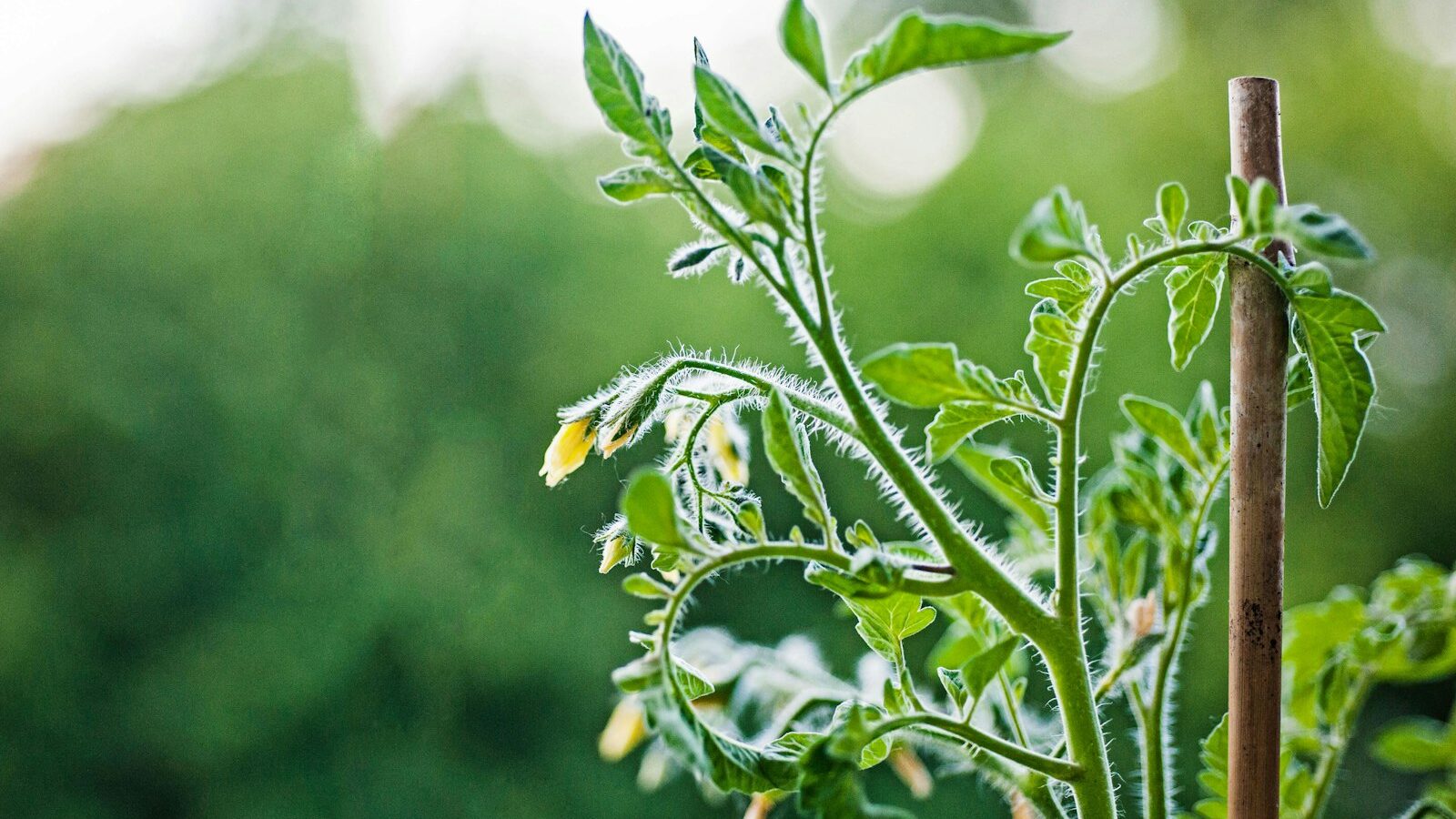
If you’ve ever stared at a tomato plant in midsummer and wondered why it turned into a sprawling jungle with a hundred tiny green fruits and no clear path to a ripe slicer, the answer usually comes down to suckers. Pruning tomato suckers is one of those small, repeatable habits that separates a tidy, productive plant from a tangled mess. It takes about two minutes per plant per week, and once you can spot a sucker at a glance you’ll never look at a tomato plant the same way again. This guide walks through exactly what a sucker is, why you might pull it (and when you shouldn’t), and how to do the job cleanly without inviting disease into your patch.
Key Takeaways
- A sucker is the new shoot that sprouts in the leaf axil, the 45-degree crotch between the main stem and a leaf branch.
- Prune suckers on indeterminate (vining) tomatoes for better airflow, fewer but larger fruit, and less disease. Do NOT heavily prune determinate (bush) varieties.
- Keep one or two main stems on indeterminate plants. Missouri pruning (pinching the tip, leaving one leaf) is a gentler middle ground.
- Start when the plant is roughly 12 to 18 inches tall or at the first flower cluster, then check weekly.
- Pinch or snap suckers under about 2 to 4 inches by hand; cut larger ones with sanitized snips or pruners.
- Sanitize tools between plants, remove the lowest leaves off the soil, and top the plant about four weeks before your first frost.
What Exactly Is a Tomato Sucker?
A tomato sucker is a brand-new shoot that emerges from the leaf axil, which is the V-shaped crotch where a leaf branch meets the main stem. Picture the main stem running vertically and a leaf branch angling off to the side. Right in the joint between them, a third growth point pushes out at roughly a 45-degree angle. That’s the sucker. Left alone, it doesn’t stay small. It becomes a full secondary stem with its own leaves, its own flower clusters, and its own suckers in its own leaf axils. One unpruned plant can turn into a dozen competing stems by August.
People sometimes confuse suckers with the main growing tip at the very top of the plant or with the flower clusters that emerge directly from the stem. The trick to telling them apart is to look at the geometry. Suckers always appear in the crook between the stem and a leaf, never standing alone on the stem and never at the terminal tip. Flower clusters, by contrast, grow straight off the stem on their own, not from inside an axil. Once you train your eye to find that 45-degree crotch, spotting suckers becomes automatic, and you’ll catch them while they’re still the size of a fingernail.
Why Prune Suckers at All?
There are three solid, practical reasons to prune suckers, and they all reinforce each other. The first is airflow. A plant that’s been thinned to one or two main stems lets breeze and sunlight move through the canopy. Wet leaves dry faster after rain or dew, and that simple fact does more to prevent fungal trouble than almost anything else you can do. A dense, suckered-out plant traps humidity in its interior, which is exactly the warm, damp environment that early blight, septoria leaf spot, and other foliar diseases love.
The second reason is fruit quality. A tomato plant has a finite amount of energy to spend. When that energy is divided among ten stems and hundreds of fruit, you get a lot of small, slow-ripening tomatoes. When you concentrate it into one or two stems, the plant funnels its sugars and resources into fewer fruit, and those fruit grow larger and ripen sooner. If your goal is big, beautiful beefsteaks for sandwiches, pruning is how you get them. If you’d rather have a heavy mass of small cherry tomatoes, that calculus changes, which is part of why variety matters so much.
The third reason is disease management, which ties back to airflow but goes a step further. Many of the worst tomato diseases live in the soil and splash up onto the lowest leaves during rain or watering. By keeping the bottom of the plant open and the lowest foliage trimmed away from the dirt, you cut off the easiest route for those pathogens to climb the plant. A pruned plant is simply easier to inspect, too. You’ll spot a curling leaf or a spotted lower branch days earlier when you’re not fighting through a thicket to see it. If you do notice trouble on the foliage, our guide on why your tomato leaves are spotted can help you identify what you’re looking at.
The Big Rule: Determinate vs. Indeterminate
Before you pinch a single sucker, you need to know which kind of tomato you’re growing, because the entire pruning strategy depends on it. This is the one mistake that costs people the most fruit, so it’s worth getting right. Tomatoes come in two growth habits: determinate and indeterminate.
Indeterminate (Vining) Tomatoes
Indeterminate varieties are the vining types that keep growing taller and producing new flowers and fruit all season long until frost kills them. Many heirlooms, most beefsteaks, and classic varieties like Brandywine, Cherokee Purple, Sungold, and Big Beef fall in this camp. These are the plants pruning was made for. Because they grow indefinitely, they’ll happily throw suckers from every axil and turn into a ten-foot monster if you let them. Pruning keeps them manageable, channels their energy, and is essentially required if you’re growing them up a single stake or string.
Determinate (Bush) Tomatoes
Determinate varieties are bush types that grow to a genetically fixed size, set most of their fruit in a concentrated window, and then largely stop. Roma, Celebrity, Bush Early Girl, and most paste tomatoes bred for canning are determinate. Here’s the critical part: do NOT heavily prune determinate tomatoes. Because they set their fruit on the suckers and branch tips, removing those suckers directly removes future tomatoes. On a determinate plant you’d be cutting away the very harvest you’re trying to grow. At most, remove the suckers and leaves below the first flower cluster to keep the base clean and off the soil. Everything above that, leave alone.
If the plant tag is long gone and you can’t remember what you bought, watch the plant’s behavior. Determinate plants tend to stay compact and stocky, often topping out around three to four feet, and set fruit in a flush. Indeterminate plants keep stretching upward and producing new growth and flowers continuously. When in doubt, prune lightly until you’re sure.
How Many Stems? Single-Stem vs. Multi-Stem
For indeterminate tomatoes, you get to choose how aggressively to prune, and there’s no single right answer. Your choice depends on your climate, your support system, and how you like to harvest.
Single-stem pruning means removing every sucker so the plant grows as one tall vine. This gives you the largest fruit, the best airflow, and a plant that’s easy to train up a single stake or string in a tight space. The tradeoff is a smaller total harvest and more exposed fruit, which can be a sunscald risk in hot, intense-sun regions. Single-stem works beautifully for greenhouse growers and anyone growing indeterminate tomatoes in narrow rows.
Two-stem (multi-stem) pruning is the practical favorite for most home gardeners. You let one sucker grow into a second main stem, usually the strong one just below the first flower cluster, and then prune everything else. You get two productive leaders, a bit more fruit, and more foliage to shade the tomatoes from sunburn, while still keeping the plant open enough for good air movement. If you’re growing up a sturdy cage or trellis, two or even three stems is a sensible target.
Missouri pruning is a gentler technique worth knowing, especially in hot climates. Instead of removing a sucker entirely, you pinch out just the growing tip and leave one or two leaves behind. Those remaining leaves keep photosynthesizing and provide shade to protect the fruit and stem from scald, but the sucker can’t develop into a full competing stem. It’s also the safer move on a sucker you let get a little too big, since pinching the tip is less of a shock than amputating the whole thing. Whatever method you pick, you’ll get the most out of it by pairing it with solid support. See our guide on how to stake tomatoes for the support side of the equation.
When to Start and How Often
Don’t prune a freshly transplanted seedling. Give it a few weeks to establish roots and put on size first. The right moment to begin is when the plant reaches roughly 12 to 18 inches tall, or when you see the first flower cluster forming, whichever comes first. By then the plant is vigorous enough to shrug off the loss of a few small shoots, and the suckers are appearing fast enough to be worth managing.
From there, make pruning a weekly ritual. A quick once-over every seven days keeps every sucker small enough to remove with a fingertip, which is faster, cleaner, and far less stressful to the plant than letting them grow into inch-thick stems you have to saw off. Tie it to another routine task, like your weekly deep watering, so you don’t forget. Skip a couple of weeks in peak summer and you’ll come back to find suckers that have flowered and set fruit of their own, at which point the decision about what to remove gets complicated.
Step-by-Step: How to Actually Prune a Sucker
The technique depends almost entirely on the size of the sucker. Small ones come off with your fingers; large ones need a clean cut.
- Find the sucker. Look in each leaf axil, the crotch between the main stem and a leaf branch, for that diagonal shoot. Work from the bottom of the plant up so you don’t miss any.
- Pinch or snap small suckers (under about 2 to 4 inches). Grip the base of the sucker between your thumb and forefinger and bend it sharply to one side. It should snap off cleanly with a small, quick wound that heals fast. Doing this when the sucker is just a couple of inches long leaves the smallest possible scar.
- Cut large suckers with sanitized tools. If a sucker is thicker than a pencil or longer than about four inches, don’t tear it off, since that can rip the bark of the main stem and leave a ragged wound. Instead use clean, sharp pruning snips and cut it close to the stem, leaving a tiny stub. A clean cut closes over more reliably than a torn one.
- Prune in dry conditions. Work in the morning of a dry day so the wounds can callus over before evening. Pruning into wet foliage or right before rain is an open invitation for disease to enter the fresh cuts.
- Don’t strip the plant in one session. Remove no more than about a third of the foliage at once. If you’ve fallen behind and the plant is overgrown, space the cleanup over two or three weekly sessions rather than shocking the plant bare in a single afternoon.
Tool Sanitation
Your hands and snips can carry disease from a sick plant to a healthy one, so sanitation matters whenever you’re using a blade. Wipe or dip your pruners between plants, and especially before moving away from any plant that looks unwell. A spray bottle of 70 percent isopropyl alcohol is the most convenient option, since it dries quickly and won’t pit the metal the way bleach can over time. A diluted bleach solution (one part bleach to nine parts water) works too if you rinse and dry the tools afterward. If you’re only pinching small suckers by hand on healthy plants, a quick wash of your hands between plants is usually enough.
Bottom-Leaf Removal
Sucker pruning goes hand in hand with cleaning up the lowest leaves, and this applies to both determinate and indeterminate plants. As the plant grows, strip off the foliage on the bottom 6 to 12 inches of the main stem, so no leaves touch or hang near the soil. Soil-borne fungal spores spread upward by splashing onto low leaves during rain and watering, and removing that bottom rung of foliage breaks the chain. It also improves airflow at the base where humidity tends to pool. As you harvest through the season and the lower leaves naturally yellow, keep clearing them so the bottom foot or so of stem stays bare and open.
Topping at Season’s End
In late summer, indeterminate plants will keep setting new flowers right up until frost, but any tomato that flowers too late simply won’t have time to ripen before the cold ends the season. Those late flowers and tiny green fruit are just draining energy away from the fruit that still has a fighting chance. The fix is called topping. About four weeks before your average first frost date, cut off the main growing tip of each stem, along with any flower clusters that clearly can’t mature in time.
Topping tells the plant to stop reaching for new growth and pour everything it has into ripening the fruit already on the vine. You’ll often notice the existing tomatoes coloring up faster and sizing better in the weeks after you top. It’s a small, decisive act that turns a plant’s late-season scramble into a focused final push, and it’s the natural bookend to a season of weekly sucker pruning.
Putting It All Together
Pruning suckers isn’t complicated once you internalize the rhythm. Identify your variety first, because that single fact decides everything: prune indeterminate plants to one or two stems and leave determinate bush types nearly alone. Start when the plant hits roughly 12 to 18 inches or its first flower cluster, then walk the rows weekly, pinching the small suckers and cleanly cutting the larger ones with sanitized snips. Keep the bottom of the plant open and off the soil, work on dry mornings, and top the indeterminate vines about a month before frost. Do that, and you’ll trade a chaotic green tangle for an orderly, productive plant that ripens larger fruit with far less disease pressure. The right support and the right pruning together make all the difference, so it’s worth reading up on tomato cage vs. stake options and browsing more of our outdoor living and gardening guides while you plan next season’s beds.
Frequently Asked Questions
Will pruning suckers reduce my total tomato harvest?
On indeterminate plants, pruning reduces the number of fruit but increases their size and speeds ripening, so your total weight stays competitive while quality improves. On determinate (bush) plants it’s different: those set fruit on the suckers, so heavy pruning genuinely removes harvest. Only clean up the lowest growth on determinates.
What happens if I accidentally remove the main growing tip?
The plant won’t die. It will respond by promoting the nearest sucker into a new leader and carry on growing. If you mistakenly top an indeterminate plant early in the season, just let one strong sucker take over as the new main stem. It’s a recoverable mistake, not a fatal one.
Can I root the suckers I pull off to grow new plants?
Yes, and it’s one of the best free-plant tricks in gardening. Take a sucker about four to six inches long, strip the lower leaves, and set it in a glass of water on a windowsill or push it into moist potting mix. It will root in a week or two. Just be sure you have enough remaining season for the new plant to produce.
Should I prune suckers on container-grown tomatoes?
If it’s an indeterminate variety, yes, and arguably more so. Container plants have limited root volume, so concentrating energy into one or two stems helps them support their fruit without exhausting the pot’s resources. It also keeps the plant compact and easier to manage on a patio or balcony.
Is it too late to start pruning a plant that’s already overgrown?
It’s never too late, but don’t strip it all at once. Remove no more than about a third of the foliage in one session and spread the cleanup over two or three weekly visits. Prioritize the lowest suckers and any foliage touching the soil first, then thin the interior to open up airflow. The plant will recover better with a gradual approach.