

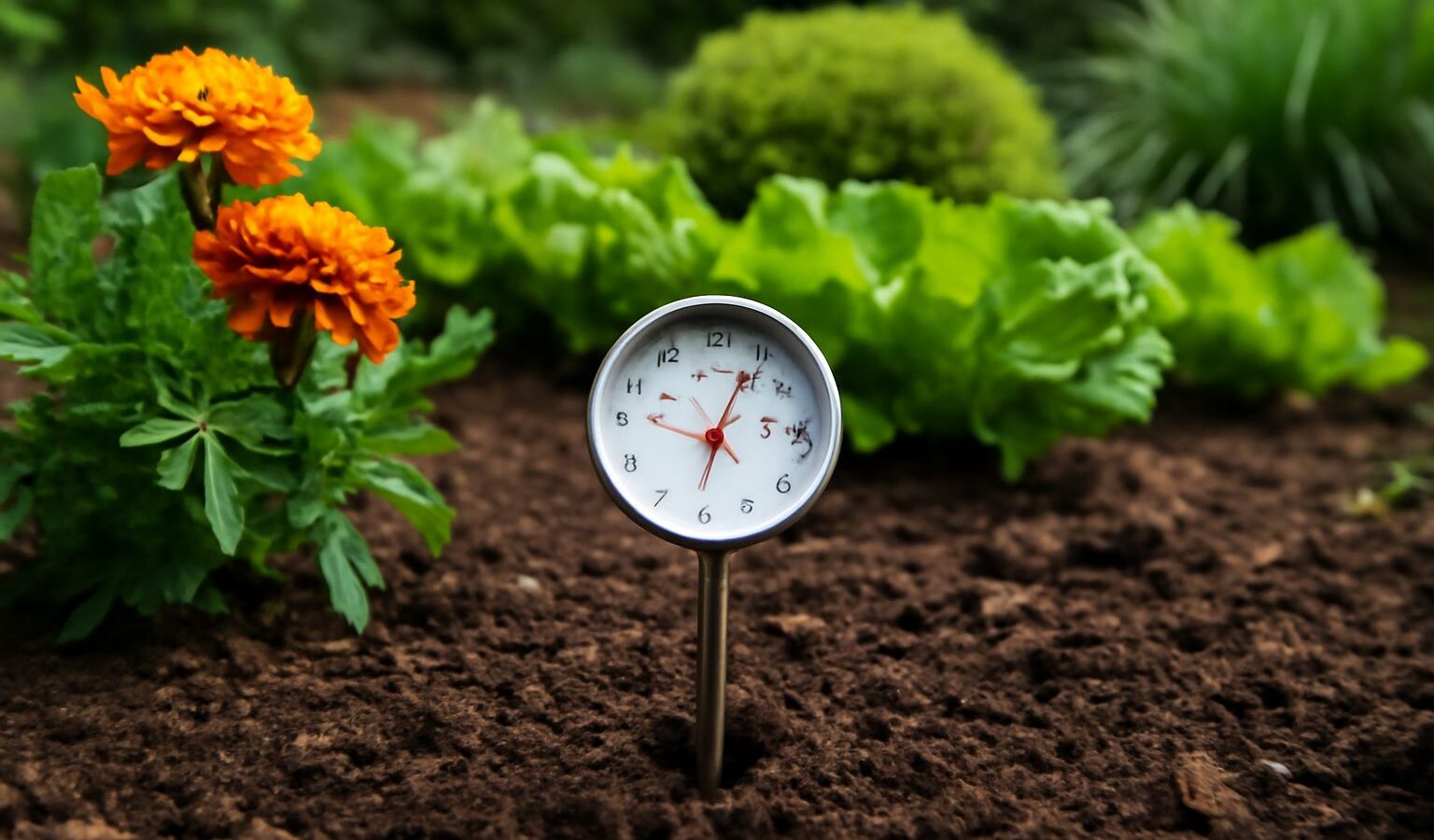
Soil temperature, not the calendar, tells you when it’s actually safe to sow and transplant — and a soil thermometer is the cheap, simple tool that takes the guesswork out of timing. Seeds germinate and roots grow within specific soil-temperature windows: peas and lettuce sprout in cool soil around 40–50°F, while warm-season crops like tomatoes, peppers, beans, and squash sulk or rot until the soil holds steady above roughly 60°F. Plant by the calendar and a cold spring leaves seeds rotting in chilly ground; plant by soil temperature and you nail germination every time. A soil thermometer is also essential for hot composting, where you want the pile core to hit 130–160°F to kill weed seeds and pathogens. Below are seven of the best soil thermometers for 2026 — dial, digital, and long compost probes — plus a buyer’s guide to probe length, accuracy, and which type fits your garden.
As an Amazon Associate we earn from qualifying purchases. This page contains affiliate links at no extra cost to you.
Key Takeaways
- Soil temperature beats the calendar for timing — sow cool crops around 40–50°F and warm crops once soil holds above ~60°F.
- Take readings at seed depth (about 2–4 inches for most seeds) in the morning, and average a few days before sowing.
- The REOTEMP and other long-probe compost models reach the hot core of a pile to confirm it’s hitting 130–160°F.
- Dial thermometers are rugged and battery-free; digital models read faster and more precisely but need batteries and care around moisture.
- Probe length matters — short probes for seed beds, long (12–20 in.) probes for compost and deep beds.
- Don’t leave thermometers buried in wet soil long-term; clean and dry the probe to protect accuracy and prevent corrosion.
| Thermometer | Best For | Key Spec |
|---|---|---|
| REOTEMP Backyard Compost | Hot composting | ~20 in. stainless probe, dial |
| Luster Leaf Rapitest 1625 | Best all-round seed sowing | ~6 in. probe, dial, seed chart |
| Taylor Precision Digital | Fast precise readings | Digital, instant-read probe |
| REOTEMP Soil/Garden Dial | Deep beds & rugged use | Stainless dial, multiple lengths |
| Luster Leaf Digital Soil | Easy-read digital budget | Digital LCD, compact probe |
| Greenco / generic dial probe | Budget seed beds | ~5 in. probe, no batteries |
| ThermoPro instant-read probe | Soil + kitchen crossover | Fast digital, foldable probe |
1. REOTEMP Backyard Compost Thermometer
If your main job is monitoring a compost pile, the REOTEMP Backyard Compost thermometer is the standard recommendation. It has a long stainless-steel probe — around 20 inches — so it reaches deep into the hot core of a pile where the action happens, paired with a clear dial face marked with the active “hot” composting zone. That long reach is the whole point: surface temperatures tell you nothing, but the core hitting 130–160°F confirms the pile is cooking hot enough to break down fast and kill weed seeds and pathogens.
It’s rugged, battery-free, and built to live outdoors, with a weather-resistant dial and a sharp tip that pushes into a dense pile without a struggle. The dial is easy to read at a glance, and the colored composting zones take the interpretation out of it. For anyone running a hot compost system, it’s an inexpensive tool that makes the difference between guessing and knowing.
Pros
- Long stainless probe reaches the hot pile core
- Battery-free and rugged for outdoor life
- Dial marked with composting temperature zones
Cons
- Overkill for shallow seed-bed readings
- Dial less precise than a digital display
2. Luster Leaf Rapitest 1625 Soil Thermometer
For timing seed sowing — the everyday garden job — the Luster Leaf Rapitest 1625 is the best all-round pick. It’s a simple, reliable dial thermometer with a probe around six inches, ideal for taking readings at the 2–4 inch depth where most seeds sit. What sets it apart is the printed reference: the tool and packaging include a handy chart of recommended planting soil temperatures for common vegetables and flowers, so you can read the soil temp and check it against the ideal range right there in the garden.
It’s battery-free, easy to read, and inexpensive, with a stainless probe that pushes into prepared beds without trouble. It’s not the fastest to settle and a dial is less precise than a digital readout, but for the core task of deciding “is the soil warm enough to plant this?” it’s accurate enough and beautifully practical. For most home gardeners, this is the one to start with.
Pros
- Built-in planting temperature reference chart
- Battery-free and inexpensive
- Probe length suits typical seed depth
Cons
- Dial settles slowly versus digital
- Less precise readout
3. Taylor Precision Digital Soil Thermometer
When you want fast, precise readings down to a degree, a digital model like the Taylor Precision soil/instant-read thermometer earns its place. The digital probe reads quickly and displays an exact number on an LCD, so there’s no squinting at dial tick-marks or waiting for a needle to settle. That precision is genuinely useful at the margins — when warm-season crops need the soil reliably above 60°F, the difference between 58° and 62° matters, and a digital readout removes the ambiguity.
Taylor is a trusted name in thermometers, and the build is dependable. The trade-offs are the usual digital ones: it needs a battery, and you have to keep moisture out of the body, so don’t leave it buried in wet soil — take the reading and pull it out. For a gardener who wants accuracy and speed and doesn’t mind battery care, it’s a precise, no-nonsense choice.
Pros
- Fast, precise digital readout to the degree
- Removes dial-reading guesswork at the margins
- Trusted thermometer brand
Cons
- Needs a battery
- Keep moisture out of the body — don’t leave buried
4. REOTEMP Soil & Garden Dial Thermometer
REOTEMP also makes a dedicated soil-and-garden dial thermometer that bridges seed beds and deeper readings, available in several probe lengths so you can choose the reach you need. The all-stainless construction is rugged and built to last outdoors for years, and the dial face is large and clearly marked. Pick a shorter probe for seed-bed depth or a longer one for deep raised beds and root-zone monitoring of established plantings.
It’s battery-free like all dial models, which means nothing to fail mid-season, and the heavy-duty build shrugs off rough handling. The dial is a touch less precise than a digital readout and settles more slowly, but for a gardener who wants one durable, do-everything dial thermometer and values toughness over to-the-degree precision, the REOTEMP soil dial is a reliable workhorse that will outlast cheaper tools.
Pros
- Rugged all-stainless build for years of use
- Multiple probe lengths to suit the task
- Battery-free and clearly marked dial
Cons
- Less precise than digital
- Dial settles slowly
5. Luster Leaf Digital Soil Thermometer
For a gardener who wants a digital readout without much cost, Luster Leaf’s digital soil thermometer is an easy-to-read budget option. It pairs a compact probe with a clear LCD that shows the temperature at a glance, settling faster than a dial and removing the squint factor. It’s well suited to checking seed-bed temperatures at sowing depth and confirming when warm crops can go in.
As a budget digital, the build is lighter than the rugged REOTEMP dials, and like any digital it relies on a battery and dislikes being left in wet soil, so read and remove. But for an inexpensive, beginner-friendly way to get precise numbers — and a step up in readability from a basic dial — it’s a sensible pick that does the everyday timing job well.
Pros
- Clear LCD, easy to read
- Settles faster than a dial
- Inexpensive and beginner-friendly
Cons
- Lighter build than rugged dials
- Battery-dependent; keep out of wet soil
6. Greenco / Generic Dial Soil Probe
For the smallest budget, a basic dial soil probe like the widely sold Greenco-style stainless thermometer covers the essentials. It’s a no-frills dial with a probe around five inches, battery-free, and cheap enough to keep one in every bed or greenhouse. It does exactly one thing — tell you the soil temperature at seed depth — and does it well enough for confident sowing decisions.
Don’t expect lab precision or a long lifespan to match a premium REOTEMP, and the cheaper dials can drift over time, so it’s worth a quick sanity-check against a known temperature now and then. But as an entry-level tool, a backup, or a “good enough” thermometer for casual sowing, it’s hard to argue with the price-to-usefulness ratio.
Pros
- Very inexpensive — buy several
- Battery-free and simple
- Fine for everyday seed-bed timing
Cons
- Cheaper dials can drift over time
- Less durable than premium models
7. ThermoPro Instant-Read Probe
The ThermoPro instant-read digital probe is a versatile crossover pick — primarily a fast kitchen/meat thermometer, but its quick, precise probe also reads soil and compost temperatures perfectly well. The appeal is speed and a folding probe: it gives a stable reading in seconds and folds away neatly, so one inexpensive tool can double for the garden bed and the cooking thermometer. For gardeners who don’t want a single-purpose device cluttering a drawer, that’s genuinely handy.
Because it’s designed for general use rather than being driven into hard soil, push it into prepared, loosened beds rather than compacted ground, and as with any digital, keep the body dry and read-and-remove rather than leaving it buried. Within those limits it’s fast, accurate, and excellent value, and the dual-purpose flexibility makes it a smart buy for a small household.
Pros
- Fast, precise instant-read digital
- Doubles for soil and kitchen use
- Foldable probe, compact and good value
Cons
- Best in loosened beds, not hard ground
- Battery-dependent; keep body dry
How to Choose a Soil Thermometer
Match probe length to the job. For seed sowing you take readings at 2–4 inches, so a probe of about 5–7 inches is plenty. For deep raised beds or for hot composting, you need to reach the warm core, so choose a long 12–20 inch probe like a dedicated compost thermometer. Buying one probe length for everything usually means it’s either too short for the compost pile or awkwardly long for a seed flat.
Dial or digital. Dial thermometers are rugged, battery-free, and live happily outdoors for years, but they settle slowly and read less precisely. Digital models give fast, to-the-degree numbers — valuable when warm crops need the soil reliably above 60°F — but need batteries and dislike being left in wet soil. Many gardeners keep a rugged dial for compost and a digital for precise sowing decisions.
Take readings the right way. Measure at seed depth, in the morning before the sun warms the surface, and ideally average a few days’ readings before sowing — a single warm afternoon doesn’t mean the soil has truly warmed. Insert the probe fully to the target depth and let it settle before reading. Consistency in how and when you read matters as much as the tool’s accuracy.
Look after the probe. Don’t leave any thermometer buried long-term in wet soil, especially digitals — moisture corrodes contacts and dial mechanisms. Wipe and dry the probe after each use, store it clean, and occasionally sanity-check accuracy against a known reference. A cared-for thermometer holds its calibration far longer. For more garden gear, browse the Tools & Gear hub.
Frequently Asked Questions
What soil temperature do seeds need to germinate?
It varies by crop. Cool-season plants like peas, lettuce, and spinach germinate in soil around 40–50°F, while warm-season crops such as tomatoes, peppers, beans, and squash want soil that holds steady above roughly 60°F. Sowing into soil that’s too cold leaves seeds slow to sprout or prone to rotting, which is exactly why a soil thermometer beats planting by the calendar.
How deep should I insert a soil thermometer?
Take readings at the depth your seeds will sit — usually about 2 to 4 inches for most vegetables and flowers. Insert the probe fully to that depth and let it settle before reading. For deep raised beds or compost piles you’ll want a longer probe to reach the root zone or the hot core of the pile.
When is the best time of day to check soil temperature?
Morning, before the sun has warmed the soil surface, gives the most representative reading of the soil’s baseline temperature. For the most reliable sowing decision, take readings over several consecutive days and average them — a single warm afternoon doesn’t mean the soil has genuinely warmed enough for warm-season crops.
Do I need a special thermometer for compost?
Yes, ideally — a compost thermometer has a long probe (around 12 to 20 inches) to reach the hot core of the pile, where temperatures should hit 130–160°F for effective hot composting. A short seed-bed thermometer only reads the cooler outer layer. The long stainless probe and the temperature zones marked on compost dials make confirming a hot pile easy.
Are digital or dial soil thermometers better?
Both work; it depends on your priorities. Dial thermometers are rugged, battery-free, and last for years outdoors but read less precisely and settle slowly. Digital models give fast, exact readings — useful at the 60°F threshold for warm crops — but need batteries and shouldn’t be left in wet soil. Many gardeners own a rugged dial for compost and a digital for precise sowing.
A soil thermometer is one of the cheapest tools that genuinely improves results, turning vague calendar guesses into confident, well-timed sowing and transplanting. Pick a long-probe compost model like the REOTEMP if you run a hot pile, a chart-equipped dial like the Luster Leaf Rapitest for everyday seed timing, or a fast digital when you want to-the-degree precision at the planting threshold. Read at seed depth in the morning, look after the probe, and pair it with the rest of your kit — see more reviews in the Tools & Gear hub — and you’ll sow at exactly the right moment every season.