

The best yellow flowering shrub for your yard depends on three things: when you want color, how much sun the spot gets, and how big the plant can get before it becomes a pruning chore. Forsythia and winter jasmine open the year in late winter. Kerria and spicebush light up shady spring borders. Potentilla and St. John’s wort carry yellow through the heat of summer, and rabbitbrush and witch hazel finish in fall. This guide sorts the reliable choices by season, mature size, light and USDA zone so you can pick for the space you actually have.
Part of our Trees & Shrubs guide →
In this guide
- Yellow Flowering Shrubs at a Glance
- Late Winter and Early Spring: The First Yellow of the Year
- Yellow Shrubs for Shade
- Summer-Blooming Yellow Shrubs
- Fall Yellow: Rabbitbrush and Witch Hazel
- Choosing by Size
- Regional Picks
- Planting and Care Basics
- Yellow Shrubs to Avoid or Plant With Care
- Design Tips for Yellow Shrubs
- Frequently Asked Questions
Key Takeaways
- For late-winter and early-spring yellow, plant forsythia (zones 5–8), winter jasmine (6–10) or winter hazel (5–8).
- For shade, kerria (4–9), spicebush (4–9), mahonia (5–9) and northern bush honeysuckle (3–7) bloom with only a few hours of sun.
- For summer color in small spaces, potentilla (2–7) and shrubby St. John’s wort (4–8) stay under 4 feet.
- Spring bloomers flower on old wood, so prune right after they bloom. Summer bloomers flower on new wood, so prune in late winter.
- Skip Scotch broom and invasive bush honeysuckles. Native options like golden currant and spicebush give the same color without the spread.
Yellow Flowering Shrubs at a Glance
Use this table to shortlist by zone and light first. Heights are typical mature sizes for the species. Named cultivars can run noticeably smaller or larger, so check the plant tag before you buy.
| Shrub | Bloom season | Mature size | Light | USDA zones |
|---|---|---|---|---|
| Winter jasmine (Jasminum nudiflorum) | Late winter | 3–4 ft tall, sprawling to 7 ft | Sun to part shade | 6–10 |
| Forsythia (Forsythia × intermedia) | Early spring | 6–10 ft | Full sun | 5–8 |
| Winter hazel (Corylopsis) | Early spring | 4–8 ft | Part shade | 5–8 |
| Spicebush (Lindera benzoin) | Early spring | 6–12 ft | Part to full shade | 4–9 |
| Kerria (Kerria japonica) | Mid-spring | 3–6 ft | Part to full shade | 4–9 |
| Golden currant (Ribes aureum) | Mid-spring | 3–6 ft | Sun to part shade | 3–8 |
| Mahonia / Oregon grape | Late winter to spring | 3–6 ft | Part to full shade | 5–9 |
| Potentilla (Dasiphora fruticosa) | Early summer to fall | 2–4 ft | Full sun | 2–7 |
| Shrubby St. John’s wort (Hypericum) | Summer | 2–4 ft | Sun to part shade | 4–8 |
| Northern bush honeysuckle (Diervilla lonicera) | Early to midsummer | 2–4 ft | Sun to shade | 3–7 |
| Yellow bells (Tecoma stans) | Summer to fall | 4–10 ft | Full sun | 9–11 |
| Rabbitbrush (Ericameria nauseosa) | Late summer to fall | 2–6 ft | Full sun | 4–9 |
| Witch hazel (Hamamelis) | Fall or late winter | 10–20 ft | Sun to part shade | 3–8 (varies) |
Late Winter and Early Spring: The First Yellow of the Year
Early yellow is the reason most people want these shrubs. Against bare branches and brown lawns, even a modest flush reads from the street.
Forsythia
Forsythia is the classic choice in zones 5 through 8, blooming on bare stems in March or April before the leaves emerge. Standard border forsythia grows 6 to 10 feet tall and just as wide, so give it room or choose a compact cultivar such as ‘Show Off Sugar Baby’ or ‘Gold Tide’, which stay roughly 2 to 3 feet. In the northern edge of its range, flower buds can be killed by hard winters even when the shrub survives. Hardier selections like ‘Meadowlark’ and ‘Northern Gold’ were bred for that problem. Our full forsythia growing guide covers planting and renewal pruning in detail.
Winter Jasmine
Winter jasmine looks like a looser forsythia, with arching green stems that root where they touch the ground. It often opens in January or February in zones 7 and warmer and is excellent spilling over a retaining wall or bank. The flowers have no fragrance despite the name. Expect a sprawl of 4 to 7 feet unless you trim it.
Winter Hazel and Spicebush
Winter hazel (Corylopsis) hangs pale yellow, lightly fragrant flower tassels along its branches in early spring and prefers the dappled light under tall trees. Spicebush is a native understory shrub of the eastern US with tiny chartreuse-yellow flowers on bare twigs. It is subtler than forsythia, but it tolerates shade and wet soil, hosts the spicebush swallowtail butterfly and turns clear yellow again in fall. Female plants produce red berries if a male is nearby.
Yellow Shrubs for Shade
Most flowering shrubs need six or more hours of sun. These manage with three to four hours of morning light or bright dappled shade, which makes them useful on the north side of a house or under a tree canopy. For a broader list of shade performers in other colors, see our guide to shrubs for shade.
- Kerria japonica: Bright golden flowers in April and May on green stems that stay colorful all winter. The double form ‘Pleniflora’ looks like small pom-poms and is more upright; single forms are more graceful. Kerria suckers, so plan for it to fill a 4- to 6-foot patch over time. Afternoon sun bleaches the flowers, so shade actually helps it.
- Mahonia: Oregon grape (Mahonia aquifolium) is native to the Pacific Northwest and hardy to about zone 5. Leatherleaf mahonia (M. bealei) is common in zones 7 to 9 but invasive in parts of the Southeast, so check local guidance before planting it. Both carry spiky, evergreen, holly-like leaves and clusters of yellow flowers followed by blue berries.
- Northern bush honeysuckle: A tough, low native shrub with small yellow tubular flowers in early summer and good burgundy fall color. It spreads by roots and works on slopes and in dry shade. It is not related to the invasive Asian bush honeysuckles.
- Edgeworthia (paperbush): In zones 7 to 9, Edgeworthia chrysantha opens fragrant, creamy-yellow clusters in late winter on bare stems. It wants rich, moist, well-drained soil and shelter from afternoon sun.
Summer-Blooming Yellow Shrubs
Summer yellow is rarer, which makes these shrubs valuable once the spring show is over. They bloom on the current season’s growth, so a late-winter trim doesn’t cost you flowers. If you’re planning a sunny bed with several colors, our guide to flowering shrubs for full sun covers the non-yellow companions that pair well with these.
Potentilla (Shrubby Cinquefoil)
Potentilla is the hardest-working small yellow shrub for cold climates. It is hardy to zone 2, stays 2 to 4 feet tall and blooms from June until frost with buttercup-like flowers. ‘Goldfinger’ and ‘Gold Drop’ are long-standing choices, and ‘Happy Face Yellow’ is a newer, tidy selection. It needs full sun and good drainage, and it struggles in hot, humid summers south of zone 7. See our guide on how to grow potentilla for spacing and pruning.
Shrubby St. John’s Wort
The shrub forms of Hypericum produce bright yellow flowers with a puff of long stamens in midsummer. Golden St. John’s wort (Hypericum frondosum ‘Sunburst’) is native to the Southeast, grows about 3 to 4 feet tall and has attractive blue-green leaves and peeling bark. Kalm’s St. John’s wort (H. kalmianum) is a Great Lakes native hardy to zone 4 that tolerates dry, sandy soil. Aaron’s beard (H. calycinum) is a low groundcover type that can spread aggressively in mild climates.
Yellow Bells and Other Warm-Climate Options
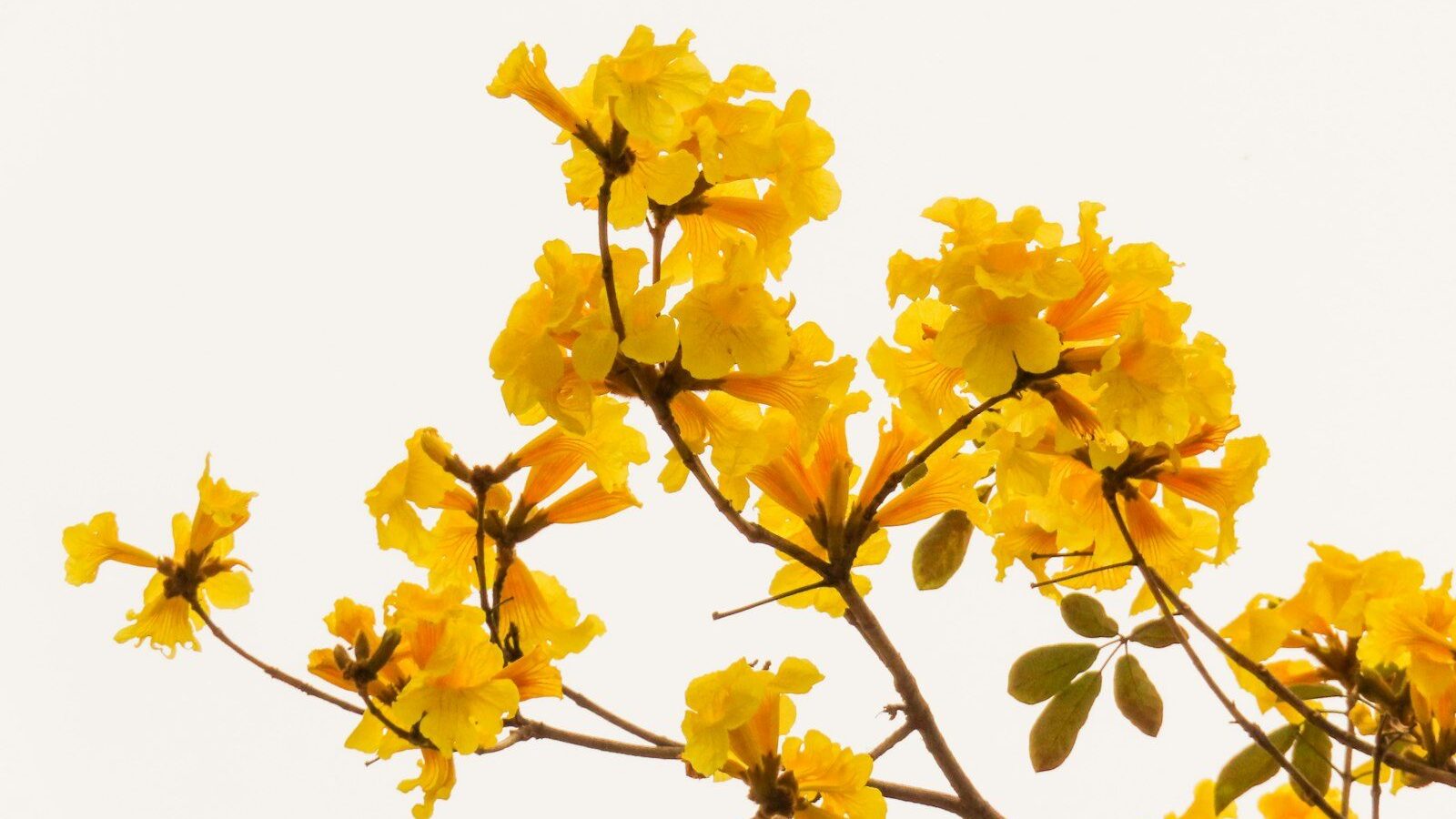
In zones 9 to 11, yellow bells (Tecoma stans, also sold as esperanza) blooms in flushes from late spring to frost with trumpet-shaped flowers that hummingbirds visit. It handles heat, drought and alkaline soil once established, and in zone 8 it often dies back and regrows from the roots like a perennial. Yellow lantana cultivars such as ‘New Gold’ stay low and bloom nonstop in heat but are invasive in parts of Florida and Hawaii. In the desert Southwest, brittlebush (Encelia farinosa) covers itself in yellow daisies in spring on almost no water.
Fall Yellow: Rabbitbrush and Witch Hazel
Rabbitbrush (also called chamisa) is a Western native that turns into a mound of mustard-yellow flowers from late August into October. It thrives in lean, dry, alkaline soil across the Intermountain West and is one of the best late-season nectar plants for pollinators. Overwatering and rich soil make it floppy.
Common witch hazel (Hamamelis virginiana), hardy in zones 3 to 8, blooms in October and November with spidery yellow flowers, often as its leaves drop. The hybrid witch hazels (H. × intermedia) such as ‘Arnold Promise’ bloom in late winter instead, with fragrant yellow flowers on bare branches in zones 5 to 8. Both eventually reach 10 to 20 feet and are better treated as large shrubs or small trees.
Choosing by Size
Size is where most shrub plantings go wrong. A plant that will mature at 8 feet does not belong under a 3-foot window, no matter how often you plan to prune it. Start with the space, then choose the plant. The trees and shrubs hub has more on spacing and placement.
- Under 4 feet (foundation beds, front of borders): potentilla, Hypericum ‘Sunburst’, northern bush honeysuckle, dwarf forsythia such as ‘Gold Tide’, and compact kerria.
- 4 to 8 feet (mixed borders, corners): kerria, golden currant, mahonia, winter hazel and yellow bells in frost-free areas.
- 8 feet and up (screens, back of property): border forsythia, spicebush and witch hazel.
Space shrubs at roughly their mature width. For a hedge, you can go to about two-thirds of that width so plants knit together faster.
Regional Picks
- Northeast and Midwest (zones 3–6): potentilla, golden currant, Kalm’s St. John’s wort, northern bush honeysuckle, spicebush and hardy forsythia cultivars.
- Mid-Atlantic and Upper South (zones 6–7): forsythia, kerria, winter jasmine, winter hazel, Hypericum ‘Sunburst’ and witch hazel.
- Deep South and Gulf Coast (zones 8–9): winter jasmine, Florida azalea (a native deciduous azalea with yellow to orange flowers), edgeworthia, yellow bells and Hypericum.
- Mountain West: rabbitbrush, golden currant and potentilla.
- Desert Southwest: yellow bells, brittlebush and yellow-flowered senna species.
- Pacific Northwest: Oregon grape, golden currant, kerria and witch hazel.
Planting and Care Basics
Plant container shrubs in spring or early fall. Dig a hole two to three times wider than the root ball but no deeper, so the top of the root ball sits level with or slightly above the surrounding grade. Loosen circling roots, backfill with the native soil, and water deeply. Spread 2 to 3 inches of mulch over the root zone, keeping it a few inches from the stems.
Water new shrubs about once a week in the first growing season, more often in sandy soil or heat waves, then taper off. Most of the shrubs here need little fertilizer. A spring layer of compost is usually enough, and heavy nitrogen tends to produce leaves at the expense of flowers.
Pruning Timing Is Everything
Spring bloomers such as forsythia, kerria, winter jasmine, winter hazel and spicebush set next year’s flower buds over summer. Prune them within a few weeks after they finish flowering. Shearing them in fall or winter removes the buds and the bloom. Summer bloomers like potentilla, Hypericum and yellow bells flower on new growth, so cut them back in late winter or early spring. For older forsythia and kerria, remove one-third of the oldest stems at ground level each year instead of shearing the tops. That keeps the natural arching shape and constant flowering wood.
Yellow Shrubs to Avoid or Plant With Care
Several yellow-flowered shrubs are listed as invasive in parts of the US. Scotch broom (Cytisus scoparius) is a serious invader in the Pacific Northwest and California. Asian bush honeysuckles (Lonicera maackii, L. tatarica and others) have cream-to-yellow flowers and are invasive across much of the East and Midwest. Leatherleaf mahonia and some lantanas spread by bird-carried seed in the Southeast. Japanese barberry, sometimes sold in golden-leaved forms, is restricted in several states. Check your state’s invasive plant list or local extension office before buying, and favor native alternatives where possible.
Design Tips for Yellow Shrubs
Yellow is the most visible color at a distance, so a single forsythia at the back of a lot will pull the eye. Repeat yellow shrubs in groups of three or five rather than dotting single plants around. Pair early yellow with blue and purple bulbs like grape hyacinth and scilla, or with the dark foliage of a purple-leaf shrub. In summer, potentilla and Hypericum look sharp in front of blue-needled junipers or with ornamental grasses. If you plan to hire out a larger planting, a landscape designer can lay out bloom sequences so something is flowering from February through October.
Frequently Asked Questions
What is the earliest yellow flowering shrub?
Winter jasmine is usually first, opening in January or February in zones 7 and warmer. Hybrid witch hazel, edgeworthia and winter hazel follow in late winter, then forsythia in early spring.
Which yellow flowering shrub grows best in shade?
Kerria japonica is the most reliable yellow bloomer in part to full shade. Spicebush, mahonia and northern bush honeysuckle also flower with just a few hours of sun.
What small yellow flowering shrub blooms all summer?
Potentilla blooms from early summer to frost and stays 2 to 4 feet tall in zones 2 to 7. In warmer zones, Hypericum ‘Sunburst’ or a compact yellow bells cultivar fills the same role.
Why did my forsythia stop blooming?
The usual cause is pruning at the wrong time. Forsythia blooms on old wood, so trimming in fall or winter removes the buds. Deep shade and a hard winter freeze in zone 5 can also wipe out flower buds.
Are there native yellow flowering shrubs?
Yes. Spicebush, golden currant, northern bush honeysuckle, Hypericum frondosum, Kalm’s St. John’s wort, witch hazel, Oregon grape, rabbitbrush and Florida azalea are all native to parts of the US.