

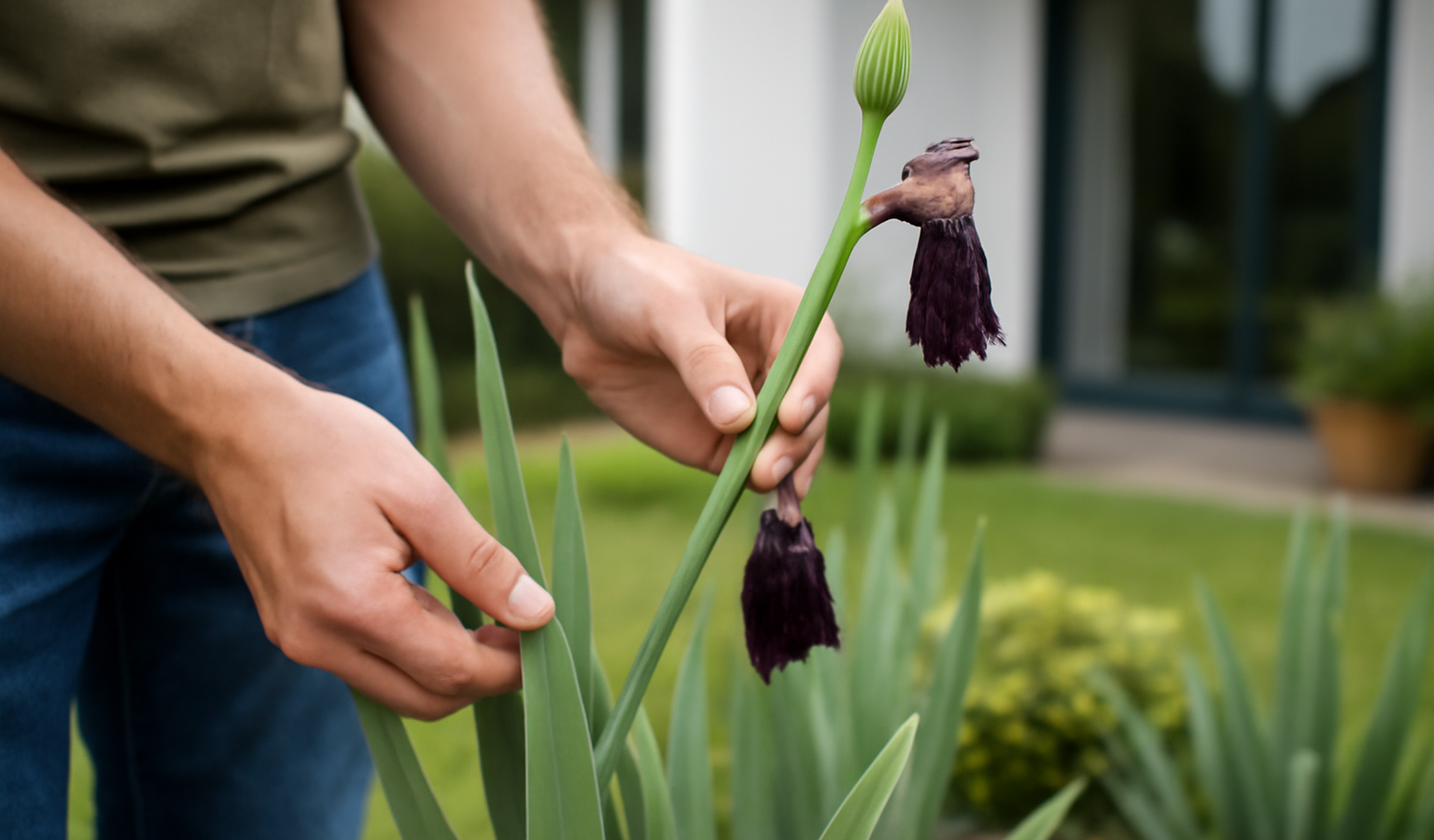
A healthy clump of iris that throws up fans of strappy green leaves but refuses to flower is one of the most common complaints in the perennial border. The plant clearly has the energy to grow, so the problem is almost never that the iris is dying. Something is quietly diverting that energy away from flower buds. With bearded iris in particular, the cause is usually mechanical or cultural: the rhizomes are too crowded, buried too deep, sitting in too much shade, chewed by borers, or pumped full of nitrogen. The good news is that every one of these causes is fixable, and most fixes happen in a single afternoon of replanting. This guide walks through the five reasons an iris stops blooming, how to diagnose each one, and exactly what to do about it.
Key Takeaways
- Overcrowded rhizomes are the number-one reason bearded iris stop blooming; divide every 3–4 years in mid-to-late summer.
- Bearded iris rhizomes must sit at or just below the soil surface, partly exposed to the sun. Deep planting kills flowering.
- Iris need at least 6 hours of direct sun a day; encroaching shade is a slow, silent bloom-stopper.
- Iris borers tunnel through rhizomes and leave mushy, smelly rot; clean up old foliage in fall to break their cycle.
- High-nitrogen lawn fertilizer drifting into iris beds produces leaves at the expense of flowers. Feed low-nitrogen instead.
Cause 1: Overcrowded Rhizomes
This is the single most common reason a bearded iris quits blooming, and it catches almost everyone eventually. Iris grow by extending their rhizomes outward, producing new offsets each year around the original. After three or four growing seasons, the center of the clump becomes a congested knot of old, woody rhizomes that no longer flower, ringed by younger growth that is now competing with itself for light, water, and root space. The plant pours its resources into simply staying alive rather than setting buds.
How to diagnose it
Look at the clump in summer after the leaves are fully grown. If you can barely see soil between the fans, if the rhizomes are stacked on top of each other, or if the middle of the clump is a bare, leafless tangle of old roots, crowding is your answer. Count the years too: if it has been three or more seasons since you last divided, assume crowding even if it does not look dramatic. Clumps that bloomed beautifully two years ago and have steadily declined since are a textbook case.
How to fix it
Divide the clump roughly four to six weeks after flowering, which in most of the US falls in July or August. Dig the whole clump, shake off the soil, and snap or cut the rhizomes apart so each division has a firm, fan-shaped piece of rhizome about the size of a thumb, a section of healthy roots, and a fan of leaves. Discard the old, hollow, leafless centers entirely. Trim the leaf fans back to about 6 inches so the divisions do not topple while they re-root. Replant the divisions 12 to 18 inches apart, point the fan in the direction you want growth to head, and water in. Divided iris often skip a season then bloom strongly the year after. Plan to repeat this every three to four years to keep them flowering for good.
Cause 2: Planted Too Deep
Bearded iris are unusual among perennials in that their rhizomes want to bake in the sun. The top of the rhizome should sit right at the soil surface, with just the roots tucked underneath. Gardeners who treat iris like bulbs and bury them several inches down end up with vigorous foliage and zero flowers, because a buried rhizome cannot get the warmth and dry conditions it needs to initiate buds. This is also how mulch quietly sabotages iris: a generous blanket of bark or shredded leaves heaped over the rhizomes mimics deep planting.
How to diagnose it
Brush the soil and mulch away from the base of a fan. You should be able to see the top of the rhizome, like the back of a sweet potato half-exposed at the surface. If the rhizome is completely buried under soil or mulch, or if it feels soft and cool rather than firm and sun-warmed, it is too deep. Beds that were heavily top-dressed with compost over several years are common offenders, as the surface slowly creeps upward and swallows the rhizomes.
How to fix it
Gently pull the soil and mulch back so the top half of each rhizome is exposed. If they are buried inches deep, lift and replant: set the rhizome on a shallow mound of soil with the roots draped down either side, then backfill so the top of the rhizome shows. Keep mulch pulled back a few inches from the rhizomes year-round, applying it only over the root zone for winter protection in colder climates. In zones 4 and below, a light winter mulch is fine but rake it off in early spring so the rhizomes can warm up again.
Cause 3: Too Much Shade
Iris are sun lovers. Bearded, Siberian, and most garden iris need a solid six hours of direct sunlight a day to flower well, and bearded types are happiest with even more. The trouble is that shade arrives gradually. A bed that was full sun when you planted slowly falls under the shadow of a maturing tree, a growing hedge, or a neighbor’s new fence. The iris keeps making leaves because leaves are cheap, but flowers are expensive, and without enough light the plant simply stops investing in them.
How to diagnose it
Spend a sunny day watching the bed and tally the hours of direct sun the iris actually receive, ideally in late spring when they would be budding. Anything under six hours is marginal; under four hours and you should not expect flowers at all. Leaves that flop or stretch unusually long and lean toward the light are another tell. Compare a shaded clump with one of the same variety in a brighter spot in your yard, and the difference in bloom is usually stark.
How to fix it
The cleanest fix is to move the iris to a sunnier location. Lift the clump in mid-to-late summer, divide if needed, and replant in a spot with at least six hours of sun and good drainage. If the shade comes from a tree or shrub you can prune, thinning the canopy to let more light through is an alternative. Avoid the temptation to wait it out, because shade only deepens as the surrounding plants grow. When choosing the new home, remember that iris also hate wet feet, so pick a spot that drains freely and is not in a low, soggy corner of the yard.
Cause 4: Iris Borers and Rot
The iris borer is the most destructive pest of bearded iris, especially east of the Rockies. The moth lays eggs on old iris foliage and garden debris in fall. In spring the caterpillars hatch, chew into the leaves, and tunnel down into the rhizomes, hollowing them out. The damage alone weakens flowering, but the real killer is that the borer wounds open the door to bacterial soft rot, which turns the rhizome into a foul-smelling mush. A clump fighting borers and rot has no energy left for blooms.
How to diagnose it
In spring, watch for ragged, water-soaked streaks or notches along leaf edges and pinholes near the leaf base, the signature feeding trail of young borers. Later, leaves yellow and pull away easily, and the rhizome beneath feels soft. Lift a suspect rhizome and you may find a fat, pinkish caterpillar inside, or a slimy, smelly cavity where soft rot has set in. That rotten-egg odor is a dead giveaway for bacterial soft rot riding in behind the borer.
How to fix it
The best control is sanitation. Cut down and remove all iris foliage in late fall and clear away debris, since that is where the moth’s eggs overwinter. In spring, squash any borers you find in the leaves before they reach the rhizomes. Lift and inspect affected clumps: cut away every soft, rotten section back to firm white tissue, scrape out borers, and let the cut rhizomes dry in the sun for a day or two before replanting in fresh soil. Discard badly hollowed rhizomes. A spinosad or systemic insecticide applied as leaves emerge can help in beds with a chronic borer history, but yearly fall cleanup is the foundation of control.
Cause 5: Too Much Nitrogen
Nitrogen drives leafy green growth. That is exactly what you want for a lawn and exactly the wrong signal for an iris that you want to flower. Beds that get hit with high-nitrogen lawn fertilizer, or that are repeatedly top-dressed with rich, fresh manure or grass clippings, produce iris with huge, lush, dark green fans and almost no flowers. The plant is doing precisely what you fed it to do. This is a quiet, easy-to-miss cause, because lush foliage looks like health.
How to diagnose it
Think about what the bed receives. Iris planted along a lawn edge often catch broadcast lawn fertilizer or weed-and-feed, which is heavy in nitrogen. If the foliage is unusually tall, floppy, and deep green while flowering is poor, and especially if a nearby lawn is fed regularly, over-nitrogen is the likely culprit. Soft, overly succulent growth also makes the rhizomes more vulnerable to the soft rot discussed above, so the symptoms often overlap.
How to fix it
Stop applying high-nitrogen products near the iris and keep lawn fertilizer off the bed. Feed iris instead with a low-nitrogen fertilizer higher in phosphorus and potassium, such as a bloom-booster formula or bone meal, applied lightly in early spring and again a month after flowering. A formula like 6-10-10 is a good target. Avoid burying the rhizomes when you apply it and water it in lightly. Once the nitrogen overload eases, the plant redirects its energy toward buds and flowering usually rebounds within a season.
Preventing Bloom Failure in the First Place
A few habits keep iris flowering reliably for years. Mark your calendar to divide bearded iris every three to four years in mid-to-late summer, before crowding ever becomes a problem. When you plant or divide, set rhizomes high with their tops exposed and keep mulch pulled back. Choose a spot with at least six hours of full sun and sharp drainage, and resist letting trees or shrubs creep over the bed. Clean up all iris foliage every fall to deny borers a place to overwinter, and feed with a low-nitrogen, bloom-friendly fertilizer rather than lawn food. Do these things and a no-bloom iris becomes a rare event rather than an annual frustration.
Iris are far from the only perennials that sulk for fixable reasons. If you are troubleshooting other plants, our guide on why your peony is not blooming covers a close cousin of these same problems, and understanding how rhizomes differ from bulbs explains exactly why iris want to sit at the surface. For more on perennial care generally, browse the Plants & Flowers hub.
Frequently Asked Questions
Why does my iris have lots of leaves but no flowers?
Lush leaves with no blooms point to one of two things: too much nitrogen feeding leafy growth, or overcrowded rhizomes spending their energy on survival rather than buds. Stop high-nitrogen fertilizer and plan to divide the clump in mid-to-late summer.
How deep should I plant bearded iris rhizomes?
Barely below the surface. Set the rhizome on a low mound of soil with the roots draped down and backfill so the top of the rhizome is exposed to the sun. Burying it deep or covering it with mulch is a leading cause of non-blooming.
How often should iris be divided?
Every three to four years for bearded iris. Divide four to six weeks after flowering, usually July or August, keeping firm thumb-sized rhizome sections with healthy roots and a leaf fan, and discarding the old woody centers.
Will iris bloom the year after I divide them?
Often they skip the first season after division while they re-establish roots, then bloom strongly the following year. Some divisions flower right away if the rhizome was large and healthy. A missed year is normal and not a sign of failure.
How do I know if iris borers are the problem?
Look for ragged, water-soaked streaks and pinholes near the leaf bases in spring, leaves that yellow and pull away easily, and soft, foul-smelling rhizomes. Cutting one open may reveal a fat pinkish caterpillar. Fall foliage cleanup is the key control.