

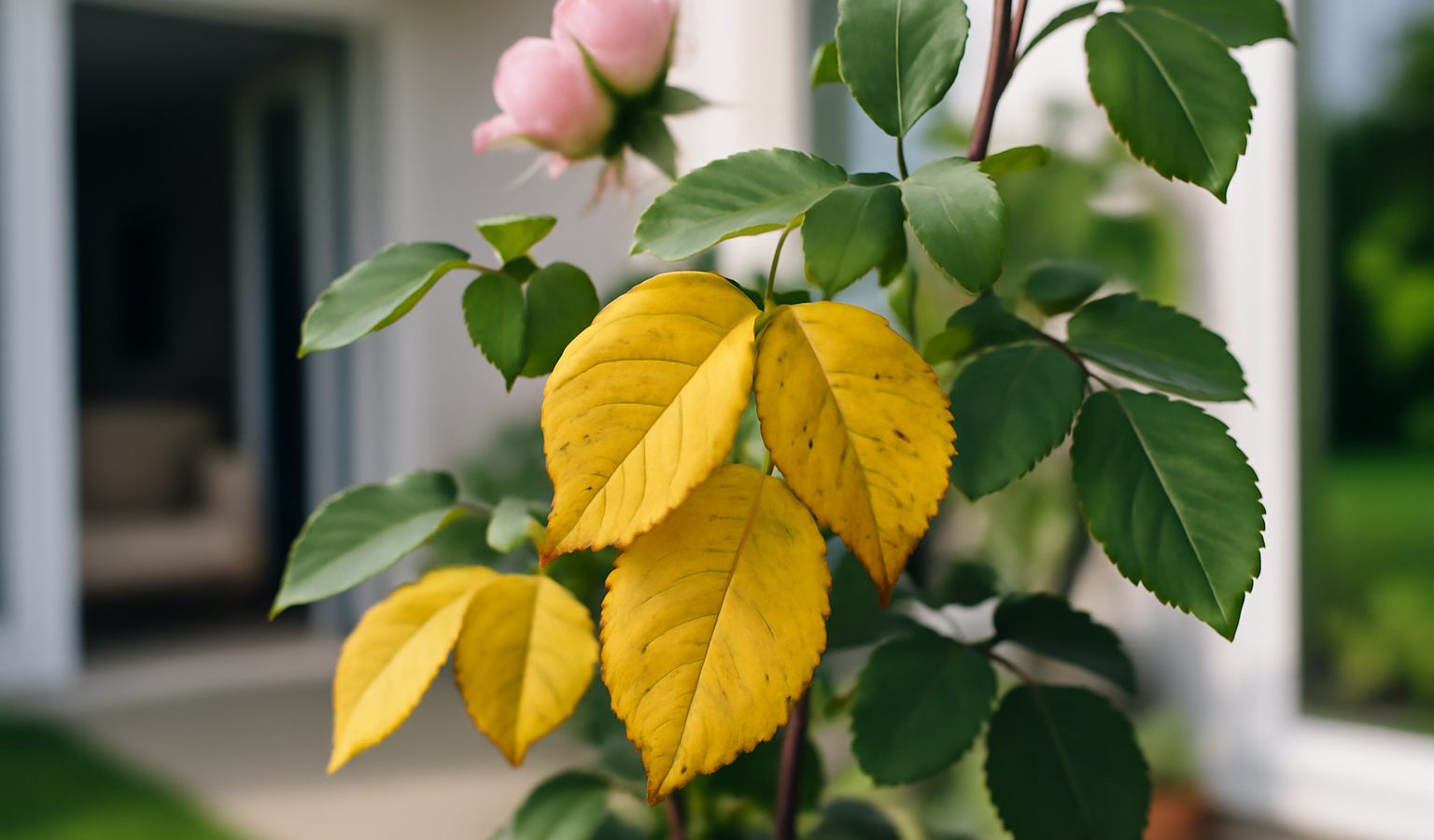
Yellow rose leaves almost always trace back to one of six things: black spot fungus, too much water, too little water, a nutrient deficiency, spider mites, or plain old seasonal aging. The fastest way to fix it is to read the pattern of the yellowing before you reach for anything. Yellow leaves dotted with black, fringed spots on the lower canes point to black spot. Uniform yellowing that climbs the whole plant in soggy soil points to overwatering and root rot. Yellow leaves crisping and dropping in a heat wave point to drought. Yellowing that follows the veins points to a mineral problem, and fine speckling with webbing on the undersides points to mites. Match the symptom to the cause below, apply the fix, and your roses will push out clean green growth within a few weeks.
Key Takeaways
- Black spot is the number one cause. Yellow leaves with black, fringed spots starting on lower leaves means the fungus Diplocarpon rosae. Remove infected foliage, spray, and improve airflow.
- Read the watering, not the calendar. Soggy soil plus whole-plant yellowing is overwatering; crisp lower leaves in heat is drought. Aim for 1 to 2 inches of water per week, deep and infrequent.
- Vein patterns reveal nutrient problems. Pale yellow oldest leaves means nitrogen; green veins on yellow new leaves means iron chlorosis from high pH; yellow between veins on older leaves means magnesium.
- Check leaf undersides for mites. Fine stippling and webbing in hot, dry weather means spider mites. Blast them off with water and treat with insecticidal soap or horticultural oil.
- Prevention beats cures. Full sun, spacing for airflow, watering at the base, mulch, balanced feeding, and disease-resistant varieties stop most yellowing before it starts.
Black Spot (the most common disease cause)
If your roses are turning yellow during a warm, wet, or humid stretch, black spot is the prime suspect. It is caused by the fungus Diplocarpon rosae, and it is the single most common disease problem rose growers face. The fungus needs leaves to stay wet for about seven hours to infect, which is why it explodes after rainy spells, heavy dew, or overhead watering. Once it takes hold it can defoliate a bush completely by midsummer, and a defoliated rose is a weak rose that blooms poorly and goes into winter stressed.
How to diagnose it
Look at the lower leaves first, because black spot almost always starts at the bottom of the plant where humidity is highest and rain splashes spores up from the soil. You will see roughly circular black spots with feathery, irregular fringed edges, usually a quarter inch to half an inch across. The tissue around each spot turns bright yellow, and eventually the whole leaf yellows and drops. The pattern moves upward over a few weeks. If you flip an affected leaf, the spots show on the upper surface and the margins are diffuse rather than sharp, which distinguishes black spot from cleaner-edged spots caused by other issues.
How to fix it
- Strip and trash the infected leaves. Pick off every spotted leaf and rake up fallen ones from the soil surface. Do not compost them; bag them or burn them. The fungus overwinters on infected leaves and canes, so sanitation is half the battle.
- Sanitize your pruners. Wipe blades with rubbing alcohol or a 10 percent bleach solution between bushes so you do not carry spores from plant to plant.
- Apply a fungicide on a schedule. Fungicides protect new growth; they do not cure spotted leaves. Chlorothalonil is a reliable broad-spectrum protectant. Myclobutanil is a systemic that both protects and knocks back active infection. For an organic route, neem oil or a sulfur or potassium bicarbonate spray works if you stay consistent. Spray every 7 to 14 days through the wet season, and rotate between two different chemistries so the fungus does not build resistance.
- Open up the airflow. Prune out crossing and inward-growing canes so air moves through the plant and leaves dry quickly. Crowded, congested bushes stay wet and stay infected.
- Water at the base, never overhead. Use a soaker hose or water the soil directly in the morning so any splash dries before night. Keeping foliage dry is the most effective free control you have.
- Mulch. A 2 to 3 inch layer of mulch over the root zone blocks spores from splashing up off the soil onto the lowest leaves.
Overwatering, Poor Drainage, and Root Rot
Roses are thirsty plants, but their roots need air as much as water. When soil stays waterlogged, roots suffocate and begin to rot, and a plant with damaged roots cannot move water and nutrients up to the leaves, no matter how wet the soil is. The cruel irony is that an overwatered, root-rotting rose looks a lot like a thirsty one: limp and yellow. The soil test settles it.
How to diagnose it
The yellowing from overwatering is usually broad and generalized rather than spotty, often affecting the whole plant or large sections at once instead of climbing leaf by leaf. Push a finger or a trowel a few inches into the soil near the base. If it is wet, muddy, or smells sour and swampy, you have a drainage problem. Roses planted in heavy clay, in low spots that collect runoff, or in pots without drainage holes are the usual victims. You may also notice soft, dark, mushy roots if you gently excavate, and the plant feels generally weak with slow new growth.
How to fix it
- Stop watering until the soil dries out. Let the top 2 to 3 inches dry before you water again. For an established rose, you want roughly 1 to 2 inches of water per week total, including rain, delivered deeply but not constantly.
- Water deeply and less often. One or two long, slow soakings a week beats a daily sprinkle. Deep watering pulls roots downward and lets the surface dry between drinks, which is exactly what stressed roots need.
- Fix the drainage. Amend heavy clay with several inches of compost worked into a wide planting area. If the rose sits in a chronic wet spot, the lasting fix is to lift and replant it on a slight mound or in a raised bed. For container roses, confirm the pot has open drainage holes and is not sitting in a saucer of standing water.
- Hold off on fertilizer. Feeding a root-rotting plant burns the few healthy roots it has left. Let it recover and put out fresh growth first.
Underwatering and Drought Stress
On the other end, roses that go dry during summer heat will sacrifice their oldest leaves to conserve moisture. This is a survival mechanism, not necessarily a death sentence, but repeated drought stress weakens the plant and invites pests like spider mites.
How to diagnose it
The lower and inner leaves yellow first, often turning crisp at the edges before they drop, while the upper growth may wilt during the hottest part of the day. It shows up fast during heat waves, in sandy soils that drain quickly, and in container roses that dry out far faster than ground-planted ones. Check the soil: if it is bone dry several inches down and pulling away from the pot edges, the plant is thirsty.
How to fix it
- Water deeply and immediately. Soak the root zone until water penetrates 8 to 12 inches down. A slow trickle from a hose at the base for 20 to 30 minutes does more good than a quick spray.
- Settle into a rhythm. Through hot weather, aim for that 1 to 2 inches per week, split into one or two deep soakings. Container roses in summer may need water every day or even twice a day.
- Mulch to hold moisture. A 2 to 3 inch organic mulch layer cuts evaporation dramatically and keeps the root zone cooler and more even.
- Do not panic over a few dropped leaves. Once watering is back on track, the plant will stabilize and push new growth. The yellowed leaves themselves will not turn green again, but no new ones should yellow.
Nutrient Deficiency
Roses are heavy feeders, and the specific pattern of yellowing tells you exactly which nutrient is short. The key clue is whether the yellowing hits old leaves or new ones, and whether the veins stay green. Get the pattern right and you avoid wasting money and stress on the wrong fix.
Nitrogen deficiency
Nitrogen is mobile in the plant, so when it runs short the rose pulls it from older leaves to feed new growth. You see uniform, even pale yellowing of the oldest, lowest leaves first, with no green vein pattern, while the new growth at the tips stays greener but smaller. This is common in sandy soils, in spring before feeding starts, and after heavy rain leaches nitrogen away. Fix it with a balanced rose fertilizer or a nitrogen source such as blood meal, following label rates, then feed regularly through the growing season. Do not overdo it: excess nitrogen pushes soft, lush growth that black spot and aphids love.
Iron chlorosis
Iron deficiency shows the opposite pattern: it hits the newest leaves at the tips, because iron is not mobile and cannot be moved from old leaves. The classic sign is interveinal chlorosis, where the leaf turns yellow but the veins stay distinctly green, giving a netted look. This is usually not a lack of iron in the soil but a lack of available iron, locked up because the soil pH is too high (above about 7.0). Test your soil pH. Lower it over time by adding elemental sulfur and working in compost, and apply a chelated iron product for a faster green-up while the pH correction takes effect.
Magnesium deficiency
Magnesium also causes interveinal yellowing, but unlike iron it shows on the older leaves first, since magnesium is mobile and gets relocated to new growth. You will see yellowing between the veins on lower, mature leaves while the veins remain green, sometimes with reddish or purplish tints at the margins. The traditional rose-grower fix is Epsom salt (magnesium sulfate): dissolve about one tablespoon per gallon of water and drench around the root zone, or scratch a tablespoon into the soil per foot of plant height in spring. A soil test confirms the deficiency before you treat repeatedly.
Spider Mites and Other Pests
When roses yellow during hot, dry, dusty weather, especially plants against a sunny wall or under an eave, suspect spider mites. They are not insects but tiny relatives of spiders, barely visible to the naked eye, and they multiply explosively in heat. They pierce leaf cells and drain them, and a heavy infestation can yellow and bronze a bush in a week.
How to diagnose it
The telltale sign is fine yellow or whitish stippling, a peppered or sandblasted speckling across the leaf surface rather than solid yellowing or distinct spots. Turn the leaves over and look closely, ideally with a hand lens: you may see tiny moving specks and fine webbing strung across the undersides and between leaflets. Tap a leaf over a sheet of white paper and watch for moving dots. Mites favor the hot, dry, sheltered parts of the garden, so check those areas first.
How to fix it
- Blast them off with water. A strong jet of water aimed at the undersides of the leaves, repeated every couple of days for a week, knocks mites and their webbing off and disrupts their breeding. This alone resolves a lot of light infestations, and mites hate the higher humidity.
- Treat with insecticidal soap or horticultural oil. Spray thoroughly, covering the leaf undersides where mites live, and repeat at 5 to 7 day intervals for two or three rounds to catch newly hatched eggs. Spray in the cool of morning or evening, never in blazing midday sun, to avoid leaf burn.
- Avoid broad-spectrum insecticides. They kill the predatory mites and other beneficials that naturally keep spider mites in check, which often makes an outbreak worse.
- Keep plants watered and unstressed. Drought-stressed roses are mite magnets, so consistent deep watering is part of the cure.
Natural and Seasonal Yellowing
Not every yellow leaf is a problem. Roses shed older leaves naturally throughout the season, and a few yellow leaves at the bottom of an otherwise healthy, vigorous bush are nothing to worry about. In fall, as days shorten and temperatures drop, it is completely normal for roses to yellow and drop a flush of leaves as they head toward dormancy. Newly planted or recently transplanted roses also commonly yellow and drop some leaves from transplant shock while their roots establish; keep them watered and they recover on their own. The way to tell normal aging from trouble is scale and location: a handful of old interior leaves yellowing while new growth stays clean and green is natural. Widespread yellowing, spotting, speckling, or yellowing on new growth is not.
How to Prevent Yellow Rose Leaves
Most yellowing is preventable, and the same handful of habits that stop disease also produce stronger, better-blooming roses. Build these into your routine and you will spend far less time troubleshooting.
- Plant in full sun. Roses want at least 6 to 8 hours of direct sun. Sun dries foliage fast after rain, which is the enemy of black spot, and it fuels the vigorous growth that shrugs off minor stress.
- Space for airflow. Give each bush room and prune out congested interior canes so air moves freely and leaves dry quickly. Crowding is the root of most fungal trouble.
- Water at the base, in the morning. Keep water off the leaves with a soaker hose or careful hand-watering, and water early so any splash dries by nightfall.
- Mulch the root zone. A 2 to 3 inch organic mulch layer conserves moisture, evens out soil temperature, and blocks soil-borne fungal spores from splashing onto lower leaves. Keep it pulled back an inch from the canes.
- Feed on a balanced schedule. Use a balanced rose fertilizer through the growing season and get a soil test every couple of years to catch pH and nutrient issues before they show up as yellow leaves.
- Practice sanitation. Clean up fallen leaves, prune out diseased canes, and sanitize your tools. Removing overwintering fungus in fall and early spring dramatically lowers disease pressure all season.
- Choose disease-resistant varieties. If black spot is a perennial battle in your climate, plant resistant cultivars like the Knock Out series, which shrug off the fungus with little or no spraying. Picking the right plant is the easiest prevention there is.
Diagnosing yellow leaves is the same detective work that solves most plant problems, and the skill carries straight over to the rest of your garden. If you want more of these symptom-to-cause walkthroughs, browse the Plants & Flowers hub for guides on common ornamentals. The discoloration logic here also lines up closely with troubleshooting why mint turns brown, where watering and fungal issues drive the same kind of leaf damage.
Frequently Asked Questions
Will yellow rose leaves turn green again?
No. Once a leaf has yellowed significantly, that tissue will not recover and the leaf will eventually drop. Your goal is to fix the underlying cause so the new growth comes in healthy and green. If you correct the watering, treat the disease, or supply the missing nutrient and fresh leaves emerge clean, you have solved it. Go ahead and remove the badly yellowed leaves, especially if disease is involved.
Should I cut off yellow leaves on my roses?
Yes, if they are diseased. Remove and dispose of any leaves with black spot or other fungal spots to slow the spread, and never compost them. For yellowing caused by nutrient deficiency or aging, removal is optional and mostly cosmetic; the plant will drop them on its own. Always sanitize your pruners between bushes so you do not spread disease.
Does Epsom salt fix yellow rose leaves?
Only when the cause is a magnesium deficiency, which shows as yellowing between the veins on older leaves while the veins stay green. Epsom salt is magnesium sulfate, so it directly corrects that specific shortage. It does nothing for black spot, overwatering, iron chlorosis, or pests, so confirm the symptom pattern, ideally with a soil test, before reaching for it.
How do I tell black spot from a nutrient problem?
Look for spots. Black spot produces distinct black, fringed circular spots surrounded by yellow tissue, starting on the lower leaves. A nutrient deficiency produces spot-free yellowing in a pattern: uniform pale yellow on old leaves means nitrogen, green veins on yellow new leaves means iron, and yellow between veins on old leaves means magnesium. If you see black spots, it is fungus, not feeding.
Can overwatering really turn rose leaves yellow?
Yes, and it is one of the most common causes gardeners overlook. Soggy, poorly drained soil suffocates and rots the roots, and damaged roots cannot deliver water and nutrients to the leaves, so the foliage yellows broadly. Check the soil a few inches down; if it is wet or smells sour, let it dry out, water deeply but less often, and fix the drainage by amending the soil or replanting on a mound.