

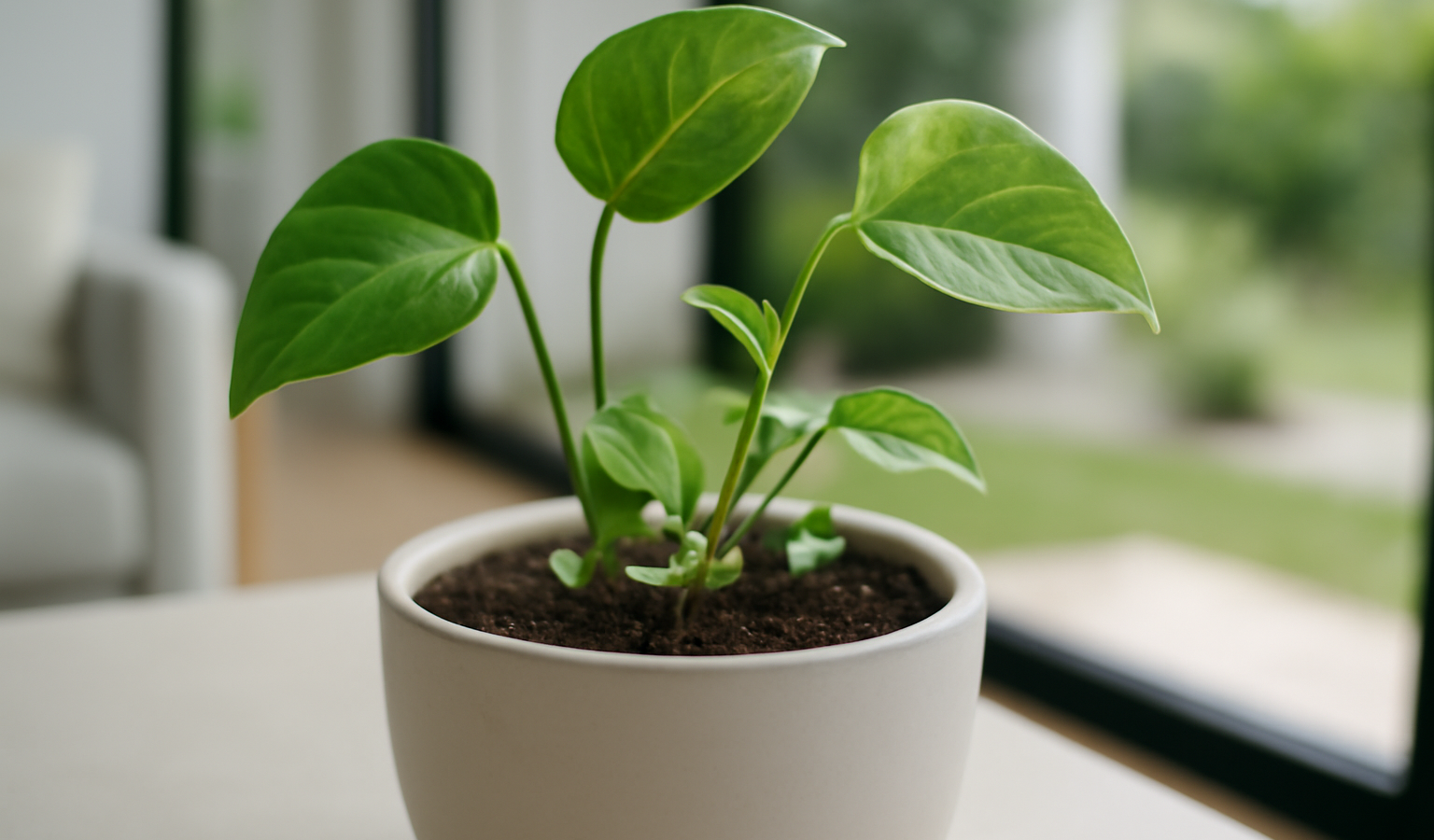
You bought a pothos because the photos online showed glossy, hand-sized leaves spilling over a shelf, and what you actually have is a vine producing leaves the size of a quarter. The plant is alive, it’s even growing, but every new leaf is small, sometimes smaller than the one before it. This is one of the most common frustrations new and intermediate houseplant growers run into, and the good news is that small pothos leaves are almost always a fixable problem rather than a sign your plant is dying. The size of a pothos leaf is controlled by a handful of factors: how much light it gets, whether it has anything to climb, how mature the vine is, how well it’s fed, and whether it has room in the pot to grow. Get those right and the same plant that’s making dime-sized leaves today can be making leaves four or five times that size within a season.
The key thing to understand before we diagnose anything is that pothos are climbing aroids. In the wild they scramble up tree trunks, and as they climb, each new leaf gets progressively larger. A pothos left to trail off a shelf does the opposite: it reverts toward small, juvenile foliage. So when you’re troubleshooting tiny leaves, you’re usually looking at one or more of the causes below, often working together. Let’s walk through each one with a clear way to diagnose it and a concrete fix.
Key Takeaways
- The two biggest causes of small pothos leaves are too little light and no support to climb — a trailing pothos stays in small, juvenile-leaf mode.
- Pothos make dramatically larger leaves when they climb a moss pole or coir pole, because climbing triggers the shift toward mature foliage.
- Juvenile pothos leaves run roughly 2-4 inches; mature, supported leaves can reach 6-12 inches or more on a healthy plant.
- Underfeeding, a rootbound pot, and long bare vines or reverted variegation all contribute to undersized leaves.
- Bright indirect light, a sturdy climbing surface, balanced feeding in spring and summer, and timely pruning are the four levers that grow bigger leaves.
Cause 1: Too Little Light (Small, Juvenile-Size Leaves)
Light is the single most common reason pothos leaves come in small, and it’s the first thing to check. Pothos are sold as “low-light” plants, and they will survive in low light — but surviving and thriving are very different. In dim conditions a pothos slows its metabolism, stretches toward the nearest window, and produces small, thin, widely spaced leaves because it simply doesn’t have the energy budget to build large ones. The vine keeps growing in length but skimps on leaf size. This is the classic look: a long, leggy runner with tiny leaves and big gaps of bare stem between them.
How to diagnose it
Look at where your plant actually sits, not where you think it sits. If it’s more than five or six feet from a window, on an interior wall, or in a room that only gets indirect ambient light, it’s almost certainly under-lit. Other tells: new leaves are noticeably smaller than the leaves the plant had when you bought it, the internodes (the bare stem between leaves) are long and stretchy, and the petioles reach toward the light source. Variegated varieties like Marble Queen or a neon pothos will also lose color and turn more solid green in low light, which is a reliable sign the plant is starved for photons. A simple test: hold your hand a foot above the plant at midday. If it casts only a faint, fuzzy shadow, that’s too little light for big leaves.
How to fix it
Move the plant into bright, indirect light. The sweet spot for pothos is the kind of light you get a few feet back from an east- or north-facing window, or within several feet of a south- or west-facing window with a sheer curtain to soften direct midday sun. In rough numbers, aim for somewhere around 200 to 500 foot-candles for steady growth, with the upper end of that range giving you the biggest leaves. If you have a bright spot with an hour or two of gentle morning sun, even better — pothos tolerate that well. Avoid harsh, direct afternoon sun on the leaves, which can scorch and bleach them, especially on variegated types.
If you don’t have a bright enough window, a basic LED grow light solves this completely. Position a full-spectrum LED roughly 12 to 18 inches above the plant and run it about 10 to 12 hours a day on a timer. Give the new growth a few weeks to respond — pothos won’t resize the leaves it already has, but every leaf that unfurls after the change should be visibly larger than the last. That progressive increase in leaf size is exactly the signal you want to see.
Cause 2: No Support or Climbing Surface
This is the cause most people have never heard of, and it’s often the difference between a pothos that makes pretty but modest leaves and one that makes the enormous, dramatic foliage you see in plant-shop display specimens. Pothos are vines that evolved to climb. When the plant senses a vertical surface it can attach to, it switches into climbing mode and begins producing larger leaves the higher it goes. When it’s left to trail downward off a shelf or hang in a basket, it reads that as “no support available” and keeps its leaves small. The trailing habit that makes pothos so popular as a hanging plant is, ironically, exactly what keeps the leaves tiny.
How to diagnose it
If your pothos is in a hanging basket or trailing down from a high shelf and the leaves are small, you’ve found a major contributor. Look at the stems: a trailing pothos sends out aerial roots — little nubs or thin brown roots along the stem at each node — that are searching for something to grab. If those aerial roots have nothing to attach to, the plant stays juvenile. Compare a vine that happens to have crept onto a nearby surface (a wall, a curtain, another pole) with the freely hanging vines; you’ll often see the attached section carrying slightly bigger leaves. That contrast confirms support is the issue.
How to fix it: give it a moss pole or coir pole
Add a vertical climbing surface and let the plant attach to it. A moss pole or a coir (coconut fiber) pole is the classic choice because the aerial roots can grip the texture and, when the surface is kept lightly moist, can actually root into it and feed the plant. Push the pole firmly into the pot near the main cluster of stems, then guide your longest vines up against it. Secure them loosely with soft plant ties, floral pins, or even bent paper clips at the nodes until the aerial roots take hold on their own. Don’t tie tightly — you just need to hold the node in contact with the surface so the roots can grab.
Keep the moss or coir damp by misting it or trickling water down it when you water the plant; moist support dramatically improves how well the aerial roots attach and feed. As the vine climbs and the upper nodes start rooting into the pole, watch what happens to leaf size — this is where pothos reward you most. Leaves that were 2 to 3 inches trailing can climb their way up to 6, 8, even 12 inches on a vigorous, well-lit plant on a tall pole. A slatted wooden trellis or a section of a wall with adhesive hooks works too; the principle is the same, the plant needs something vertical to commit to. If you want a deeper dive into climbing aroids and how support changes their growth, our Plants & Flowers hub covers the broader family.
Cause 3: Plant Maturity — Juvenile vs. Mature Foliage
Closely tied to support is the question of maturity, and it’s worth understanding on its own because it explains why some pothos seem stuck making small leaves no matter what. Pothos, like many aroids, produce two distinctly different kinds of foliage over their lifespan: a juvenile form with small, heart-shaped leaves, and a mature form with much larger, sometimes deeply fenestrated (split) leaves. The wild Epipremnum aureum in tropical canopies can produce mature leaves more than a foot long. The plants we grow indoors almost always stay in the juvenile phase, which is exactly why our pothos leaves are small.
How to diagnose it
If your plant has good light, is fed reasonably, isn’t rootbound, and still only makes small leaves, the answer is usually that it’s simply still in its juvenile, trailing phase. The leaf size you’re seeing — roughly 2 to 4 inches, uniform, heart-shaped, no splits — is normal juvenile foliage. There’s nothing wrong with the plant; it just hasn’t been given the conditions that trigger the maturity shift. The single biggest trigger for that shift is sustained upward climbing, which is why this cause and the support cause go hand in hand.
How to fix it
Maturity is a gradual process, not a switch, so this fix takes patience measured in months, not weeks. The recipe is: strong, consistent bright indirect light, plus a tall climbing support, plus steady feeding, all sustained over time. As the vine climbs higher and stays in climbing mode, each successive leaf trends larger and the plant slowly transitions toward its mature form. Don’t keep cutting it back to the same length — that resets it toward juvenile growth. Instead, let a few leading vines run tall up a pole and you’ll watch the leaves graduate in size up the stem. This same principle is why a leggy vining plant with small leaves benefits from being trained upward; if you’ve fought the same issue with a stretched-out vine, our guide on why your monstera is leggy walks through the closely related light-and-support fix.
Cause 4: Underfeeding
Big leaves take resources to build, and a plant that’s never fed will eventually run out of the nutrients it needs to make full-sized foliage. Potting mix holds a limited supply of nutrients, and after several months to a year of watering, much of that has been used up or flushed out the bottom of the pot. A pothos in spent soil keeps growing on whatever it can scavenge, but the leaves get smaller, paler, and the overall plant looks tired.
How to diagnose it
Ask yourself when you last fertilized. If the answer is “never” or “I can’t remember,” and the plant has been in the same soil for more than six months to a year, underfeeding is likely part of the picture. Visual cues include an overall pale or yellowish-green cast to the newer leaves, slow growth, and small leaf size even when light and support are adequate. Lower leaves yellowing and dropping while new growth comes in undersized is another nutrient-shortage signal.
How to fix it
Feed during the active growing season — spring and summer — with a balanced houseplant fertilizer. A common approach is a balanced water-soluble fertilizer diluted to about half the label’s recommended strength, applied roughly every two to four weeks while the plant is actively pushing new growth. Pothos are not heavy feeders, so err on the lighter side; over-fertilizing burns roots and causes leaf-tip scorch, which sets you back further. Always water the plant first if the soil is bone dry, then apply diluted fertilizer to avoid root burn. Ease off or stop feeding in fall and winter when growth naturally slows. Combined with good light, regular gentle feeding gives the plant the raw material to build the larger leaves you’re after.
Cause 5: The Plant Is Rootbound
A pothos that has outgrown its pot will start to plateau, and leaf size is one of the first things to suffer. When roots fill the container completely, they run out of room to take up water and nutrients efficiently, the soil dries out faster than you can keep up with, and the plant downshifts into a survival mode that produces smaller leaves. This is easy to overlook because the plant still looks lush up top while quietly struggling below.
How to diagnose it
Check for roots growing out of the drainage holes or circling visibly at the soil surface. Slip the plant out of its pot if you can — if you see a dense, tangled mass of roots with little soil left, it’s rootbound. Other clues: the pot dries out within a day or two of watering, water runs straight through without soaking in, and the plant’s growth has stalled even though conditions are otherwise fine. A plant that’s been in the same nursery pot for a year or two is a prime suspect.
How to fix it
Repot into a container one size larger — typically 1 to 2 inches wider in diameter, no more. Going too big at once leaves a lot of wet, unused soil around the roots and invites rot, so size up gradually. Use a chunky, well-draining aroid-style mix (potting soil cut with orchid bark, perlite, and a little coco coir works well) so the new roots get plenty of air. Gently tease apart the outer roots if they’re tightly circled, settle the plant at the same depth it was before, and water it in. Spring is the ideal time to repot so the plant can capitalize on the fresh root room during its growing season. With space to expand, the roots can again support full-sized foliage.
Cause 6: Reverted Variegation and Long Bare Vines
Two related cosmetic problems often show up alongside small leaves and make the plant look worse than it is: variegation reverting to solid green, and long, leggy vines with bare stretches of bare stem and only a few small leaves clinging to the ends. Variegated pothos like Marble Queen, Golden, or a neon-leaning cultivar can lose their patterning in low light because the plant prioritizes green, chlorophyll-rich tissue to capture what little light there is. Meanwhile, vines that have grown long and bare in dim conditions concentrate what energy they have into the growing tip, leaving sparse small leaves behind.
How to diagnose it
If a once-marbled or golden pothos is turning increasingly solid green and the new leaves are both plain and small, low light is driving reversion. If you’ve got several feet of skinny vine with only occasional tiny leaves and long bare gaps, that’s leggy, light-starved growth. Both point back to the light and support causes above, but they call for an extra step: pruning.
How to fix it: prune to encourage bushier, larger growth
First, fix the light so new growth comes in properly variegated and larger. Then prune. Cut the long bare vines back to just above a node (the little bump where a leaf and aerial root emerge); the plant will branch from that node and from nodes below it, producing fuller, bushier growth instead of one straggly runner. This redirects the plant’s energy into fewer, stronger shoots that, in good light, carry bigger leaves. You can root the cuttings in water or moist soil to make a denser plant or start a new one entirely. For variegated cultivars specifically, keeping them in bright indirect light preserves the pattern; our care guides for the Marble Queen pothos and the neon types go deeper on holding color and growing strong foliage.
Prevention: Keeping Pothos Leaves Big Long-Term
Once you’ve diagnosed and fixed the immediate cause, a few steady habits keep the leaves coming in large rather than slowly shrinking again. Prevention is mostly about consistency — pothos respond to sustained good conditions far more than to occasional intervention.
- Lock in bright indirect light. Put the plant where it reliably gets bright, filtered light year-round, and supplement with a grow light through dark winter months so leaf size doesn’t dip seasonally.
- Give it something to climb from the start. Add a moss or coir pole early and keep it lightly moist. Training the plant upward from the beginning means it stays in large-leaf climbing mode rather than reverting to small juvenile foliage.
- Feed lightly but regularly. A balanced fertilizer at half strength every few weeks in spring and summer keeps the nutrient budget topped up. Skip feeding in winter.
- Repot before it’s desperate. Check the roots once a year and size up one pot when it’s getting tight, ideally in spring, so the plant never stalls out from being rootbound.
- Prune with purpose. Trim back leggy, bare, or small-leaved runners above a node to push bushier branching, and keep a few leading vines climbing tall to encourage the largest mature foliage.
- Water consistently. Let the top inch or two of soil dry, then water thoroughly until it drains. Erratic drought-and-flood cycles stress the plant and shrink new leaves.
Do those six things and you’ll rarely have to troubleshoot small leaves again. If you’re still deciding which pothos to grow or comparing it to a similar vine, our pothos vs. philodendron comparison can help you pick a variety whose mature leaf size and growth habit match what you’re picturing.
Frequently Asked Questions
How long does it take for pothos to grow bigger leaves after I fix the light?
The existing leaves won’t change size — leaves are fixed once they unfurl. But new growth responds within a few weeks. After moving the plant to brighter light, watch the next two or three leaves that open; each should be noticeably larger than the last. Reaching dramatically bigger, mature-size leaves takes several months of sustained good light plus a climbing support.
Will a pothos make bigger leaves if I let it climb instead of trail?
Yes, and it’s one of the most reliable ways to get larger foliage. Climbing triggers the plant to shift toward its mature form, producing progressively bigger leaves up the support. A trailing or hanging pothos stays in its small-leaved juvenile phase. Add a moss or coir pole, guide the vines up, and keep the pole lightly moist so the aerial roots can attach.
What size should healthy pothos leaves be?
It depends on the phase. Indoor juvenile pothos leaves typically run about 2 to 4 inches. On a well-lit plant climbing a tall pole, mature leaves can reach 6 to 12 inches or more. So small leaves alone aren’t a problem — they’re normal juvenile growth. You only need to act if the leaves are getting smaller over time or the plant is leggy and pale.
Can low light cause my variegated pothos to lose its pattern and make small leaves?
Yes. In low light a variegated pothos reverts toward solid green because the plant favors chlorophyll-rich tissue to capture more light, and the same light shortage keeps the new leaves small. Move it to bright indirect light to restore variegation in fresh growth and to bring leaf size back up. Prune away the worst reverted, bare runners to encourage bushier growth.
Should I fertilize to fix small pothos leaves?
Feeding helps if underfeeding is part of the cause, but it won’t override poor light or lack of support. Use a balanced houseplant fertilizer at about half strength every two to four weeks in spring and summer, and skip it in winter. Don’t overdo it — pothos are light feeders, and too much fertilizer burns the roots and scorches leaf tips, making things worse.