

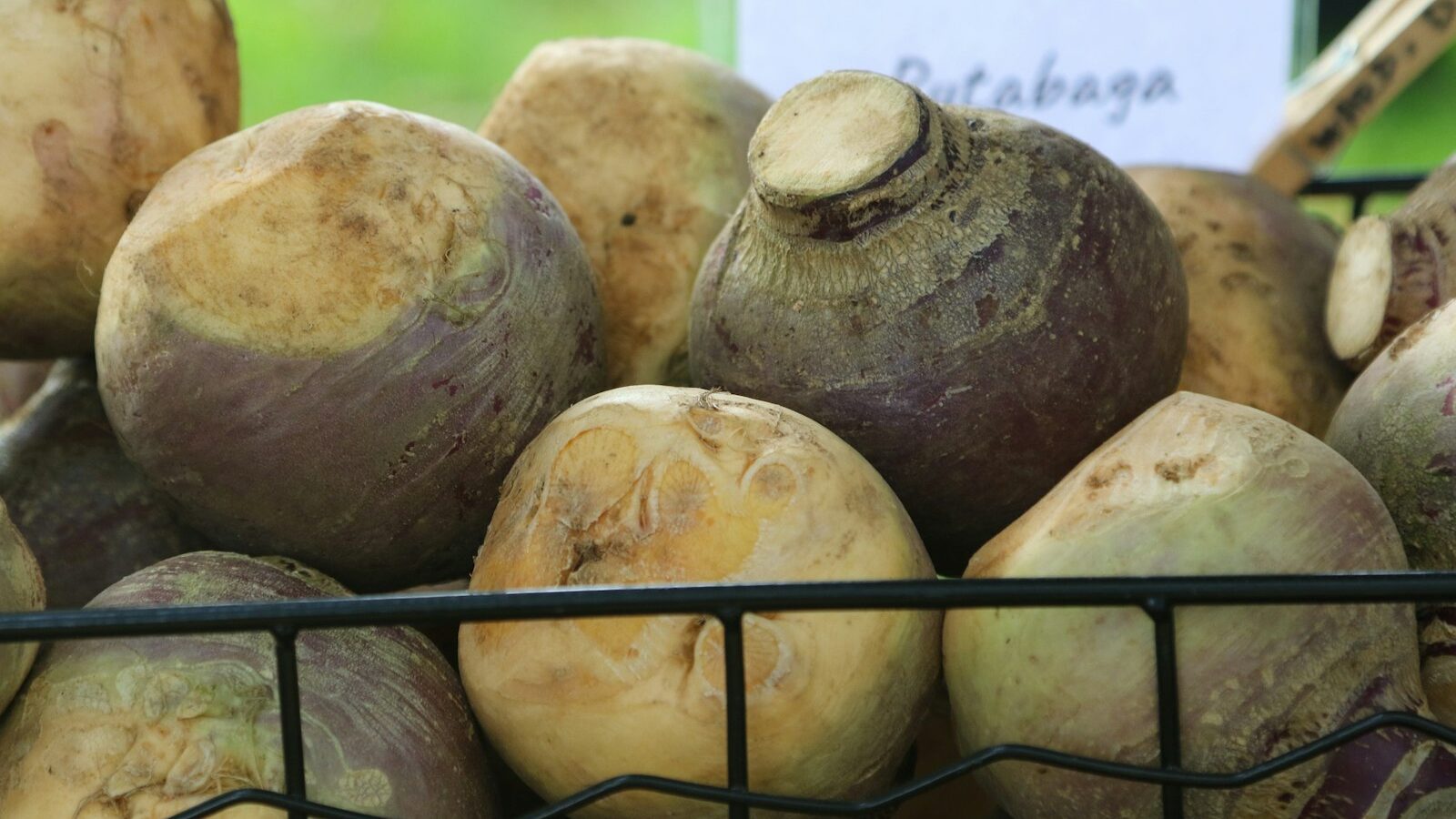
The short answer: turnips are smaller, peppery, and ready in about a month, while rutabagas are larger, sweeter, denser, and take three to four months to size up. Both are cool-season root crops in the brassica family, both want the same chilly weather and loose soil, and both store well into winter. But they are not interchangeable in the garden or the kitchen. If you want a fast crop you can harvest before the heat returns, grow turnips. If you want a hearty storage root for roasting and mashing through the cold months, grow rutabaga. Plenty of gardeners grow both, staggering the plantings so the quick turnips fill the gap while the slow rutabagas mature.
Key Takeaways
- Speed: Turnips mature in roughly 30 to 60 days; rutabagas need about 90 to 120 days.
- Flavor: Turnips are crisp and peppery with a slight bite; rutabagas are sweeter, nuttier, and earthier after a frost.
- Size and texture: Turnips are tennis-ball sized with white-and-purple skin and crisp white flesh; rutabagas are larger, yellow-fleshed, and dense.
- Season: Both are cool-season brassicas. Plant turnips in early spring or late summer; rutabagas mainly in midsummer for a fall harvest.
- Greens: Turnip tops are tender and widely eaten; rutabaga leaves are coarser and less commonly used.
- Best use: Turnips for quick roasting, pickling, and fresh eating; rutabagas for mashing, stews, and long winter storage.
Turnip vs Rutabaga at a Glance
Before we dig into each crop individually, here is how the two stack up side by side. Use this as your quick reference, then read the detailed sections below for the why behind each number.
| Trait | Turnip | Rutabaga |
|---|---|---|
| Botanical family | Brassica rapa | Brassica napus (turnip x cabbage cross) |
| Days to maturity | 30 to 60 days | 90 to 120 days |
| Mature size | 2 to 3 inches across | 4 to 6 inches across |
| Flesh color | White | Yellow to orange |
| Skin | White with purple top | Tan with purple crown, often waxed in stores |
| Flavor | Crisp, peppery, mild bite | Sweet, nutty, earthy |
| USDA growing zones | 2 to 9 (as a cool-season crop) | 2 to 9 (as a cool-season crop) |
| Spacing | 2 to 4 inches apart | 6 to 8 inches apart |
| Best eaten | Fresh, roasted, pickled, greens | Mashed, roasted, stewed, stored |
The single most useful thing to understand is the timeline difference. A turnip is a sprint and a rutabaga is a marathon. That one fact drives almost every other decision, from when you sow to how you use the harvest. For more on timing cool-weather crops correctly, see our guide on warm-season versus cool-season vegetables.
Turnips: The Fast, Peppery Root
The turnip (Brassica rapa) is one of the oldest cultivated vegetables, grown for both its swollen root and its leafy greens. It is the crop to reach for when you want results quickly. A spring sowing can be on your plate before summer, and a late-summer sowing fills the fall garden after the tomatoes wind down.
Appearance
Most garden turnips are round, roughly the size of a tennis ball, with smooth white skin that turns purple or magenta where the shoulders pushed above the soil line and caught the sun. Cut one open and the flesh is bright white and crisp, like a radish but milder. The leaves rise in a loose, slightly bristly rosette and are fully edible. Some varieties, like the Japanese Hakurei, stay small and pure white and are sweet enough to eat raw out of the bed.
Taste
Raw turnip has a crisp, watery crunch with a peppery bite that sits somewhere between a radish and a cabbage heart. Cooking tames the sharpness and brings out a mild sweetness, though turnips never reach the candied sweetness of a rutabaga. Harvest size matters: small turnips picked young are tender and sweet, while oversized roots left too long turn woody, pithy, and harshly bitter. Pick them on the small side and you will rarely be disappointed. A light frost before harvest also nudges the flavor sweeter, the same way it does for carrots and kale.
Growing Turnips
Turnips are a cool-season crop that thrives in USDA zones 2 through 9 when timed to the cool shoulders of the year. They actively dislike heat, which makes the roots woody and pushes the plants to bolt. Sow seeds directly in the garden, since they germinate fast and do not transplant well. In spring, sow two to three weeks before your last frost date; in late summer, sow about eight to ten weeks before your first fall frost for an autumn harvest. Most gardeners find the fall crop sweeter and less troubled by pests.
Plant seeds about half an inch deep and thin seedlings to 2 to 4 inches apart, with rows roughly 12 inches apart. Crowded turnips make leaves instead of roots, so do not skip the thinning, the thinnings are good in salads. They want loose, well-drained soil with a pH between 6.0 and 6.8, kept consistently moist with about an inch of water a week. Uneven watering causes cracked or split roots, much like the cracking you see in onions that split from inconsistent moisture. With days to maturity running just 30 to 60 days, you can sow a fresh short row every two to three weeks for a steady supply.
In the Kitchen
Turnips are versatile. Small ones can be sliced raw into salads or slaws for crunch and pepper. Larger ones roast beautifully, caramelizing at the edges, and they melt into soups and braises. They take well to quick pickling and pair naturally with butter, bacon, and root-vegetable mashes. Do not throw out the tops: turnip greens are a Southern staple, cooked down with smoked pork or simply sauteed with garlic, and they carry more vitamins than the root itself. Buy turnips with greens attached and you effectively get two vegetables in one.
Rutabaga: The Sweet, Hearty Storage Root
The rutabaga (Brassica napus) is a younger vegetable than the turnip, thought to have originated as a natural cross between a turnip and wild cabbage a few hundred years ago. You will also see it sold as a swede or, in parts of the American South, a yellow turnip or wax turnip. It is bigger, denser, sweeter, and far better suited to long winter storage than its faster cousin.
Appearance
Rutabagas are noticeably larger than turnips, commonly 4 to 6 inches across and sometimes bigger. The skin is tan to yellowish-brown with a distinctive purple crown, and the root often shows the rough ringed shoulders that distinguish it from a smooth turnip. Stores frequently coat them in food-grade wax to prevent moisture loss, giving them a shiny, slightly waxy feel. Inside, the flesh is yellow to pale orange, dense, and firm. The leaves are bluish-green, smooth, and more cabbage-like than the bristly turnip rosette.
Taste
This is where the rutabaga earns its keep. The flavor is sweeter, nuttier, and earthier than a turnip, with only a faint trace of brassica bite. The dense yellow flesh becomes silky and almost buttery when cooked, which is why rutabaga is the classic choice for mashing. Like turnips, rutabagas convert starches to sugars after exposure to frost, so a rutabaga pulled after a few hard cold nights tastes markedly sweeter than one harvested in warm weather. This frost sweetening is the main reason rutabaga is grown as a fall and winter crop.
Growing Rutabaga
Rutabaga grows in the same USDA zones 2 through 9 as turnips but demands patience: it needs 90 to 120 days to mature, so timing is critical. Because it takes so long and tastes best after frost, it is almost always grown as a fall crop. Sow seeds directly in early to midsummer, counting back roughly 90 to 110 days from your first expected fall frost, then let the roots size up through the cooling weather. In the deep South and warm parts of zones 8 and 9, you can sow in early fall for a winter harvest. Rutabaga does not handle summer heat well, so avoid a spring sowing in most regions, the plants will bolt or stay tough before the roots mature.
Sow about half an inch deep and thin seedlings to 6 to 8 inches apart, with rows 18 to 24 inches apart, those big roots need room. Like all brassicas, rutabaga prefers loose, fertile, well-drained soil with a pH of 6.0 to 6.8 and steady moisture, about an inch of water per week. Boron deficiency, common in sandy soils, can cause hollow brown centers known as brown heart, so do not skimp on balanced organic matter. The long season means rutabaga occupies a bed far longer than turnips, which is worth planning around when you map out your rotations. The Plants and Flowers hub has more on planning brassica beds and crop rotation to keep soil disease in check.
In the Kitchen
Rutabaga shines in cooked, hearty dishes. The dense flesh mashes into a smooth, sweet puree, often blended with potatoes and plenty of butter. It roasts into golden, caramelized chunks, holds its shape in stews and pot roasts, and is the traditional filling in dishes like the Cornish pasty and Scottish neeps. Because it is denser and tougher than a turnip, it needs longer cooking, but it rewards the wait with a richer, sweeter result. You will want to peel the waxy skin off store-bought roots before cooking. While the greens are technically edible, they are coarse and rarely eaten, so most cooks treat the root as the prize.
Pests, Problems, and Storage
Both crops are brassicas, so they share the same pest and disease list, and the same defenses work for both. Cabbage root maggots are the most damaging, tunneling into the roots and ruining them, floating row covers laid at sowing keep the egg-laying flies off, which is the single best preventive measure. Flea beetles riddle the young leaves with tiny shot holes; row covers and keeping the bed weed-free help, and seedlings usually outgrow light damage. Clubroot, a soilborne disease that deforms the roots, is the big long-term threat: rotate brassicas to a different bed every year and keep soil pH near neutral, since clubroot thrives in acidic ground. Aphids and cabbage worms may also appear but are easier to manage.
Storage is where rutabaga clearly wins. Turnips keep for a few weeks to a couple of months in the refrigerator or a cold root cellar but lose quality faster. Rutabagas are storage champions, lasting several months in a cold, humid cellar or the crisper drawer, especially the waxed ones. For both, twist off the tops before storing so the leaves do not pull moisture from the root, and keep them cold, dark, and humid. This storage gap is a real reason gardeners in cold climates lean on rutabaga to carry fresh vegetables deep into winter.
The Verdict: Which Should You Grow?
There is no universal winner here, only the right crop for your goal, your season, and your patience. Here is how to decide.
Grow turnips if you want fast results, you garden in a short season, you have limited space and want to rotate crops quickly, or you love tender greens. Turnips reward succession sowing, fit neatly into the spring and fall shoulders, and give you something to harvest in as little as a month. They are the better pick for fresh eating, pickling, and anyone who wants a low-commitment crop.
Grow rutabaga if you want a sweet, substantial root for mashing and roasting, you are aiming to stock a root cellar, or you garden in a cold climate where storage crops matter. Rutabaga asks for a long, uninterrupted season and a midsummer sowing, but it pays you back with rich flavor and months of storage life. It is the better winter-keeper and the better choice for hearty cold-weather cooking.
The honest trade-offs: turnips are quick but can turn bitter and woody if you let them oversize or grow them into heat, and they do not store long. Rutabagas store beautifully and taste wonderful, but they tie up a bed for a third of the year and offer no quick payoff. My usual recommendation for a mixed garden is to grow both, sow turnips in early spring and again in late summer for fresh eating, and tuck in a block of rutabaga in midsummer for the cellar. That way you get speed and storage from the same family of crops on the same cool-season schedule.
Frequently Asked Questions
Can I substitute turnip for rutabaga in a recipe?
You can, but expect a difference. Rutabaga is sweeter, denser, and milder, while turnip is sharper and more watery. In a mash, substituting turnip yields a looser, more peppery result. Turnips also cook faster, so reduce the cooking time if you swap them in.
Why does my turnip taste bitter?
Bitterness usually comes from harvesting too late or growing in heat. Oversized turnips and roots stressed by warm weather develop a harsh, woody bite. Pick turnips young and small, grow them in cool weather, and let a light frost sweeten them before harvest.
Is a rutabaga just a big turnip?
No. They are different species. Rutabaga (Brassica napus) is believed to be a cross between a turnip and wild cabbage, while the turnip is Brassica rapa. Rutabaga has yellow flesh, sweeter flavor, larger size, and a much longer growing season.
Which one is easier to grow?
Turnips are easier for beginners because they mature in about a month, forgive timing mistakes, and let you try again quickly with succession sowing. Rutabagas require precise summer timing and a long, uninterrupted cool season, which leaves less room for error.
Do I need to peel turnips and rutabagas?
Young, thin-skinned turnips usually do not need peeling, just scrub them well. Rutabagas are almost always peeled, since store-bought roots are coated in food-grade wax and the skin is thick and tough. A sharp knife works better than a peeler on rutabaga.