

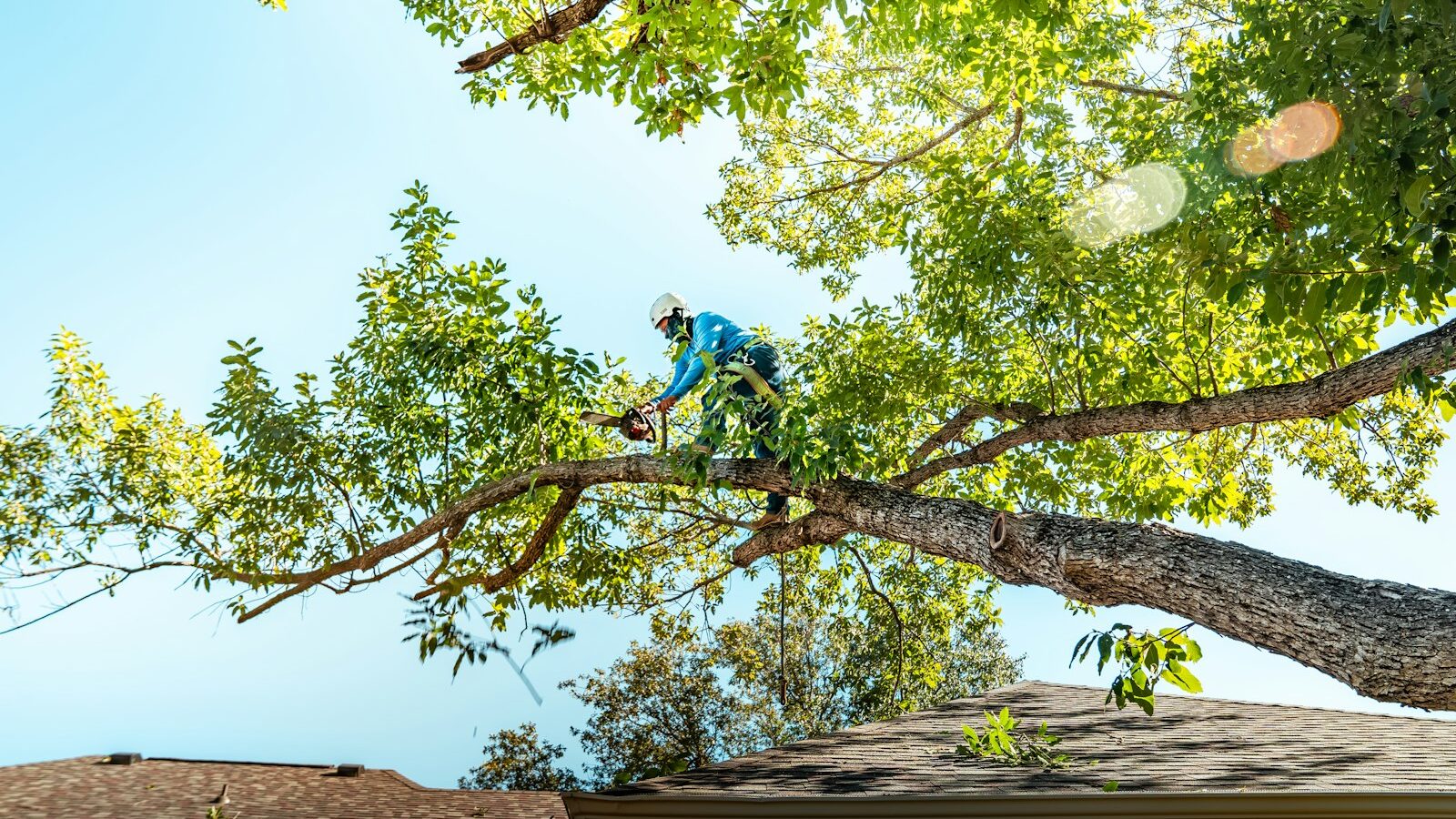
Tree removal is one of the bigger-ticket jobs in any backyard, and the price can swing wildly depending on what you’re dealing with. A small ornamental tree might cost a couple hundred dollars to take down, while a towering oak leaning over your roof can run several thousand. This guide breaks down average US tree removal costs in 2026 by tree size, what actually drives the price, and the extra charges (like stump grinding and crane work) that catch homeowners off guard.
Key takeaways
- Most removals run about $400-$2,000+
- Size, access & hazard drive the price
- Stump grinding usually costs extra
- Always use an insured arborist for big/hazardous trees
- Get a few quotes for an accurate figure
Average tree removal cost in 2026
Across the US, the typical tree removal costs somewhere between $400 and $2,000, with a national average landing around $800 to $1,200 for a mid-sized tree. That number is a moving target, though, because no two trees (or job sites) are the same. A short, healthy tree in an open yard is quick work for a crew, while a tall, dead tree wedged between your house and the neighbor’s fence is slow, dangerous, and far more expensive.
The single biggest factor is size, specifically height and trunk diameter. Tree services often price by the foot, and the math isn’t linear: doubling a tree’s height can more than triple the cost because taller trees mean more weight, more rigging, and more risk. Below, we’ll walk through typical price ranges by size class so you have a realistic ballpark before you call anyone.
Tree removal cost by size
The clearest way to estimate your cost is by the tree’s height, which usually correlates with trunk thickness and overall mass. Use the table below as a starting point. Keep in mind these figures assume reasonable access and a healthy or only moderately compromised tree; hazards and tight spaces push you toward the high end or beyond.
| Tree size | Height | Typical cost |
|---|---|---|
| Small | Up to 30 ft | $150 – $500 |
| Medium | 30 – 60 ft | $450 – $1,200 |
| Large | 60 – 80 ft | $900 – $2,000 |
| Very large | 80 ft and up | $1,500 – $4,000+ |
Small trees (under 30 ft) — Think dogwoods, young maples, or ornamental fruit trees. A two-person crew can often handle these in a single visit with a chainsaw and a chipper, so labor stays low. Expect $150 to $500.
Medium trees (30–60 ft) — Many mature backyard trees fall here. They require climbing or a bucket truck and more careful sectioning, which bumps the price to roughly $450 to $1,200.
Large trees (60–80 ft) — Big oaks, maples, and mature pines. These need experienced climbers, heavy rigging, and a full crew. Plan on $900 to $2,000.
Very large trees (80 ft+) — Towering conifers, old-growth hardwoods, and giant eucalyptus. Removal is a multi-hour or multi-day project, often requiring a crane. Costs commonly start at $1,500 and can exceed $4,000.
What drives the price of tree removal
Two trees of identical height can cost very different amounts to remove. Here are the factors that move the needle on your quote:
- Height & trunk diameter — Taller, thicker trees mean more weight to control and more time aloft. A wide trunk also takes longer to fell and section, and may need to be hauled in heavy rounds.
- Access — Can the crew back a truck and chipper right up to the tree, or do they have to carry every limb through a gate and around the house? Poor access can add hundreds in labor.
- Condition & hazard — A dead, diseased, or storm-damaged tree is unpredictable. Brittle, rotten wood is harder to rig safely, so hazard trees command a premium.
- Location near structures or power lines — A tree growing over your roof, fence, or pool, or tangled in utility lines, must be taken down piece by piece with ropes. Proximity to power lines may also require utility coordination.
- Lean & branch spread — A heavy lean or a wide, sprawling canopy complicates the drop direction and rigging plan.
- Emergency & after-hours work — A tree on your house after a storm needs immediate attention. Emergency removals often cost 1.5x to 2x the standard rate.
- Local rates & permits — Labor costs vary by region, and some cities require a permit to remove protected or heritage trees.
Free, no-obligation quote · Connect with a local pro
Extra costs to budget for
The base removal quote usually covers cutting the tree down and getting the trunk on the ground. Several common add-ons are billed separately, so ask for an itemized estimate to avoid surprises.
- Stump removal or grinding — Once the tree is gone, the stump remains. Grinding typically runs $100 to $400 per stump, depending on diameter, and full stump removal (digging out the root ball) costs more. See our stump removal cost guide for the full breakdown.
- Log & debris hauling — Hauling away the wood and brush adds roughly $50 to $150 per load. Some homeowners save money by keeping the logs for firewood or asking the crew to leave wood chips for mulch.
- Crane service — For very large, tall, or awkwardly placed trees, a crane lifts heavy sections out safely. Crane rental and operation can add $500 to $1,500 or more to the job.
- Limb chipping — On-site chipping of branches is often bundled in, but confirm it’s included rather than an extra fee.
- Travel or remote-location fees — Crews serving rural areas may charge for travel time.
Cost to remove common trees
Species matters because of how a tree grows, how dense its wood is, and how big it typically gets. Here’s what to expect for some of the most commonly removed trees in the US:
Oak removal: $700 – $2,000+. Oaks are large, heavy hardwoods with dense wood and wide canopies. A mature oak can reach 60–80 ft and demands serious rigging, putting it firmly in the large-tree price range and sometimes beyond.
Pine removal: $400 – $1,500. Pines grow tall and straight, which can make them somewhat easier to fell when there’s room to drop them. But many ornamental and forest pines top 80 ft, and removals near structures still require careful sectioning, so tall specimens climb toward the high end.
Palm removal: $250 – $1,200. Palms are typically lighter and simpler than hardwoods, and shorter palms are inexpensive to remove. Tall varieties (like queen or Mexican fan palms) at 40–80 ft cost more because of the height and the bulky frond debris.
Whatever the species, getting a couple of quotes is the only way to nail down your real cost, since local conditions and access vary so much.
Why you should hire insured pros (never DIY large trees)
It’s tempting to grab a chainsaw and save money, but felling a large tree is genuinely one of the most dangerous jobs a homeowner can attempt. Trees are heavy, and gravity is unforgiving: a misjudged drop can crush a car, a roof, a power line, or a person. Falling limbs, kickback from a chainsaw, and working at height all add up to serious injury risk. Tree work consistently ranks among the most hazardous trades, and professionals train for years to do it safely.
Hiring a licensed, insured tree service protects you on every front. A reputable company carries general liability and workers’ compensation insurance, so if something goes wrong, the damage and injury are covered, not pinned on you. Always ask for proof of insurance and a certificate before work begins. A certified arborist also brings the right gear (cranes, bucket trucks, rigging) and the judgment to know how a compromised tree will behave.
Small, easily accessible trees in an open area may be a reasonable DIY project for a confident, well-equipped homeowner. But anything tall, leaning, dead, or near a structure or power line should always go to the pros. The cost of removal is a bargain compared to a hospital bill or a new roof. If you’re planting replacements, our guide on how to plant a tree can help you choose species that won’t outgrow their space, and our when to prune trees guide explains how regular maintenance can keep a tree healthy enough to avoid removal in the first place.
For more on shaping a low-maintenance, beautiful yard around your trees, see our complete outdoor living guide.
Free, no-obligation quote · Connect with a local pro
How to save money on tree removal
- Get at least three quotes. Prices vary significantly between companies, and competitive bids reveal the fair market rate for your job.
- Schedule in the off-season. Late fall and winter are slower for tree crews, so you may get a better rate than during peak storm season.
- Keep the wood. Skip the hauling fee by keeping logs for firewood and asking for the chips as free mulch.
- Bundle jobs. Removing several trees or adding trimming in one visit can lower the per-tree cost.
- Don’t sacrifice insurance for price. The cheapest quote from an uninsured crew is the most expensive mistake you can make.
Frequently asked questions
How much does it cost to remove a tree on average?
Most US tree removals cost between $400 and $2,000, with an average around $800 to $1,200 for a medium tree. Small trees can be as little as $150, while very large or hazardous trees can exceed $4,000.
Is stump removal included in the price?
Usually not. The base quote covers felling the tree, and stump grinding is typically a separate charge of $100 to $400 per stump. Always confirm whether the stump and debris hauling are included in your estimate.
Does homeowners insurance cover tree removal?
Generally only when a tree falls and damages an insured structure (or blocks a driveway), and usually with a coverage cap. Removing a healthy or dead tree for routine reasons is almost always an out-of-pocket cost.
Can I remove a large tree myself?
It’s strongly discouraged. Felling tall, leaning, dead, or near-structure trees is extremely dangerous and best left to insured professionals with proper equipment. Only small, accessible trees in open areas are reasonable DIY candidates.
Why is removing a tree near power lines more expensive?
Trees near power lines must be taken down piece by piece with careful rigging, and the work may require coordinating with the utility company. The added complexity and risk raise the labor cost compared to a tree in an open yard.
Get free tree removal quotes
Compare free, no-obligation quotes from vetted, insured local tree pros near you.