

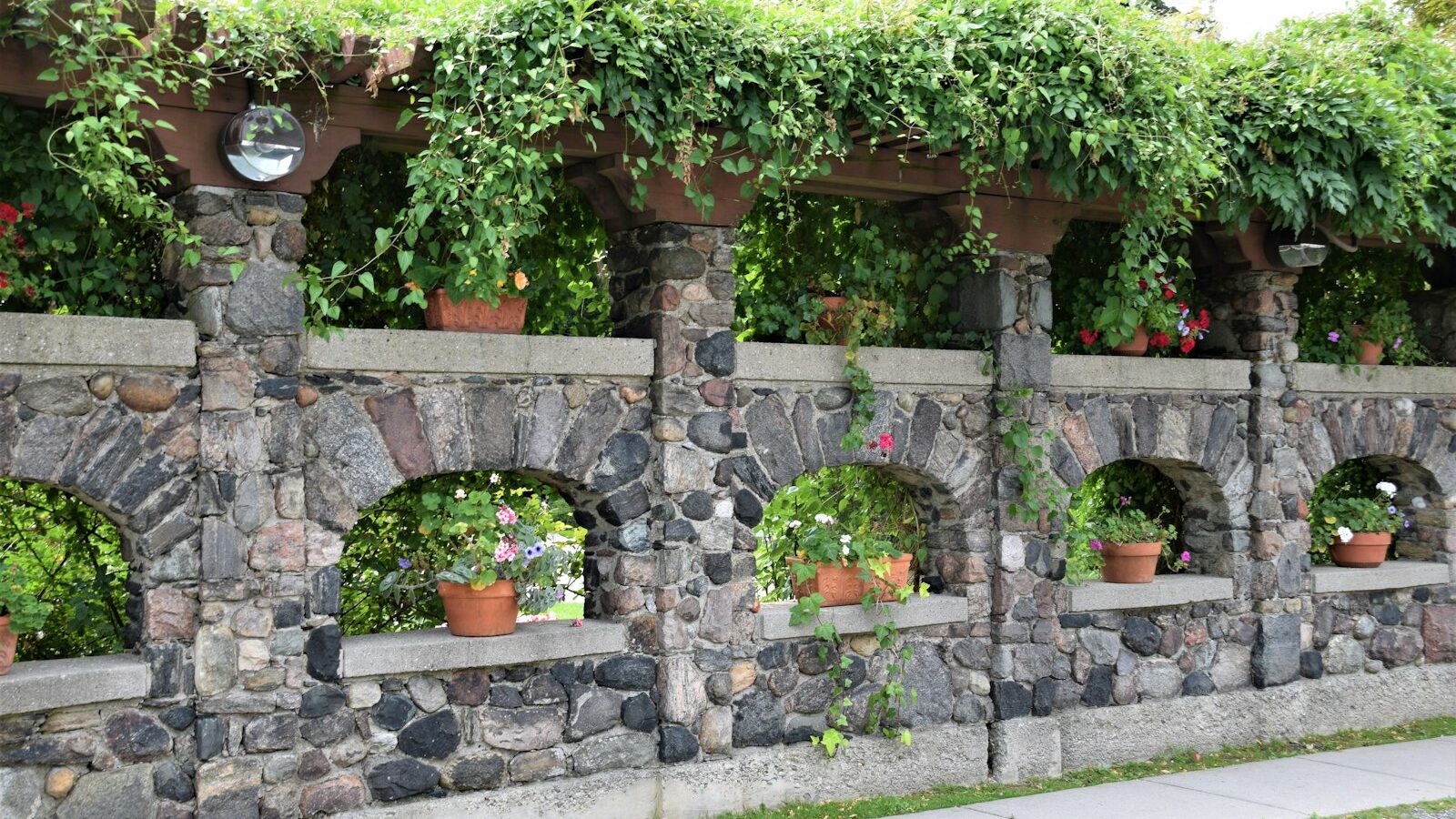
A retaining wall is one of the few landscaping projects that does double duty: it holds back soil to prevent erosion and slumping while carving out usable, level space on a sloped lot. Because it’s a structural element, pricing varies widely with material, height, drainage, and site conditions. This 2026 guide breaks down what you can expect to pay per square foot of wall face, total project ranges by size, what drives the cost up or down, and how to get accurate quotes.
Key takeaways
- Most walls run about $25-$60 per sq ft of face
- Material, height & drainage drive the price
- Tall walls often need permits & engineering
- Proper drainage/footing is non-negotiable
- Compare a few quotes for an accurate figure
How retaining wall cost is measured
Contractors almost always price retaining walls by the square foot of wall face — the visible surface area you’d see standing in front of the finished wall. To estimate it, multiply the length of the wall by its exposed height. A 40-foot-long wall that stands 3 feet tall has a face area of 120 square feet (40 × 3). At a typical installed price of $35 per square foot, that’s a ballpark of roughly $4,200 before extras.
Why face area and not linear feet? Because the work scales with height. A taller wall needs a deeper footing, more backfill, more drainage, and often engineering — so two 40-foot walls can cost very different amounts depending on whether they’re 2 feet or 5 feet tall. Per-square-foot pricing captures that. Across the US, installed costs generally land between $25 and $60 per square foot, with simple, short walls at the low end and tall stone or engineered walls well above it.
Average cost per square foot by material
Material choice is the single biggest lever on price. Manufactured concrete block (segmental retaining wall units, or SRW) is the workhorse of the industry — affordable, predictable, and DIY-friendly at low heights. Natural stone sits at the premium end because it’s labor-intensive and skilled. The table below shows typical installed ranges per square foot of face, including materials and labor.
| Material | Cost/sq ft | Notes |
|---|---|---|
| Timber (treated wood) | $15-$30 | Cheapest upfront; 15-20 yr lifespan, prone to rot |
| Concrete block (SRW) | $20-$45 | Most popular; modular, DIY-friendly under 3-4 ft |
| Poured concrete | $30-$60 | Strong, smooth; needs forms & rebar, less DIY-friendly |
| Brick | $30-$55 | Classic look; skilled masonry labor, slower install |
| Gabion (wire baskets) | $20-$50 | Excellent drainage; industrial/modern look |
| Boulder / rock | $25-$60 | Natural look; heavy equipment to place stones |
| Natural stone (dry-stack/mortared) | $40-$90+ | Premium; highly labor-intensive, longest lifespan |
Use these as planning numbers, not quotes. Regional labor rates, stone availability, and how complex your site is can push any of these figures up or down. For inspiration on which look fits your yard, browse our retaining wall ideas before you commit to a material.
Total project cost by size and height
Most homeowners care about the bottom line, so here’s how face area translates into total project cost using a mid-range concrete block at roughly $35 per square foot installed. These ranges assume standard soil, reasonable access, and basic drainage included.
- Small (20 ft long, 2 ft high — 40 sq ft): roughly $1,000-$2,400. A typical garden bed border or short slope.
- Medium (40 ft long, 3 ft high — 120 sq ft): roughly $3,000-$7,200. A common driveway or patio-edge wall.
- Large (60 ft long, 4 ft high — 240 sq ft): roughly $6,000-$14,400. Often the threshold where permits and engineering kick in.
- Extra-large (80 ft long, 6 ft high — 480 sq ft): roughly $14,000-$30,000+. Almost always engineered, sometimes terraced into multiple walls.
A key planning note: in most jurisdictions, walls taller than 3 to 4 feet (measured from the bottom of the footing) trigger a permit and a stamped engineering design. Rather than build one tall, expensive wall, many landscapers terrace the slope into two or three shorter walls. This can stay under the permit threshold, improve drainage, and create planting shelves — though the total square footage, and cost, may still add up.
Free, no-obligation quote · Connect with a local pro
What drives the cost up or down
Two walls of the same material and size can differ in price by thousands of dollars. Here are the factors that move the needle most:
- Height: The biggest multiplier. Taller walls need deeper footings, geogrid reinforcement, more backfill, and engineering. Cost per square foot rises sharply above 4 feet.
- Drainage: Gravel backfill, perforated drain pipe (weep system), and filter fabric typically add $10-$20 per linear foot — but skipping them is the number-one cause of wall failure. This is non-negotiable.
- Footings & base: A compacted gravel or concrete footing is what keeps a wall from leaning over time. Poor soil may require deeper excavation or a reinforced base.
- Site access: If equipment can’t reach the work area and materials must be moved by hand or wheelbarrow, labor costs climb. Tight backyards and steep slopes are pricier.
- Permits & engineering: Permit fees range from about $100 to $1,000+, and a stamped engineer’s design for a tall or surcharged wall can add $500-$2,500.
- Excavation & grading: Removing soil, hauling it away, and prepping the slope can add meaningfully if there’s a lot of earth to move.
- Finishing: Caps, lighting, steps, and decorative facing all add to the total.
Drainage deserves a special call-out. Water pressure building up behind a wall (hydrostatic pressure) is what topples most failed walls. If your yard already struggles with standing water, address it as part of the project — see our guide on how to fix yard drainage so your new wall isn’t fighting a losing battle.
DIY vs hiring a pro: savings and risks
Doing it yourself can cut costs roughly in half, since labor often makes up 50% or more of the total. A short concrete-block wall — under 3 feet, on stable ground, with a straight run — is a realistic weekend DIY project for a handy homeowner. At that scale you might spend $10-$20 per square foot in materials versus $30-$45 installed.
But the savings come with real risk. Retaining walls hold back tons of soil and water, and a wall that fails can damage property, collapse onto people, or cost far more to rebuild than it would have to hire out. DIY makes the least sense when:
- The wall will be taller than 3-4 feet, or a permit/engineering is required.
- There’s a “surcharge” load above it — a driveway, pool, or structure adding pressure.
- The soil is poor, the slope is steep, or drainage is already a problem.
- You’re using poured concrete, mortared brick, or large boulders that need skilled trades or heavy equipment.
For anything load-bearing, tall, or near a structure, hiring a licensed hardscaping contractor is the safer call. They’ll handle permits, build to code, and usually warranty the work. A good middle path: DIY the simple, low garden walls and bring in a pro for the structural ones.
Free, no-obligation quote · Connect with a local pro
How to get accurate quotes
The per-square-foot ranges above get you in the ballpark, but the only way to know your real number is to get itemized bids. Here’s how to make them comparable and avoid surprises:
- Get at least three quotes. Prices vary widely by contractor and region; three bids reveal the going rate and any outliers.
- Ask for itemized estimates. Materials, labor, excavation, drainage, base prep, permits, and disposal should each be a line item — not one lump sum.
- Confirm drainage is included. Make sure gravel backfill, drain pipe, and filter fabric are spelled out, not “optional.”
- Verify licensing and insurance. For structural walls, ask for proof and check that they pull permits.
- Clarify who handles engineering. If the wall needs a stamped design, find out whether it’s included or billed separately.
- Ask about the warranty. A reputable pro will stand behind the build for years.
A retaining wall is also a chance to upgrade how you use your yard — turning an awkward slope into terraced beds, a level patio, or a seating area. If you’re planning a broader project, our outdoor living guide ties walls together with the rest of your backyard design.
Frequently asked questions
How much does a retaining wall cost per square foot?
Most retaining walls cost about $25 to $60 per square foot of wall face installed. Treated timber is cheapest (around $15-$30), concrete block sits mid-range ($20-$45), and natural stone is the premium option ($40-$90+). Height, drainage, and site access shift the final number.
How much does a 4-foot retaining wall cost?
A 4-foot-tall wall typically runs $30-$60 per square foot of face because it usually requires a permit, engineering, and reinforcement. A 50-foot-long, 4-foot wall (200 sq ft) often lands between $6,000 and $12,000 installed, depending on material and soil conditions.
Do I need a permit for a retaining wall?
In most US jurisdictions, walls over 3 to 4 feet tall (measured from the bottom of the footing) require a permit and often a stamped engineering design. Walls near structures, driveways, or property lines may need a permit regardless of height. Always check with your local building department.
Can I build a retaining wall myself to save money?
Yes, for short walls under about 3 feet on stable ground — DIY can cut costs roughly in half. But tall walls, poor soil, surcharge loads, or required permits make a professional install the safer, code-compliant choice. A failed wall costs far more to fix than to build right.
Why is drainage so important behind a retaining wall?
Water trapped behind a wall creates hydrostatic pressure that’s the leading cause of wall failure. Gravel backfill, a perforated drain pipe, and filter fabric let water escape. Skipping drainage to save a few hundred dollars often leads to a leaning or collapsed wall within a few years.
Get free retaining wall quotes
Compare free, no-obligation quotes from vetted local hardscaping pros near you.