

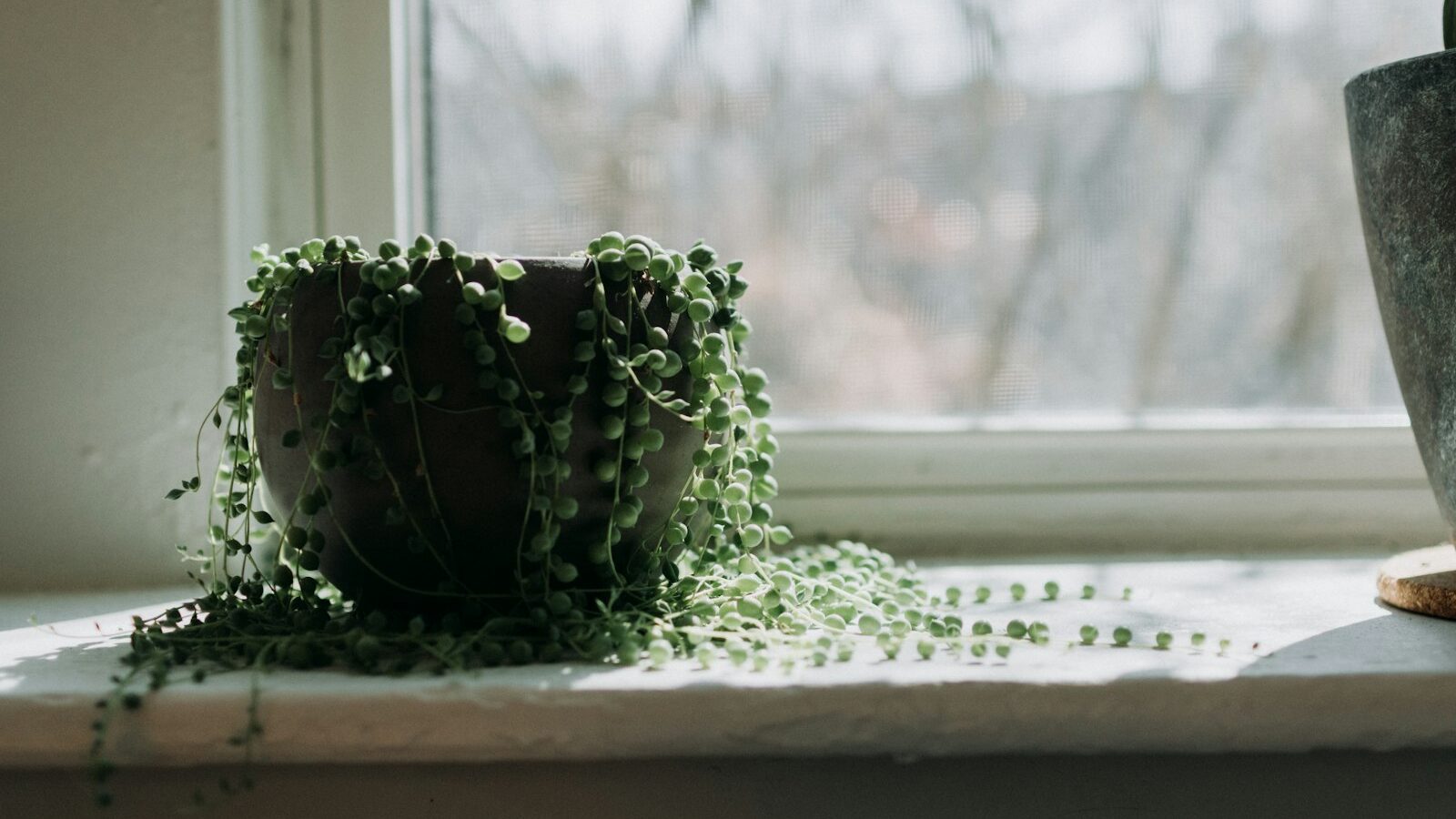
Few houseplants turn heads quite like a string of pearls (Senecio rowleyanus), a trailing succulent whose stems are strung with little green spheres that spill over the edge of a pot like a beaded curtain. Native to the dry ground of southwest Africa, it stores water in those round “pearls” so it can shrug off neglect, which makes it forgiving once you learn its rhythm. The secret to a lush, cascading plant is mostly about light and restraint with the watering can.
String of pearls quick care
- Light: bright indirect, some sun
- Water: soak-and-dry; sparingly
- Soil: gritty/cactus mix, shallow pot
- Easy to propagate from strands
- Toxic to pets
As an Amazon Associate we earn from qualifying purchases.
Light: bright is non-negotiable
String of pearls is a sun lover at heart, and inadequate light is the single most common reason it goes leggy, sparse, or stops producing new pearls. Give it the brightest spot you can offer indoors: an east- or south-facing window is ideal, where it gets bright indirect light most of the day plus a few hours of gentle direct sun. A little morning sun deepens the green and keeps stems compact; harsh, all-day summer sun through glass can scorch the pearls, leaving them brown and translucent.
Reading the light
- Too little light: long gaps between pearls, pale color, and a thin, stringy look. Move it closer to a window.
- Too much harsh sun: shriveled or sunburned pearls with brown patches. Filter midday sun with a sheer curtain.
- Just right: plump, evenly spaced pearls and steady new growth at the tips.
If your home is short on bright windows, a basic LED grow light on a timer for 10 to 12 hours a day keeps the plant full and prevents the leggy stretch you get in low light.
Watering: master the soak-and-dry
This is where most string of pearls plants live or die. The pearls are water-storage organs, so the plant is built to handle drought far better than excess. The method to follow is “soak and dry”: water thoroughly until it runs from the drainage hole, then leave the soil completely alone until it has dried out almost all the way through. Stick a finger or a wooden skewer an inch or two into the mix; if it comes out with any moisture or soil clinging to it, wait.
In practice that often means watering every two to three weeks in spring and summer, and as little as once a month (or less) in winter when growth slows. Always err on the dry side. The plant will tell you what is wrong if you learn to read the pearls.
What the pearls are telling you
- Mushy, squishy, translucent pearls: overwatering. The pearls have taken on too much water and the cells are bursting. Stop watering immediately and check the roots for rot.
- Shriveled, wrinkled, deflated pearls: underwatering. The plant has drawn down its reserves. Give it a thorough soak and they should plump up within a day or two.
- Yellowing at the base: usually overwatering or poor drainage rather than thirst.
When in doubt, stay dry. A shriveled string of pearls almost always recovers; a rotted one usually does not. Use room-temperature water and water the soil, not the pearls, to avoid leaving them sitting wet.
Soil and pots: gritty and shallow
Drainage is everything for this plant. A standard, moisture-retentive potting mix holds water against those shallow, delicate roots and invites rot. Use a fast-draining cactus and succulent soil, or make your own by cutting regular potting mix with plenty of perlite, pumice, or coarse sand so water flows straight through.
Pick the right pot
- Go shallow. String of pearls has a shallow root system, so a wide, shallow pot suits it far better than a deep one that holds a column of damp soil at the bottom.
- Demand drainage. A pot with at least one drainage hole is essential. Terracotta is a great choice because it wicks moisture away and dries faster.
- Don’t oversize. A pot only slightly larger than the root ball helps the soil dry quickly. These plants are happy a little snug.
Repot only every couple of years, and only when truly root-bound, since this is a plant that prefers to be left alone. For more on matching mix and pot to plant type, see our plant & flower care guide.
Displaying and pruning for a full look
The whole appeal of string of pearls is the cascade, so display it where the strands can hang free. A hanging planter by a bright window, a high shelf, or the edge of a plant stand all show it off beautifully. Just keep it within reach of your best light, since hanging spots are often dimmer than they look.
Over time, plants tend to thin out at the crown while the strands grow long, leaving a bald top. Pruning fixes this and gives you free plants. Trim back overlong or leggy strands with clean scissors, and don’t toss the cuttings.
Keep it lush
- Snip leggy strands to encourage branching and a denser top.
- Lay the trimmed pieces back on top of the soil in the same pot to fill bare spots.
- Rotate the pot every week or two so all sides get even light and grow evenly.
Propagation: the easiest succulent to multiply
String of pearls is almost embarrassingly easy to propagate, which is why a single plant can fill a whole shelf in a season. The trick is that the pearls root from the small nodes along the stem wherever they touch soil.
Lay-on-soil method
- Cut a healthy strand a few inches long.
- Pinch off two or three pearls at the cut end to expose a node.
- Lay the strand flat on the surface of fresh, slightly damp succulent soil, pressing the bare node into gentle contact.
- Mist lightly every few days to keep the surface barely moist, and place it in bright indirect light.
- In two to four weeks, roots form along the contact points and new growth begins. Then water as you would a mature plant.
You can also coil a strand in a circle on the soil for an instantly fuller look, or root cuttings in water, though the lay-on-soil method gives the strongest roots. Want to grab a starter plant first? A string of pearls plant is widely sold. For the broader technique across species, see how to propagate houseplants, and explore relatives in our roundup of types of succulents.
Getting it to bloom
Mature string of pearls plants produce small, brush-like white flowers, often described as smelling faintly of cinnamon. Blooming is not guaranteed indoors, but you can encourage it by mimicking the plant’s natural seasonal cues. Give it a cool, dry rest in winter: cut watering right back and keep it somewhere around 55 to 60 F (13 to 16 C) for about six weeks. This dormancy period signals the plant to set buds when spring brings warmth and longer days. Consistent bright light through the year also makes flowering far more likely.
Common problems: rot and pests
Most trouble traces back to water. Root rot, the number one killer, starts with mushy stems and a base that turns brown or black. If you catch it early, unpot the plant, cut away any rotted roots and stems, let the healthy cuttings callus for a day, and re-root them in dry, gritty mix. Often the fastest save is to propagate the healthy strands and start over.
Pests to watch for
- Mealybugs: white, cottony specks tucked between pearls. Dab them with a cotton swab dipped in rubbing alcohol.
- Aphids: tiny clusters on new growth and flower stalks. Rinse off or treat with insecticidal soap.
- Spider mites: fine webbing and stippled pearls, common in dry heat. Wipe down and treat as needed.
Isolate a newly affected plant from your collection while you treat it, and repeat treatments every week or so until the pests are gone. Good light, good airflow, and disciplined watering prevent most issues before they start.
Is string of pearls toxic to pets?
Yes. String of pearls is toxic to cats, dogs, and humans if eaten, and the sap can also irritate skin. Ingestion can cause vomiting, diarrhea, drooling, and lethargy, while sap contact may bring on a mild rash. Because the dangling strands are tempting to curious pets, hang it well out of reach or keep it in a room your animals don’t access. If you suspect your pet has eaten any, call your veterinarian or a pet poison helpline.
Frequently asked questions
Why are my string of pearls shriveling?
Shriveled, wrinkled pearls almost always mean the plant is thirsty. Give it a thorough soak until water drains from the bottom, and the pearls should plump back up within a day or two. If they feel mushy rather than shriveled, that is overwatering instead.
How often should I water string of pearls?
Use the soak-and-dry method: water thoroughly, then wait until the soil is nearly dry throughout before watering again. That is roughly every two to three weeks in spring and summer, and once a month or less in winter. Always lean toward underwatering.
Why is my string of pearls leggy with gaps between the pearls?
Long gaps and a thin, stringy look are classic signs of too little light. Move the plant to your brightest window or add a grow light, and prune the leggy strands to encourage fuller, more compact growth.
How do I propagate string of pearls?
Lay a cut strand on top of damp succulent soil with a node or two exposed, mist lightly, and keep it in bright indirect light. Roots form along the contact points within a few weeks, after which you can water it like a mature plant.
Is string of pearls safe around cats and dogs?
No. It is toxic if eaten and the sap can irritate skin, so keep it hung out of reach of pets and children. If ingestion happens, contact your veterinarian or a pet poison helpline.