

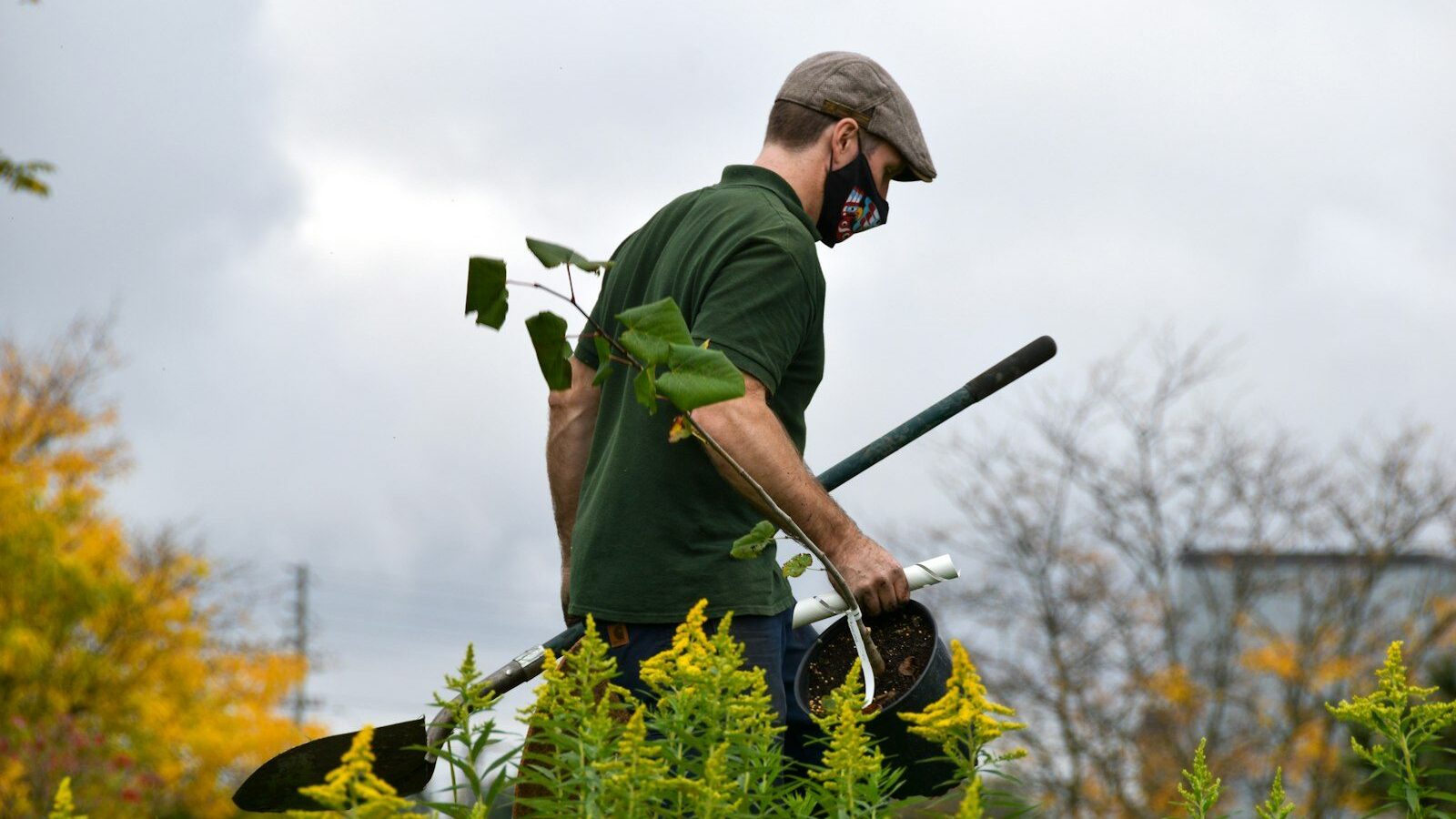
A spade has a flat, straight-edged, fairly square blade on a shorter handle, built for cutting: edging beds, slicing sod, dividing perennials and lifting plants with a clean root ball. A shovel has a pointed or rounded, dished blade on a longer handle, built for digging into hard ground and scooping loose material like soil, compost and gravel. If you garden in beds and borders and buy only one tool, buy a good garden spade. If you mainly dig planting holes in tough ground, move mulch and soil, or do yard projects, buy a round-point shovel first. Most gardeners end up owning both, because each does half the job badly. Here is how they differ and which to reach for when.
In this guide
Key Takeaways
- Spade: flat, square blade, straight edge, usually a D-grip handle about 28 to 32 inches long. Cuts and slices.
- Shovel: pointed or rounded dished blade, usually a long straight handle around 48 inches. Penetrates and scoops.
- Buy a spade first for bed edging, transplanting, dividing perennials and turning beds.
- Buy a round-point shovel first for digging holes in compacted or rocky soil and moving loose material.
- Look for a forged or thick steel blade, a solid socket connection and a foot tread on either tool.
Spade vs Shovel at a Glance
| Feature | Garden spade | Round-point shovel |
|---|---|---|
| Blade shape | Flat, rectangular, straight cutting edge | Curved, dished, pointed or rounded tip |
| Blade angle | Nearly in line with the handle | Angled forward (lift) from the handle |
| Typical handle | Short, often D-grip | Long, straight |
| Best at | Edging, slicing sod, transplanting, dividing, turning beds | Digging holes, breaking hard ground, scooping and moving soil, mulch, gravel |
| Weak at | Scooping loose material, penetrating rocky clay | Clean vertical cuts, neat edges, precise root balls |
| Leverage | Less; you bend more | More; you stand more upright |
| Best first buy for | Bed gardeners, vegetable plots, borders | Yard projects, tree planting, landscaping |
The names get used loosely in US hardware stores, and you will see “square shovels” and “pointed spades” for sale. What matters is the blade shape and edge, not the label on the tag. A flat, square-edged blade cuts; a dished, pointed blade digs and carries.
Blade Shape and What It Does
A spade blade is flat or only slightly curved, with straight sides and a straight bottom edge. When you step on it, the full width of the edge slices into the soil at once, which leaves a clean vertical wall. That is exactly what you want when cutting a bed edge, lifting a square of turf, or slicing around a shrub to make a tidy root ball. The flat face also makes a good lever for prying out a slice of soil when turning a bed.
A shovel blade is dished, like a shallow bowl, with a pointed or rounded tip. The point concentrates your weight on a small area so it pushes into compacted clay, roots and gravelly soil that would stop a spade. The dished bowl holds a load of loose material without it sliding off, and the forward angle of the blade (called lift) helps you raise and throw that load with less bending.
Handle Length and Grip
Spades traditionally have shorter handles, often 28 to 32 inches with a D-grip or T-grip on top. The short handle gives control for precise cuts and works well in tight spaces between plants. The downside is that taller gardeners bend more. Long-handled spades exist and are worth seeking out if you are over about 5 feet 10 inches or have back trouble.
Shovels usually have long, straight handles around 48 inches. The length acts as a lever, so you can pry against the ground and lift loads while standing more upright. Long handles are better for digging deep holes and moving lots of material; they are clumsier in a crowded border.
Task by Task: Which Tool Wins
Bed edging
Spade, clearly. A sharp, flat blade cuts a crisp vertical edge between lawn and bed, and you can work along a string line or garden hose layout to get smooth curves. A pointed shovel leaves a scalloped, ragged edge. If you edge often, a half-moon edger is even faster, and our guide to installing landscape edging covers permanent options.
Transplanting and dividing
Spade. To move a shrub or perennial, you slice a circle around it at the drip line, cutting roots cleanly, then lever under the root ball. The flat blade keeps the ball intact. For dividing hostas, daylilies and ornamental grasses, a sharp spade driven straight down through the crown splits clumps neatly. See our guide on how to transplant a shrub for the full method.
Turning and preparing beds
Spade for established vegetable and flower beds. Single digging and double digging are traditionally done with a spade because it lifts neat slices of soil you can flip and break up. In very compacted ground on the first dig, a shovel or digging fork may get you started. Many vegetable gardeners now dig less and mulch more; our comparison of double digging vs no-dig helps you decide how much digging your beds really need. For more on bed prep, see the vegetable gardening hub.
Digging planting holes
Shovel, especially in clay, rocky or root-filled soil, and for any hole wider than about 18 inches such as for a tree or large shrub. The point breaks ground faster and the dished blade lifts loose soil out of the hole. A spade is fine for small holes in good bed soil.
Moving soil, compost, mulch and gravel
Shovel. The bowl holds material and the lift angle helps you toss it into a wheelbarrow. For very loose material like mulch, a square-point transfer shovel or a scoop shovel holds even more. A flat spade spills half its load.
Cutting sod
Spade. To convert a strip of lawn to a bed, cut the outline with the spade, then slice under the turf at a shallow angle to lift it in manageable squares. For large areas, a rented sod cutter is faster.
Trenching
Depends on the trench. A spade cuts the clean vertical walls of a narrow trench for edging or irrigation line. A shovel removes the loosened soil. For drainage trenches, a narrow trenching shovel is the specialist tool.
Build Quality: What to Look For
Whichever you buy, a few details separate a tool that lasts decades from one that bends the first time you hit a root.
- Blade steel. Forged or heat-treated carbon steel holds an edge and resists bending. Stainless spades cost more but shed sticky clay and do not rust. Thin stamped blades flex and fold.
- Socket and handle connection. A long, solid socket that wraps the handle, or a one-piece steel or fiberglass construction, is stronger than a short open-back socket.
- Foot tread. A rolled or flat step on top of the blade protects your boot sole and lets you put full weight on the tool.
- Handle material. Ash hardwood is traditional and comfortable; fiberglass is lighter and weatherproof; steel is strongest but heavy.
- Grip. D-grips give control for lifting and twisting; long straight handles give leverage.
- Weight. A heavy tool tires you out over a long session. Pick it up and mime a dig before you buy.
Other Digging Tools Worth Knowing
- Border spade: a smaller, narrower spade for working between established plants in tight borders and raised beds.
- Transplanting spade: a long, narrow, slightly curved blade for digging deep around root balls without a wide hole.
- Digging fork: four stout tines for loosening compacted soil, lifting potatoes and dividing perennials with less root damage.
- Square-point shovel: flat-edged and dished, for scooping material off hard surfaces and squaring the bottom of trenches.
- Hand trowel: for containers and small transplants; our roundup of the best garden trowels covers good options.
Care and Sharpening
A sharp edge makes a bigger difference than most people expect. File the edge of a spade or shovel once or twice a season with a mill bastard file, holding the file at roughly the original bevel angle and stroking from the face toward the edge. Clean soil off after each use, dry the blade, and wipe it with an oily rag before winter storage. Sand and oil wooden handles once a year to prevent splintering. Store tools hanging, not leaning on the blade edge in a damp corner.
Digging Technique That Saves Your Back
Use your legs and body weight, not your arms. Set the blade, put your foot on the tread and step down with your full weight rather than stabbing with your arms. Keep the load small; a half-full shovel of wet clay can weigh more than you think. Bend at the knees and hips, keep the tool close to your body when lifting, and pivot your feet to turn instead of twisting your spine. Work in 20- to 30-minute stretches with breaks, and water very dry, hard ground the day before a big dig so the blade goes in more easily.
Which Should You Choose?
- If you mainly garden in beds and borders, buy a forged garden spade first. It edges, transplants, divides and turns soil, which covers most bed work.
- If you mainly plant trees and shrubs in hard ground, buy a round-point shovel first.
- If you move a lot of mulch, compost or gravel, buy a round-point or square-point shovel first, and consider a scoop shovel later.
- If you garden in raised beds or small spaces, buy a border spade and a hand trowel; a full-size shovel is overkill.
- If you have heavy clay, add a digging fork alongside either tool. It loosens soil with less effort than a blade.
- If you are tall or have a sore back, look for a long-handled spade so you are not stooping for every cut.
For most homeowners, the long-term answer is one good spade and one good round-point shovel. Together they handle 90 percent of digging jobs in a typical yard, and buying quality once is cheaper than replacing bent blades every few years.
Frequently Asked Questions
What is the main difference between a spade and a shovel?
A spade has a flat, square blade with a straight edge for cutting and slicing. A shovel has a dished, pointed or rounded blade for digging into hard ground and scooping loose material.
Is a spade or shovel better for digging holes?
A round-point shovel is better for most planting holes, especially in clay or rocky soil. A spade is fine for small holes in loose bed soil and better when you need straight sides.
Can I edge a lawn with a shovel?
You can, but the pointed, curved blade leaves a wavy, ragged edge. A sharp flat spade or a half-moon edger cuts a much cleaner line.
What is a square shovel used for?
A square-point shovel has a flat edge and a dished blade. It scoops loose material from hard surfaces, levels gravel and squares off trench bottoms. It is not a substitute for a true spade for edging.
How do I keep a spade sharp?
File the edge once or twice a season with a flat file at the original bevel angle, clean off soil after each use and oil the blade before storage.