

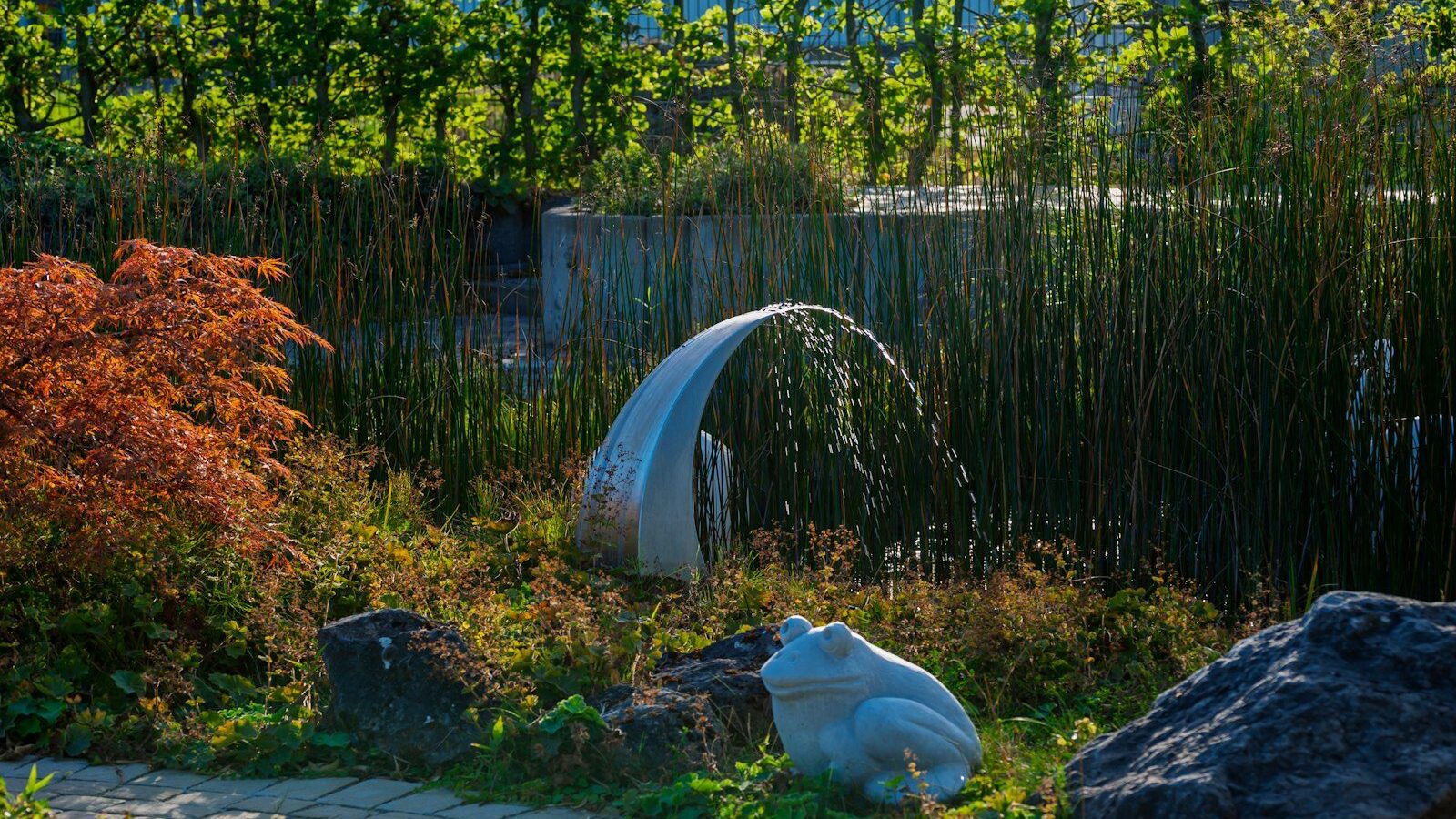
The best pool fountain for your backyard depends on whether you are building new or retrofitting. During construction or a remodel, sheer descent waterfalls, deck jets, scuppers and tanning-ledge bubblers can all be plumbed in cleanly with their own valves. For an existing pool, the easy wins are return-line fountain attachments, floating solar pool fountains and add-on sheer descents mounted on a raised wall. Every option adds sound, movement and a little evaporative cooling, and every one needs enough pump flow to look right. Below are the main types, how they work, and the planning details that keep them looking good instead of sputtering.
Part of our Ponds & Water Gardens guide →
In this guide
- 1. Sheer Descent Waterfalls
- 2. Deck Jets and Laminar Jets
- 3. Bubblers on a Tanning Ledge
- 4. Scuppers and Spillways
- 5. Rain Curtains and Pergola Rain Features
- 6. Return-Line Fountain Attachments
- 7. Floating and Solar Pool Fountains
- 8. Freestanding Fountains Beside the Pool
- Matching a Fountain to Your Pool Style
- Comparing Pool Fountain Options
- Planning Details That Matter
- Getting a Feature Installed
- Frequently Asked Questions
Key Takeaways
- Built-in features like sheer descents and deck jets are easiest to add during construction or a deck replacement.
- Give each water feature its own valve, and ideally its own pump or a variable-speed pump schedule.
- Return-line fountain heads and floating solar fountains are the cheapest retrofit options.
- Water features increase evaporation and can raise pH; plan on checking chemistry more often.
- Consider wind and splash: arcs that land on the deck waste water and stain pavers.
1. Sheer Descent Waterfalls
A sheer descent is a stainless or acrylic spout, usually 1 to 6 feet wide, that releases a smooth, glassy sheet of water into the pool. It is the most popular modern pool fountain because it looks clean, sounds gentle and suits contemporary designs. Sheer descents are typically mounted in a raised bond-beam wall behind the pool, under a coping stone, or in a column, and fed by a dedicated plumbing line.
- Flow: the sheet needs a steady, even flow across its width. Manufacturers list a recommended flow per foot of width; too little looks ragged, too much arcs out and splashes.
- Height: a drop of 1 to 3 feet is typical. Higher drops are louder and more likely to break up.
- Lip type: smooth lips give a glassy sheet; rain or textured lips give a sparkling curtain.
- Lighting: many models offer LED strips that light the sheet at night.
Retrofitting a sheer descent usually means building a short raised wall or planter at the pool edge and trenching a supply line to the equipment pad. That is a mason and pool plumber job for most homeowners.
2. Deck Jets and Laminar Jets
Deck jets are small nozzles set flush in the pool deck that shoot arcs of water into the pool. A row of three or four along one side is a classic look, and kids love running through them. Standard deck jets produce an aerated, bubbly stream. Laminar jets produce a glass-smooth, rod-like stream that looks almost solid and can be lit internally with LEDs so the arc glows at night.
Both are adjustable for height and distance. Set them so the arc lands well inside the pool even on breezy days; overspray on the deck is the most common complaint. Deck jets are best installed when the deck is poured or replaced, since each jet needs a buried supply line. Laminar jets in particular need clean, steady, filtered water to keep their smooth stream.
3. Bubblers on a Tanning Ledge
If your pool has a shallow sun shelf, sometimes called a tanning ledge or Baja shelf, bubblers set into the floor push a low dome or column of water up through a few inches of water. They create a soft burbling sound and a fun spot for kids and loungers, and they do not splash the deck. Height is adjustable by valve. Bubblers must be installed when the shelf is built, and they work best with a dedicated valve so you can turn them down when people are sitting on the ledge.
4. Scuppers and Spillways
Scuppers are spouts, often copper, stone or cast concrete, that pour water from a raised wall into the pool. They range from a single Mediterranean-style lion head to a row of modern bowls. Fire-and-water bowls combine a gas fire feature on top of a bowl that spills water into the pool, a striking evening feature that requires both gas and water lines.
Spillways and spillover spas, where a raised hot tub overflows into the pool, are another popular option during new construction. They need careful plumbing so the spa level stays stable.
5. Rain Curtains and Pergola Rain Features
A rain curtain is a perforated pipe or descent mounted overhead, typically in a pergola beam or wall overhang, that drops a line of droplets into the pool. It sounds like steady rain and creates a spot you can swim through. Rain features need a strong enough supply to reach the height and enough nozzle spacing to look even.
6. Return-Line Fountain Attachments
The easiest retrofit for any pool. These plastic fountain heads screw or snap onto an existing return jet fitting and use the pump’s return flow to shoot a spray, arc or multi-tier pattern into the air. Many have adjustable or color-changing LED lights. Because they divert return flow into the air, they also help cool warm summer water slightly through evaporation.
Downsides: they can reduce circulation through that return, so remove or adjust them if your pool develops dead spots, and take them off for winterizing. They are also more visible and less refined than built-in features, which makes them better for fun summer use than permanent design.
7. Floating and Solar Pool Fountains
Floating fountains drift on the surface and spray water upward from a small built-in pump. Solar pool fountains use a panel on top to power the pump, so there is no wiring and no connection to your pool system. They are inexpensive, portable and good for adding a touch of movement on a sunny afternoon.
Be realistic about solar models: most run only in direct sunlight, spray modestly, and stop or sputter when clouds pass unless they include a battery. Make sure any floating fountain is rated for chlorinated or saltwater pools. Our explainer on whether solar fountains work covers what to expect, and our roundup of solar fountain pumps compares options for ponds and basins.
8. Freestanding Fountains Beside the Pool
Not every fountain needs to spill into the pool. A recirculating urn, bubbling rock or tiered fountain set in pool-side landscaping adds sound without touching pool chemistry or plumbing. It runs on its own small pump and reservoir. This is a good option for renters, above-ground pools, or anyone who wants a water feature without hiring a pool plumber. Browse our pool landscaping ideas for planting around it.
Matching a Fountain to Your Pool Style
- Modern and minimalist: one wide sheer descent from a smooth stucco or porcelain-clad wall, or a pair of lit laminar jets. Keep materials simple and let the water do the work.
- Mediterranean or Spanish: scuppers or wall spouts set in stone or tile, with terracotta pots and olive or citrus trees nearby.
- Tropical or resort: rock waterfalls, rain curtains from a pergola, and bubblers on a sun shelf surrounded by palms and bold foliage.
- Traditional or classic: a row of deck jets along one side, or a tiered fountain in poolside planting.
- Small or plunge pools: a single narrow sheer descent or a wall spout adds sound without crowding the space.
One well-placed feature usually looks better than several competing ones. Place it where you see it most, typically on the far side of the pool from the main patio or the kitchen window, so it becomes the focal point.
Comparing Pool Fountain Options
| Feature | Retrofit difficulty | Sound level | Splash risk | Best for |
|---|---|---|---|---|
| Sheer descent | Moderate to high (needs wall) | Gentle | Low | Modern designs, raised walls |
| Deck jets | High unless replacing deck | Moderate | Medium in wind | Family pools, classic look |
| Laminar jets | High | Quiet | Low to medium | Night lighting effects |
| Bubblers | New construction only | Soft | Very low | Tanning ledges |
| Scuppers and fire bowls | Moderate to high | Moderate to loud | Low | Statement walls |
| Return-line attachments | Very easy | Moderate | Medium | Quick, low-cost fun |
| Floating solar fountains | Very easy | Quiet | Low | Occasional use, no wiring |
Planning Details That Matter
Pump and plumbing
Every water feature takes flow from somewhere. Running features off the main filter pump works for small additions, but larger sheer descents or multiple deck jets usually need a dedicated feature pump, or a variable-speed pump programmed to run at higher speed only when features are on. Put each feature on its own valve or actuator so you can balance flow and turn it off independently. Automation systems can run features on a schedule or from your phone.
Water chemistry and evaporation
Aerating water drives off carbon dioxide, which tends to push pH upward, and water features increase evaporation, which concentrates calcium and other minerals. Expect to test and adjust pH more often, top off water more frequently in summer, and wipe or descale sheer descent lips and scuppers to prevent white calcium buildup.
Sound, wind and neighbors
Falling water can be soothing or surprisingly loud. A sheer descent over a short drop is gentle; tall scuppers and arcs are louder. Position features so prevailing winds blow spray back into the pool, not onto the deck or furniture, and consider how the sound carries to bedrooms and neighbors’ patios.
Lighting and winterizing
LED lighting doubles the impact of most features after dark. In freezing climates, every feature line must be blown out and plugged when the pool is closed, so make sure your installer leaves accessible fittings.
Getting a Feature Installed
For built-in features, talk to a pool builder or remodeler who handles both masonry and plumbing, and ask to see similar water features they have built. Ask whether your existing pump can supply the feature or whether a dedicated pump is needed, how each feature will be valved, and what the winterizing process looks like. Our guide to outdoor fountain installation cost covers the factors that move prices for water features, and you can request quotes from local pros through our services directory. For more water feature ideas beyond the pool, explore our ponds and water gardens guide.
Frequently Asked Questions
Can I add a fountain to an existing pool?
Yes. Return-line fountain attachments and floating solar fountains need no construction. Sheer descents and scuppers can be added with a new raised wall and supply line, while deck jets usually require cutting or replacing the deck.
Do pool fountains cool the water?
They can help slightly. Spraying water through the air increases evaporation, which removes some heat, especially in dry climates. The effect is modest compared with shade or running features overnight.
What is a sheer descent?
A sheer descent is a wide, flat spout that releases a smooth sheet of water into the pool, usually from a raised wall or under coping. It needs steady, even flow to look glassy.
Do solar pool fountains work?
They work in direct sun, with modest spray height. Most stop or slow when clouds pass unless they have a battery. They are best for occasional decoration rather than a main feature.
Do water features affect pool chemistry?
Yes. Aeration tends to raise pH, and extra evaporation concentrates calcium. Test more often and descale feature lips and nozzles to keep them working well.