

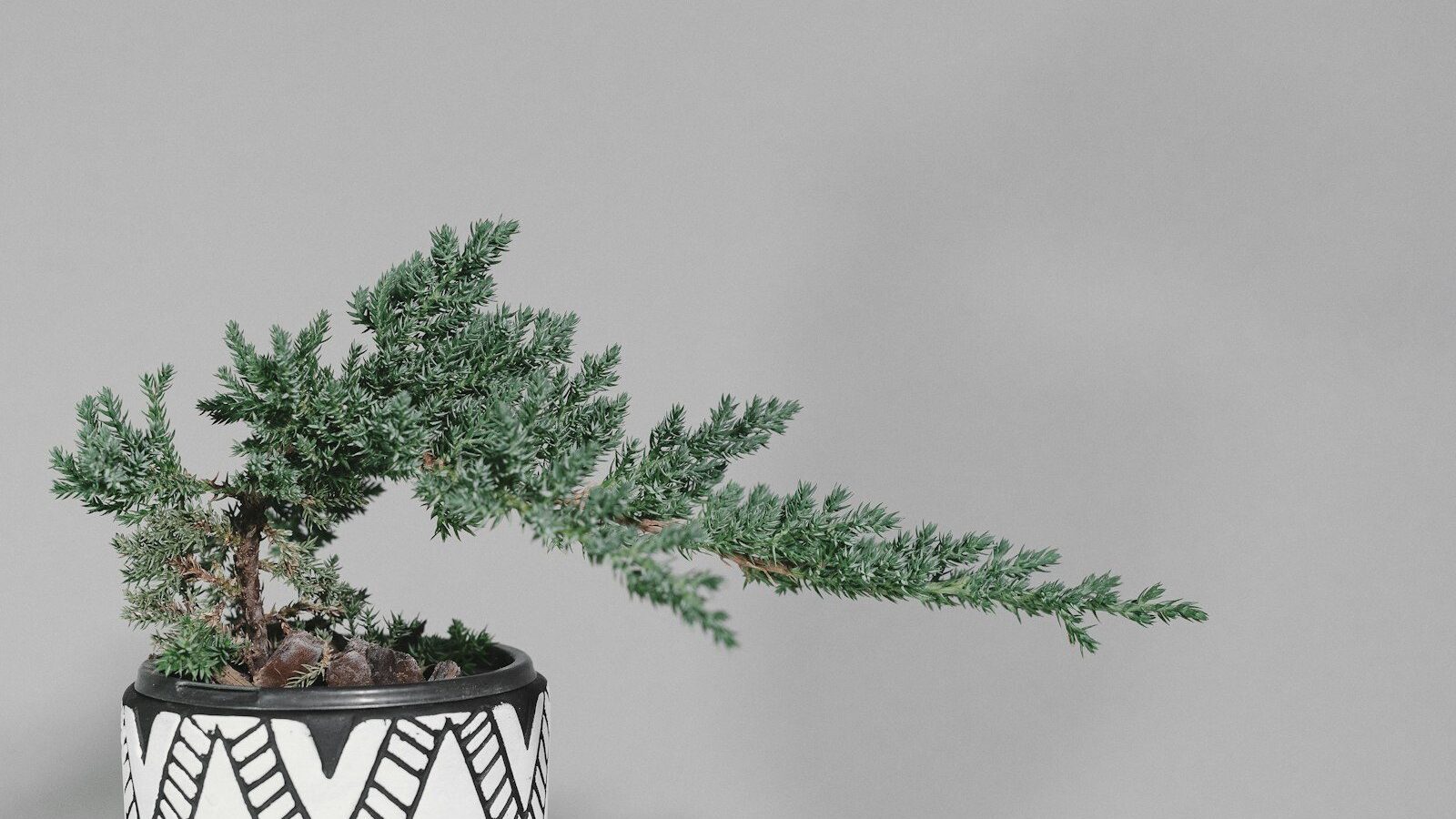
Short answer: only tropical and subtropical species make good indoor bonsai, and even they grow better if they spend summer outside. Temperate trees such as juniper, Japanese maple, pine, elm and azalea need a cold winter rest and will slowly decline if you keep them on a windowsill all year. If you want a bonsai plant that lives inside, start with ficus, Hawaiian umbrella tree, jade, Fukien tea or Chinese elm grown as a semi-tropical. If you have a yard, balcony or patio and a cold winter, the much wider world of outdoor bonsai is open to you, provided you protect the roots in hard freezes.
Part of our Houseplants & Container Gardening guide →
In this guide
- Indoor vs Outdoor Bonsai at a Glance
- Why Most Bonsai Belong Outside
- Best Indoor Bonsai Species
- Classic Outdoor Bonsai Species
- Light: The Deciding Factor Indoors
- Temperature and Winter Care
- Watering and Humidity Differences
- Soil, Pots and Feeding
- The Hybrid Approach: Summer Out, Winter In
- Common Problems and Fixes
- Which Should You Choose?
- Frequently Asked Questions
Key Takeaways
- Indoor bonsai = tropical species that never need dormancy: ficus, schefflera, jade, Fukien tea, serissa, Brazilian rain tree.
- Outdoor bonsai = temperate species that need 2 to 4 months of winter cold: juniper, maple, pine, elm, larch, azalea.
- Light is the limiting factor indoors; most homes give a fraction of outdoor sun, so a south window or grow light is essential.
- A juniper sold as a “desk bonsai” is an outdoor tree and will not survive long inside.
- Even indoor species benefit from summers outdoors once nights stay above about 55°F.
Indoor vs Outdoor Bonsai at a Glance
| Factor | Indoor (tropical) bonsai | Outdoor (temperate) bonsai |
|---|---|---|
| Typical species | Ficus, schefflera, jade, Fukien tea, serissa, Brazilian rain tree | Juniper, Japanese maple, trident maple, pine, larch, elm, azalea, beech |
| Winter needs | Stays above about 50 to 55°F; no dormancy | Needs cold dormancy, roughly below 40°F for several weeks |
| Light | Brightest window or grow light, 12 to 14 hours | Full or part sun outdoors |
| Watering | Slower drying indoors; check daily, water when top 1/2 inch is dry | Can need water daily or twice daily in summer heat |
| Humidity | Often too dry indoors in winter; humidity tray helps | Outdoor air is usually fine |
| Growth rate | Steady year-round but slower than outdoors | Strong spring flush, then rest |
| Best for | Apartments, cold climates without outdoor space | Anyone with a yard, patio or balcony |
Why Most Bonsai Belong Outside
A bonsai is not a special kind of plant. It is an ordinary tree or shrub kept small in a shallow pot through pruning, wiring and root work. That means it has exactly the same needs as the full-size version of the species. A Japanese maple in a 10-inch tray still needs a winter chill to reset its growth cycle, and a juniper still wants sun from dawn to dusk. Shrinking the tree does not shrink those requirements; if anything, the tiny soil volume makes the tree less forgiving.
Temperate trees evolved with seasons. Shortening days and falling temperatures in autumn trigger them to harden off, drop leaves (deciduous species) or slow to a standstill (conifers). They then need a period of cold, often described as several weeks to a few months near or below 40°F, before they will push healthy new growth in spring. Kept indoors at 70°F, they never get that signal. The first year often looks fine. The second and third years bring weak, leggy shoots, thinning foliage and eventually death. Junipers sold at malls and supermarkets as “indoor bonsai” are the classic example; they are outdoor plants with a misleading label.
Best Indoor Bonsai Species
These species come from tropical or subtropical regions where there is no hard winter. They tolerate household temperatures year-round and cope with lower light better than temperate trees, though none of them actually prefer dim rooms.
Ficus (Ficus retusa, F. microcarpa, F. benjamina)
The most forgiving indoor bonsai. Ficus handles dry air, missed waterings and less-than-ideal light better than anything else on this list. It throws aerial roots in humid conditions, heals pruning cuts quickly and back-buds readily, so you can shape it hard. “Ginseng ficus” with its fat, swollen root base is the version sold most often. If you are new to the hobby and have no outdoor space, start here.
Hawaiian Umbrella Tree (Schefflera arboricola)
Tough, fast-growing and tolerant of lower light than most. Its compound leaves are large for bonsai, so it suits bigger, informal designs rather than fine miniature trees. It does not take wire well; shape it mostly by pruning.
Jade (Crassula ovata) and Dwarf Jade (Portulacaria afra)
Succulents that store water in thick stems and leaves, which makes them ideal for people who travel or forget to water. They need very bright light and a gritty, fast-draining mix. Overwatering, not underwatering, is what kills them.
Fukien Tea (Carmona retusa) and Serissa
Both have small leaves and small white flowers, which makes them look like “real” bonsai at a small size. Both are fussier: they dislike drafts, sudden moves and drying out, and they often drop leaves when relocated. Consider them a second tree once you have kept a ficus healthy for a year.
Brazilian Rain Tree, Chinese Elm and Others
Brazilian rain tree (Pithecellobium tortum) has fine, feathery foliage that folds at night, and it needs high light and humidity. Chinese elm (Ulmus parvifolia) is a semi-evergreen that can be grown either way: it survives indoors in a bright spot but does noticeably better outdoors with a mild winter rest. Other workable indoor choices include dwarf pomegranate in very bright light, olive in a sunny window, and Australian brush cherry (Syzygium).
Classic Outdoor Bonsai Species
These are the trees most people picture when they think of bonsai. All need outdoor conditions and a winter rest. Most are hardy enough in the ground across USDA zones 4 to 8, but roots in a shallow pot are far more exposed than roots in the ground, so pot-grown trees need protection in hard freezes.
- Juniper (Juniperus procumbens ‘Nana’, Chinese juniper, shimpaku): full sun, tolerant of neglect outdoors, completely unsuitable indoors. See our juniper bonsai care guide for watering and wiring specifics.
- Japanese and trident maple: excellent ramification and fall color; need afternoon shade in hot summers to prevent leaf scorch.
- Pines (Japanese black, Japanese white, mugo): full sun, lean soil, long-term projects.
- Larch and bald cypress: deciduous conifers that develop quickly and recover well from heavy work.
- Azalea (satsuki): prized for flowers; needs acidic soil and protection from strong afternoon sun.
- Elms, hornbeam, beech, boxwood: good broadleaf choices that tolerate pruning well.
Check the cultivar tag on any tree you buy, because hardiness and sun tolerance vary within a genus. A Japanese black pine and a Japanese white pine, for example, want different soil moisture and respond differently to the same pruning schedule, so buy a species you can research and then stick with its specific routine.
Light: The Deciding Factor Indoors
Light intensity drops off sharply a few feet from a window, and even a bright south window delivers far less than open sky. That is why indoor bonsai often grow long, thin internodes and large leaves, the opposite of what you want for a miniature tree. Practical rules:
- Keep the tree within 1 to 2 feet of an unobstructed south- or west-facing window in the Northern Hemisphere.
- Rotate the pot a quarter turn every week so it grows evenly.
- In winter, or if your windows face north, add a full-spectrum LED grow light 6 to 12 inches above the canopy on a 12 to 14 hour timer.
- Do not move a tree straight from indoors to full summer sun; acclimate it over 7 to 10 days, starting in shade.
Temperature and Winter Care
Indoor Species
Most tropical bonsai are happiest between about 60 and 80°F and should come indoors when nights drop below roughly 50 to 55°F. Keep them away from heating vents, radiators and cold, drafty doors. Leaf drop after a move is common, especially with ficus and Fukien tea; hold steady with watering and light and new leaves usually follow within a few weeks.
Outdoor Species
The goal in winter is to keep the tree cold enough to stay dormant while preventing the root ball from freezing solid and drying out. Options, from simplest to most involved:
- Mild winters (zone 7 and warmer): leave trees on the ground in a sheltered spot out of drying wind; most hardy species need little else.
- Moderate winters (zones 5 to 6): set pots on the ground and mound mulch, bark or leaves up to the rim, or sink pots into a garden bed.
- Cold winters (zones 3 to 4): use an unheated garage, shed or cold frame that stays roughly between 25 and 40°F. Dormant trees need little light, but evergreens need some.
Check soil moisture every week or two through winter. Dormant trees still lose water, and a dry, frozen root ball is a common cause of spring losses.
Watering and Humidity Differences
Outdoor bonsai dry out fast. A small tree in a shallow pot can need water every day in summer, and twice a day in hot, windy weather. Indoor trees dry much more slowly, which makes overwatering the main risk. For both, the rule is the same: water thoroughly until it drains from the bottom, then wait until the top 1/4 to 1/2 inch of soil is dry before watering again. A chopstick pushed into the soil is a reliable tester.
Indoor air in heated homes can be very dry in winter. A humidity tray (a shallow tray filled with gravel and water, with the pot sitting above the waterline) raises local humidity a little. Grouping plants helps too. Misting gives only a brief bump and is not a substitute for good watering.
Soil, Pots and Feeding
Both groups need a fast-draining, open mix rather than potting soil. A common base is roughly equal parts akadama (or calcined clay), pumice and lava rock, with fine bark added for moisture-loving tropicals. Our guide to the best bonsai soil compares ready-made blends. Feed actively growing trees every 2 to 4 weeks with a balanced fertilizer at half strength, or use slow-release pellets on the surface. Stop feeding outdoor trees in late fall; indoor tropicals can be fed lightly through winter if they are under grow lights and still growing.
For broader container techniques, such as choosing pots with drainage and repotting schedules, our houseplants and container gardening hub covers the fundamentals that apply to bonsai too.
The Hybrid Approach: Summer Out, Winter In
Many experienced growers treat tropical bonsai as part-time outdoor trees. Once night temperatures stay above about 55°F, usually late May or June in much of the country, they move ficus, schefflera, jade and Brazilian rain tree outside to a bright spot with some afternoon shade. The extra light tightens internodes, shrinks leaves and builds vigor. In September or whenever nights cool toward 50°F, they inspect for pests (hose off the foliage and check under leaves for scale and mealybugs) and bring the trees back in.
This only works one direction. You can take indoor species outside for summer; you cannot bring temperate species inside for winter without breaking their dormancy. A juniper brought into a warm living room in December will start to grow and then fail.
Common Problems and Fixes
- Yellowing and dropping leaves indoors: usually overwatering, low light, or a recent move. Check drainage and light before anything else.
- Brown, crispy juniper foliage: the tree is likely an outdoor juniper kept indoors, or it dried out completely. Move it outside to bright shade and water carefully.
- Long, leggy shoots: not enough light. Add a grow light or move the tree outdoors in summer.
- Sticky leaves or white fluff: scale or mealybugs, common on indoor ficus. Wipe off with a cotton swab and isopropyl alcohol, or use insecticidal soap per the label.
- Maple leaf scorch in summer: too much afternoon sun or drying wind; give shade after noon.
Which Should You Choose?
- If you live in an apartment with no outdoor space: choose a ficus or Hawaiian umbrella tree, place it in your brightest window and add a grow light for winter.
- If you have a balcony or patio but cold winters: grow outdoor species and plan winter protection, or keep a tropical tree that summers on the balcony.
- If you travel often: a jade or dwarf jade indoors forgives missed waterings far better than any outdoor bonsai in summer.
- If you want classic bonsai styling with fine branching and seasonal change: go outdoor with juniper, trident maple or Chinese elm.
- If you are a complete beginner: buy a healthy, nursery-grown tree of a species suited to your conditions, rather than a cheap mall juniper. Our roundup of bonsai starter kits lists options that include seeds, tools and pots, and bonsai for beginners walks through the first year.
Frequently Asked Questions
Can any bonsai tree live indoors permanently?
Only tropical and subtropical species, such as ficus, schefflera, jade, Fukien tea and serissa, can live indoors year-round. Even these grow better with a summer outdoors. Temperate species like juniper and maple need winter dormancy and will decline indoors.
Is a juniper bonsai an indoor plant?
No. Junipers are outdoor trees that need full sun and a cold winter rest. They are often sold as desk or indoor bonsai, but they typically decline within a year or two inside. Keep them outdoors and protect the pot in hard freezes.
What is the easiest indoor bonsai for beginners?
Ficus is the most forgiving. It tolerates dry indoor air, recovers from missed waterings, heals pruning cuts quickly and back-buds well. Hawaiian umbrella tree and jade are also easy choices.
Do indoor bonsai need a grow light?
Most do in winter, and many do year-round unless they sit right next to a bright south or west window. A full-spectrum LED placed 6 to 12 inches above the tree for 12 to 14 hours a day keeps growth compact.
How cold can outdoor bonsai get in winter?
It depends on the species, but roots in shallow pots are much less hardy than in-ground roots. In cold zones, most growers keep dormant trees in an unheated garage, shed or cold frame that stays roughly between 25 and 40°F, or mulch pots into the ground.