

Snakeroot (Actaea, long sold as Cimicifuga) is one of the few perennials that wants exactly what most flowering plants hate: shade and steady moisture. Plant it in part to full shade in consistently moist, humus-rich, slightly acidic soil, give it room and patience, and by late summer it sends up dramatic white bottlebrush flower spikes that can top 4 to 7 feet and perfume the whole back of a shade border. Hardy in USDA zones 3 to 8 (the dark-leaved cultivars run a touch tenderer, zones 3 to 7), it is deer-resistant, essentially pest-free, and famously low-maintenance once settled. The catch is the establishment: snakeroot is slow to take hold and hates being moved, so the single most important thing you do is choose the right spot and leave it there. This guide covers naming, siting, planting, watering, feeding, staking, dividing, and the fragrant fall payoff.
Key Takeaways
- Snakeroot is a shade-loving, moisture-loving perennial hardy in USDA zones 3 to 8 (3 to 7 for dark-leaf cultivars).
- Site it in part to full shade in consistently moist, humus-rich, slightly acidic soil — never let it dry out.
- It blooms in late summer to fall with tall (4 to 7 ft) white bottlebrush spikes that are intensely fragrant.
- It is slow to establish and resents being moved, so pick a permanent spot and disturb it as little as possible.
- Once settled it is low-maintenance, deer-resistant, and rarely needs dividing; tall plants may need staking.
Plant Overview: Actaea, Cimicifuga, and the Confusing Names
Snakeroot has more aliases than almost any garden perennial, which trips up shoppers constantly. Botanists merged the old genus Cimicifuga into Actaea years ago, so the same plant may be labeled either way at the nursery — Actaea simplex and Cimicifuga simplex are the same thing. Common names pile on further: you will see it sold as bugbane, black snakeroot, black cohosh, and fairy candles. The “bugbane” name comes from a traditional (and largely unreliable) reputation for repelling insects.
Two species matter most to gardeners. Actaea racemosa (black cohosh) is a North American native of eastern woodlands, valued for its tall, branching white wands in early-to-midsummer and its toughness. Actaea simplex, especially the Atropurpurea Group, gives us the showstopping dark-foliage cultivars: ‘Black Negligee’, ‘Hillside Black Beauty’, and ‘Brunette’ all carry deep purple-to-bronze, almost black leaves topped by white-to-pink-tinged spikes in fall. The dark foliage is the whole point with these — it reads almost black against bright hostas or ferns and holds its color best in cooler, partly shaded sites.
Hardiness and Where It Grows
Snakeroot is genuinely cold-hardy. Most types thrive in USDA zones 3 to 8, sailing through brutal northern winters thanks to their woodland-edge heritage. The dark-leaved Actaea simplex cultivars are slightly less heat-tolerant and tend to be rated zones 3 to 7; in the warm end of their range (zone 7 and the cooler edge of 8) they need more shade and more reliable moisture to look their best and avoid scorched, faded foliage.
Think about where this plant lives in the wild: the dappled edges of moist deciduous forests, along streams, and in low woodland clearings. That tells you everything about siting. The north or east side of a house, the shaded edge of a pond or rain garden, a spot under high-canopy trees, or the back of a shade border all suit it. It struggles in hot, dry, exposed sites and in the deep South, where summer heat and humidity outpace its preference for cool, moist conditions. If you garden in a hot climate, lean toward the native Actaea racemosa and the deepest, coolest shade you can offer.
Light and Soil: Shade Plus Moisture
Snakeroot is a shade plant first and foremost. Aim for part shade to full shade — roughly 2 to 4 hours of gentle morning sun at most, with protection from hot afternoon sun. In cool-summer northern gardens it will tolerate more sun provided the soil stays reliably moist, but the moment the soil dries, leaf edges crisp and the plant sulks. Too much sun on the dark-leaved cultivars also bleaches their prized near-black foliage to a muddy green. When in doubt, give it more shade rather than less.
Soil It Wants
The soil target is consistently moist, humus-rich, and slightly acidic, with a pH somewhere around 5.5 to 6.5. Heavy, rich, organic ground is ideal — this is not a plant for lean, sandy, fast-draining soil. Before planting, work in a generous amount of compost, leaf mold, or well-rotted manure to a depth of at least 12 inches; the extra organic matter both feeds the plant and, crucially, holds moisture between waterings. Snakeroot tolerates clay better than most perennials as long as the spot does not turn into a stagnant bog in winter. What it cannot tolerate is drought, so if your only shady spot is dry, amend heavily and plan to water. For other shade companions that share these conditions, see our guide to growing hostas in moist, shaded beds.
When and How to Plant
Plant container-grown snakeroot in spring or early fall, when the soil is workable and the weather is cool and damp. Spring planting gives the roots a full season to establish before winter; fall planting works well in zones 5 and warmer, leaving enough time to settle before hard freezes. Avoid planting in the heat of midsummer, when transplant stress and dry soil are at their worst.
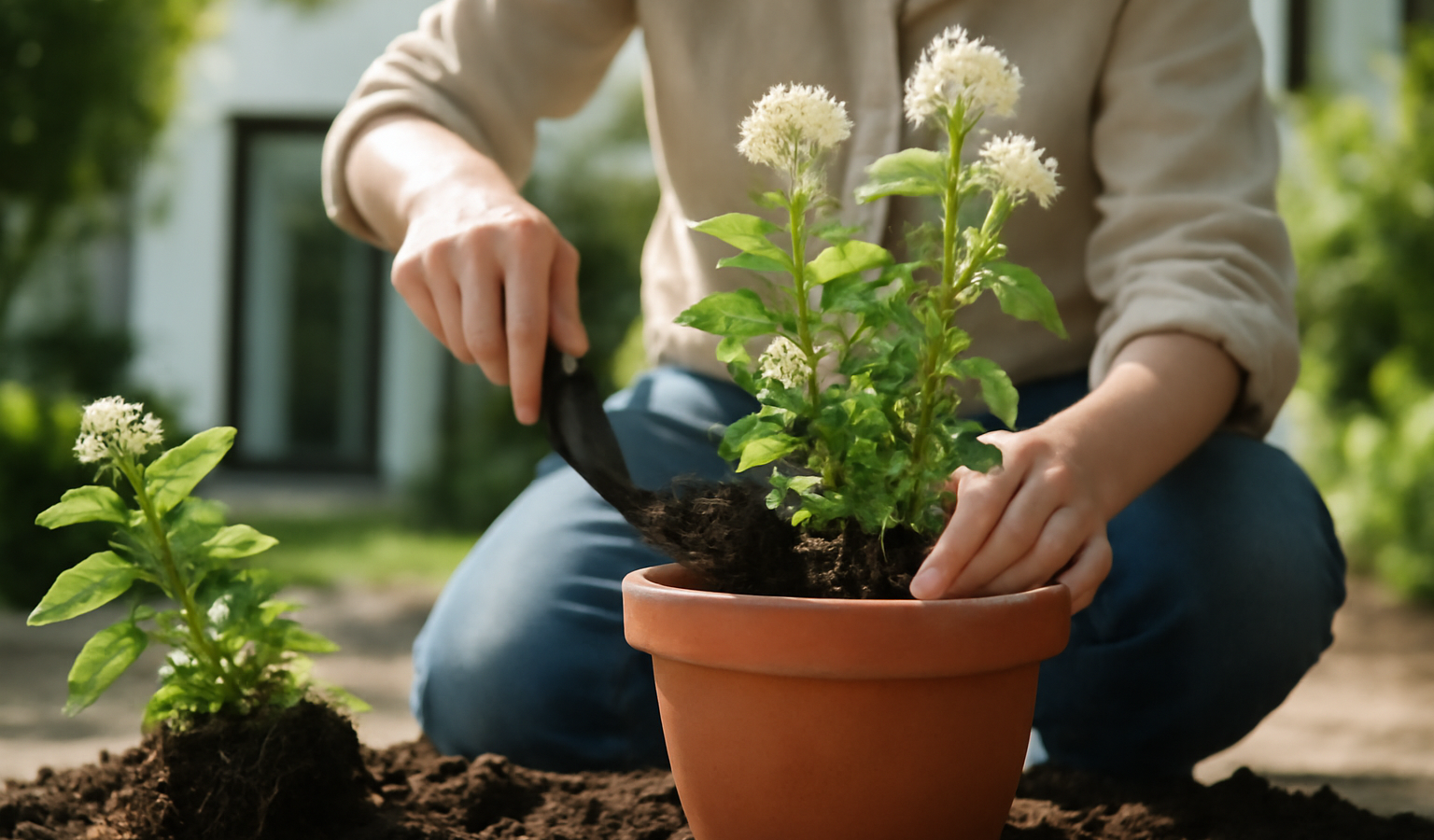
Dig a hole as deep as the root ball and about twice as wide, and set the plant at the same depth it grew in the pot — no deeper. Space individual plants 24 to 36 inches apart; remember these are big perennials, eventually 2 to 4 feet wide and 4 to 7 feet tall in bloom, so what looks like a lonely gap at planting fills in within a couple of seasons. Backfill with the amended soil, firm gently, water in thoroughly to settle air pockets, and mulch right away. Because snakeroot deeply resents disturbance, choose the location as if it is permanent — that means thinking about its mature height behind shorter plants, not in front of them.
Watering and Mulching
Water is the make-or-break factor with this plant. The soil should stay consistently moist — not waterlogged, but never bone dry. For the first full growing season after planting, water deeply whenever the top inch of soil begins to dry, aiming for roughly an inch of water per week from rain or irrigation combined, and more during hot, dry spells. Even established plants need supplemental water in summer droughts; the first sign of trouble is browning, crisping leaf margins, which means the plant is too dry.
A 2- to 3-inch layer of organic mulch — shredded bark, leaf mold, or compost — is not optional with snakeroot; it is essential. Mulch keeps the root zone cool and damp, smothers competing weeds, and slowly feeds the soil as it breaks down, mimicking the leaf litter of a forest floor. Pull the mulch back an inch or two from the crown to prevent rot, refresh it each spring, and you will dramatically cut how often you need to water. In a rain garden or pondside planting where moisture is naturally abundant, snakeroot is at its happiest and needs the least fuss.
Feeding
Snakeroot is not a heavy feeder, and in good woodland soil it may need no fertilizer at all. The simplest and best approach is to topdress each spring with an inch or two of compost or well-rotted manure spread around (not on) the crown. This feeds the plant gently, builds soil structure, and reinforces the moisture-holding humus the plant craves — exactly the conditions it evolved with.
If your soil is poor or the foliage looks pale and growth is weak, you can apply a balanced, slow-release granular fertilizer (something like a 10-10-10) once in early spring as new shoots emerge. Avoid heavy nitrogen feeding, which pushes soft, floppy growth that needs even more staking and produces fewer flower spikes. Annual compost is almost always enough.
Staking, Deadheading, and Seasonal Care
Those magnificent 4- to 7-foot flower spikes are also snakeroot’s main maintenance issue: in wind, rain, or too much shade they can flop. Plants grown in their preferred cool, sheltered shade and rich soil often stand on their own, but in more open or windy sites you will want to stake. The trick is to install supports early, in late spring or early summer while the plant is still short, using discreet grow-through grids or individual stakes and soft ties. Trying to corral a fully grown, top-heavy plant after it has flopped never looks good. Siting it against a fence, wall, or shrub also provides natural backing.
Deadheading is optional. Removing spent flower spikes tidies the plant and can occasionally coax a few late side shoots, but many gardeners leave the seed heads standing for fall and winter interest and to allow self-sowing. In late fall after the foliage dies back, you can cut the stems to a few inches above the ground, or leave them through winter and clean up in early spring — the dark-leaved cultivars in particular hold structure attractively into the cold months. Either way, leave the crown undisturbed.
Slow Establishment and Dividing
Set your expectations early: snakeroot is slow. A newly planted clump may do little above ground in its first year, putting most of its energy into roots, and it often takes two to three seasons to reach full size and bloom power. This is normal. Resist the urge to dig it up and check on it or move it because it “isn’t doing anything” — disturbance only resets the clock. The reward for patience is a long-lived, dependable plant that improves year after year and can thrive in the same spot for decades.
Because it dislikes being moved, divide snakeroot only rarely — when a clump is genuinely overcrowded or you want more plants, and not as routine maintenance. Do it in early spring before growth surges, or in fall as the plant goes dormant. Dig the whole clump, slice the crown into sections each with healthy roots and at least one growing bud, and replant immediately at the same depth, keeping the new divisions well watered until they settle. Expect divisions to sulk for a season before resuming. For another moisture-loving perennial that rewards a “plant it and leave it” approach, compare notes with our guide to growing gentian in cool, damp soil.
Pests, Problems, and Deer Resistance
Good news: snakeroot is one of the most trouble-free perennials you can grow. It is notably deer-resistant and rabbits generally leave it alone too, making it a genuine asset in woodland gardens plagued by browsing. Serious insect pests are rare, though you may occasionally see minor leaf damage from caterpillars or beetles, which almost never warrants treatment.
Nearly every problem you encounter traces back to moisture and light. Browning, crisping leaf edges mean the plant is too dry, too sunny, or both — increase shade and water, and refresh the mulch. Faded, muddy foliage on the dark cultivars signals too much sun bleaching the color. Flopping stems point to excess shade, too much nitrogen, or missing stakes. In persistently soggy, poorly drained soil, crown or root rot can set in, so aim for moist-but-draining rather than standing water. Fix the growing conditions and the plant essentially takes care of itself.
Fragrance, Companions, and a Toxicity Note
The late-summer-to-fall flowers are the real prize. Those slender white bottlebrush spikes are powerfully, sweetly fragrant — a single mature Actaea simplex ‘Brunette’ or ‘Black Negligee’ can scent an entire shaded corner on a still evening, and the blooms draw in late-season bees and butterflies when little else is flowering. Because it peaks in September and October, snakeroot extends the shade garden’s season well past most perennials.
Pair it with plants that share its love of moist shade: hostas, ferns, astilbe, hellebores, brunnera, and the chartreuse foliage of Hakonechloa grass all set off the dark snakeroot leaves beautifully. Plant it toward the back of the border given its height, and let shorter shade lovers carry the front. For more ideas on building out a layered shade planting, browse our wider collection of plants and flowers guides.
One point of clarity, because the Actaea name causes confusion: the ornamental garden snakeroots covered here (Actaea racemosa and Actaea simplex) are grown for foliage and flowers, not fruit. A related species, white baneberry (Actaea pachypoda, the “doll’s eyes” plant), produces striking white berries on red stalks that are toxic if eaten. The bottlebrush garden snakeroots are not grown for showy berries, but as with any Actaea, keep curious children and pets from sampling any plant parts, and wash hands after handling. Grown and admired in the border, snakeroot is perfectly safe to enjoy.
Frequently Asked Questions
Is snakeroot the same plant as Cimicifuga?
Yes. Botanists moved the old genus Cimicifuga into Actaea, so a plant labeled Cimicifuga simplex and one labeled Actaea simplex are identical. You may also see it sold as bugbane, black cohosh, black snakeroot, or fairy candles — all refer to the same group of plants.
How much sun does snakeroot need?
It is a shade plant. Aim for part to full shade, with no more than a few hours of gentle morning sun and protection from hot afternoon sun. It can take more sun only where summers are cool and the soil stays reliably moist. Too much sun scorches the leaves and fades the dark-leaved cultivars.
Why is my snakeroot not blooming or growing much?
Most often it is simply still establishing — snakeroot is slow and may do little for its first season or two while it builds roots, then bloom well by year three. Be patient and avoid moving it. Persistent weak growth usually means the soil is too dry or too poor; water consistently and topdress with compost.
Does snakeroot need staking?
Sometimes. The tall 4- to 7-foot flower spikes can flop in wind, rain, or too much shade. Plants in their preferred sheltered, rich, partly shaded sites often stand on their own, but in open or windy spots install grow-through grids or stakes early in the season while the plant is short.
Is snakeroot poisonous or deer-resistant?
It is reliably deer-resistant, which makes it valuable in woodland gardens. Garden snakeroots are grown for foliage and flowers, not their fruit. A related species, white baneberry (Actaea pachypoda), has toxic berries, so as a precaution keep children and pets from eating any plant parts, but the ornamental snakeroots are safe to grow and handle.