

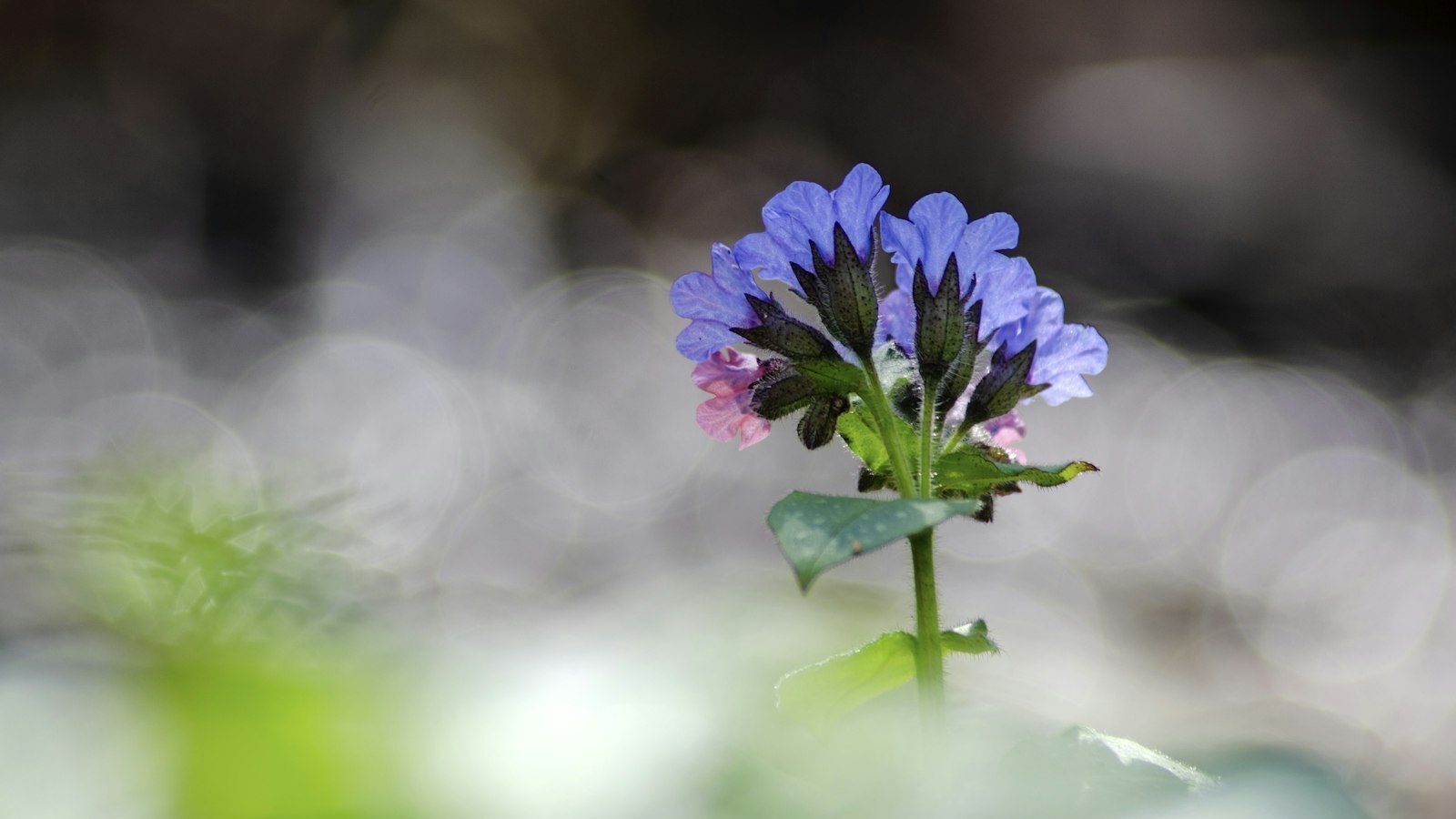
Lungwort, Pulmonaria, is one of the first perennials to wake the shade garden in spring, often blooming alongside the daffodils while most of the border is still bare. Its flowers are a small marvel: buds open pink and age to blue or purple, so a single cluster shows both colors at once, an old habit that earned it the nickname “soldiers and sailors.” After the flowers fade, the real long-season payoff arrives — bold clumps of silver-spotted or fully silvered leaves that brighten dark corners from spring to frost. Lungwort is a tough, shade-loving, deer-resistant groundcover that asks only for shade and steady moisture, with powdery mildew its one recurring quirk. This guide covers choosing cultivars, planting, watering, the post-bloom shear that beats mildew, division, and the best shade companions.
Key Takeaways
- Zones: Hardy in USDA zones 3–8; prefers cool conditions and dislikes hot, dry summers.
- Sun: Part to full shade. Morning sun with afternoon shade is fine; hot afternoon sun scorches it.
- Soil: Moist, humus-rich, well-drained soil. Consistent moisture is the key to success.
- Spacing: 12–18 inches apart; clumps slowly spread to form a groundcover.
- Bloom time: Very early spring, with flowers that open pink and age to blue or purple.
- Care: Shear after bloom to refresh foliage and combat powdery mildew.
Why Grow Lungwort
Lungwort does two jobs few other plants do as well. First, it is one of the earliest spring bloomers, providing nectar for emerging bees and bumblebees when little else is open, and its bicolor pink-to-blue flowers are genuinely charming up close. Second, and more lastingly, its foliage carries the shade garden for the rest of the year. Depending on the cultivar, the leaves range from green flecked with silver spots to almost entirely metallic silver, and that brightness is invaluable for lighting up the dim spots under trees and on the north side of buildings where few flowering plants thrive. It is deer and rabbit resistant, low-growing, and slowly clumps into an effective weed-suppressing groundcover. The common name and the old genus name (from “pulmo,” lung) come from the spotted leaves’ fanciful resemblance to diseased lungs, a relic of medieval herbalism rather than any garden trait.
Choosing a Cultivar
Modern lungworts are bred mostly for spectacular foliage and improved mildew resistance, so cultivar choice matters. For dramatic silver leaves, look to ‘Majeste’ (nearly solid silver), ‘Silver Bouquet,’ and ‘Diana Clare.’ ‘Mrs. Moon’ is a classic with heavily silver-spotted leaves and pink-to-blue flowers. ‘Raspberry Splash’ offers upright habit and raspberry-pink flowers, while ‘Trevi Fountain’ pairs cobalt-blue flowers with spotted leaves. For the best mildew resistance, choose the narrow-leaved Pulmonaria longifolia types and newer hybrids bred for it. If you want red flowers, Pulmonaria rubra blooms early and is one of the least mildew-prone species. Pick a cultivar suited to how much silver you want and how humid your summers are.
When and Where to Plant
Plant lungwort in spring or early fall while the soil is moist and temperatures are mild. Site is everything: lungwort wants part to full shade. It can take morning sun, and in cool northern climates it tolerates more light as long as the soil stays moist, but hot afternoon sun scorches and wilts the foliage badly. The ideal home is dappled shade beneath deciduous trees or the cool north or east side of a structure. Because it dislikes heat, lungwort is happiest in zones 3–8 and struggles in the hot, humid lower South.
Soil should be rich in organic matter, consistently moist, and well-drained — think of the cool, leaf-littered floor of a woodland, which is exactly the habitat lungwort evolved for. Work plenty of compost or leaf mold into the planting area. The number one cause of disappointment with lungwort is dry soil: let it dry out and the leaves wilt, scorch, and become a magnet for powdery mildew. Space plants 12–18 inches apart; they will knit together over a few seasons into a continuous low cover.
Planting and Watering
Dig a hole as deep as the root ball and wider, enrich the backfill with compost, and set the crown level with the soil surface. Backfill, firm gently, and water deeply. Apply a generous two- to three-inch layer of organic mulch — shredded leaves or bark — around the plant to lock in the moisture lungwort craves and keep its roots cool, keeping mulch just off the crown. Water thoroughly and regularly while the plant establishes, never letting the soil dry out in the first season.
Even after establishment, lungwort is not a drought plant. Consistent moisture is the single biggest factor in keeping the foliage lush and mildew-free through summer. During dry spells, water deeply at the base; in deep, dry shade under greedy tree roots it will need extra attention. If plants wilt on a hot afternoon but recover overnight, that is normal heat response; persistent wilting and crisping edges mean the soil is too dry or the spot is too sunny.
Ongoing Care: Feeding and the Post-Bloom Shear
Lungwort is a light feeder. A spring topdressing of compost or a light dose of balanced fertilizer as growth begins is all it needs; an organic mulch that breaks down over time supplies much of its nutrition. Avoid heavy feeding.
The key maintenance task mirrors the one for lady’s mantle and hardy geraniums: a post-bloom shear. After the flowers fade in late spring, and especially if the foliage starts to look tired or mildewed by early summer, cut the whole plant back hard, almost to the ground, and water it well. A clean flush of fresh, bright leaves regrows within a few weeks and carries the plant attractively through the rest of the season. This shear refreshes the foliage and is also the most effective non-chemical control for powdery mildew, since it removes the affected leaves and lets healthy ones replace them. Deadheading the spent flower stems before shearing keeps things tidy in the meantime.
In late fall the foliage of many types persists or semi-evergreens in milder zones; you can leave it for winter cover and tidy any tattered leaves in early spring before the new flowers emerge. Lungwort is fully hardy through its range and needs no special winter protection beyond its mulch.
Dividing Lungwort
Lungwort spreads slowly by short rhizomes and forms tighter clumps over time. Divide every three to five years to rejuvenate aging clumps and make new plants, ideally in early fall or in spring right after flowering. Lift the clump, separate it into sections each with roots and a fan of leaves, trim the foliage back to reduce stress, and replant immediately at the same depth in moisture-rich soil. Keep divisions well watered until they re-root. Dividing right after bloom pairs naturally with the post-bloom shear. This same divide-and-refresh rhythm suits most shade perennials, including the lady’s mantle that makes such a good neighbor for lungwort.
Pests, Diseases, and Troubleshooting
Lungwort’s headline problem is powdery mildew, the white, dusty coating that appears on the leaves in hot, dry, or stressed conditions and in stagnant, crowded plantings. The best defenses are cultural, not chemical: keep the soil consistently moist (drought-stressed plants are far more susceptible), choose mildew-resistant cultivars and species like P. longifolia and P. rubra, space plants for good air circulation, water at the base rather than overhead, and shear affected foliage off to force clean regrowth. With those steps, mildew is a cosmetic nuisance rather than a real threat.
Beyond mildew, lungwort is largely untroubled. Slugs and snails may chew the leaves in damp shade — handpick, use traps, or apply iron-phosphate bait if damage is heavy. The plant’s bristly foliage makes it reliably deer and rabbit resistant. The other common complaint, wilting and leaf scorch, is an environmental issue: too much sun or too little water. Move the plant to deeper shade and richer, moister soil, and the problem resolves.
Companion Plants and Design Uses
Lungwort is a foundation plant for the shade garden, valued for both its early flowers and its season-long bright foliage. The silver and spotted leaves light up dim corners and contrast beautifully with the bold leaves and varied textures of classic shade companions: hostas, ferns, astilbe, heuchera, bleeding heart, foamflower (tiarella), and brunnera. As an early bloomer it overlaps with spring bulbs — interplant lungwort among daffodils, scilla, and hellebores so its emerging leaves hide the bulbs’ fading foliage later. Its low, spreading habit makes it an excellent groundcover and edging plant along shaded paths and at the front of woodland borders.
For a layered woodland-edge planting, combine lungwort’s silvered mounds with the chartreuse froth of lady’s mantle and the blooms of shade-tolerant hardy geraniums for a tapestry of contrasting foliage and long bloom. The early flowers are also a valuable nectar source for bumblebees emerging in cool spring weather. To build out a resilient, low-maintenance shade border, explore more shade-friendly perennials on the Plants & Flowers hub.
Frequently Asked Questions
Does lungwort grow in full shade?
Yes. Lungwort thrives in part to full shade and is one of the best foliage plants for dim corners under trees or on the north side of a house. It tolerates morning sun but scorches in hot afternoon sun, so deeper shade is safer in warm climates.
Why do my lungwort leaves get powdery mildew?
Mildew strikes when plants are drought-stressed, crowded, or in stagnant air. Keep the soil consistently moist, space plants for airflow, choose resistant cultivars like P. longifolia, and shear affected foliage back hard so clean new leaves can replace it.
Why do lungwort flowers change color?
The buds open pink and the flowers age to blue or purple as the pigment shifts with the flower’s pH. A single cluster often shows both colors at once, which is why lungwort is nicknamed “soldiers and sailors.” It’s a natural, healthy trait.
When should I cut back lungwort?
Shear the whole plant back hard after the flowers fade in late spring, or whenever the foliage looks tired or mildewed in early summer. Water it well and fresh leaves regrow within a few weeks. Tidy any tattered leaves again in early spring.
Is lungwort deer resistant?
Yes. Its bristly, somewhat coarse foliage makes lungwort reliably deer and rabbit resistant, so it’s a dependable choice for shaded gardens where browsing is a problem. Slugs are the main pest in damp shade.