

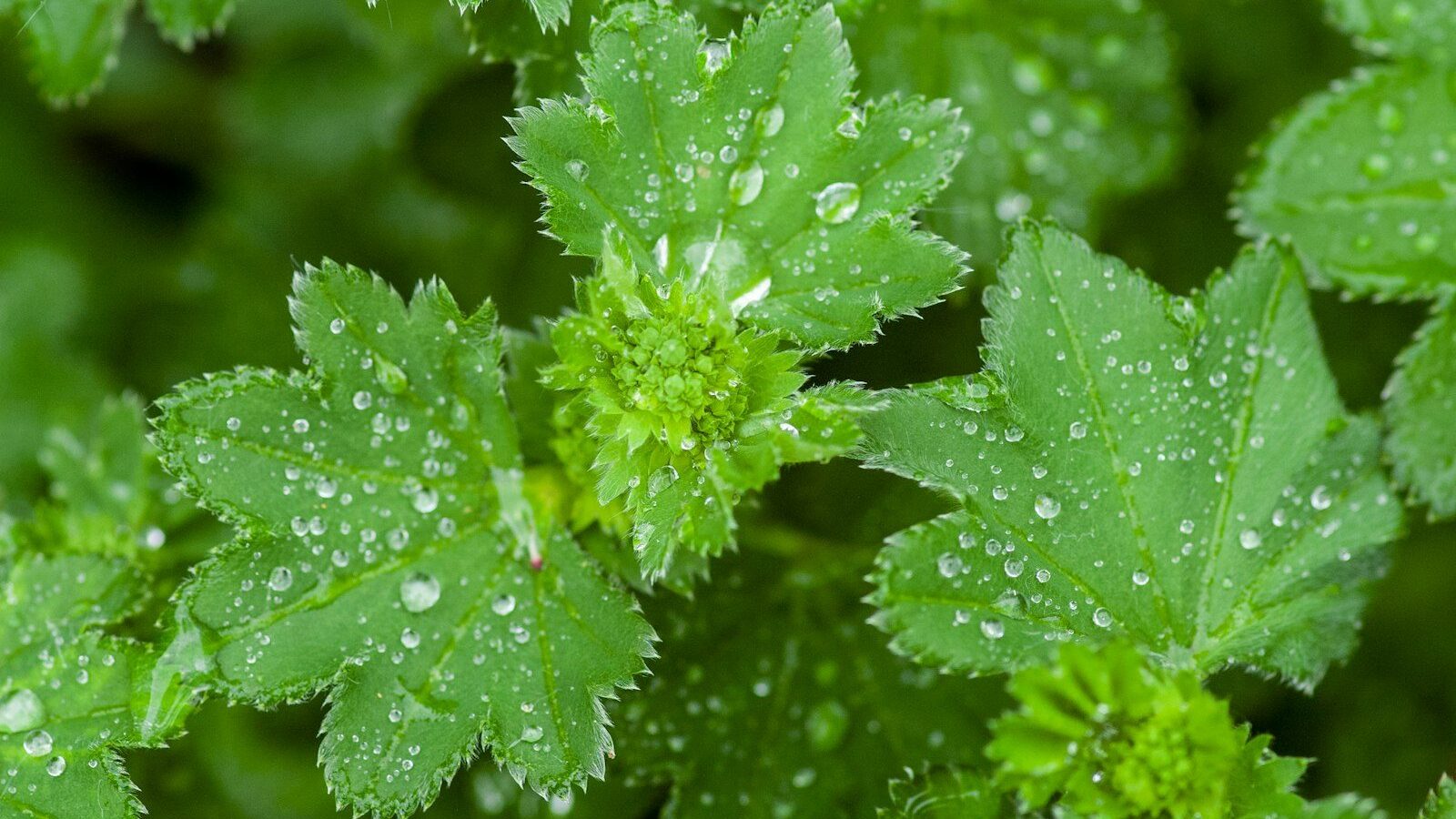
Lady’s mantle, Alchemilla mollis, is a quiet workhorse of the perennial border, prized as much for its foliage as its flowers. The soft, scalloped, pleated leaves catch raindrops and morning dew in glistening silver beads, an effect so striking it gave the plant its botanical name (from “alchemy”). In early summer, a froth of tiny chartreuse-green flowers rises above the leaves in airy sprays, blending and brightening every color around them. Easygoing, shade-tolerant, deer-resistant, and adaptable, lady’s mantle softens path edges, fills gaps, and ties a planting together with that signature acid-green haze. It does self-sow enthusiastically, which is either a feature or a chore depending on your tolerance, and this guide covers planting, the all-important midsummer shear, division, and how to keep its seeding in check.
Key Takeaways
- Zones: Hardy in USDA zones 3–8; dislikes hot, humid summers in the deep South.
- Sun: Full sun in the North; part to full shade where summers are hot. Morning sun, afternoon shade is ideal.
- Soil: Average, moist but well-drained soil rich in organic matter; tolerates clay.
- Spacing: 12–18 inches apart; mature clumps reach 18–24 inches wide.
- Bloom time: Early to midsummer, with frothy chartreuse-green flower sprays.
- Care: Shear after bloom to refresh foliage and prevent heavy self-seeding.
Why Grow Lady’s Mantle
Lady’s mantle earns its place through versatility. The mounded, pleated foliage is handsome from the moment it unfurls in spring until frost, and those water-beading leaves are genuinely magical after rain. The chartreuse flowers are one of the great “blender” colors in garden design — acid green flatters hot reds and oranges, cools down pinks, and electrifies blues and purples. As a cut or filler flower it is a florist’s staple. Practically, it tolerates shade, clay, and a range of conditions, resists deer and rabbits, and forms a soft, weed-suppressing edge along paths, steps, and the front of borders. The main species, A. mollis, is the standard; the smaller A. erythropoda and alpine A. alpina suit rock gardens and tighter spaces.
When and Where to Plant
Plant lady’s mantle in spring or early fall. Container plants establish quickly when set out while the soil is warm and moisture is reliable. The plant’s light needs shift with your climate: in cool northern gardens (zones 3–6) it thrives in full sun as long as the soil stays moist, but in hot summer regions it needs afternoon shade or the leaves scorch and brown at the edges. The ideal exposure almost everywhere is morning sun with afternoon shade, or bright dappled shade. Lady’s mantle struggles in the hot, humid lower South (zones 8–9 and warmer), where summer heat and humidity cause it to melt out; in those climates treat it as a cool-season plant or skip it.
Give it average to fertile soil that holds moisture but drains well, ideally enriched with compost. It tolerates clay and a range of pH, and once established handles short dry spells, though it looks best with consistent moisture. Space plants 12–18 inches apart for a continuous edge, knowing each clump will spread to roughly 18–24 inches across.
Planting Step by Step
Dig a hole the depth of the root ball and a bit wider, work some compost into the backfill if your soil is lean, and set the crown level with the surrounding soil. Backfill, firm gently, and water thoroughly. Mulch around the plant with an inch or two of organic mulch to keep roots cool and moist and to suppress weeds, keeping the mulch off the crown. During the first season, water consistently — whenever the top inch of soil dries — to establish a strong root system. After establishment lady’s mantle is fairly drought tolerant in shade but will brown and look ragged if it dries out badly in sun, so site it where you can keep it reasonably moist.
The Key Care Task: Shearing After Bloom
If you remember one thing about caring for lady’s mantle, make it the post-bloom shear. By mid to late summer the flowers fade to a tired tan-brown, and the foliage often looks scorched or floppy. At that point, cut the entire plant back hard — flowers and leaves both, down to a few inches above the crown — and water it well. Within a couple of weeks a fresh flush of clean, bright new leaves emerges, and the plant looks crisp again into fall. This single shearing accomplishes three things at once: it refreshes tired foliage, tidies the plant, and removes the spent flowers before they shed seed.
That last point matters because lady’s mantle self-sows freely — sometimes too freely. Seedlings pop up in gravel paths, bed edges, and crevices, which is charming in a cottage garden and a nuisance in a tidy one. Shearing right after bloom, before the seed ripens, is the most effective way to control unwanted spread. If you enjoy the volunteers, leave a few flower heads to ripen; if you do not, cut the whole plant back promptly and remove the trimmings. Either way, deadheading or shearing keeps the planting looking intentional.
Feeding and Seasonal Care
Lady’s mantle is not a heavy feeder. A spring topdressing of compost or a light application of balanced fertilizer is plenty for the season; rich feeding just produces floppier growth. Keep an even moisture supply through the heat of summer, especially for plants in sunnier spots. In late fall the foliage dies back; you can cut it down then or leave it for winter cover and clean up in early spring as new leaves emerge. The plant is fully hardy through its range and needs no winter protection beyond ordinary mulch in the coldest zones. Old, woody, or hollow-centered clumps signal it is time to divide.
Dividing and Propagating
Lady’s mantle divides easily and benefits from it every three to five years once clumps grow large or open out in the center. Lift the clump in early spring or fall, slice or pull it into sections, each with roots and a few crowns, and replant at the same depth, spacing the divisions out. Water them in and keep them moist while they re-root. Division both rejuvenates the parent and gives you free plants for edging elsewhere. Of course, the plant also propagates itself by seed with no help from you — transplanting a few self-sown seedlings in spring is the laziest way to get more. The same divide-every-few-years rhythm applies to many border perennials, including the hardy geraniums that pair so naturally with lady’s mantle.
Pests, Diseases, and Problems
Lady’s mantle is remarkably pest- and disease-free. Deer and rabbits leave it alone, and serious insect problems are rare; the occasional slug or snail may nibble new spring leaves, especially in damp shade, but rarely cause lasting harm. The most common complaint is not a pest at all but environmental: leaves that scorch, brown at the edges, or collapse in midsummer. This is heat and sun stress, sometimes compounded by drought or poor air circulation in humid weather. The cure is the same midsummer shear — cut it back, water, and let it regrow fresh. Long term, move struggling plants into more shade and consistently moist soil. In very hot, humid climates the plant may simply not be a good fit. Occasionally fungal leaf issues appear in crowded, wet conditions; improve spacing and airflow and avoid overhead watering.
Companion Plants and Design Uses
Lady’s mantle is one of the best edging and “knitting” plants in the perennial palette. Its low, pleated mounds and chartreuse froth spill gracefully over path edges, steps, and the front of borders, softening hard lines. Use that acid-green flower color deliberately as a blender: it makes roses and peonies glow, cools down hot-colored daylilies, and harmonizes with blue and purple companions like salvia, catmint, and hardy geraniums. In shadier spots it pairs beautifully with hostas, ferns, astilbe, heuchera, and foxglove, the contrasting leaf shapes playing off the rounded, scalloped foliage. It is also a classic underplanting for shrub roses.
For a cottage-garden or woodland-edge planting, weave lady’s mantle through a mixed border so its froth ties everything together, and let a little self-seeding fill the gaps for that relaxed, abundant look. The flowers are excellent cut or as a filler in arrangements. To round out a shade-tolerant, low-maintenance border, browse the Plants & Flowers hub for more easygoing perennials that share its conditions.
Frequently Asked Questions
Does lady’s mantle prefer sun or shade?
It depends on climate. In cool northern gardens it grows well in full sun with moist soil, but in hot regions it needs afternoon shade or the leaves scorch. The ideal nearly everywhere is morning sun with afternoon shade, or bright dappled shade.
Why are my lady’s mantle leaves turning brown?
Browning, scorched edges and midsummer collapse are usually heat, sun, and drought stress, not disease. Shear the whole plant back hard and water it — fresh clean leaves regrow within a couple of weeks. Long term, move it to more shade and steadier moisture.
Is lady’s mantle invasive?
It isn’t truly invasive, but it self-sows freely and seedlings can pop up widely. To control spread, shear the plant right after bloom before seed ripens. If you like the volunteers, leave a few flower heads to set seed instead.
When should I cut back lady’s mantle?
Shear the whole plant — flowers and leaves — after the blooms fade in mid to late summer, then water for a fresh flush of foliage. Do a final cleanup either in late fall or early spring as new growth emerges.
Is lady’s mantle deer resistant?
Yes. Lady’s mantle is reliably deer and rabbit resistant and largely free of pests and disease, which makes it a dependable, low-maintenance choice for edging and shade gardens troubled by browsing animals.