

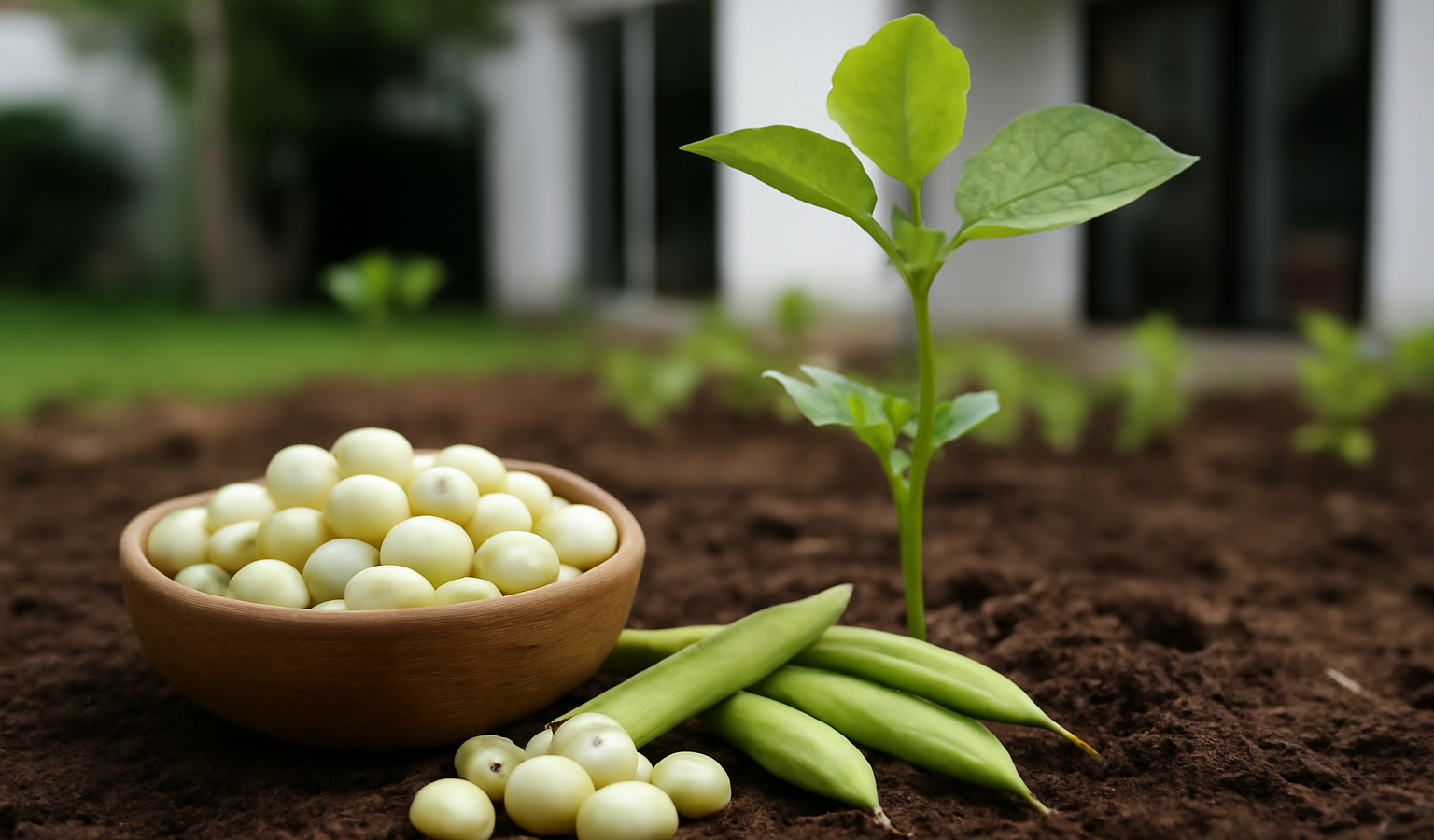
Lima beans, also called butter beans, are one of the most rewarding warm-season legumes you can grow, but they are also one of the most misunderstood. Gardeners who succeed with peas and fava beans in cool spring weather often kill their first lima bean planting outright by sowing too early into cold, soggy soil. Limas are tropical in origin, frost-tender from seed to harvest, and they refuse to germinate until the soil truly warms. Get the timing and the watering right, though, and a single short row of bush limas or a trellis of pole limas will produce buttery, protein-rich beans for fresh shelling and for drying through fall. This guide walks through everything from soil temperature and seed depth to the blossom drop that frustrates so many growers during summer heat waves, plus harvesting both fresh-shell and dry beans.
Key Takeaways
- Lima beans are a warm-season crop. Unlike cool-season fava beans, they need soil at 65 to 70°F or warmer to germinate and will rot in cold ground.
- Sow seeds directly 1 to 2 weeks after your last frost date, once nighttime temperatures stay above 50°F. They are frost-tender at both ends of the season.
- Plant seeds 1 to 1.5 inches deep. Space bush types 3 to 6 inches apart in rows 24 to 30 inches apart; space pole types 6 to 10 inches apart along a sturdy trellis.
- Bush limas mature in about 65 to 75 days; pole limas take 85 to 95 days but yield over a longer window.
- Give them full sun and consistent moisture, especially during flowering and pod set. Heat above 80 to 90°F plus drought triggers blossom drop.
- Avoid high-nitrogen fertilizer. Limas fix their own nitrogen, and excess N gives you leaves instead of pods.
- Harvest fresh-shell beans when pods feel plump and firm; for dry beans, leave pods on the plant until they turn brown and papery.
What Are Lima Beans?
Lima beans (Phaseolus lunatus) are a tender legume grown for their flat, kidney-shaped seeds. In the kitchen they are often called butter beans, especially the larger, paler varieties popular in Southern cooking. They come in two broad seed sizes: large-seeded “potato” or Fordhook types with a rich, buttery texture, and smaller “baby” or sieva types that mature faster and tolerate heat a little better. Colors range from cream and pale green to speckled maroon and even deep purple in heirloom varieties like Christmas lima and Jackson Wonder.
Like other beans, limas are legumes that partner with soil bacteria to fix atmospheric nitrogen, which means they need very little supplemental feeding. What sets them apart from common snap beans is their longer season and their stronger demand for heat. Where a green bean might be ready in 50 to 55 days, a lima bean often needs 65 to 95 days of warm weather. That long, frost-free requirement is the single biggest factor in deciding whether and how to grow them in your region.
Bush Limas vs. Pole Limas
Lima beans come in both bush and pole forms, and choosing between them shapes your whole planting plan. Bush limas grow as compact, self-supporting plants 18 to 24 inches tall. They set most of their pods over a concentrated two- to three-week window, mature faster (roughly 65 to 75 days), and need no trellis, making them the practical choice for short-season gardens and for growers who want a single big harvest to freeze. Popular bush varieties include Fordhook 242, Henderson, and Eastland.
Pole limas are vigorous climbers that can reach 8 to 12 feet and keep producing for two months or more once they start. They take longer to mature (about 85 to 95 days) but deliver a much larger total yield from a small footprint and tend to handle summer heat with less blossom drop because the foliage shades the developing pods. King of the Garden, Christmas, and Carolina (sieva) are classic pole types. If you have a long, hot summer and vertical space, pole limas are usually the more productive use of a bed. If your frost-free season is tight, bush types are the safer bet.
Warm-Season vs. Cool-Season: Why Timing Matters
This is the point that trips up the most gardeners. Lima beans are decisively a warm-season crop, and they behave nothing like the cool-season legumes many people grow first. Fava beans, for example, are sown in very early spring (or even fall in mild climates) and actually prefer cool 60 to 65°F weather, shutting down once summer heat arrives. Peas behave the same way. If you treat a lima bean like a fava and rush it into cold March soil, the seed will simply sit, absorb water, and rot before it can sprout.
Limas demand warmth at every stage. The seeds need soil temperatures of at least 65°F to germinate reliably, and 70 to 80°F is better. The plants are killed by frost, so they cannot go out until all danger of frost has passed and the soil has warmed. And because they need 65 to 95 frost-free days to reach harvest, gardeners in short-season northern zones should lean heavily toward fast bush varieties, while those in USDA zones 7 and warmer can grow long-season pole types with ease. Understanding whether a crop wants cool or warm conditions is the same principle behind comparisons like sugar snap vs. snow peas: matching the plant to its preferred temperature window is what separates a good harvest from a failed one.
When to Plant Lima Beans
The golden rule is to wait. Plant lima beans outdoors one to two weeks after your average last spring frost date, and only once the soil at seed depth has reached at least 65°F. A cheap soil thermometer pushed 1 to 2 inches into the bed at mid-morning is the most reliable guide you can use. As a secondary check, wait until nighttime air temperatures stay consistently above 50°F. In much of the central and southern U.S. this means planting from late April through May; in cooler northern zones, early to mid-June is often safer than gambling on a warm late-May spell.
Lima beans strongly prefer to be direct-sown rather than transplanted. Like most beans, they have sensitive taproots that resent disturbance, and they germinate quickly in warm soil, so there is little advantage to starting them indoors. If your season is genuinely too short for direct sowing even fast bush types, you can start seeds in biodegradable pots two to three weeks before transplanting, but handle the root ball gently. For most gardeners the choice is clear; if you want to weigh it for your own conditions, this guide on direct sow vs. transplant covers the trade-offs in detail.
Soil and Light Requirements
Lima beans need full sun to produce well, meaning at least 6 to 8 hours of direct light per day. More sun means more pods and faster, more even ripening. A site that gets shaded for part of the afternoon will give you fewer beans and a longer, more frustrating wait for maturity.
For soil, aim for a well-drained, loose loam with a pH between 6.0 and 6.8. Heavy clay that stays cold and wet is the enemy of lima germination, so work in compost to improve both drainage and warmth before planting. Limas are not heavy feeders, but a few inches of finished compost worked into the top 6 inches of the bed provides plenty of slow-release nutrition and improves moisture retention for the critical pod-setting period later in the season. Avoid planting in low spots where water pools after rain, since waterlogged seeds rot almost immediately in the warm conditions limas otherwise love.
Use a Bean Inoculant
If lima beans or other legumes have not grown in your bed before, treating the seed with a Rhizobium inoculant can noticeably improve nitrogen fixation and overall vigor. The inoculant introduces the specific soil bacteria that form nodules on the roots and pull nitrogen from the air. It is inexpensive, harmless, and applied by dampening the seed and dusting it with the powder right before sowing. In beds that have grown beans for years, native bacteria are usually already present, but inoculant is cheap insurance in new gardens or where you have heavily amended the soil.
How to Plant: Depth and Spacing
Sow lima bean seeds 1 to 1.5 inches deep, planting on the shallower end in heavy soil and the deeper end in light, sandy soil. Plant with the eye (the small scar on the seed) facing down if you are placing seeds by hand; this helps the root emerge in the right direction. Water the bed before planting rather than soaking heavily afterward, because lima seeds are prone to cracking and rotting if they sit in saturated soil right after sowing.
Spacing for Bush Limas
Space bush lima seeds 3 to 6 inches apart within the row, with rows 24 to 30 inches apart. Sowing on the closer side gives the plants enough mutual support to stay upright and helps shade out weeds, while the wider row spacing leaves room to walk through and harvest. There is no need to thin aggressively; bush limas tolerate fairly dense stands. If germination is patchy, you can fill gaps with a second sowing a week or two later.
Spacing and Trellising for Pole Limas
Pole limas need both wider spacing and strong vertical support installed before you plant. Space seeds 6 to 10 inches apart along a trellis, fence, or teepee. Because pole limas grow tall and stay productive for months, their supports must be genuinely sturdy: a heavy mature vine loaded with pods and wet foliage can topple a flimsy structure in a summer storm. Sink trellis posts at least a foot into the ground, use a teepee of 8-foot poles lashed firmly at the top, or run heavy netting between solid end posts. Guide the young vines onto the support by hand for the first week or two; once they catch, lima beans climb on their own by twining.
Watering Lima Beans
Consistent moisture is the make-or-break factor for lima bean yields. Aim for about 1 to 1.5 inches of water per week from rain or irrigation, more in hot, dry, or windy weather. Deep, infrequent watering encourages roots to grow down and makes plants more resilient than shallow daily sprinkling. Water at the base of the plants rather than overhead when possible, because wet foliage encourages fungal diseases like downy mildew.
The most critical period is from the onset of flowering through pod set. If plants dry out while they are blooming and filling pods, they will abort flowers and produce poorly filled or flat pods. A 2- to 3-inch layer of organic mulch such as straw or shredded leaves applied once the soil is warm helps hold moisture steady, suppresses weeds, and keeps the root zone from overheating during midsummer. Inconsistent watering, swinging between bone-dry and flooded, is one of the most common causes of disappointing lima harvests.
Heat and Blossom Drop
Here is the frustrating paradox of lima beans: they need heat to grow, but extreme heat sabotages their flowers. When daytime temperatures climb above roughly 80 to 90°F, especially combined with hot nights above 70°F and dry air, lima flowers frequently fail to pollinate and simply drop off without setting pods. This blossom drop is not a disease and not your fault; it is the plant’s physiological response to heat stress, the same mechanism that affects tomatoes and snap beans in a heat wave.
You can reduce blossom drop by keeping soil moisture steady, mulching to cool the root zone, and avoiding fertilizer that pushes tender new growth during peak heat. The plants typically resume setting pods once the worst of the heat passes, which is one reason pole limas, with their long production window, often outproduce bush types in hot climates: they keep flowering into the cooler weeks of late summer and fall. In the hottest regions, choosing small-seeded baby lima or sieva types, which tolerate heat better than large Fordhook types, also helps.
Fertilizing Lima Beans
The most important fertilizing advice for lima beans is restraint. As nitrogen-fixing legumes, they manufacture much of their own nitrogen through root nodules, so high-nitrogen fertilizer is actively counterproductive. Too much nitrogen produces lush, leafy plants that flower poorly and set few pods, the classic “all vines, no beans” problem. Skip the lawn-style fertilizers entirely.
If your soil is reasonably fertile and amended with compost, lima beans usually need no supplemental feeding at all. In poor soil, a single light application of a balanced or low-nitrogen, phosphorus-and-potassium-leaning fertilizer at planting is plenty. Phosphorus and potassium support flowering and pod fill, which is exactly what you want. Excess nitrogen also delays maturity, a real risk for a crop that already needs every frost-free day it can get.
Pests and Diseases
The most damaging pest of lima beans is the Mexican bean beetle, a copper-colored relative of the ladybug whose spiny yellow larvae skeletonize leaves from the underside, leaving a lacy, papery look. Scout the undersides of leaves regularly and crush the yellow egg clusters and larvae you find. Hand-picking is effective in small gardens; row cover early in the season keeps adults off young plants; and in bad infestations, neem oil or an approved insecticide applied to leaf undersides can knock the population back.
Aphids are the other common pest, clustering on tender shoots and flower buds where they suck sap and can spread viruses. A strong spray of water dislodges them, and they are kept in check by ladybugs, lacewings, and other beneficial insects, so avoid broad-spectrum sprays that kill those allies. Insecticidal soap works for heavy outbreaks.
On the disease side, downy mildew can appear on lima beans in cool, humid, wet weather, showing up as fuzzy patches on pods and leaves. Reduce its odds by spacing plants for good airflow, watering at the base rather than overhead, and avoiding working among wet plants, which spreads spores. Bacterial blights and root rots are also possible in waterlogged soil, which is one more reason good drainage matters from the start. Rotate beans to a different bed each year, ideally on a three-year cycle, to keep soilborne problems from building up. For more on companion planting and rotation in the vegetable garden, browse the Plants & Flowers hub.
Harvesting Lima Beans
How and when you harvest depends on whether you want fresh-shell beans or dry beans. For fresh-shell limas, the kind you cook soon after picking, harvest when the pods feel plump, firm, and bulging with developed seeds but are still bright green and have not begun to dry. Squeeze a pod; if it gives easily and feels empty, it is too early, while a firm, well-filled pod is ready. Pick frequently, every few days during the peak, because regular harvesting signals the plant to keep flowering and producing. Pods left too long become tough and starchy.
For dry beans to store through winter, do the opposite: leave the pods on the plant until they turn brown, dry, and papery and the beans rattle inside. Then pull the whole plants or strip the pods and let them finish drying under cover for a week or two before shelling. Make sure the beans are fully dry and hard before storing them in airtight jars, or they may mold. If frost threatens before dry pods have fully matured, pull the plants and hang them somewhere warm and dry to finish off the stems.
One important safety note: raw lima beans contain natural compounds (cyanogenic glycosides) and should always be cooked before eating. Cooking them in an uncovered pot for at least 10 to 15 minutes makes them perfectly safe and brings out their classic buttery flavor.
Succession Planting
Because bush limas concentrate their harvest into a short window, succession planting can extend your fresh supply. Sow a new short row of bush limas every two to three weeks through early to midsummer, stopping early enough that the final planting still has its full 65 to 75 days before your first fall frost. Count backward from your average first frost date and add a week of cushion to find your last safe sowing date. Pole limas usually do not need succession because a single planting produces continuously for two months or more once it starts bearing.
In long-season southern gardens, you can sometimes fit a spring bush planting and a second midsummer planting that matures in fall, effectively bookending the hottest weeks that cause the worst blossom drop. Keep notes on your planting dates and harvest results each year; lima beans reward gardeners who learn the precise warm-weather window for their own backyard.
Frequently Asked Questions
Why won’t my lima bean seeds germinate?
The most common cause is cold soil. Lima beans need soil at least 65°F, and ideally 70 to 80°F, to sprout reliably. Below that, seeds absorb water and rot before they can germinate. Wait until one to two weeks after your last frost and confirm soil temperature with a thermometer before sowing. Overly wet soil right after planting also rots the seeds.
How are lima beans different from fava beans?
They are opposites in temperature needs. Lima beans are a warm-season crop sown after frost that thrive in summer heat, while fava beans are a cool-season crop sown in very early spring or fall that prefer 60 to 65°F and stop producing in summer heat. Planting limas as early as you would favas is a common and fatal mistake.
Why are my lima bean flowers falling off without making pods?
This is blossom drop, usually caused by heat stress when daytime temperatures rise above 80 to 90°F, often worsened by dry soil and hot nights. The plants typically resume setting pods once cooler weather returns. Keep soil consistently moist, mulch to cool the roots, and consider heat-tolerant small-seeded or pole varieties in hot climates.
How do I know when lima beans are ready to harvest?
For fresh shelling, pick when pods are plump, firm, and bulging with seeds but still green. For dry beans, leave pods on the plant until they turn brown and papery and the beans rattle inside. Harvest fresh-shell pods every few days to encourage continued production; pods left too long become tough and starchy.
Should I fertilize lima beans with nitrogen?
No. Lima beans are legumes that fix their own nitrogen through root nodules, so high-nitrogen fertilizer leads to lots of leaves and few pods. Amend the bed with compost before planting, and if you feed at all, use a low-nitrogen product higher in phosphorus and potassium to support flowering and pod fill.