

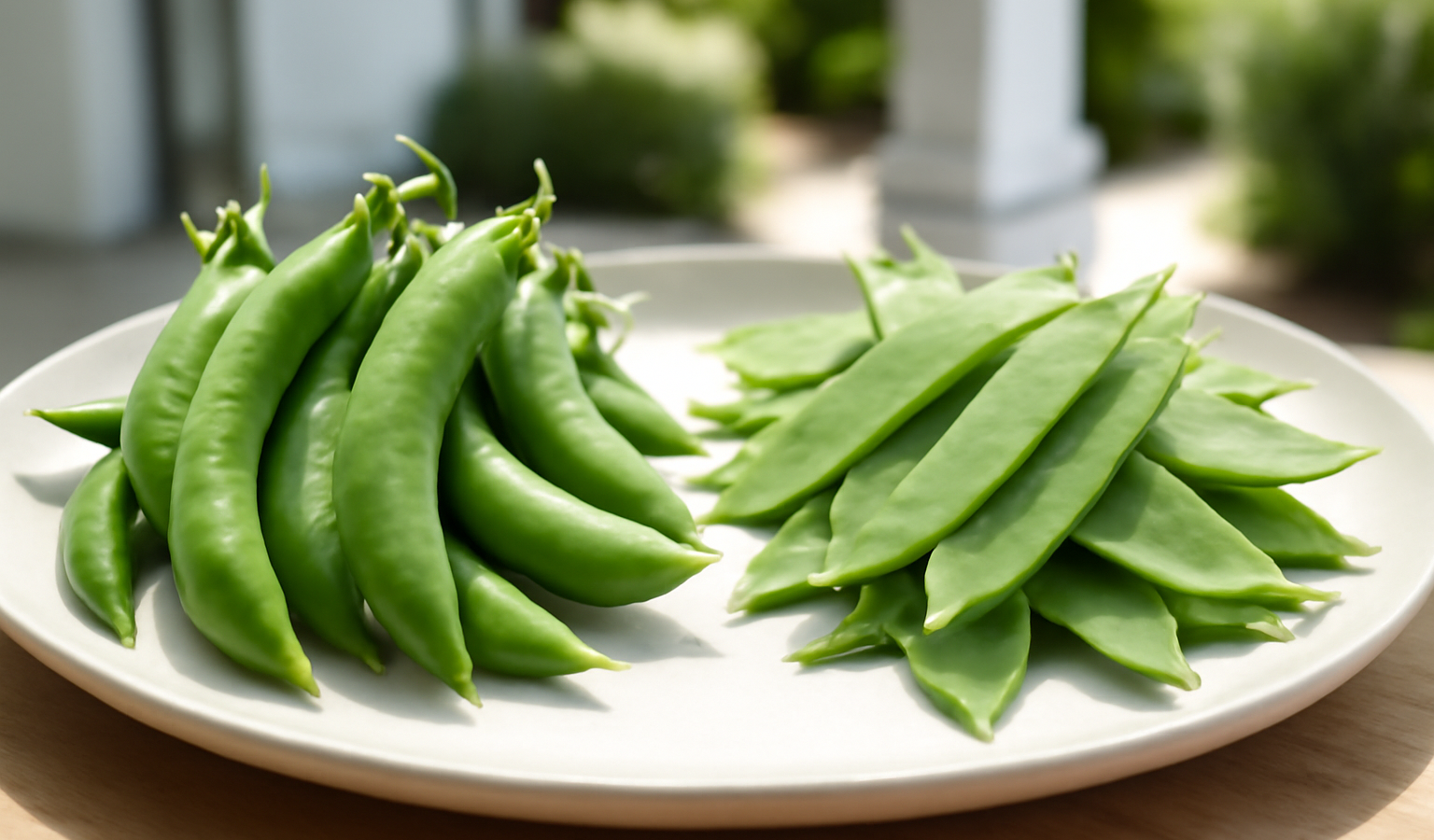
The quick answer: snow peas are flat, edible pods you harvest before the seeds swell, while sugar snap peas are plump, edible pods you harvest after the peas fill out. Both are eaten whole, pod and all, which sets them apart from shelling (English) peas where you discard the pod. They grow almost identically in the garden, but they differ in sweetness, crunch, pod texture, days to maturity, and the dishes they suit. If you only have room for one, your choice usually comes down to whether you want a crisp, sweet snacking pea (sugar snap) or a tender, flat stir-fry pea (snow).
Key Takeaways
- Snow peas are flat with tiny immature seeds; harvest at 2–3 inches before peas bulge. Best for stir-fries.
- Sugar snap peas are rounded with fully formed peas inside a crisp, sweet pod; harvest when plump. Best for raw snacking.
- Both are edible-pod peas — you eat the whole pod, unlike English/shelling peas.
- Snow peas mature a bit faster (~60 days) than sugar snaps (~65–70 days).
- Both are cool-season crops: sow as soon as soil hits 45°F in early spring, or 8–10 weeks before first fall frost.
- Pick every 1–3 days during peak season to keep plants producing and pods tender.
| Trait | Snow Peas | Sugar Snap Peas |
|---|---|---|
| Pod shape | Flat, translucent | Rounded, plump |
| Seeds at harvest | Tiny, immature | Fully formed, sweet |
| Texture | Tender, slightly chewy | Crisp, snappy |
| Sweetness | Mild | High |
| Days to maturity | 55–65 | 60–70 |
| Best raw? | Good | Excellent |
| Best cooked use | Stir-fry, soup | Quick blanch, sauté |
| Stringy? | Usually stringless | Often has a string to remove |
What Snow Peas Are
Snow peas (Pisum sativum var. saccharatum), sometimes labeled “Chinese pea pods” or mangetout, are bred to be eaten flat and immature. You harvest the pod when it has reached full length — usually 2.5 to 3 inches — but before the peas inside begin to swell into visible bumps. At that stage the pod wall is thin, tender, and almost translucent against the light. Catch them late and they turn fibrous and starchy, losing the delicate snap that makes them worth growing.
Popular varieties include ‘Oregon Sugar Pod II’, a reliable, disease-resistant standard that grows to about 28 inches and resists pea enation mosaic and powdery mildew, and ‘Mammoth Melting Sugar’, a taller climber (4–5 feet) that needs a trellis but rewards you with large, sweet pods. ‘Golden Sweet’ is an ornamental yellow-podded heirloom with purple flowers that doubles as a pretty addition to the edible garden. Most modern snow pea cultivars are bred to be stringless, so they need little prep before cooking.
In the kitchen, snow peas shine where you want quick cooking and a flat profile that picks up sauce: stir-fries, fried rice, spring rolls, and brothy soups. Because the pod is thin, it cooks in 60–90 seconds — overcook it and you lose the bright color and crispness. They’re also fine raw on a crudité platter, though their flavor is milder and grassier than a snap pea.
What Sugar Snap Peas Are
Sugar snap peas are a 1970s cross between a snow pea and a shelling pea, combining the edible pod of one with the plump, sweet seeds of the other. The original cultivar, simply called ‘Sugar Snap’, was a breakthrough that won an All-America Selections award and remains a tall, vigorous favorite reaching 5–6 feet. You harvest snaps once the pods are fully rounded and the peas inside have swelled — the pod should look fat and feel firm, almost ready to burst, but still be bright green and crisp rather than dull and tough.
The defining trait is crunch. A fresh sugar snap pod snaps cleanly like a fresh green bean and delivers a burst of sugar that no other pea matches raw. That makes them the best pea for out-of-hand snacking, lunchboxes, and dipping. Good varieties include ‘Sugar Ann’, a compact 2-foot bush type that needs little or no support and matures early (about 56 days), ‘Super Sugar Snap’ with improved disease resistance, and ‘Cascadia’, a shorter, stringless, mildew-resistant pick well suited to containers and small beds.
One quirk: many sugar snap varieties have a tough string running along the seam that you’ll want to zip off before eating, snapping the stem end and pulling downward. Newer “stringless” cultivars reduce this, but check before you commit to a low-prep crop. Cook snaps briefly — a 90-second blanch or a fast sauté — to keep the snap intact; long cooking turns them limp and dulls the sweetness.
How They Grow (Almost the Same)
Both peas are cool-season annuals that germinate in cold soil and resent heat. Direct-sow seeds about 1 inch deep and 2 inches apart as soon as the soil can be worked and reaches at least 45°F — that’s typically 4–6 weeks before your last spring frost in zones 3–7. They tolerate light frost as seedlings. For a fall crop, count back 8–10 weeks from your first expected frost and sow in late summer, accepting that germination in warm soil can be patchy. Peas stop setting pods cleanly once daytime temperatures push past the mid-70s°F.
Give both full sun and steady moisture — about 1 inch of water per week, more during flowering and pod fill, since drought stress makes pods tough and stunts the crop. Peas fix their own nitrogen with the help of soil bacteria, so skip high-nitrogen fertilizer; too much nitrogen gives you lush vines and few pods. A light dusting of compost at planting is plenty. An inoculant powder on the seed can improve nodulation in beds that haven’t grown legumes before. For more on getting young plants established, see our guide on direct sow vs transplant.
The big practical difference is height and support. Bush types like ‘Sugar Ann’ and ‘Cascadia’ stay around 2–3 feet and can scramble on twiggy brush or a short net. Climbing types — ‘Mammoth Melting Sugar’, the original ‘Sugar Snap’, ‘Super Sugar Snap’ — hit 5–6 feet and need a sturdy trellis, netting, or cattle panel. Decide your support before you sow, because retrofitting a trellis over established vines is fiddly. A trellis also keeps pods clean, improves airflow against powdery mildew, and makes picking far easier on your back.
Harvest, Yield & Storage
Timing is where the two diverge most. Pick snow peas young and flat, before the seeds bulge — every 1 to 2 days during the peak, since they go from perfect to fibrous quickly. Pick sugar snaps once the pods are plump and the peas have filled out but the pod is still glossy and crisp; taste-test one to judge peak sweetness. For both, hold the vine with one hand and pull the pod with the other, or use scissors, to avoid tearing the plant.
Frequent picking is the single best thing you can do for yield. Once a pea plant sets mature seed, it gets the signal to stop flowering, so leaving over-mature pods on the vine shuts down production within days. Harvest religiously and a healthy row will keep producing for three to five weeks until the weather turns hot. Expect roughly 2–6 pounds of pods per 10-foot row depending on variety and conditions.
Both types lose sugar fast after picking as sugars convert to starch, so eat them within a few days. Store unwashed in a perforated bag in the crisper for up to a week. Both freeze well after a quick 90-second blanch and ice bath — snow peas can be frozen flat, snaps freeze best when slightly underripe. If pests are a problem, the same culprits hit both crops; many of the same organic tactics in our vegetable growing guides apply, from row cover against aphids to good airflow against mildew.
Verdict: Which Should You Grow?
Grow sugar snap peas if you want raw snacking
If your peas mostly get eaten standing in the garden, packed in lunches, or served raw with dip, grow sugar snaps. Their sweetness and clean crunch are unmatched fresh, and a compact variety like ‘Sugar Ann’ or ‘Cascadia’ fits a container or small raised bed with little support. They’re also the more kid-friendly crop — sweet enough that picky eaters treat them like candy.
Grow snow peas if you cook a lot of stir-fries
If you cook Asian-style dishes regularly, snow peas earn their space. Their flat shape and quick-cooking pod are built for high-heat stir-fries, fried rice, and brothy soups, and they tend to be reliably stringless for low-prep cooking. They also mature a touch faster, so they’re a good pick if you’re squeezing a crop into a short cool window.
Grow both if you have the room
Because they grow on nearly identical schedules and conditions, planting a row of each is easy and gives you the best of both worlds: snaps for the snack bowl and snows for the wok. Stagger a bush snap and a tall snow pea on the same trellis line, sow them the same week, and harvest them through the same cool window. For most home gardens, that combination is the most satisfying use of a spring pea bed.
Frequently Asked Questions
Can you eat snow pea and sugar snap pods raw?
Yes — both are edible-pod peas meant to be eaten whole. Sugar snaps are sweeter and crunchier raw, while snow peas are milder and best when very young. Just remove any tough string along the seam first.
Why are my pea pods tough and stringy?
You likely harvested too late. Snow peas turn fibrous once the seeds swell, and snaps get tough and starchy if left until the pod dulls. Heat stress and drought also toughen pods, so pick young and water consistently.
Which matures faster, snow or sugar snap peas?
Snow peas are usually a little quicker, around 55–65 days, since you harvest them before the seeds fill. Sugar snaps need 60–70 days to plump up. Compact varieties like ‘Sugar Ann’ (about 56 days) are the fastest snaps.
Do both types need a trellis?
Only the tall climbing varieties. Bush types like ‘Sugar Ann’ and ‘Cascadia’ stay 2–3 feet and need little support, while climbers such as ‘Mammoth Melting Sugar’ and the original ‘Sugar Snap’ reach 5–6 feet and require netting or a trellis.
Can I plant snow peas and sugar snaps together?
Absolutely. They share the same cool-season timing, sun, water, and soil needs, so you can sow them in the same bed the same week. Just match support to height — put climbers on the trellis and let bush types scramble in front.