

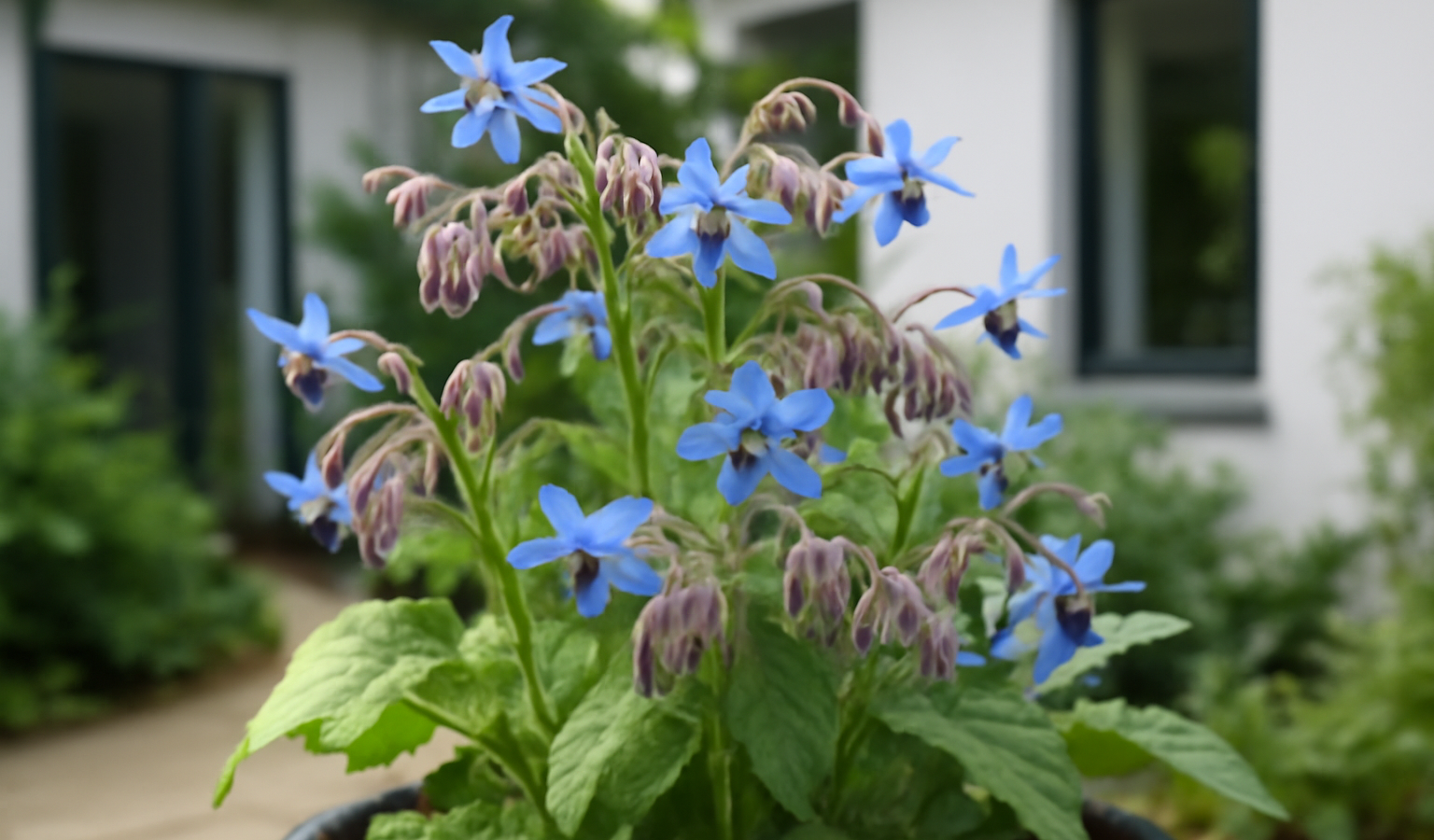
Borage is one of those plants that earns its place in the garden three times over: it produces clouds of star-shaped, sky-blue flowers that are genuinely edible, its cool cucumber-flavored leaves go into salads and summer drinks, and it is among the very best bee plants you can grow. Bees and other pollinators work borage flowers relentlessly from sunup to sundown, and the blooms refill with nectar quickly, so the plant hums with activity all season. It is also dead easy to grow from seed, asks for almost nothing, and once you have it, it tends to come back year after year by self-seeding. This guide covers sowing borage directly in the ground, spacing and care, how to use the flowers and leaves, managing its enthusiastic self-seeding, and how to keep this big, bristly herb looking its best.
Key Takeaways
- Borage is a fast, easy annual grown from seed; sow directly where it will grow after the last frost.
- The edible blue flowers taste lightly of cucumber and are one of the best bee and pollinator plants you can grow.
- Give it full sun and average, well-drained soil; it tolerates poor ground and drought once established.
- Space plants 12 to 18 inches apart, as borage grows into a bushy 2 to 3 foot mound.
- It self-seeds freely, so deadhead or pull spent plants if you want to limit where it returns next year.
What Borage Is and Why Grow It
Borage (Borago officinalis) is a hardy annual herb native to the Mediterranean, grown for centuries as both a culinary and ornamental plant. It forms a sprawling, bushy plant 2 to 3 feet tall, covered in coarse, gray-green leaves with a bristly texture, and it is topped through summer by drooping clusters of perfect five-pointed blue stars, each with a black central cone of stamens. The flowers occasionally open pink before maturing to vivid blue. Every part above ground is touched with the same soft cucumber flavor, which makes it a favorite for summer cooking and drinks. More than anything, gardeners grow borage to feed bees: it is a nectar powerhouse, and planting it near vegetables, especially tomatoes, squash, and strawberries, draws in pollinators that boost the whole garden’s fruit set.
When and Where to Plant
Borage is grown almost universally from seed sown directly into the garden, because it grows so fast and resents being transplanted thanks to a deep taproot. Sow seed outdoors after your last spring frost, once the soil has warmed, roughly when you would plant beans. In USDA zones 2 through 11 it grows happily as a warm-season annual; in mild-winter areas you can even sow in fall for early spring bloom. The seeds need darkness to germinate, so cover them about a quarter to half an inch deep with soil. Expect sprouts within 5 to 14 days, and flowers in roughly 8 weeks from sowing.
Choose a spot in full sun for the most flowers, though borage tolerates light afternoon shade in hot climates. It is genuinely unfussy about soil and will grow in poor, dry, or sandy ground, but it performs best in average, well-drained soil with a little compost worked in. Avoid rich, soggy ground, which produces leafy plants that flop. Because mature borage is large and a bit floppy, give it room: thin or space seedlings 12 to 18 inches apart so air moves freely and the plants support one another. It works beautifully tucked among vegetables as a companion plant, and its drought tolerance makes it a natural fit for the kind of low-water plantings covered across the Plants & Flowers hub.
Watering, Feeding, and Routine Care
Once it is up and growing, borage is close to maintenance-free. Water young seedlings regularly to get them established, then ease off; mature plants are notably drought tolerant and only need watering during prolonged dry spells. Aim to keep the soil from drying out completely while flowers are forming, but never keep it soggy. Borage rarely needs feeding. In fact, overly rich soil or heavy fertilizing produces lush, weak, sprawling growth at the expense of flowers, so skip the fertilizer unless your soil is genuinely poor, in which case a single light feeding or a top-dressing of compost is plenty.
The main maintenance task is staking or supporting tall plants. A well-grown borage can reach 3 feet and tends to lean or topple, especially after rain or in a windy spot. Planting in groups so plants prop each other up helps, as does a discreet stake or a low ring support placed early. The leaves and stems are covered in stiff bristly hairs that can irritate sensitive skin, so wearing gloves when handling or harvesting is wise. Pinching out the growing tips of young plants encourages bushier, sturdier growth and more flowering stems.
Harvesting and Using the Flowers and Leaves
Harvest borage flowers by gently pinching or pulling the star off its black central cone; they are at their best fresh and do not store long. Float them in lemonade, iced tea, or summer cocktails, where they look striking, freeze them into ice cubes, scatter them over salads and desserts, or candy them for cakes. The flavor is mild and faintly cucumber-sweet. Young leaves, picked while small and tender, carry a stronger cucumber taste and can be chopped into salads, cream cheese, or yogurt dips, or cooked like spinach; older leaves get too bristly to eat raw. A note on quantity: borage contains small amounts of compounds (pyrrolizidine alkaloids) that mean it is best enjoyed in moderation as a garnish and flavoring rather than eaten in large bowls daily.
Keep picking flowers and the plant responds by producing more, extending the bloom season well into late summer and early fall. Frequent harvesting doubles as deadheading, which both prolongs flowering and reduces how much seed the plant drops, giving you a measure of control over next year’s volunteers.
Self-Seeding and Keeping Borage in Bounds
Borage is a generous self-seeder. Left to its own devices, a single plant will scatter seed that sprouts the following spring, so once you plant it you rarely need to sow it again. For many gardeners this is a feature, giving a reliable patch year after year with no effort. If you would rather it not pop up everywhere, simply deadhead spent flowers before they set seed, or pull and compost the plants once flowering winds down in late summer. Unwanted seedlings are shallow-rooted when young and easy to hoe or pull, so borage is never a true nuisance the way a creeping weed is, it just shows up where it likes. Many growers let a few plants self-seed in a designated corner and weed out the rest.
To save seed deliberately, let some flowers mature and watch for the small black seeds that form; collect them as they ripen, before they drop. Store dry seed in an envelope for sowing exactly where you want it next season. If you enjoy self-sustaining cottage-style plants, borage pairs naturally with other easygoing self-seeders, and the same hands-off approach applies to the daisy-flowered feverfew, which similarly returns on its own once established.
Common Problems
Borage is remarkably trouble-free. The most common issue is floppy, leggy plants, almost always caused by too-rich soil, too much water, or too much shade; give it lean soil and full sun and it stands sturdier. In hot, humid conditions powdery mildew can coat the leaves with a gray film, which improves with better air circulation, so do not crowd plants and remove badly affected leaves. Aphids occasionally cluster on stems and flower buds and can be knocked off with a spray of water; ironically, borage often attracts beneficial insects that handle aphids for you. Black leaf spots in damp weather are usually cosmetic. The plant’s deep taproot makes mature borage hard to move, which is simply a reason to sow it where you want it from the start. Overall, this is one of the most forgiving herbs you can grow, asking little and rewarding you with months of edible blue flowers and a garden full of bees.
Frequently Asked Questions
Is borage an annual or perennial?
Borage is a hardy annual, completing its life cycle in one growing season. However, it self-seeds so freely that it often behaves like a perennial in the garden, reappearing each spring from dropped seed. Sow it once and you will usually have it for years without replanting.
Are borage flowers really edible?
Yes. The star-shaped blue flowers and young leaves are edible, with a mild cucumber flavor, and are popular in drinks, salads, and as garnishes. Enjoy them in moderation as a flavoring rather than in large daily quantities, since borage contains small amounts of compounds best consumed sparingly.
Why is borage good for bees?
Borage is one of the best nectar plants for bees because its flowers refill with nectar very quickly, sometimes within minutes, so bees can return again and again throughout the day. Planting it near vegetables draws in pollinators that improve fruit set on crops like tomatoes, squash, and strawberries.
How do I stop borage from spreading everywhere?
Deadhead spent flowers before they set seed, or pull plants once flowering winds down in late summer, to limit self-seeding. Any unwanted seedlings that appear are shallow-rooted and easy to pull or hoe when young, so borage is simple to keep in bounds.
Does borage need full sun?
Borage flowers best in full sun, though it tolerates light afternoon shade in hot climates. It is unfussy about soil, thriving even in poor, dry ground, and once established it is quite drought tolerant. Avoid rich, soggy soil, which produces floppy, leafy plants with fewer flowers.