

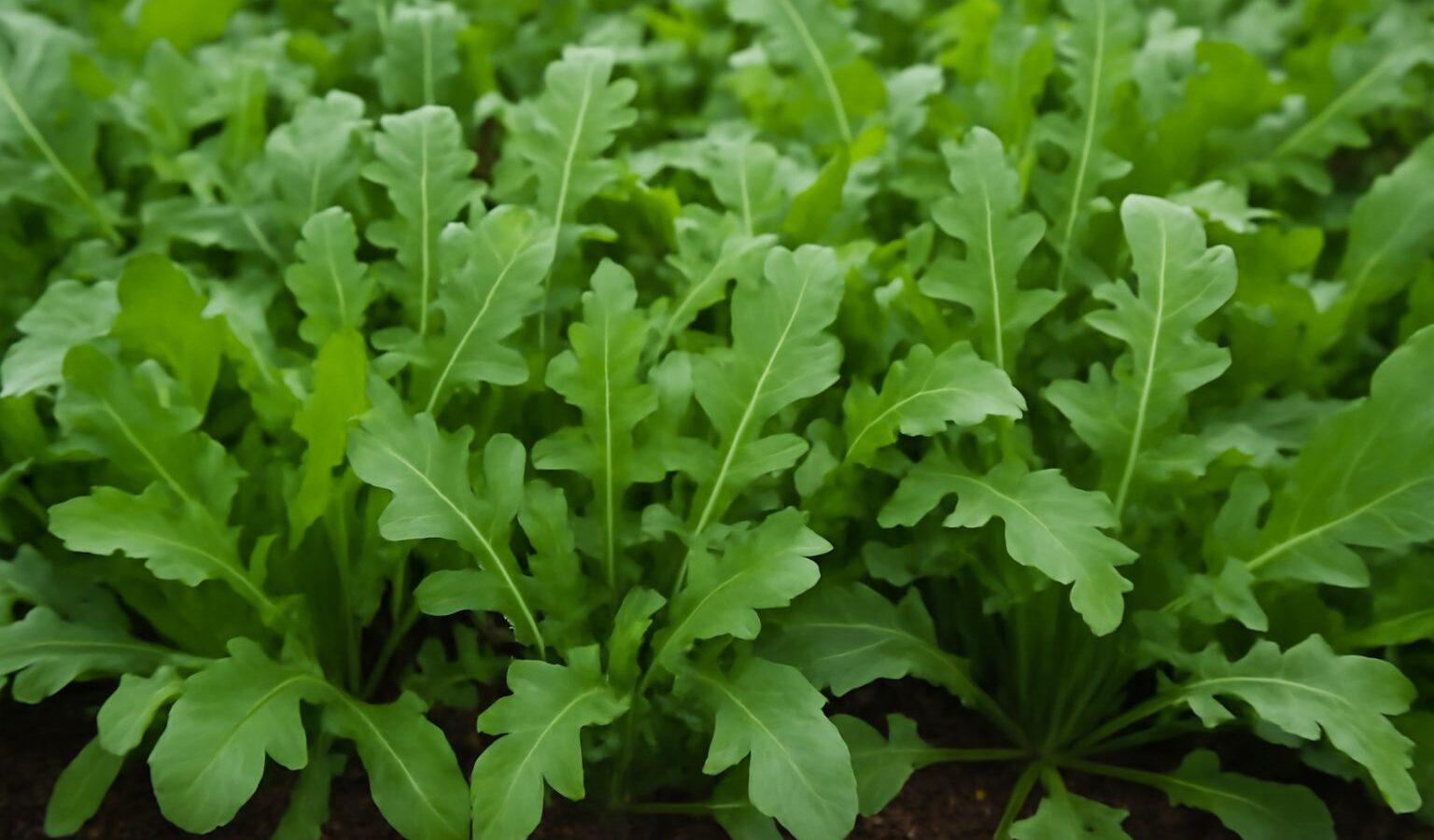
Arugula is the fastest reward in the salad garden. Sow seed today and you can be cutting tender, peppery leaves in three weeks, with a baby-leaf crop ready before most other greens have put out their second set of true leaves. It is cool-season, frost-tolerant, undemanding about soil, and happy in a container or a sliver of garden bed. The only real skill is timing: arugula bolts fast in heat, so the trick is sowing it at the right moment and harvesting before the leaves turn bitter. This guide walks through everything from seed depth to succession planting so you can keep a steady supply of greens from early spring through hard frost.
Key Takeaways
- Cool-season speed crop: baby leaves in 21 days, full size in 35–40 days from direct sowing.
- Sow shallow, sow often: seeds 1/4 inch deep, every 2–3 weeks for a continuous supply.
- Beat the bolt: grow in spring and fall when temps stay below 75°F; heat and long days trigger bolting and bitterness.
- Spacing: thin to 3–4 inches for full plants, or broadcast densely for cut-and-come-again baby greens.
- Water steadily: 1 inch per week keeps leaves mild and tender; drought stress turns them harsh.
- Watch flea beetles: the main pest; row cover is the easiest defense.
Meet Arugula: Two Plants, One Name
What most American gardeners call arugula is salad or garden arugula (Eruca vesicaria), an annual brassica with rounded, lobed leaves and a mild-to-moderate peppery bite. There is also wild or perennial arugula (Diplotaxis tenuifolia), which has narrower, more deeply serrated leaves, a sharper and nuttier flavor, slower growth, and the ability to survive as a short-lived perennial in mild zones. Garden arugula is the one to start with: it germinates fast, grows fast, and forgives beginners. Wild arugula is worth a second bed once you are hooked, because it tolerates heat a little better and bolts more slowly.
Both are members of the cabbage family, which matters for two reasons. First, they share pests and diseases with broccoli, kale, radishes and turnips, so rotate them out of beds where you grew brassicas the previous year. Second, like other brassicas they actively dislike heat and respond to lengthening summer days by bolting—sending up a flower stalk and turning the leaves bitter. Working with that biology, rather than against it, is the whole game.
When to Plant Arugula
Arugula is a cool-season crop that germinates in soil as cold as 40°F and grows best when air temperatures sit between 45°F and 65°F. It will keep producing up to about 75°F, but beyond that it bolts quickly. Plan your sowings around the shoulders of the season rather than the heat of summer.
Spring: Direct sow as soon as the soil can be worked, typically 2–4 weeks before your last expected frost. In USDA zones 5–7 that is often late March to mid-April; in zones 8–10 you may be sowing in February. Mature plants tolerate light frost down to about 22°F, and a touch of cold actually sweetens the flavor.
Fall: This is arguably the best arugula season. Start sowing 6–8 weeks before your first fall frost, when summer heat is breaking, and continue every couple of weeks. Cooling temperatures and shortening days keep plants in leaf production far longer than spring, and quality stays high.
Winter: In zones 8 and warmer, arugula grows through winter outdoors. In colder regions, a cold frame or low tunnel extends the harvest deep into the cold months. Under cover, arugula is one of the most reliable winter greens you can grow.
Soil, Sun and Site
Arugula is not fussy, but a little preparation pays off in tenderness and speed. Give it loose, fertile soil rich in organic matter, with a pH between 6.0 and 7.0. Work an inch or two of finished compost into the top 6 inches of the bed before sowing; this feeds the fast leaf growth and helps the soil hold moisture, which keeps leaves mild.
Full sun is ideal in spring and fall. In late spring or early fall, when temperatures are climbing, partial afternoon shade is an advantage—it slows bolting and keeps the leaves cooler and less bitter. If you garden in a hot climate, deliberately site summer sowings where they get morning sun and afternoon shade.
Arugula is an excellent container and raised-bed crop because of its shallow roots. Any pot at least 6 inches deep with drainage holes will grow a fine crop, and a window box or balcony planter can supply a steady stream of cut greens. Fill containers with a quality potting mix amended with compost. For more small-space techniques, our guide to window box planting covers soil and watering choices that suit fast greens like this.
How to Sow Arugula Seed
Direct sowing is the way to go—arugula grows so quickly that transplanting only sets it back and can encourage early bolting. Sow seeds 1/4 inch deep. They are small but easy to handle. You have two approaches depending on your harvest goal.
For baby-leaf greens
Broadcast or band-sow seed densely, aiming for about 1 inch between seeds, in rows or a wide block. You will harvest these young, so they do not need room to size up. This is the method for the salad-mix look, and it produces the most leaves per square foot in the shortest time.
For full-size plants
Sow seeds about 1 inch apart in rows 10–12 inches apart, then thin seedlings to 3–4 inches once they have a couple of true leaves. Wider spacing gives larger, more substantial leaves and better airflow, which reduces disease. The thinnings are edible, so nothing is wasted.
Germination is fast: expect seedlings in 4–7 days at soil temperatures of 50–65°F. Keep the surface consistently moist until they emerge. The single most important habit for a steady supply is succession sowing—plant a new short row or pot every 2–3 weeks during cool weather rather than one big planting. A 4-foot row sown every fortnight keeps a household in salad without gluts or gaps.
Watering and Feeding
Consistent moisture is the key to mild, tender arugula. Aim for about 1 inch of water per week, more in heat or wind, delivered so the soil stays evenly moist but never waterlogged. Drought stress is a fast track to tough, intensely peppery, bitter leaves and triggers bolting. Containers dry out quickly and may need daily watering in warm weather, so check them by hand.
If you prepared the bed with compost, arugula rarely needs supplemental feeding for a 4–6 week crop. For successive cuttings or poorer soil, a light feed of balanced liquid fertilizer or fish emulsion every 2–3 weeks keeps leaf production strong. Avoid heavy nitrogen, which produces lush but flavorless growth and softer leaves that are more prone to disease.
Mulch with a thin layer of straw or shredded leaves between rows to conserve moisture, suppress weeds and keep soil temperatures down—especially valuable for late-spring and early-fall sowings teetering on the edge of bolting.
Pests and Diseases
Flea beetles are the number-one arugula pest. These tiny black beetles chew dozens of small “shotgun” holes in the leaves, which is unsightly on a crop you eat raw. They are worst in warm, dry weather and on young plants. The simplest, most effective defense is floating row cover laid over the bed from the day you sow and kept on until harvest—arugula needs no pollination, so it can stay covered the whole time. A heavy infestation can be knocked back with kaolin clay or by trapping with yellow sticky cards.
Aphids sometimes cluster on the undersides of leaves; a strong spray of water or insecticidal soap handles them. Cabbage worms and slugs are occasional visitors—handpick slugs in the evening and use row cover against the white cabbage butterflies. Because you are harvesting young, fast-growing leaves, you rarely need to reach for anything stronger.
On the disease side, downy mildew can appear as yellow patches with gray fuzz underneath during cool, wet, crowded conditions. Good spacing, morning watering at the soil line, and crop rotation away from other brassicas prevent most problems. White rust and bacterial leaf spot are rare in home gardens but also respond to airflow and rotation.
How to Prevent Bolting
Bolting is arugula’s defining quirk. Once plants flower, leaf flavor sharpens to an unpleasant bitterness and texture turns tough. Bolting is triggered by a combination of heat (above 75°F), long days, drought stress, and plant age. You cannot stop it forever, but you can delay it: sow in spring and fall rather than summer, keep moisture steady, provide afternoon shade as it warms, harvest regularly to keep plants juvenile, and choose slower-bolting cultivars such as ‘Astro’ or wild arugula. When plants do bolt, the small white flowers are edible and have a pleasant nutty-spicy taste—scatter them on salads rather than composting the whole plant.
Harvesting Arugula
You can begin harvesting baby leaves about 21 days after sowing, when they are 2–3 inches long, and full-size leaves at 35–40 days. Arugula is a classic cut-and-come-again green: harvest the outer leaves and leave the central growing point intact, and the plant will keep producing for several weeks. Alternatively, shear the whole patch about an inch above the crown with scissors and it will regrow for a second and often third cutting.
Harvest in the cool of the morning when leaves are crisp and full of water, and pick before the heat of the day for the best flavor and longest shelf life. Younger leaves are milder; older leaves carry more heat, which some cooks prefer for cooking or pesto. Wash gently, spin dry, and store wrapped in a damp towel in the refrigerator, where arugula keeps for 5–7 days. Because it grows so fast, the best storage strategy is to grow a little at a time and harvest as needed.
Arugula pairs naturally with other quick greens and herbs in a kitchen garden. If you are building out a cut-and-come-again salad patch, our guide on growing cilantro without bolting tackles the same heat-and-bolt challenge from a different angle, and the broader Plants & Flowers hub has companion how-tos for rounding out the bed.
Frequently Asked Questions
How long does arugula take to grow?
Baby-leaf arugula is ready to harvest about 21 days after direct sowing, and full-size leaves at roughly 35–40 days. Germination happens within 4–7 days in cool soil, making it one of the fastest crops in the garden.
Why is my arugula so bitter?
Bitterness comes from heat, drought stress, or age. Leaves grown above 75°F, allowed to dry out, or harvested after the plant bolts turn sharp and harsh. Grow in cool weather, water steadily, and pick young leaves for the mildest flavor.
Can you grow arugula in containers?
Yes—arugula’s shallow roots make it ideal for pots, window boxes and balcony planters at least 6 inches deep with drainage. Use a compost-rich potting mix, keep it evenly moist, and harvest cut-and-come-again for weeks.
Does arugula regrow after cutting?
Yes. Arugula is a cut-and-come-again green. Harvest outer leaves or shear the patch about an inch above the crown and it will regrow for a second and often third cutting, especially in cool weather with steady water.
Will arugula survive frost?
Mature arugula tolerates light frost down to about 22°F, and a touch of cold actually sweetens the leaves. In zones 8 and warmer it grows through winter outdoors; in colder zones a cold frame or low tunnel extends the harvest well into the cold months.