

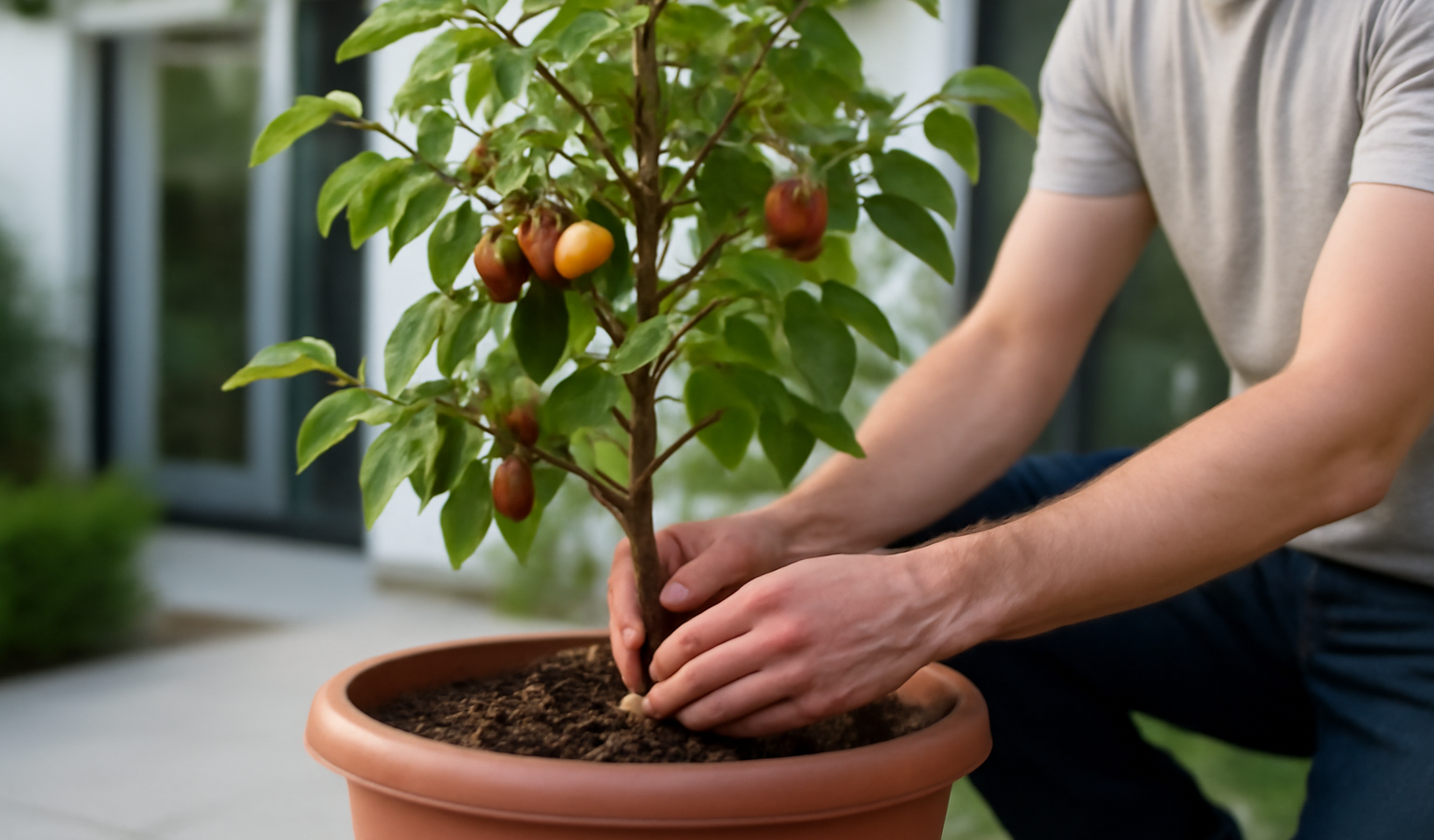
To grow a jujube tree, plant a grafted variety in full sun and fast-draining soil in spring after your last frost, give it deep water for the first season or two, then mostly leave it alone. The jujube (Ziziphus jujuba), also called Chinese date or red date, is one of the most forgiving fruit trees you can plant in a hot climate. It thrives on heat, laughs at drought, fruits within two or three years, and has almost no pests. If you garden in the Southwest, Texas, California, or anywhere summers run long and scorching, this is a tree that rewards neglect better than almost anything else in the orchard.
Key Takeaways
- Jujubes are hardy across roughly USDA zones 6-10 (some down to 5) but absolutely require long, hot summers to ripen sweet fruit.
- They are exceptionally drought tolerant once established and tolerate poor, sandy, alkaline, and even mildly saline soils as long as drainage is good.
- Plant in full sun (6-8+ hours); more sun means more fruit and higher sugar.
- Most varieties are partially self-fertile, but a second variety nearby dramatically improves fruit set.
- Grafted trees often fruit within 2-3 years; pests and diseases are minimal, making this nearly a no-spray tree.
What Is a Jujube Tree?
The jujube is a small-to-medium deciduous tree, typically reaching 15 to 30 feet at maturity though it is easily kept much smaller with pruning. It has been cultivated in China for more than 4,000 years, which is why you will hear it called Chinese date or red date. The tree carries glossy, bright green leaves arranged in a distinctive zig-zag pattern along the branches, and some varieties are armed with sharp thorns at the nodes while others are nearly thornless. In late spring to early summer it produces tiny, fragrant, yellow-green flowers that are so inconspicuous most people never notice them. The fruit is the entire reason to grow this tree.
The fruit starts out green and smooth, looking very much like a small olive or a miniature apple. As it ripens it turns a glossy mahogany or reddish-brown, often patchy at first. Here is where jujubes get interesting: you get two completely different fruits from one tree depending on when you pick. Harvested while still crisp and partly brown, the flesh is white, dense, and apple-like, with a sweet, mildly tart crunch that makes a fantastic fresh snack. Left on the tree to wrinkle and dry down, the same fruit transforms into a chewy, sweet, date-like dried fruit, which is the traditional “red date” used across Asian cooking and herbal medicine. Either way, jujubes are remarkably high in vitamin C, packing far more than most citrus by weight.
Hardiness and Climate: Why Heat Matters Most
One of the most appealing things about the jujube is its enormous climate range. The tree is hardy across roughly USDA zones 6 through 10, with some cultivars surviving into zone 5. When fully dormant it shrugs off hard freezes that would kill peaches or figs, with mature trees tolerating winter lows well below zero. But cold hardiness is only half the story, and it is the half that trips people up.
What the jujube truly demands is heat. This is a tree built for long, hot, sunny summers, and it will not ripen its fruit to full sweetness without them. In regions with cool, short, or cloudy summers, a jujube may grow into a perfectly healthy tree and still produce disappointing, bland fruit, or none at all. The hotter and drier your summer, the better. That is precisely why jujubes have become a darling of gardeners in the desert Southwest, the Texas Hill Country, the Central Valley of California, and other places where conventional fruit trees struggle with the heat. If you live somewhere that bakes from June through September, you have close to ideal jujube country.
Soil, Drought, and Why This Tree Is So Easy
If heat tolerance is the jujube’s first selling point, its toughness with soil and water is the second. Once established, a jujube is exceptionally drought tolerant. Mature trees in hot climates can survive on rainfall alone in many areas, and even where they need supplemental water, they ask for far less than nearly any other fruit tree. This makes the jujube an excellent fit for xeriscaped yards and water-conscious gardens, and a natural companion to other low-water plantings in your outdoor living spaces.
The tree is equally unfussy about soil. Jujubes tolerate poor, rocky, sandy, and heavy clay soils, handle a wide pH range, and even shrug off alkaline and mildly saline conditions that would stunt most fruit trees. The one non-negotiable requirement is good drainage; jujubes do not want their roots sitting in waterlogged ground. Give them a spot that drains and they will adapt to almost any soil chemistry you throw at them.
On top of all that, jujubes are nearly pest-free and disease-free. They are not bothered by the codling moths, borers, fungal diseases, and brown rot that plague stone and pome fruits, which means you can grow a productive jujube with little or no spraying. Deer tend to leave them alone as well, especially the thorny types, though hungry deer will browse almost anything in a bad year. For a low-maintenance, low-input orchard tree, very little competes with it.
Sunlight Requirements
There is no negotiating on sun. Plant your jujube in full sun, period. Aim for at least 6 to 8 hours of direct sunlight per day, and the more the better. Sun drives both fruit quantity and sugar development, so a tree tucked into partial shade will be leggy, shy to fruit, and produce flavorless fruit if it produces any at all. Choose the brightest, hottest, most exposed spot in your yard; the location where you would not dream of putting a tomato in August is often perfect for a jujube.
Pollination
Pollination with jujubes can be slightly unpredictable. The two most widely sold varieties, ‘Li’ and ‘Lang’, are described as partially self-fertile, meaning a single tree can set some fruit on its own. In practice, however, almost every grower sees a dramatic improvement in fruit set when a second variety is planted nearby for cross-pollination. If you have room for two trees, plant two different cultivars; it is the single best thing you can do for your yield.
Bees and other small insects handle the actual pollen transfer, working those tiny fragrant flowers in early summer. Poor fruit set in an isolated tree is the most common complaint from new jujube growers, and it is almost always solved by adding a pollinator partner. If you only have space for one and notice weak fruiting, even a neighbor’s jujube down the street can help, since the flowers attract plenty of pollinators across a surprising distance.
How to Plant a Jujube Tree
Plant in spring after your last frost has passed and the soil has begun to warm. Whenever possible, buy a grafted tree rather than a seedling; grafted jujubes come true to a named variety and begin fruiting years sooner, sometimes producing a few fruits the very first season. Seedlings are slow, variable, and often disappointing.
Step by Step
- Dig a hole that is wide but no deeper than the root ball. Jujubes resent being planted too deep, so set the tree at the same depth it sat in the nursery container.
- Loosen the sides of the hole if your soil is compacted, but skip heavy soil amendments; you want the roots to push out into native soil rather than circling in a cushy pocket.
- Backfill with the soil you removed, firm it gently, and create a shallow watering basin around the trunk.
- Space multiple trees 10 to 15 feet apart to give each room to develop a full canopy and to allow cross-pollination.
- Water deeply at planting to settle the soil, then water regularly through the first season to establish the roots before backing off.
One quirk to know about from day one: grafted jujubes frequently send up suckers from the rootstock, sometimes several feet away from the trunk. These rootstock suckers grow from a wild, often thorny seedling and will not produce the fruit you bought. Pull or cut them off at ground level as soon as you spot them, ideally tearing them rather than clipping, which discourages regrowth. Stay on top of this and it is a minor chore; ignore it and a vigorous rootstock can colonize a flowerbed.
Ongoing Care
After that establishment period, jujube care is genuinely minimal. Water deeply and infrequently in the first year or two, then taper off; once the roots are down, the tree needs very little supplemental irrigation in most climates. Deep, occasional watering during fruit development will improve size and quality, but overwatering can cause split or watery fruit, so err on the dry side.
Feeding is light. A modest application of balanced fertilizer or compost in early spring is plenty; jujubes are not heavy feeders and too much nitrogen pushes leafy growth at the expense of fruit. A few inches of mulch over the root zone conserves moisture and suppresses weeds, just keep it pulled back a few inches from the trunk.
The single most important care tip is also the one that panics first-time growers: jujubes leaf out extremely late in spring, often weeks after every other tree in the yard is in full leaf. A jujube can stand bare and apparently lifeless well into late spring and be perfectly healthy. Do not assume it is dead, and do not dig it up. Scratch the bark to check for green cambium if you are nervous, then be patient. It will wake up when the weather is reliably warm. If you are mapping out a low-water, heat-tolerant planting, browse our wider Plants and Flowers hub for companions that share the jujube’s tough constitution.
Pruning
Prune jujubes during the dormant season, in late winter before growth resumes. The goals are to shape the tree, open up the center for light and air, control the ultimate height so harvesting stays manageable, and remove any dead, damaged, or crossing wood. Take out rootstock suckers and any vigorous water sprouts at the same time. Because jujubes fruit on new growth produced that season, you do not have to worry about cutting off next year’s crop the way you would with some fruit trees; sensible thinning and shaping actually encourages fresh fruiting wood. Many growers keep their trees pruned to a compact 10 to 12 feet so all the fruit is within reach. If you enjoy propagation projects, jujubes are trickier to root than some fruits, but the same patient mindset that works for growing figs from cuttings serves you well when experimenting with rootstock and grafting.
Harvesting Jujubes
Jujubes ripen from late summer into fall, and crucially, they ripen unevenly over a span of several weeks rather than all at once. This staggered ripening is actually a feature, because it lets you harvest at two different stages for two different products. For fresh eating, pick the fruit when it has turned about half to mostly mahogany-brown but is still firm and crisp; at this stage it eats like a sweet, crunchy little apple. If you want the chewy dried “red dates,” simply leave the fruit on the tree longer, letting it fully brown and begin to wrinkle and dry in place. In a hot, dry climate the tree will essentially dry its own crop for you, and you can pick the shriveled fruits as they finish.
Because ripening is spread out, plan to walk the tree every few days during the season and pick what is ready. Fresh crisp jujubes keep for a week or two in the refrigerator, while fully dried fruit stores for months in an airtight container. Birds and other wildlife generally show less interest in jujubes than in softer fruits, which is one more small mercy this easygoing tree offers.
Best Jujube Varieties to Grow
- ‘Li’ – The most popular variety. Large, round to slightly oval fruit, excellent for fresh eating, and somewhat self-fruitful, making it a reliable choice for a single-tree garden.
- ‘Lang’ – Pear-shaped fruit that is at its best dried into dates. Benefits noticeably from a pollinator partner and pairs classically with ‘Li’.
- ‘Honey Jar’ – Small fruit, but legendary for being intensely sweet and juicy; many growers rate it the best-tasting jujube for fresh eating despite its size.
- ‘Sugar Cane’ – Very sweet, crisp fruit on a vigorous, often thorny tree; an early and productive bearer.
- ‘Sherwood’ – A later-ripening variety prized for excellent flavor and an upright, well-behaved growth habit.
- ‘GA-866’ – Known for unusually large, sugary fruit; a favorite among collectors in hot climates.
For a balanced home orchard, a classic strategy is to plant ‘Li’ and ‘Lang’ together for guaranteed cross-pollination and a mix of fresh and dried fruit, then add ‘Honey Jar’ if you have room and want the sweetest fresh snacking jujube around. If you enjoy unusual fruit trees, the jujube pairs well in spirit with other offbeat choices like the medlar tree, another tough, low-input fruit that rewards adventurous growers.
How Long Until It Fruits?
This is where the jujube really shines compared to most fruit trees. Grafted jujubes are precocious, frequently setting their first fruit within two to three years of planting, and it is not unusual for a healthy grafted tree to produce a handful of fruit in its very first season in the ground. As the tree matures, yields climb steadily, and an established jujube in a hot climate becomes a dependable, heavy producer that asks for almost nothing in return. Few fruit trees offer such a short wait for such a long, reliable payoff.
Frequently Asked Questions
Do I need two jujube trees to get fruit?
Not strictly. Popular varieties like ‘Li’ and ‘Lang’ are partially self-fertile and can set some fruit alone. However, almost every grower gets dramatically better fruit set with a second, different variety planted nearby for cross-pollination, so plant two if you have the space.
Why are the leaves taking so long to appear in spring?
This is completely normal. Jujubes leaf out very late, often weeks after other trees, and can look bare and lifeless well into late spring. Do not assume the tree is dead. Scratch the bark to confirm green tissue underneath, then be patient until the weather warms.
How much water does a jujube tree need?
Water regularly through the first year or two to establish the roots, then back off sharply. Once established, jujubes are exceptionally drought tolerant and need very little supplemental irrigation in most hot climates. Deep, occasional watering during fruiting improves size, but overwatering can cause splitting.
Can I grow a jujube in a cooler or coastal climate?
You can grow the tree, but you may be disappointed by the fruit. Jujubes are very cold-hardy when dormant, yet they require long, hot summers to ripen sweet fruit. In cool, short, or cloudy-summer climates the fruit often stays bland or fails to ripen, so they perform best in hot, dry regions.
When do I pick jujubes, fresh or dried?
Both, from the same tree. Pick fruit while it is crisp and mostly brown for a sweet, apple-like fresh snack. Leave fruit on the tree to fully brown and wrinkle for chewy, date-like dried fruit. Ripening is staggered over several weeks, so harvest in stages.