

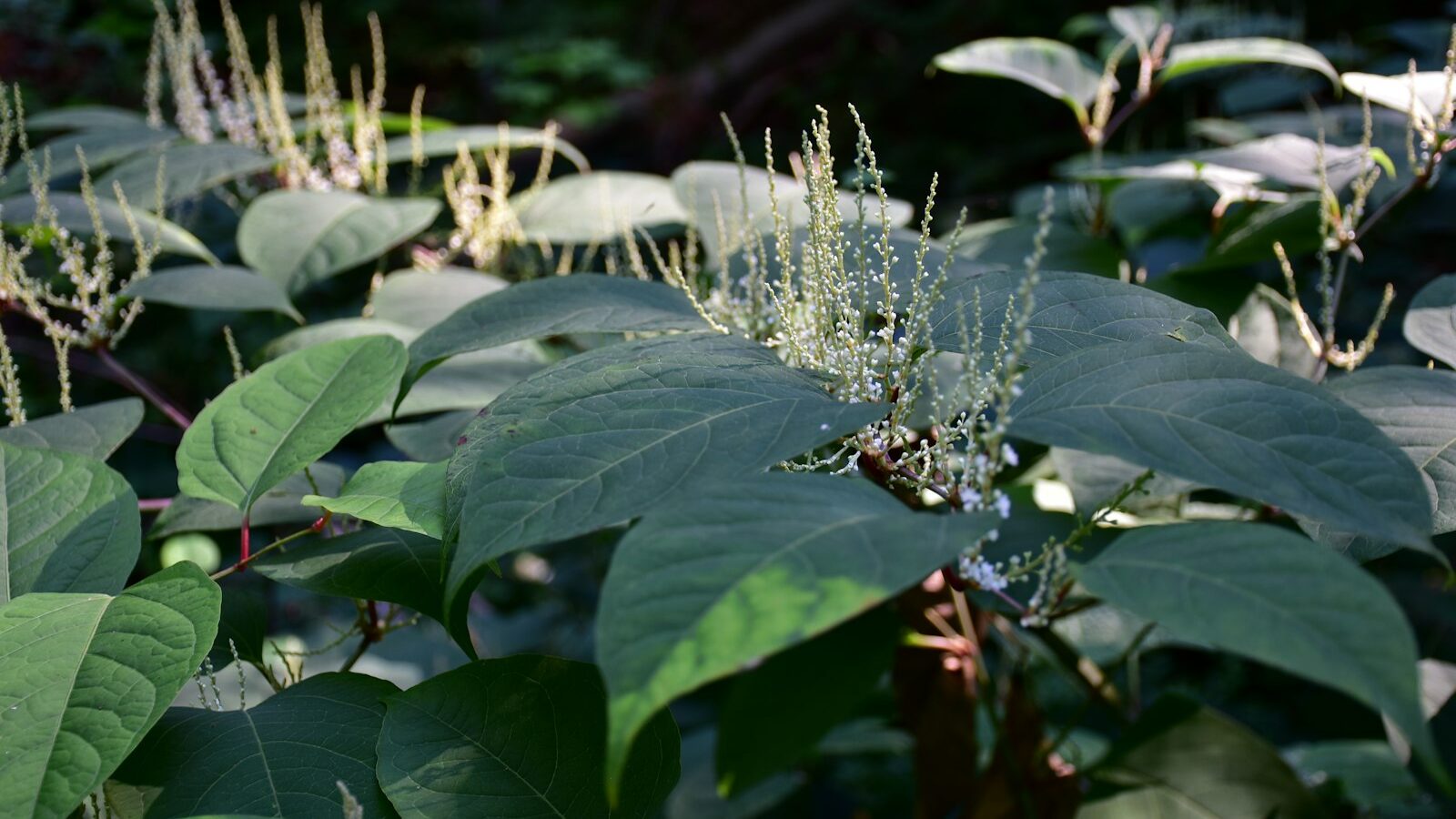
To get rid of Japanese knotweed, the honest answer is that you treat it with herbicide in late summer to early fall, you repeat that treatment for three to four years, and you dispose of every scrap of cut material and contaminated soil as regulated waste rather than tossing it in the compost or yard-waste bin. There is no one-and-done fix. This is the single most aggressive landscape invasive most American homeowners will ever face, and the people who beat it are the ones who accept that it is a multi-year project from the start. The plant regenerates from a fragment the size of a pea, its roots can run twenty feet sideways and seven feet down, and a single mistake with disposal can re-seed an entire property. The good news: with the right method, the right timing, and a realistic timeline, you can eradicate it. This guide walks through identification, why knotweed is so stubborn, the legal and disposal rules you cannot skip, and the control methods that actually work.
Key Takeaways
- Herbicide beats digging. Glyphosate applied in late summer/early fall, when the plant pulls energy down into its roots, is the most effective control. Plan on 3 to 4+ years of repeat treatment.
- Never till, rotavate, or mow it. Chopping spreads it. A rhizome or stem fragment as small as 0.7 grams can grow a whole new plant.
- Disposal is regulated. Cut canes and contaminated soil are often classified as controlled waste. Do not compost, do not bin it with yard waste, do not move soil offsite casually.
- Check your state. Japanese knotweed is a listed noxious or invasive species in many US states, and sale or transport may be restricted. Call your extension office and state department of agriculture.
- Watch for years. Even after the canes stop appearing, monitor the site for regrowth for 2 to 3 seasons before you call it dead.
How to Identify Japanese Knotweed
Before you spend a dime or a weekend on control, confirm you actually have knotweed. It is frequently mistaken for bamboo, dogwood, and lilac, and the treatment for a true knotweed infestation is very different from how you would handle a clump of ornamental bamboo. Japanese knotweed (Reynoutria japonica, sometimes listed as Fallopia japonica or Polygonum cuspidatum) has a handful of features that, taken together, are unmistakable once you know them.
- Canes: The stems are hollow and bamboo-like, with a clearly segmented, jointed look. They are often green flushed with red or purple speckling, especially early in the season. Mature stands can reach 7 to 10 feet tall in a single growing season.
- Stem pattern: The stems grow in a distinctive zigzag, changing direction slightly at each node rather than running straight up.
- Leaves: Broad, shovel- or heart-shaped leaves roughly 4 to 6 inches long, with a flat base and a pointed tip. They grow in an alternate arrangement up the stem, zigzagging from side to side.
- Flowers: In late summer, the plant produces sprays of small creamy-white flowers that hang in loose clusters from the leaf joints.
- Winter form: The plant dies back to hollow, brown, brittle canes that stand through winter, looking like dead bamboo, then resprouts vigorously in spring from the same crowns.
How to tell it apart from look-alikes
Bamboo has woody, round, persistent canes that do not die back to the ground each winter, and its leaves are long and narrow, not heart-shaped. Dogwood grows as a woody shrub with paired (opposite) leaves and prominent curving leaf veins, the opposite of knotweed’s alternate, zigzag pattern. Lilac is also a woody shrub with opposite, smooth-edged leaves and fragrant purple or white spring blooms, nothing like knotweed’s hollow summer canes. The combination of hollow speckled canes, zigzag stems, alternate heart-shaped leaves, and a full die-back to brown canes in winter is what nails the ID. If you are unsure, photograph a stem, a leaf joint, and the overall stand and send them to your local cooperative extension office before you do anything else.
Why Japanese Knotweed Is So Hard to Kill
Everything difficult about knotweed comes down to its root system. What you see above ground is a fraction of the plant. Below the surface is a dense network of rhizomes, underground stems that store enormous reserves of energy. These rhizomes can extend more than 7 feet deep and run 20 feet or more laterally from the visible crown. That is why you cannot simply pull it up, and why a clump that looks small on the surface may have roots reaching halfway across your yard.
The truly alarming part is how it regenerates. A piece of rhizome or even a stem node as small as 0.7 grams, about the size of a pea or fingernail, can grow into an entirely new, fully viable plant. This is the central fact that should govern every decision you make. It means a lawnmower, a string trimmer, a rotary tiller, or a careless shovel does not weaken knotweed; it multiplies it. Each chopped fragment that lands in soil, gets dragged on a boot tread, or rides away in a load of fill dirt becomes a brand-new infestation.
Left alone, knotweed crowds out native plants by leafing out early and casting dense shade, then dominates streambanks, fence lines, and disturbed ground. It is aggressive enough to exploit cracks in asphalt, building foundations, retaining walls, and drainage pipes, which is why an untreated stand near a structure is a genuine property concern, not just an aesthetic one. The combination of deep roots, lateral spread, fragment regeneration, and structural reach is what makes this plant a multi-year commitment rather than a weekend chore. Knowing your enemy here is half the battle; the other half is patience.
The Legal and Disposal Rules You Cannot Skip
This is the section homeowners most often ignore, and it is the one that creates the worst messes. Because knotweed spreads from fragments, the way you handle cut material and soil is regulated in many places, and getting it wrong can spread the infestation to a neighbor’s land or a public waterway.
Japanese knotweed is listed as a noxious or invasive species in many US states. In some jurisdictions it is illegal to sell, transport, or knowingly plant it, and disturbed material may be treated as controlled or regulated waste. Because the specifics vary widely by state and even by county, you must verify the rules where you live rather than assume. Your two best resources are your state department of agriculture and your local cooperative extension office; both can tell you the legal status, approved disposal sites, and any reporting obligations in your area.
Disposal do’s and don’ts
- Do not compost it. Home compost piles do not get hot enough to kill rhizomes and nodes, and you will simply spread the plant wherever that compost goes.
- Do not put it in green-waste or yard-waste bins. Municipal yard-waste streams are not designed to neutralize knotweed and can carry it to new sites.
- Do not move contaminated soil offsite casually. Soil within several feet of a stand may contain rhizome fragments; hauling it away spreads the problem.
- Do dry and burn it on-site where local rules permit. Cut canes can be left on a tarp or hard surface to dry to a crisp, brown, brittle state and then burned if open burning is legal in your area.
- Do bag and send to a licensed landfill if burning is not allowed. Seal material in heavy-duty bags and dispose of it at a facility that accepts it, following your local guidance.
It is worth noting that in the United Kingdom, knotweed is taken so seriously that its presence can affect property sales and mortgage approvals, and landowners can face legal liability for allowing it to spread. US rules are generally less stringent on the real-estate side, but the same biology applies here, and the disposal principles are identical. Treat every cut stem and shovel of soil as if it could start a new colony, because it can. For broader help managing the surrounding landscape once knotweed is under control, our outdoor living hub covers reclaiming and replanting cleared ground.
Control Methods and How Well They Work
Herbicide: the most effective approach
For nearly every homeowner, herbicide is the method that actually works, and timing is everything. The key is to treat in late summer to early fall, roughly August through September, when the plant naturally translocates sugars and energy down into its rhizomes to prepare for winter. A systemic herbicide applied at this window rides that downward flow and reaches the roots, which is exactly what you need. Spraying in spring, when growth is moving upward, mostly burns off the tops and leaves the root system intact to resprout.
Glyphosate is the most commonly recommended active ingredient for knotweed because it is systemic and translocates well. Two application techniques work:
- Foliar spray: Apply to the leaves of actively growing plants in late summer, following the product label rates exactly. Best for open stands away from desirable plants and water.
- Stem injection or cut-and-treat: Cut the cane and immediately apply concentrated herbicide directly into the hollow stem. This delivers the chemical straight to the root system with minimal off-target drift, making it the preferred method near water, ponds, or plants you want to keep. Note that any application near water may require a special aquatic-approved formulation and, in some areas, a permit, so check first.
Whichever method you choose, set your expectations correctly: plan on three to four or more years of repeat treatment. Knotweed will resprout, often more weakly each year, and you keep treating the regrowth each late summer until nothing comes back. Always read and follow the herbicide label; the label is the law, and it specifies legal rates, protective equipment, and where the product may be used.
Digging and excavation
Digging out knotweed is only realistic for small, young infestations, and it carries real risk. To succeed you must remove every piece of rhizome, which can mean excavating several feet deep and wide, and then dispose of all of it as controlled waste. Any fragment left behind will regrow, and the act of digging tends to break rhizomes into the very fragments that spread. If you go this route, work carefully, sift the soil, bag everything, and monitor the disturbed area closely. For most established stands, excavation alone is not a dependable cure.
Cutting, smothering, and what never to do
Repeated cutting and heavy smothering with thick membrane can weaken a stand over a long period by starving the roots, but on their own they rarely eradicate knotweed and they require years of relentless consistency. They are best used in combination with herbicide, not as a replacement for it. And there is one rule that overrides everything: never rotavate, till, or mow knotweed. Mechanical chopping turns one plant into dozens by scattering viable fragments across your soil. If you remember nothing else, remember that you cannot cut your way to victory.
When to call a professional
For large infestations, stands on a property line, or knotweed near foundations or water, hiring a licensed remediation specialist is often the smartest move. Professionals carry the right herbicides, follow legal disposal protocols, can issue documentation that some real-estate transactions require, and bring experience that prevents the spreading mistakes that plague DIY efforts. The cost is real, but so is the cost of a botched job that re-seeds the whole site.
Realistic Expectations and Monitoring
Set your mindset for a campaign, not a quick win. In year one, expect to knock the stand back significantly. In years two and three, expect progressively weaker, sparser regrowth that you treat again each late summer. The moment when no new canes appear is encouraging but it is not proof of death. Knotweed rhizomes can lie dormant and then push up again. Monitor the site for 2 to 3 years after the last visible regrowth before you declare it eradicated, and inspect the area every spring for the telltale red-tinged shoots. Keep a simple log of where and when you treated so you can spot patterns.
Once you have cleared the ground, resist the urge to immediately install valuable plantings on top of recently treated soil; give it a season to confirm the knotweed is truly gone, then replant. The same vigilance that beats knotweed pays off against other aggressive spreaders, too. If you are dealing with multiple problem plants, our guide on how to get rid of burdock covers another deep-rooted invader, and our plants and flowers section can help you choose tough, well-behaved replacements for the reclaimed space. Beating Japanese knotweed is absolutely possible. It just rewards patience, correct timing, and disciplined disposal over speed.
Frequently Asked Questions
What is the best time of year to kill Japanese knotweed?
Late summer to early fall, roughly August through September, is the ideal window. During this period the plant moves energy down into its rhizomes for winter, so a systemic herbicide like glyphosate travels with that flow and reaches the root system. Spring spraying mostly burns the tops and leaves the roots to resprout.
Can I just dig Japanese knotweed out of my yard?
Only for small, young patches, and even then it is risky. The rhizomes can run more than 7 feet deep and 20 feet sideways, and any fragment as small as a pea can regrow. Digging tends to break roots into spreadable pieces, so you must remove every fragment and dispose of it as controlled waste. For established stands, herbicide is far more reliable.
How do I dispose of Japanese knotweed legally?
Never compost it or put it in yard-waste or green-waste bins, and do not move contaminated soil offsite casually. Where local rules allow, dry the cut canes until brittle and burn them on-site; otherwise bag the material and take it to a licensed landfill that accepts it. Check with your state department of agriculture and local extension office for the exact rules in your area.
How long does it take to get rid of Japanese knotweed completely?
Plan on three to four or more years of repeat treatment. The stand weakens each season, but rhizomes can persist and resprout. Even after canes stop appearing, monitor the site for 2 to 3 years before considering it eradicated, checking each spring for new red-tinged shoots.
Why shouldn’t I mow or till Japanese knotweed?
Because mechanical chopping spreads it. Knotweed regrows from tiny stem nodes and rhizome fragments, so mowing, string-trimming, rotavating, or tilling turns a single plant into many by scattering viable pieces through the soil. The only mechanical options that help are careful cutting combined with herbicide, never tilling.