

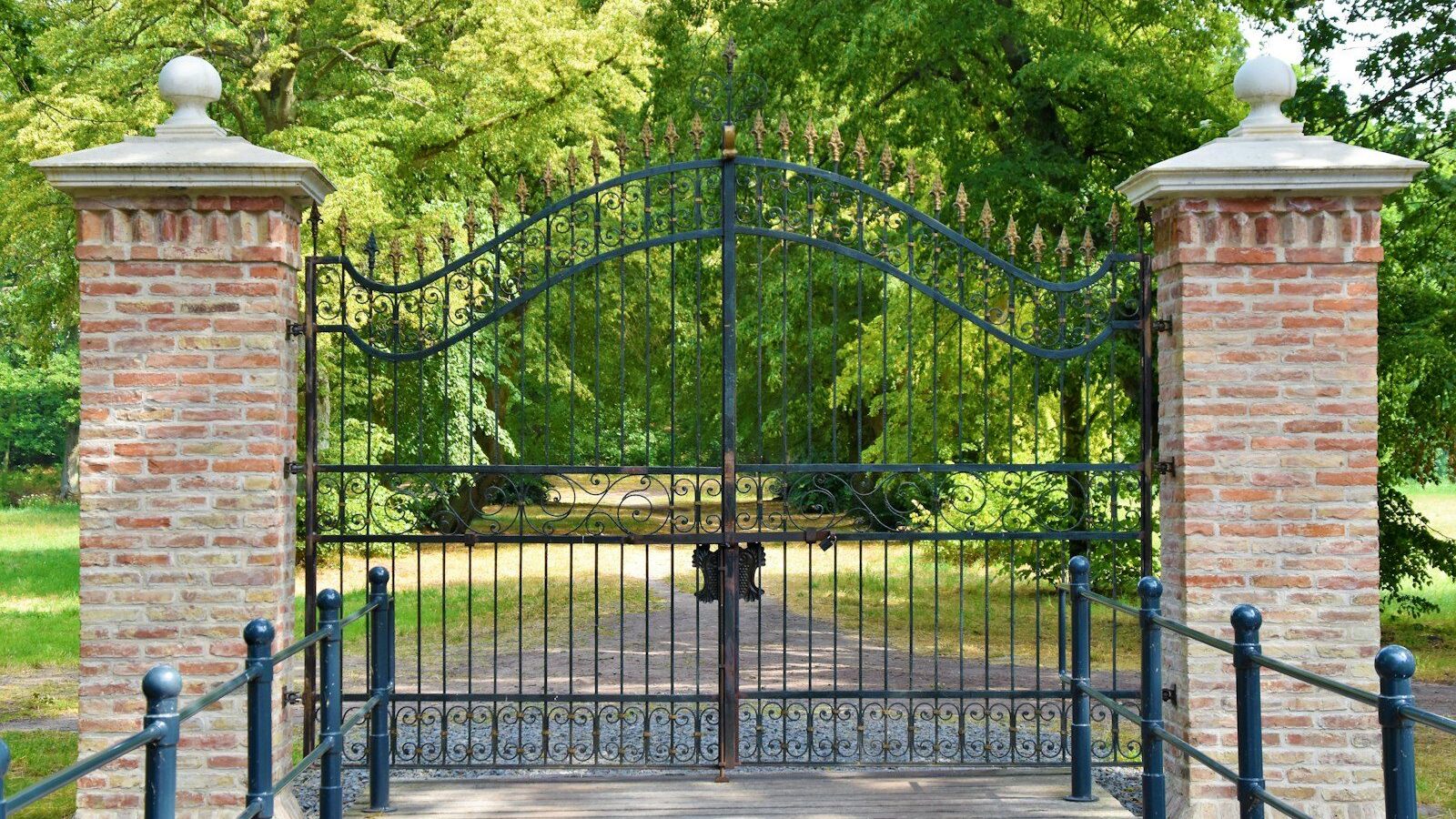
A professionally installed automatic driveway gate typically costs about $4,000 to $12,000 all in, with simple single swing gates using an off-the-shelf opener at the low end and custom sliding gates with video intercoms at the high end. Elaborate custom ironwork, long electrical runs, or steep driveways can push past $15,000 to $20,000. The gate itself is often less than half the bill: the operator (opener), running power, concrete footings, safety devices and access controls add up quickly. This guide breaks down each component for swing and slide gates so you can build a realistic budget and compare quotes item by item.
In this guide
Key Takeaways
- Most homeowners spend roughly $4,000 to $12,000 for a fully installed automatic driveway gate.
- Sliding gates usually cost more than swing gates because of the track, heavier operator and longer foundation work.
- Running power to the gate is a major variable; solar can avoid trenching on long driveways.
- Safety devices such as photo eyes and edge sensors are required for compliant automatic gates.
- Access controls, from remotes and keypads to video intercoms and smartphone apps, can add a few hundred to a few thousand dollars.
Electric Gate Cost Breakdown
These typical ranges are for residential driveway gates installed by a gate or fence contractor. Regional labor rates, site conditions and material choices move the numbers considerably.
| Component | Typical range | Notes |
|---|---|---|
| Gate panel(s), 12 to 16 ft opening | $1,500–$8,000+ | Aluminum low end, steel or wrought iron mid, custom wood or ornamental high |
| Swing gate operator | $800–$3,500 | Single or dual arm; heavier gates need commercial-grade units |
| Slide gate operator | $1,200–$4,000 | Chain-drive or rack-and-pinion |
| Posts, footings and concrete | $300–$1,500 | More for masonry pillars |
| Slide gate track or cantilever hardware | $500–$2,500 | Includes concrete pad or support posts |
| Electrical run and circuit | $500–$3,000+ | Trenching distance is the big factor |
| Solar power kit (instead of wired) | $300–$1,500 | Panel, battery, charge controller |
| Safety photo eyes and edge sensors | $150–$800 | Required for entrapment protection |
| Keypad | $100–$500 | Wired or wireless |
| Intercom (audio or video) | $300–$3,000 | Smart video units at the high end |
| Remotes | $30–$80 each | Often 2 included with operator |
| Vehicle exit sensor or loop | $200–$700 | Free exit without a remote |
| Permits and inspections | $50–$500 | Varies by municipality |
| Labor | $1,000–$4,000+ | Often bundled into the total |
Swing Gate vs Sliding Gate Cost
Automatic swing gates
Swing gates are hinged on posts and open inward (usually) like doors. They’re the most common residential choice and generally the less expensive one: a single swing gate with a residential arm operator is often in the $4,000 to $8,000 installed range, and a dual (bi-parting) gate with two operators runs higher. Swing gates need clear, fairly level space for the gate to swing through, plus room so a waiting car isn’t in the swing path. On uphill driveways, the gate may need to open outward or be fitted with special hinges, which adds cost.
Automatic sliding gates
Sliding gates roll sideways along a ground track or hang from a cantilever frame. They suit sloped driveways, short setbacks where a car would block a swinging gate, and windy sites. They usually cost more, often $6,000 to $12,000 or more installed, because they need a longer gate panel (roughly one and a half times the opening for cantilever designs), a concrete pad or track, a heavier operator and more installation labor. They also need clear space along the fence line for the gate to slide into.
Other styles
Vertical pivot and bi-folding gates exist for tight sites but are specialty, mostly commercial products and cost significantly more. Retrofitting an existing manual gate with an operator can save money if the gate and posts are sound, square and strong enough for the motor; budget for hinge upgrades and reinforcement.
Free, no-obligation quote · Connect with a local pro
Gate Material Costs
- Aluminum: lightweight, rust-free and easy on operators. Often the most affordable automated option. Good match for ornamental aluminum fences.
- Steel and wrought iron: stronger and more secure, heavier, and need periodic painting or powder-coat touch-ups. Custom ironwork raises costs sharply. If you’re matching an iron fence, see our wrought iron fence cost guide.
- Wood: warm look and privacy, but heavy and prone to sagging and warping, which stresses operators. A steel frame with wood cladding is a durable compromise.
- Vinyl and composite: low maintenance, but large panels can flex in wind; check the manufacturer’s rating for automation.
Gate weight and length decide which operator you need. A heavy wood or steel gate requires a stronger, more expensive operator, so a lighter gate can save on both ends.
Powering the Gate
Hardwired power is the most reliable option. An electrician runs a dedicated circuit from your panel to the gate, usually in buried conduit. Cost depends mostly on distance, soil and what’s in the way: a gate 50 feet from the garage is straightforward, while a gate 400 feet down a gravel driveway with a paved crossing can cost several thousand dollars in trenching and wire alone. Low-voltage wiring for keypads, intercoms and sensors often shares the trench.
Solar kits avoid trenching and are popular on rural properties. They work well for lighter gates with moderate daily use in sunny locations, but heavy gates, many daily cycles, shaded sites and northern winters can drain the battery. Ask the installer to size the panel and battery for your gate weight and expected cycles, and to include a battery backup either way so the gate works during power outages.
Safety Devices
Automatic gates are heavy, and entrapment injuries are a real risk. Residential gate operators sold in the US are built to the UL 325 safety standard, which requires entrapment protection, and ASTM F2200 covers gate construction. In practice that means photo-eye sensors across the opening, contact edges on the gate’s leading edge, and in many installs mesh on ornamental gates so hands can’t reach through near moving parts. Budget for these as part of the job, not an optional upgrade, and be wary of quotes that leave them out.
Access Control Options
- Remotes: the simplest entry; most operators include one or two.
- Keypad: lets guests and deliveries in with a code. Mount it on a gooseneck post at car-window height.
- Audio or video intercom: lets visitors call the house or your phone. Smart video intercoms let you see and open the gate from anywhere.
- Smartphone control: Wi-Fi or cellular modules add app control and logs; check that your Wi-Fi reaches the gate.
- Exit sensor or vehicle loop: opens the gate automatically for cars leaving, so you don’t need a remote on the way out.
- Emergency access: many fire departments require a key switch, siren sensor or code access; check local requirements.
Other Factors That Affect Price
- Driveway slope and soil. Slopes complicate swing gates; rocky or wet soil makes footings and trenching harder.
- Pillars and masonry. Brick or stone columns add significant cost but improve the look and support heavy gates.
- HOA and permits. Many HOAs regulate gate style and height; cities may require permits, setbacks from the street and electrical inspection.
- Fence integration. A gate without a fence only controls the driveway. If you’re fencing the property too, see our fence installation cost guide.
- Lighting. Lighting the entrance improves safety and makes the keypad easy to use at night; our landscape lighting installation cost guide covers pricing.
Free, no-obligation quote · Connect with a local pro
Example Project Scenarios
These illustrative scenarios show how the components combine. Actual quotes depend on your region and site.
- Basic suburban swing gate: a single 12-foot aluminum swing gate on new steel posts, a residential arm operator, power run about 40 feet from the garage, photo eyes, two remotes and a wireless keypad. This kind of job typically lands near the lower end of the overall range.
- Dual swing gate with intercom: a pair of 8-foot steel ornamental gates on masonry pillars, two operators, a 150-foot trenched power and low-voltage run, a video intercom with phone app, and a vehicle exit loop. Expect the middle to upper part of the range, with pillars and the intercom being the biggest add-ons.
- Rural sliding gate on solar: a 16-foot cantilever steel gate at the end of a long gravel driveway, a slide operator with a solar panel and battery, a cellular keypad and a fire department key switch. Solar avoids hundreds of feet of trenching, but the cantilever frame and heavier operator keep this at the upper end.
When comparing quotes, ask each installer to list the operator brand and model, the gate weight it’s rated for, the safety devices included, and the warranty on both parts and labor.
Maintenance and Ongoing Costs
Plan on annual service: lubricating hinges, tracks and chains, adjusting limits and force settings, testing safety sensors and checking batteries. Many gate companies offer service plans, or a single visit often runs a few hundred dollars. Backup batteries typically need replacing every few years, and operators eventually wear out; expect a long service life from a quality operator sized correctly for the gate, and shorter life from undersized units.
DIY or Professional?
Experienced DIYers can install a residential swing gate opener kit on a light, well-hung gate, which saves labor. But the electrical circuit should be done by a licensed electrician, and safety setup matters: an incorrectly adjusted operator can crush or trap. For sliding gates, heavy gates, steep driveways or any installation with intercoms and loops, a professional gate installer is the better choice. Ask for proof of license and insurance, at least three itemized quotes, and warranty terms covering both the operator and the installation labor.
For ideas to frame the entrance, our driveway ideas and landscaping and hardscaping guide cover plantings and paving that complement a new gate.
Frequently Asked Questions
How much does an automatic driveway gate cost?
Most fully installed residential automatic gates fall in a typical range of about $4,000 to $12,000. Simple aluminum swing gates are at the low end, while sliding steel gates, masonry pillars, long power runs and video intercoms push costs higher.
Is a sliding gate more expensive than a swing gate?
Usually, yes. Sliding gates need a longer panel, a track or cantilever frame, a concrete pad and often a heavier operator. They’re worth the extra cost on sloped driveways, short setbacks or where there’s no room for a gate to swing.
Can an electric gate run on solar power?
Yes, solar kits work well for lighter gates with moderate use in sunny locations, and they avoid expensive trenching on long driveways. Heavy gates, frequent use or shaded sites may need hardwired power or a larger solar and battery setup.
Can I automate my existing driveway gate?
Often, if the gate is sturdy, square, swings freely and the posts are solid. The installer may need to upgrade hinges, reinforce the frame or add a stronger post. A sagging or very heavy gate may cost more to fix than to replace.
How long does electric gate installation take?
Simple operator installs on an existing gate may take a day. New gates with footings, trenching and access controls typically take several days spread over one to three weeks, allowing time for concrete to cure and permits or inspections.
Get free quotes from local pros
Compare written quotes from experienced local contractors for gate installation, power and access controls.