

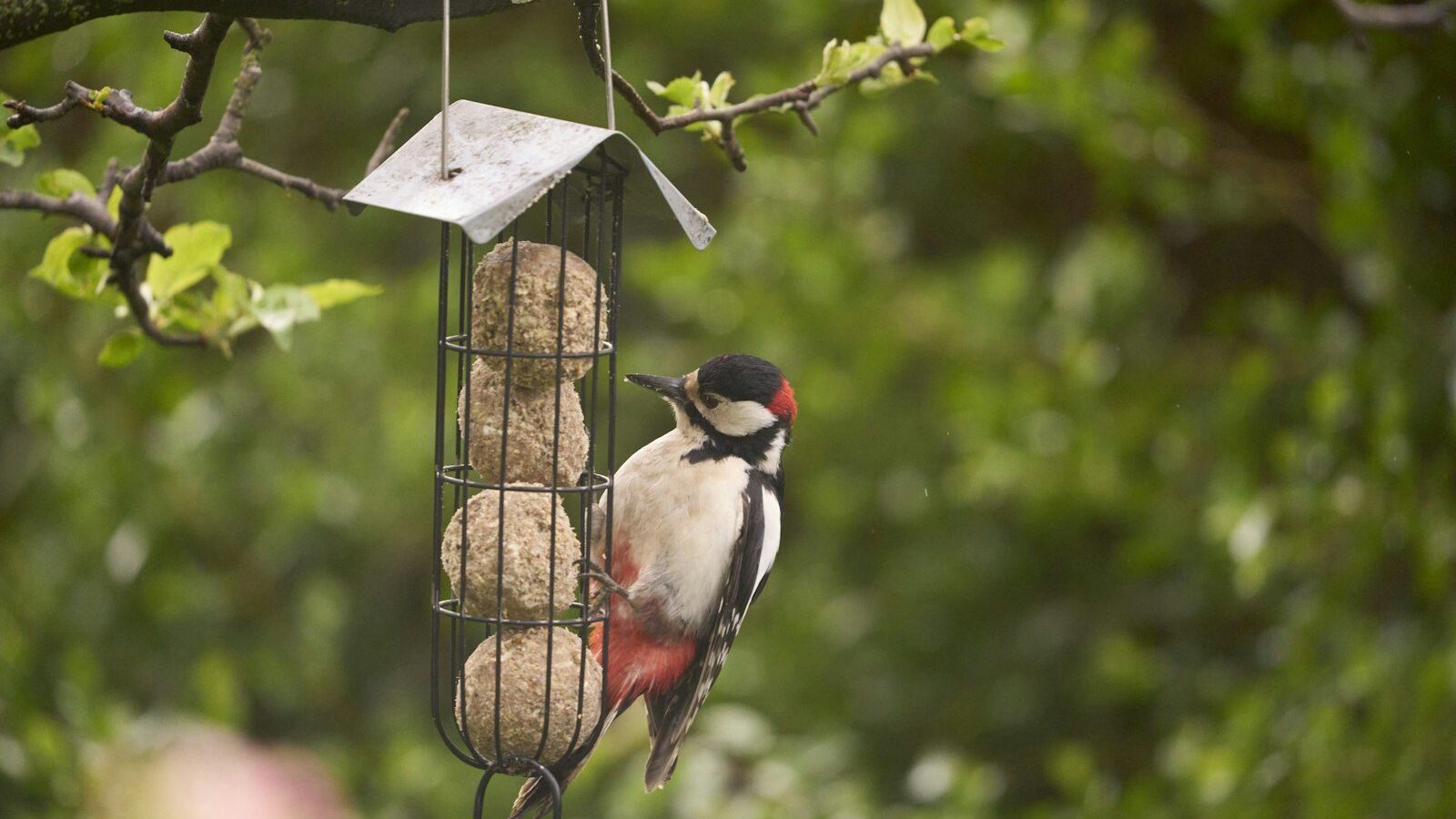
Suet is the single best way to pull woodpeckers, nuthatches, chickadees, and wrens into a backyard, especially in cold weather when birds burn through fat reserves overnight. But the feeder matters as much as the suet cake. A bare wire cage works, yet the right design will steady a clinging woodpecker with a tail prop, foil starlings with an upside-down layout, or hold four cakes at once so you refill less often. The best suet feeder for you depends on which birds you want and which pests you want to shut out.
Suet is rendered animal fat, often blended with seeds, nuts, berries, or insects, and it delivers the dense, high-calorie energy that insect-eating birds crave when bugs are scarce. That makes it a winter staple, but it is also valuable in spring and fall migration and even summer if you switch to a no-melt formula. The clinging birds it attracts, woodpeckers and nuthatches especially, feed differently from the seed-eating finches and cardinals at your tube feeder; they grip the cage and work the suet rather than perching, which is why feeder design centers on giving them something to hold onto and, ideally, a tail to brace. The seven feeders and styles below cover every situation, from attracting giant pileated woodpeckers to shutting out starling flocks, and the buyer’s guide at the end ties the choices together.
As an Amazon Associate we earn from qualifying purchases. This page contains affiliate links at no extra cost to you.
Key Takeaways
- A tail-prop extension below the cage lets large woodpeckers like flickers and pileateds brace their tails and feed comfortably.
- Upside-down (bottom-access) feeders let clinging birds feed but block most starlings and grackles, which dislike hanging head-down.
- Vinyl-coated wire is gentler on bird feet and resists rust longer than bare galvanized cage.
- Cedar and recycled-plastic feeders both last for years; recycled plastic shrugs off rot and never needs sealing.
- Stack or double-cage feeders hold more cakes so you refill less in peak winter demand.
- Use no-melt suet in summer heat and offer plain or hot-pepper suet to deter squirrels and raccoons.
Suet Feeder Comparison
| Product | Best For | Key Spec |
|---|---|---|
| Nature’s Way Cedar Tail-Prop (CWF1) | Large woodpeckers | Cedar, 1 cake, tail prop |
| C&S EZ Fill Suet Basket | Easy refilling | Top-loading wire basket |
| Woodlink Going Green Double Suet | Eco-friendly durability | Recycled plastic, 2 cakes |
| Stokes Select Double Suet | High capacity | Stacked cage, up to 4 cakes |
| More Birds Double Suet w/ Weather Guard | Rain protection | 2 cakes, roof guard |
| Kettle Moraine Cedar Suet Log | Suet plugs | Cedar log, drilled holes |
| Kingsyard Double Suet w/ Roof | All-metal longevity | Powder-coated, 2 cakes |
Nature’s Way Cedar Tail-Prop Suet Feeder (CWF1)
If your goal is to attract big woodpeckers, start here. The Nature’s Way CWF1 adds an extended cedar tail-prop panel below the suet cage so northern flickers, red-bellied, and even pileated woodpeckers can brace their stiff tails against it and feed in their natural posture. It is built from rot- and insect-resistant premium cedar with rust-free screws and mesh, and it holds one standard suet cake.
The cedar weathers to a soft gray over time and needs no sealing. A vinyl-coated steel hanging cable comes included. For a backyard where woodpeckers are the headline act, this is the feeder we reach for first.
Pros
- Tail prop steadies large woodpeckers
- Rot- and insect-resistant cedar
- Rust-free mesh and screws
Cons
- Holds only one cake
- Does not exclude starlings
C&S EZ Fill Suet Basket
The C&S EZ Fill basket is the no-nonsense workhorse of suet feeding. It is a simple vinyl-coated wire cage that hinges open from the top so you drop a cake in and snap it shut, no fumbling with a side door. C&S makes the suet cakes that fit it perfectly, which removes the guesswork of mixing brands.
It is cheap enough to buy two or three and hang them around the yard, and the vinyl coating is easier on small bird feet than bare galvanized wire. There is no tail prop, so it suits chickadees, nuthatches, and smaller woodpeckers more than the giant flickers.
Pros
- Top-loading design fills in seconds
- Inexpensive enough to buy several
- Vinyl-coated, foot-friendly wire
Cons
- No tail prop for big woodpeckers
- Holds a single cake
Woodlink Going Green Double Suet Feeder
Woodlink’s Going Green line is built from recycled plastic, which never rots, splits, or needs sealing, so it stands up to years of rain and sun without fading like cedar. This double model holds two suet cakes side by side, doubling capacity for high-traffic winter feeding, and the recycled body wipes clean easily when you do the seasonal scrub.
If you like the look and longevity of plastic over wood and want to refill less often, this is a smart pick. The two-cake layout also lets you offer two suet flavors at once, which is handy if you are experimenting with hot-pepper suet to deter mammals.
Pros
- Recycled plastic never rots or needs sealing
- Holds two cakes for fewer refills
- Wipes clean easily
Cons
- No starling exclusion
- Plastic look not for everyone
Stokes Select Double Suet Feeder
The Stokes Select double suet feeder uses a stacked cage design that doubles capacity, holding up to four suet cakes in a single hanging unit thanks to two cages stacked together. For a busy winter yard where a single cake vanishes in a day, that capacity means dramatically fewer trips out into the cold to refill.
The classic black powder-coated cage is sturdy and blends into a tree line. Multiple birds can feed at once across the stacked cages, reducing squabbling at peak times. It is a great choice when you have a strong woodpecker and nuthatch crowd and want to keep them all fed.
Pros
- Stacked cages hold up to four cakes
- Several birds feed simultaneously
- Durable powder-coated finish
Cons
- Heavier when fully loaded
- No weather roof on the basic model
More Birds Double Suet Feeder with Weather Guard
Rain is suet’s enemy; a soaked cake turns to mush and goes rancid faster. The More Birds double suet feeder adds an overhead weather guard, a small roof that sheds rain and snow off the cakes below. It holds two cakes and keeps them drier and fresher in wet climates, which is exactly what you want in the Pacific Northwest or a soggy Northeast winter.
The guard also gives perching birds a little shelter while they eat. If your feeders sit out in the open with no tree canopy overhead, the weather guard earns its keep.
Pros
- Roof keeps suet drier in rain and snow
- Holds two cakes
- Sheltered feeding for the birds
Cons
- Roof can crowd very large woodpeckers
- More parts to clean
Kettle Moraine Cedar Suet Log Feeder
For something different, the Kettle Moraine cedar suet plug log is a natural-looking cedar log drilled with deep holes that you pack with suet plugs. Clinging birds work the plugs out of the holes much as they would dig insects from real bark, which feels more natural to woodpeckers and nuthatches than a wire cage.
It is handcrafted cedar, so it ages gracefully and looks at home hanging from a tree. You will need suet plugs rather than standard square cakes, which is a minor sourcing note. As a second feeder alongside a cage, it adds variety that keeps clinging birds returning.
Pros
- Natural feeding action mimics bark foraging
- Attractive handcrafted cedar
- Great variety alongside a cage feeder
Cons
- Requires suet plugs, not standard cakes
- Lower capacity than cage feeders
Kingsyard Double Suet Feeder with Roof
The Kingsyard double suet feeder is an all-metal, powder-coated unit built to shrug off weather and rust. It holds two cakes and adds a metal roof to keep them dry, combining the high capacity of a double feeder with the rain protection of a weather guard in a tougher all-metal package than the plastic-and-wire options.
Metal also resists squirrel chewing better than wood or plastic, which is a quiet advantage if rodents have been gnawing your feeders apart. For a durable, weatherproof feeder that will last many seasons outdoors, the Kingsyard is a strong all-rounder.
Pros
- All-metal, rust-resistant build
- Roof keeps cakes dry
- Resists squirrel chewing
Cons
- Heavier than wire-only feeders
- No tail prop for the largest woodpeckers
How to Choose a Suet Feeder
Pick a design around the birds you want. If big woodpeckers are the goal, get a tail-prop model so flickers and pileateds can brace and feed. If starlings and grackles are mobbing your suet, switch to an upside-down or bottom-access feeder; clinging native birds adapt to feeding head-down while most blackbirds give up. Chickadees and nuthatches are happy at any simple cage.
Match capacity to your traffic. A single-cake basket is fine for a quiet yard, but if a cake disappears in a day in midwinter, step up to a double or stacked feeder so you are not refilling daily in freezing weather. Higher capacity also lets several birds feed at once and cuts down on squabbling.
Choose materials for your climate. Vinyl-coated wire is gentler on bird feet and resists rust. Cedar looks natural and weathers well but eventually ages; recycled plastic and powder-coated metal never rot and shrug off chewing rodents. In wet regions, a weather guard or roof keeps suet from turning rancid.
Use the right suet for the season. Switch to no-melt or “summer” suet blends once temperatures climb, since standard suet goes greasy and can foul feathers in heat. Hot-pepper suet deters squirrels and raccoons, which cannot taste capsaicin the way mammals do, while birds are unbothered. Place suet feeders near cover so birds feel safe, and clean them every couple of weeks to prevent spoilage and disease. For more on attracting wildlife and designing a bird-friendly yard, see our Outdoor Living hub, and browse other feeder buyer guides over in Tools & Gear.
Get the design right for your birds and your weather and a suet feeder pays off fast: woodpeckers, nuthatches, and chickadees become daily visitors, especially through winter. Tail-prop for the big drummers, double or stacked for high traffic, weather-guarded for rainy regions. Whichever you choose, keep it clean and stocked and your yard turns into a year-round bird magnet. Pair it with native plantings from our Plants & Flowers hub for even more wildlife.
Frequently Asked Questions
What birds will a suet feeder attract?
Suet draws clinging insect-eaters: downy, hairy, red-bellied, and pileated woodpeckers, plus nuthatches, chickadees, titmice, wrens, and warblers. Bluebirds and some other species take it too. It is especially valuable in cold weather when birds need extra fat.
How do I keep starlings off my suet?
Use an upside-down or bottom-access feeder where birds must hang head-down to eat. Most native clinging birds adapt, but starlings and grackles usually give up. Plain or hot-pepper suet without seed and corn also makes the feeder less appealing to flocking birds.
Can I offer suet in summer?
Yes, but switch to a no-melt or summer suet blend. Standard suet softens and turns greasy in heat, which can coat feathers and go rancid. No-melt blends are formulated to stay firm in warm temperatures.
How often should I clean a suet feeder?
Clean it roughly every two weeks, more often in warm or wet weather. Scrub with hot water and a dilute vinegar or bleach solution, rinse well, and dry before refilling. Spoiled suet and old residue can spread disease among visiting birds.
Will squirrels eat suet?
Yes, squirrels and raccoons will raid suet. Use hot-pepper suet, which mammals dislike but birds cannot taste, and hang the feeder on a baffled pole away from jump-off points. All-metal feeders also resist chewing better than wood or plastic.