

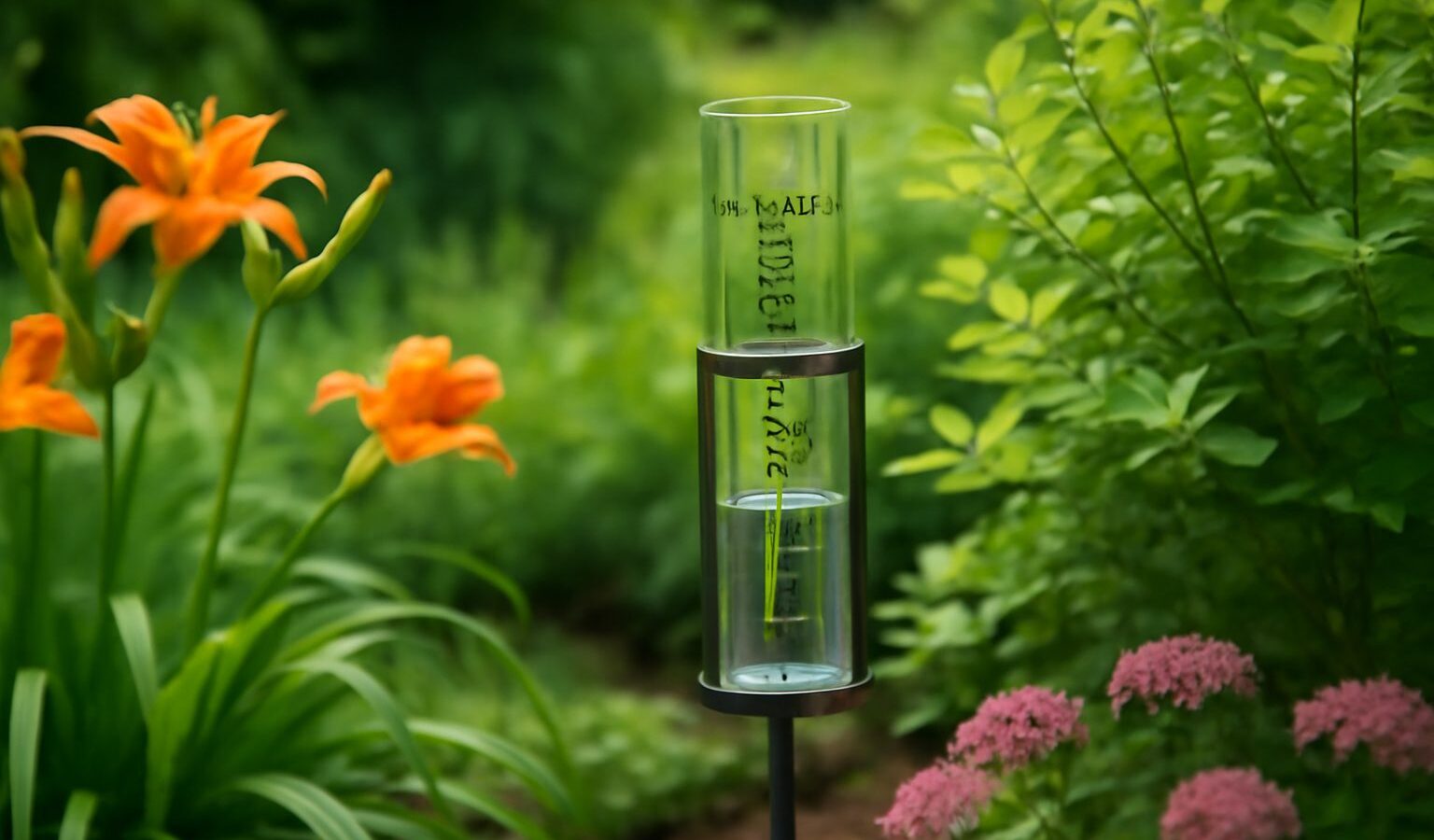
Knowing exactly how much rain fell in your garden is one of those small data points that quietly makes you a better gardener. The standard advice is that most lawns and gardens want about an inch of water a week — but “it rained yesterday” tells you nothing about whether you got a quarter inch or two inches, and whether you should drag out the hose or leave the sprinkler off. A rain gauge answers that question precisely. It also lets you compare your microclimate to the official forecast (which is often measured miles away), track seasonal totals, decide when a young tree or new lawn needs supplemental water, and avoid the waste and root rot that come from watering soil that’s already soaked.
Rain gauges range from a two-dollar plastic tube you stake in a bed to a wireless digital weather station that logs rainfall, temperature, and wind to an app on your phone. The right one depends on how much detail you want and how much you’ll fuss with it. This guide walks through seven real, widely available models — simple manual tube and wedge gauges, decorative copper, professional-grade collectors, and self-emptying wireless tipping-bucket stations — with what each is genuinely good for and the honest trade-offs, followed by a buyer’s guide and a short FAQ. For more tool comparisons, browse our Tools & Gear hub.
As an Amazon Associate we earn from qualifying purchases. This page contains affiliate links at no extra cost to you.
Key Takeaways
- Most gardens want roughly an inch of water a week; a rain gauge tells you exactly how much rain you got so you don’t over- or under-water.
- Manual tube and wedge gauges are cheap, accurate, and never need batteries — you just read and empty them by hand.
- Wireless digital gauges with a tipping bucket self-empty, log totals, and send readings to an indoor display or app, but need batteries and occasional cleaning.
- Mount the gauge in the open, away from buildings, eaves, and tree canopy, with the rim level and above splash height for an accurate reading.
- The Stratus is the accuracy pick, the AcuRite 00850 is the best simple value, and the Ecowitt or AcuRite digital stations are best for hands-off logging.
| Product | Best For | Key Spec |
|---|---|---|
| Stratus Precision (CoCoRaHS) | Best accuracy / official-grade | 11-in capacity, 0.01-in resolution tube |
| AcuRite 00850 Easy-Read | Best simple value | 5-in capacity, large magnified numbers |
| Ecowitt WH5360B Wireless | Best wireless digital value | Self-emptying tipping bucket, indoor display |
| AcuRite 00899 Wireless | Best easy digital station | Self-emptying bucket, programmable display |
| Taylor 2715 Jumbo | Best easy-read manual | 6-in capacity, oversized clear numbers |
| Achla Copper Rain Gauge | Best decorative | Glass tube in patina copper holder |
| La Crosse 705-109 Digital | Best budget digital | Wireless tipping bucket, simple readout |
1. Stratus Precision Rain Gauge (CoCoRaHS)
The Stratus Precision is the gauge serious weather watchers use, and it’s the official instrument of the CoCoRaHS volunteer rain-reporting network across North America. It’s a manual gauge built to the U.S. standard: a large outer cylinder holds up to about 11 inches of rain, and a precision inner measuring tube reads the first inch in fine 0.01-inch graduations, so you get genuinely accurate, repeatable readings rather than a rough eyeball. The thick polycarbonate construction is UV-stable and tough, the funnel design minimizes evaporation between readings, and the whole thing is built to last for many seasons outdoors.
The trade-offs are that it’s a manual gauge — you walk out, read the tube, and empty it yourself, with no display, logging, or app — and it costs much more than a basic plastic tube. The precise inner tube can overflow into the outer cylinder in a big storm, which you then measure separately. But if you genuinely want the most accurate reading a home gardener can get, and you don’t mind a daily walk to the gauge, nothing here beats it.
Pros
- Official CoCoRaHS-grade accuracy with 0.01-in resolution
- Large 11-inch total capacity for big storms
- Tough, UV-stable polycarbonate built to last
- Funnel design limits evaporation between readings
Cons
- Most expensive; manual reading and emptying
- No display, logging, or app
- Inner tube overflows in heavy rain and needs a second read
2. AcuRite 00850 Easy-Read Magnifying Rain Gauge
The AcuRite 00850 is the simple, accurate, no-batteries gauge I recommend to most gardeners. It’s a clear acrylic tube that holds up to 5 inches of rain, and its clever feature is a built-in magnifying lens that enlarges the water level and numbers so you can read the total accurately from several feet away — handy when you’d rather not crouch over it in the wet. It comes with both a ground stake and a mounting bracket, so you can plant it in a bed or fix it to a post or fence. For a couple of dollars, it does exactly what a rain gauge should: tell you precisely how much fell.
The honest limits are the budget ones. Acrylic isn’t as UV-tough as the Stratus’s polycarbonate, so years of harsh sun can eventually cloud or embrittle it. It’s manual, so you read and empty it yourself, and a 5-inch capacity can overflow in a tropical downpour. But as an accurate, dirt-cheap, battery-free gauge that’s genuinely easy to read, it’s the best value on the list.
Pros
- Magnifying lens makes it easy to read from a distance
- Very inexpensive and battery-free
- Includes both ground stake and mounting bracket
- Accurate, no-fuss manual reading
Cons
- Acrylic can cloud or embrittle after years of sun
- 5-inch capacity overflows in big storms
- Manual emptying; no logging
3. Ecowitt WH5360B Wireless Rain Gauge
The Ecowitt WH5360B is the best-value way to go fully digital and stop walking out to read a tube. The outdoor sensor uses a self-emptying tipping-bucket mechanism that measures and dumps rain automatically and transmits wirelessly to an indoor color display, which shows current rainfall, rate, and daily, weekly, monthly, and total accumulations, plus temperature and humidity. Crucially for tech-minded gardeners, it can connect to Wi-Fi and push data to weather services and the Ecowitt app, so you can check rainfall from your phone and log long-term history. For the price, the feature set is excellent.
The trade-offs are inherent to tipping-bucket gauges. They need batteries in the outdoor sensor and the display, and the bucket and funnel must be cleaned occasionally — leaves, pollen, and insects can jam the mechanism and skew readings. Tipping buckets are also slightly less precise than a good manual tube in very light drizzle or extremely heavy downpours, and the funnel can ice up in freezing weather. For hands-off rainfall logging with app access, though, it’s a lot of capability for the money.
Pros
- Self-emptying; logs daily through total accumulation
- Wi-Fi and app access for phone monitoring and history
- Indoor display also shows temperature and humidity
- Strong feature set for the price
Cons
- Needs batteries and occasional cleaning of the bucket
- Less precise than a tube in very light or very heavy rain
- Funnel can ice up in freezing weather
4. AcuRite 00899 Wireless Rain Gauge
The AcuRite 00899 is the easy, well-supported wireless digital option for gardeners who want plug-and-play simplicity over deep app integration. The self-emptying outdoor collector transmits to a simple indoor display that shows rainfall over multiple periods and lets you set programmable rain alerts — handy if you want a heads-up that a threshold of rain has fallen so you know to skip watering. AcuRite is a mainstream brand with reliable support and easy availability, and the display is clear and uncomplicated, which makes this a friendly first step into digital rainfall tracking.
As with any tipping-bucket gauge, you’ll feed it batteries and need to keep the funnel clear of debris for accurate readings. It leans more toward a self-contained display than a data-logging, web-connected station, so if you specifically want long-term cloud history and app graphs, the Ecowitt is the better fit. But for someone who just wants reliable, self-emptying rainfall numbers on an easy indoor screen, the 00899 is a solid, fuss-free choice.
Pros
- Self-emptying with a clear, simple indoor display
- Programmable rainfall alerts
- Mainstream brand with reliable support
- Friendly first digital gauge
Cons
- Less data-logging and app depth than the Ecowitt
- Needs batteries and funnel cleaning
- Tipping-bucket precision limits in extreme rain
5. Taylor 2715 Jumbo Rain Gauge
The Taylor 2715 is the pick if your main complaint with rain gauges is that you can’t read the tiny numbers. It’s a tall, clear tube that holds up to 6 inches of rain with oversized, high-contrast graduations you can read from across the yard without your glasses, which makes it especially good for older gardeners or anyone who wants a quick glance from the porch. Taylor is a long-established maker of weather instruments, the build is straightforward and durable, and it comes with mounting hardware to stake it or attach it to a post. It’s a no-nonsense, battery-free gauge that just works.
Like the other manual gauges, you read and empty it by hand, and it has no logging or alerts. The clear plastic, while durable, will eventually weather under years of intense sun, and the 6-inch capacity can overflow in a serious storm. For an easy-to-read, reliable, inexpensive manual gauge, though, the jumbo numbers make it the most legible option here.
Pros
- Oversized numbers readable from a distance
- 6-inch capacity and durable build
- Battery-free and inexpensive
- Trusted weather-instrument brand
Cons
- Manual reading and emptying; no logging
- Plastic weathers over years of sun
- Can overflow in heavy storms
6. Achla Designs Copper Rain Gauge
If you want a gauge that looks like a piece of garden art rather than a lab instrument, the Achla copper rain gauge fits the bill. It pairs a graduated glass measuring tube with a solid copper holder and stake that weathers to a warm patina over time, so it earns a place in an ornamental border or by a path where a plastic tube would look out of place. The glass tube is genuinely accurate to read, typically measuring up to around 5 inches, and the copper construction is far more durable and UV-proof than plastic — it’s the gauge you buy as much for how it looks as for the data.
The compromises are practicality. Glass can break if knocked or if water freezes inside it, so you should empty it before a hard freeze. It costs more than a plain plastic gauge for the same measurement, and it’s still a fully manual read-and-empty design. But for a gardener who wants their tools to be beautiful as well as useful, a copper-and-glass gauge is a lovely, lasting choice that complements a well-designed garden.
Pros
- Attractive copper-and-glass design that ages to patina
- Durable, UV-proof copper holder and stake
- Accurate, clear glass measuring tube
- Doubles as garden decor
Cons
- Glass tube can break or crack if it freezes
- Pricier than plain plastic for the same data
- Manual read-and-empty; no logging
7. La Crosse 705-109 Wireless Rain Gauge
The La Crosse 705-109 is the budget-friendly entry into wireless digital rainfall tracking from a well-known weather-instrument brand. The self-emptying outdoor tipping-bucket sensor transmits to a compact indoor display that shows current and accumulated rainfall over several periods, plus a clock and indoor temperature. It hits the sweet spot for a gardener who wants the convenience of a self-emptying, no-walk gauge and an indoor readout without paying for a full app-connected weather station. Setup is simple and the display is easy to live with on a kitchen counter.
The trade-offs are the familiar digital ones plus a budget caveat. It needs batteries, the funnel and bucket want occasional cleaning, and tipping-bucket accuracy slips in very light or torrential rain. As a lower-cost station it offers less logging depth and weaker app/web connectivity than the Ecowitt. But for affordable, hands-off rainfall numbers on an indoor screen, it’s a sensible pick. If you’re dialing in irrigation, pair it with our guide to the right amount of water in our outdoor living hub.
Pros
- Affordable self-emptying wireless gauge
- Indoor display with accumulation and clock
- Simple setup from a known brand
- No more walking out to read a tube
Cons
- Limited logging and app/web connectivity
- Needs batteries and funnel cleaning
- Tipping-bucket precision limits in extreme rain
What to Look For in a Rain Gauge
Rain gauges vary more than they look. Here’s what actually matters when you choose one, and how to set it up so the numbers mean something.
Manual vs Digital
This is the first decision. Manual tube and wedge gauges are cheap, accurate, never need batteries, and never jam — but you have to walk out, read them, and empty them by hand, and they don’t log history. Digital tipping-bucket gauges self-empty, send readings to an indoor display or app, and track running totals automatically, but they need batteries, occasional cleaning, and are slightly less precise in extreme conditions. If you want maximum accuracy and simplicity, go manual; if you want convenience and data logging, go digital.
Capacity and Resolution
Capacity is how much rain the gauge holds before it overflows; resolution is how finely it measures. In a wet climate, a 5-inch gauge can overflow in a single storm, so a larger 6- to 11-inch capacity saves you from missing big totals. Resolution matters for precision: an official Stratus reads to 0.01 inch, while a basic gauge might only mark quarter-inches. Most gardeners are fine with a 5- to 6-inch capacity and tenth-inch marks; weather enthusiasts want more of both.
Materials and Durability
A rain gauge lives outdoors year-round, so material matters. UV-stable polycarbonate (like the Stratus) resists sun damage best and stays clear for years. Cheaper acrylic and plastic are accurate but eventually cloud, yellow, or grow brittle in harsh sun. Glass tubes are clear and attractive but can crack if water freezes inside them, so empty them before a hard freeze. Copper and metal holders last decades. Match durability to your climate and how long you want it to last.
Placement and Mounting
Even the best gauge gives bad data if it’s badly placed. Mount it in the open, away from buildings, fences, eaves, and overhanging tree canopy that would block or funnel rain, ideally with the rim about a foot or two above the ground so splash from the soil doesn’t add false rain. Keep it level so the reading is true, and make sure it’s secure enough not to tip in wind. A gauge under a tree or beside a wall can read wildly wrong.
Winter and Freezing
If you live where it freezes, plan for winter. Water left in any gauge will freeze and can crack a glass or rigid plastic tube, so empty manual gauges before a hard freeze, or bring them in. Tipping-bucket digital gauges don’t measure frozen precipitation accurately — snow has to melt to register — and the funnel can ice up. Some gardeners simply store the gauge over deep winter and put it back out in spring. Knowing this prevents a cracked tube and confusing readings.
Frequently Asked Questions
How much rain does my garden actually need?
As a rule of thumb, most lawns and gardens want about one inch of water per week from rain and irrigation combined, though hot, windy weather and fast-draining sandy soil push that higher, and cool weather or clay soil lowers it. A rain gauge lets you measure what nature provided so you only top up the difference with the hose, which saves water and prevents the soggy, oxygen-starved roots that come from overwatering already-wet soil.
Where should I put a rain gauge?
Place it in an open spot away from buildings, fences, eaves, and tree canopy that would block or funnel rain, with the rim roughly a foot or two above the ground so soil splash doesn’t add false rainfall. Keep it level and secure so it won’t tip in wind. A gauge tucked under a tree or against a wall will read far too low or too high, so open exposure is the single most important placement rule.
Are digital rain gauges accurate?
Good digital tipping-bucket gauges are accurate enough for garden use and have the big advantage of self-emptying and logging totals automatically. They’re slightly less precise than a quality manual tube in very light drizzle (it may not tip the bucket) or torrential downpours (rain can come faster than it tips), and they don’t measure frozen precipitation until it melts. Keep the funnel clean of debris and they’ll serve you well year-round.
Will my rain gauge crack in winter?
It can if water freezes inside it. Glass and rigid plastic tubes are most at risk — expanding ice can split them — so empty manual gauges before a hard freeze or bring them indoors over winter. Tipping-bucket digital sensors won’t crack the same way but can ice up and won’t register snow until it melts. In cold climates, many gardeners simply store the gauge over deep winter and redeploy it in spring.
How do I clean a rain gauge?
For manual tubes, empty after each reading and occasionally wash the tube with soapy water to remove dust, pollen, and algae that can cloud it or alter the reading. For tipping-bucket digital gauges, periodically lift the funnel and clear out leaves, insects, spider webs, and debris that can jam the bucket, then check that the bucket tips freely. A clean gauge gives accurate readings; a clogged one quietly under-reports rain.
For most gardeners, the AcuRite 00850 is the easiest recommendation: cheap, accurate, battery-free, and genuinely easy to read. If you want official-grade precision, step up to the Stratus; if you’d rather never walk out to a tube again, the Ecowitt or AcuRite wireless stations log everything for you. Whichever you choose, knowing exactly how much rain fell takes the guesswork out of watering and quickly pays for itself in a healthier, less wasteful garden.