

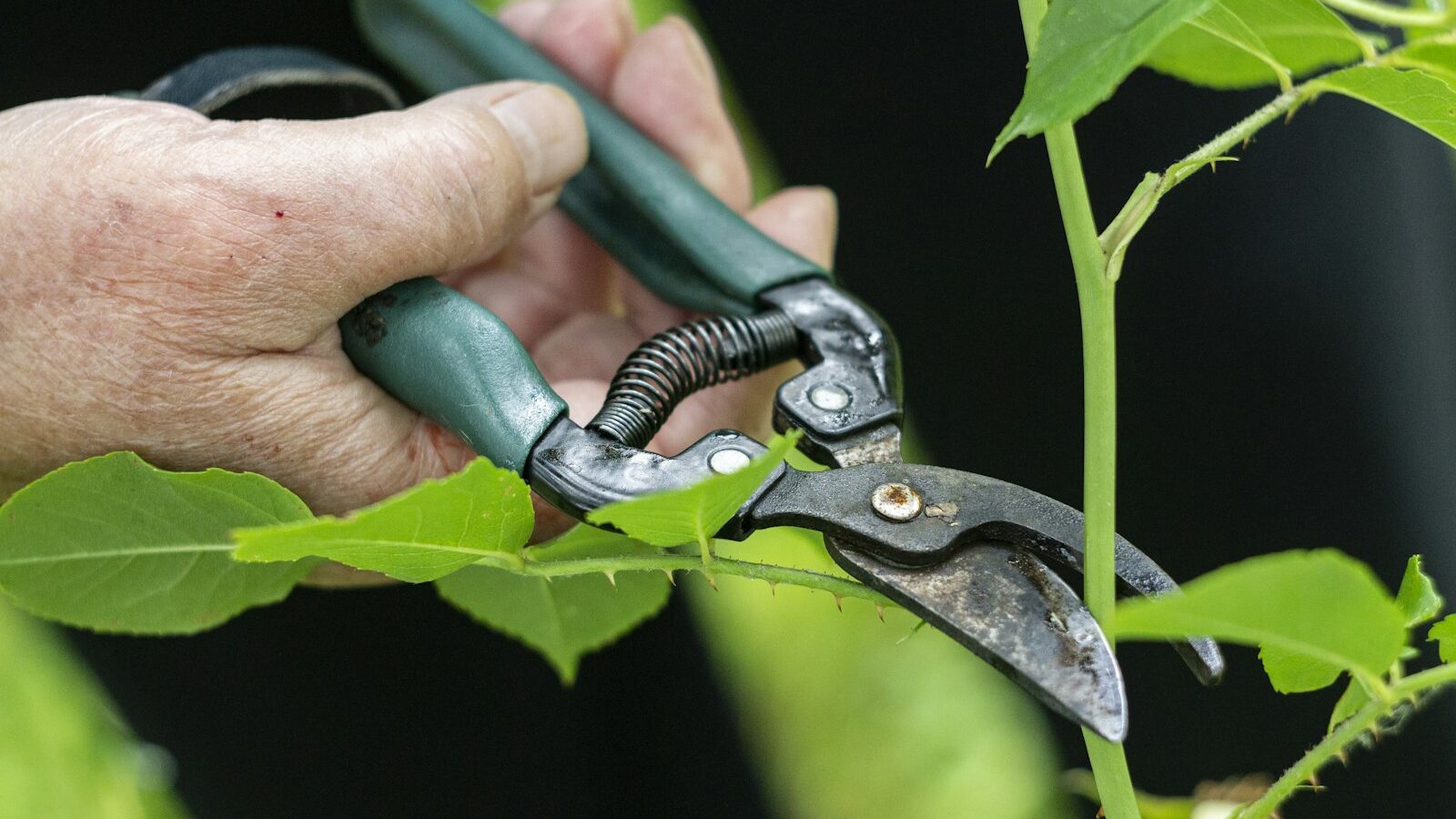
When your hand pruners hit their limit and the branch is too high or too thick to wrestle by hand, a good pair of loppers saves your forearms and your sanity. The catch is that “loppers” covers a wide range: lightweight bypass models for clean cuts on living wood, brute-force anvil and ratchet designs for dry deadwood, and telescoping pairs that reach overhead limbs without a ladder. We researched and compared the most trusted models for 2026 and narrowed the field to seven standout picks, each suited to a different job in the yard.
As an Amazon Associate we earn from qualifying purchases.
Our top picks
- Best overall bypass: Fiskars 32″ PowerGear2 Bypass Lopper
- Best anvil for deadwood: Tabor Tools GG12A Compound Action Anvil Lopper
- Best ratchet: Spear & Jackson Razorsharp Telescopic Ratchet Anvil Lopper
- Best extendable / telescoping: Fiskars Extendable Power-Lever Bypass Lopper (25″–37″)
- Best compact: Corona ComfortGEL Bypass Lopper (25″)
- Best for thick branches: Felco 211-60 Bypass Lopper
- Best budget: Fiskars 28″ Bypass Lopper
| Model | Type | Cut capacity | Best for |
|---|---|---|---|
| Fiskars 32″ PowerGear2 | Bypass (compound gear) | Up to 2″ | Best overall bypass |
| Tabor Tools GG12A | Anvil (compound action) | Up to 2″ (dry) | Best anvil for deadwood |
| Spear & Jackson Razorsharp | Anvil (ratchet, telescopic) | Up to ~1.5″+ (dry) | Best ratchet |
| Fiskars Extendable Power-Lever | Bypass (telescoping 25″–37″) | Up to 1-5/8″ | Best extendable |
| Corona ComfortGEL 25″ | Bypass | Up to 1.5″ | Best compact |
| Felco 211-60 | Bypass | Up to 1-3/8″ | Best for thick branches |
| Fiskars 28″ Bypass | Bypass | Up to 1.5″ | Best budget |
The 7 best loppers for 2026
Fiskars 32″ PowerGear2 Bypass Lopper — best overall bypass
If you only buy one pair of loppers, make it a bypass model, and the Fiskars 32-inch PowerGear2 is the one we’d hand most homeowners. Bypass loppers work like scissors, with a curved blade sliding past a hooked counter-blade to slice cleanly through living wood without crushing it, a cut that heals faster and invites less disease than the torn cut an anvil leaves on green growth. The PowerGear2 pairs that bypass action with Fiskars’ patented compound gear mechanism, which multiplies your hand force as the blade moves through the wood, giving you roughly three times the power of a single-pivot lopper right where the cut gets hardest.
In practice that means slicing through branches up to a full 2 inches in diameter with a satisfying lack of grunting. The 32-inch hollow-shaft handles keep weight down while still delivering long-handle leverage, and the fully hardened, precision-ground steel blade carries a low-friction coating so it glides through sappy wood. The one quirk worth knowing is that the arms swing open close to 180 degrees on the biggest cuts, so you need clearance when working a branch near the 2-inch limit. For everyday pruning of fruit trees, shrubs, and woody perennials, this is the workhorse that earns its keep.
Pros
- Compound PowerGear mechanism multiplies cutting force about 3x
- Clean bypass cut on living wood up to 2 inches
- Lightweight hollow handles with long-handle leverage
- Hardened, low-friction coated blade resists sticking and rust
Cons
- Arms open very wide on the largest cuts, needing clearance
- Geared head is harder to fully disassemble for sharpening
Tabor Tools GG12A Compound Action Anvil Lopper — best anvil for deadwood
Anvil loppers flip the geometry of a bypass tool: a single sharp blade drives straight down onto a flat metal “anvil,” splitting the wood like a chisel. That crushing action is wrong for living stems but exactly what you want for dry, hard deadwood, where a bypass blade can wedge and bind. The Tabor Tools GG12A is our favorite anvil model because it adds a compound-action linkage, a short pivoting arm at the fulcrum that multiplies your force roughly three times, so dead branches up to 2 inches give way without throwing your whole body into it.
The 30-inch handles balance reach and control, and the hardened carbon-steel blade has a non-stick coating that keeps dried sap from gumming up the works. At a little over three pounds it isn’t the lightest tool here, but that heft works in your favor on gnarly wood. If your yard has a lot of dead limbs or storm-damaged branches, this turns a chore into quick work. Just keep it off green roses and water sprouts, where you’ll want the cleaner bypass cut instead.
Pros
- Compound action triples applied force for dry, hard wood
- Cuts deadwood up to 2 inches with little effort
- Hardened carbon-steel blade with non-stick coating
- Excellent value for a professional-feeling tool
Cons
- Anvil design crushes living stems, so not for green growth
- Heavier than comparable bypass loppers
Spear & Jackson Razorsharp Telescopic Ratchet Anvil Lopper — best ratchet
A ratchet lopper is the secret weapon for anyone with weaker grip strength or a lot of tough cuts to make in one session. Instead of one big continuous squeeze, the ratchet lets you cut in stages: you squeeze, the jaws bite deeper and lock, you release and squeeze again, working through the wood in small, low-effort increments. The Spear & Jackson Razorsharp combines that ratcheting anvil head with telescoping handles that extend past 40 inches, so it doubles as a power tool for thick dead branches and a reach tool for limbs you can’t otherwise get to.
It chews through dry, woody material like dead willow and hard stems up to about 1.5 inches and beyond, with the ratchet doing the heavy lifting. There’s a short learning curve if you’re used to a one-and-done squeeze, but most users who stick with it end up converts, especially overhead where you have less leverage. Spear & Jackson backs it with a long warranty, and the aluminum handles lock evenly so they don’t wander mid-cut. It’s the pick for arthritic hands, big deadwood jobs, and anyone who hates dragging out a ladder.
Pros
- Ratchet action lets you cut thick wood in easy stages
- Telescoping handles extend past 40 inches for overhead reach
- Great for limited grip strength and large deadwood jobs
- Long manufacturer warranty
Cons
- Ratchet mechanism has a learning curve
- Slower per cut than a one-squeeze lopper on small branches
Fiskars Extendable Power-Lever Bypass Lopper (25″–37″) — best extendable / telescoping
Getting at high limbs is where most loppers leave you stuck on a wobbly ladder, and that’s the problem the Fiskars Extendable Power-Lever solves. Its handles telescope from a compact 25 inches out to a full 37 inches, so you keep both feet on the ground while reaching branches that would otherwise demand a step stool. Shorten the handles back down and it works perfectly well as a standard lopper, making it one of the more versatile single tools in the lineup.
The cutting action is Fiskars’ Power-Lever compound mechanism, a four-point pivot that roughly doubles your leverage, driving the hardened, non-stick steel bypass blade through limbs up to 1-5/8 inches. SoftGrip touchpoints keep your hands comfortable when you’re working overhead and the tool’s weight is fighting you. The trade-off with any extendable lopper is that fully extended it feels tip-heavy and less rigid, so save the longest reach for thinner branches. For tidying tree canopies and tall hedges, it’s a back-and-ladder-saver.
Pros
- Handles extend from 25″ to 37″ for true overhead reach
- Power-Lever four-point pivot roughly doubles leverage
- Clean bypass cut up to 1-5/8 inches
- SoftGrip handles reduce fatigue on long jobs
Cons
- Feels tip-heavy and less rigid at full extension
- Best reserved for thinner branches when fully extended
Corona ComfortGEL Bypass Lopper (25″) — best compact
Not every job needs a 32-inch monster. For close-quarters pruning, working inside a shrub, thinning a rose bed, or reaching between fence rails, a shorter, lighter lopper is faster and far less tiring. The 25-inch Corona ComfortGEL is our compact pick because it feels premium at a budget-friendly price. The standout is right in the name: ComfortGEL grips, a rubber overmold with a gel layer that absorbs shock and stays grippy even with sweaty hands. Reviewers consistently report the least hand shock at the end of the cut and no hot spots after hours of use.
The bypass blade handles branches up to about 1.5 inches and slices smoothly through anything that fits in the jaws, plenty for the lighter-duty work a compact lopper is meant for. You’re trading capacity and reach for maneuverability, so this isn’t the tool for thick limbs or high canopies. But as a nimble everyday pruner for the gardener constantly reaching into tight spots, it punches well above its price, and Corona backs it with a lifetime warranty.
Pros
- Compact 25″ length is nimble in tight spaces
- ComfortGEL grips deliver low hand shock and all-day comfort
- Smooth bypass cut up to 1.5 inches
- Premium feel at a modest price, plus lifetime warranty
Cons
- Limited 1.5-inch capacity and shorter reach
- Not suited to thick limbs or overhead canopy work
Felco 211-60 Bypass Lopper — best for thick branches
Felco is the Swiss name professional arborists reach for, and the 211-60 lives up to that reputation when the wood gets serious. It’s a bypass tool tuned for maximum force on dense, hard branches: the curved blade works against a hooked counter-blade in a variable-radius geometry that keeps leverage high as the blade travels. Felco claims a 40 percent boost in cutting power over its older 200 and 210 series, and in hands-on reviews it sails through hard-wooded crabapple and pear over an inch thick in seconds, with a rated capacity up to 1-3/8 inches of tough living hardwood.
What sets a Felco apart is that it’s built to last a lifetime and then some. The aluminum handles keep the 23.6-inch tool surprisingly light, the grips are genuinely ergonomic, and nearly every part, blade, counter-blade, springs, bumpers, can be bought as a replacement. Keep it cleaned and sharpened and this is a tool you hand down, not throw away. It costs more than anything else here, but for pros who cut dense hardwood regularly, the per-year value is hard to beat.
Pros
- Variable-radius blade delivers ~40% more power than older Felcos
- Slices dense hardwood up to 1-3/8 inches cleanly and fast
- Lightweight aluminum handles and ergonomic grips
- Fully serviceable with replaceable parts for lifetime use
Cons
- Premium price, the most expensive pick here
- Shorter handles than budget loppers, so less raw reach
Fiskars 28″ Bypass Lopper — best budget
You don’t have to spend a lot to get a lopper that handles the average yard, and the Fiskars 28-inch bypass model proves it. For about the price of a couple of bags of mulch you get a genuinely capable tool: rust-resistant, hardened, precision-ground stainless steel blades with a low-friction coating, paired with a bypass design that gives clean cuts on living growth. The 28-inch handles offer enough leverage for most homeowner pruning while staying easy to store.
Capacity tops out around 1.5 inches, which covers the majority of pruning a typical homeowner does, hedges, shrubs, fruit trees, and woody perennials. You won’t get the compound gearing of the PowerGear2 or the lifetime pedigree of a Felco, so the thickest, hardest branches take more muscle. But for the casual gardener who just needs a reliable lopper that won’t rust out after one season, this is the smart-money buy.
Pros
- Excellent value for an everyday homeowner lopper
- Rust-resistant, hardened, precision-ground steel blades
- Clean bypass cut on living growth up to 1.5 inches
- Light and easy to store and handle
Cons
- No compound gearing, so thick wood takes more effort
- Not built for heavy, professional daily use
Free, no-obligation quote · Connect with a local pro
How to choose loppers
Bypass vs. anvil (vs. ratchet)
This is the most important decision, and it comes down to what you’re cutting. Bypass loppers use two curved blades that pass like scissors, producing a clean cut that heals well, so they’re right for living growth such as fruit trees, shrubs, and perennials. Anvil loppers drive a single blade onto a flat plate, crushing as they cut, which makes them ideal for dry deadwood but a poor choice for living stems. Ratchet loppers are usually anvil-style tools that let you cut in stages; they shine when you have limited grip strength or a lot of thick, dry branches. Many gardeners end up owning one of each, a bypass for living wood and an anvil or ratchet for deadwood.
Cut capacity
Manufacturers quote a maximum diameter, typically 1.5 to 2 inches, but treat it as a best-case figure for the wood the tool is built for. A 2-inch bypass rating assumes greener, softer wood; the same tool will struggle on a dry, seasoned 2-inch branch. Buy more capacity than you think you need, and don’t force cuts at the limit, since overloading the jaws springs blades out of alignment or snaps a handle. If you regularly face branches thicker than 2 inches, reach for a pruning saw.
Blade material and coating
Look for fully hardened, high-carbon or stainless steel blades. High-carbon steel takes a keener edge and is easy to sharpen, while stainless resists rust better, which matters in a damp shed. A low-friction coating helps the blade glide through sappy wood and shrugs off gummy residue. The best tools, like the Felco, offer replaceable blades, so a worn edge means a cheap part swap rather than a new tool.
Weight, handle length, and reach
Longer handles give more leverage and reach but add weight; shorter handles are nimbler in tight spaces but ask more of your muscles on thick cuts. Hollow aluminum or composite handles keep weight down without giving up much strength. If you prune overhead, a telescoping pair keeps you off the ladder, though extendable tools feel tip-heavy at full stretch, so use them on thinner branches when fully extended. Cushioned grips like ComfortGEL or SoftGrip make a real difference over a long afternoon.
Gearing and ratchet mechanisms
Compound or geared mechanisms (Fiskars PowerGear and Power-Lever, Tabor’s compound action) multiply your hand force, often two to three times, just when the cut gets hardest. Ratchet mechanisms break a cut into several easy stages so you never apply full force at once. Both are worth seeking out if you have a lot of cutting to do or limited hand strength; the main downside is a slightly more complex head that’s harder to sharpen. For how loppers fit alongside your other gear, see our guide to essential garden tools, and for finer cuts on smaller stems pair them with a good set of best pruning shears. Timing matters too, so check when to prune trees and shrubs before you start cutting.
Frequently asked questions
What’s the difference between bypass and anvil loppers?
Bypass loppers have two curved blades that slide past each other like scissors, making a clean cut that’s ideal for living, green wood. Anvil loppers press a single blade against a flat metal plate, crushing as they cut, which works well on dry deadwood but bruises living stems. Use bypass for green growth and anvil for deadwood.
How thick a branch can loppers cut?
Most loppers are rated for branches between 1.5 and 2 inches in diameter, and the quoted figure assumes the type of wood the tool is built for. Don’t force cuts at the very top of the range, and for anything consistently thicker than 2 inches switch to a pruning saw.
Are ratchet loppers worth it?
If you have limited grip strength, arthritis, or a lot of thick, dry branches to cut, yes. The ratchet lets you work through a cut in small, low-effort stages instead of one big squeeze. The trade-off is a short learning curve and slower cutting on thin branches, where a standard lopper is quicker.
How do I keep my loppers sharp and rust-free?
Wipe the blades clean and dry after each use, and give them a light coat of oil before storing. Sharpen the beveled edge of a bypass blade with a sharpening stone or file as needed, and keep the pivot bolt snug but not so tight that the action binds. A non-stick coating helps, but cleaning off dried sap regularly does the most to keep cuts smooth.
Can I use loppers instead of a pole saw for high branches?
Telescoping loppers like the Fiskars Extendable Power-Lever let you reach limbs up to a few feet overhead without a ladder, which covers most light canopy tidying. But they’re limited to roughly 1.5-inch branches and lose rigidity at full extension. For branches that are thicker or higher than a telescoping lopper can comfortably handle, a pole saw or pole pruner is the safer tool.
Bigger job? Hire a pro.
For large, tall or hazardous work, compare free, no-obligation quotes from vetted local tree pros near you.