

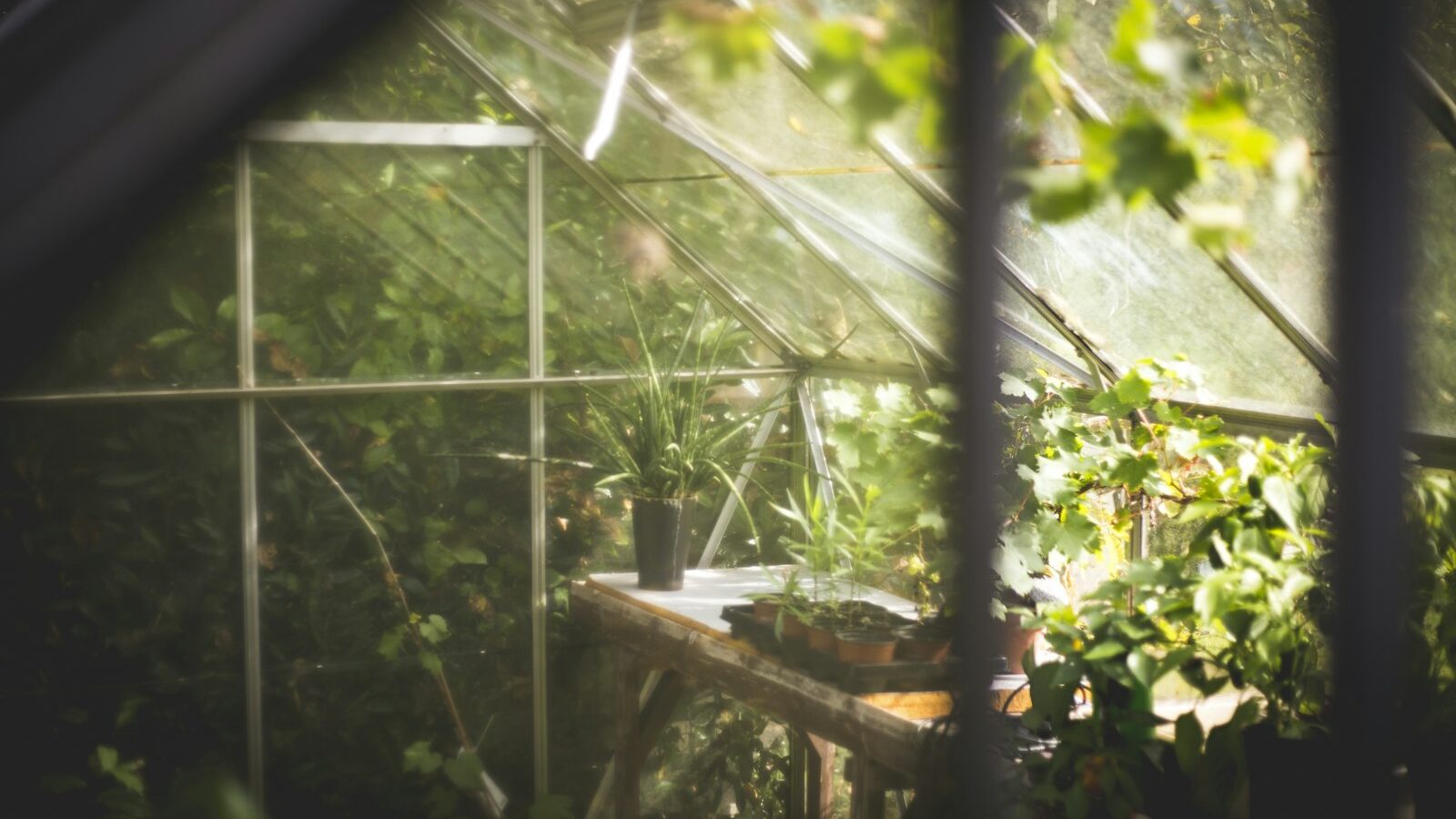
A greenhouse heater has one mission in winter: hold the air above the threshold your plants can survive. For a frost-free house that is just above 32°F; for tender tropicals or seed-starting it might be 50–60°F. The right heater depends on three things — how big your greenhouse is, how cold your winters get, and whether you have electricity out there. After years of running heaters in an 8×10 hobby greenhouse through zone-5 winters, I have learned that the cheap fan heater that “works fine” in November is the one that trips its thermal cutoff at 3 a.m. in January. Below are the seven greenhouse heaters I would actually buy in 2026 — electric, propane, and paraffin — with realistic BTU/wattage sizing, the safety realities of each fuel, and honest trade-offs.
As an Amazon Associate we earn from qualifying purchases. This page contains affiliate links at no extra cost to you.
Key Takeaways
- Electric is safest and cleanest — no fumes, no moisture, easy thermostatic control — but you need power run to the greenhouse and it costs more to run in cold zones.
- Propane and paraffin heat where there’s no power and are cheaper per BTU, but they release water vapor and CO₂, so the greenhouse must be ventilated.
- Size by volume, not floor area: a rough rule is ~10–15 watts per cubic foot for a frost-free electric house in a moderate winter; cold zones need more.
- A good thermostat is non-negotiable — it slashes running costs by only heating when needed.
- Pair any heater with bubble-wrap insulation, a circulating fan, and draft sealing — heating an uninsulated house is throwing money out the vents.
- Never run an unvented combustion heater in a sealed greenhouse: incomplete combustion produces deadly carbon monoxide and excess humidity invites disease.
| Heater | Best For | Key Spec |
|---|---|---|
| Bio Green Palma 2.0kW | Most hobby greenhouses | Electric fan, 6,824 BTU, thermostat |
| Dr. Infrared DR-988A | Larger powered greenhouses | Electric, 5,600W / 240V |
| VEVOR Greenhouse Heater 1500W | Budget electric | Electric fan, 5,118 BTU |
| Mr. Heater Buddy MH9BX | No power, small spaces | Propane, 4,000–9,000 BTU |
| Mr. Heater Big Buddy MH18B | No power, larger houses | Propane, up to 18,000 BTU |
| Parasene Warmoware Paraffin | Off-grid frost protection | Paraffin, ~1,500–2,000 BTU |
| Bio Green Phoenix 2.8kW | Cold-zone hobby houses | Electric, 9,553 BTU, digital |
1. Bio Green Palma 2.0kW — Best Overall Electric Heater
The Bio Green Palma is the heater I point most hobby growers to first. It is a 2,000-watt (6,824 BTU) electric fan heater purpose-built for greenhouses, with a splash-proof housing, a stainless-steel element, and an integrated thermostat. Unlike a generic space heater, it is rated for the damp, dusty greenhouse environment and runs cool enough at the casing to live among plants. The fan doubles as air circulation in summer, which is a genuine bonus. For a typical 8×10 to 8×12 house held frost-free in zones 5–7, 2kW is the right amount of power.
The honest limits: the built-in dial thermostat is functional but not precise, so many owners pair it with a separate plug-in greenhouse thermostat for tighter control and lower running costs. And like all electric heat, it needs a properly run outdoor circuit — 2kW is a real load. Within those constraints it is reliable, safe, and exactly the right tool for most hobby greenhouses.
Pros
- Purpose-built, splash-proof, safe around plants
- Fan provides summer air circulation too
- No fumes or added humidity (electric)
Cons
- Built-in thermostat is coarse; external one is better
- Needs a dedicated outdoor circuit
2. Dr. Infrared Heater DR-988A — Best for Larger Powered Greenhouses
When the greenhouse is bigger than a hobby box — a 10×16 or larger commercial-style structure — a 1,500W plug-in heater simply cannot keep up in a cold zone. The Dr. Infrared DR-988A is a 5,600-watt garage/shop heater on 240V that I have seen pressed into greenhouse duty effectively. It moves a lot of heated air through a fan, has an adjustable thermostat, and is built tough. For a large, well-insulated greenhouse on a 240V circuit, it provides the muscle that 120V units lack.
This is the trade-off you accept for capacity: it requires a 240V outlet (a real electrical job, not a standard wall plug), and it is not a sealed greenhouse-specific unit, so I keep it elevated and away from splashing water and dripping foliage. It is overkill — and a waste of a 240V install — for a small house. But for a big powered greenhouse in a cold climate, it is the realistic way to hold temperature.
Pros
- 5,600W output heats large greenhouses
- Rugged build with adjustable thermostat
- Strong fan distributes heat well
Cons
- Requires a 240V circuit (electrical work needed)
- Not a sealed greenhouse-rated unit; keep dry
3. VEVOR Greenhouse Heater 1500W — Best Budget Electric
The VEVOR 1500W greenhouse fan heater is the value pick for a small house. At 1,500 watts (about 5,118 BTU) it plugs into a standard 120V outlet, has a basic thermostat dial and frost/fan/heat settings, and a water-resistant housing aimed at greenhouse use. For a small 6×8 hobby house held just frost-free in a moderate winter, it does the job for noticeably less money than the premium German-brand units.
You get what you pay for in refinement: the thermostat is approximate, build quality is decent but not heirloom, and at 1,500W it is undersized for anything bigger than a small house or a genuinely cold zone. As a starter heater or a backup, though, it is a sensible, affordable way to keep frost off your overwintering plants without a big outlay.
Pros
- Affordable; plugs into standard 120V
- Frost/fan/heat settings with summer circulation
- Water-resistant greenhouse-oriented housing
Cons
- Coarse thermostat; less refined than premium brands
- 1,500W is undersized for larger or cold-zone houses
4. Mr. Heater Buddy MH9BX — Best for Greenhouses Without Power
If there is no electricity at the greenhouse, propane is the practical answer, and the Mr. Heater Buddy MH9BX is the go-to portable unit. It runs on a 1 lb propane cylinder (or a 20 lb tank with a hose adapter) and puts out 4,000 to 9,000 BTU, enough to take the edge off frost in a small house. Critically for indoor-ish use, it has an oxygen-depletion sensor (ODS) and an accidental tip-over shutoff — important safety features for combustion heat in an enclosed space.
That said, respect what it is: an unvented propane heater. It releases water vapor and carbon dioxide as it burns, so the greenhouse must have ventilation — a sealed house plus combustion equals dangerous CO and excess humidity that breeds botrytis and mildew. I treat the Buddy as frost-protection insurance for off-grid houses, not a set-and-forget unattended heater, and I crack a vent whenever it runs.
Pros
- No electricity required; portable
- ODS and tip-over auto-shutoff safety features
- Adjustable 4,000–9,000 BTU output
Cons
- Unvented combustion adds humidity and CO₂ — must ventilate
- No thermostat; not ideal for unattended use
5. Mr. Heater Big Buddy MH18B — Best Propane for Larger Off-Grid Houses
When the off-grid greenhouse is too big for the little Buddy, the Big Buddy MH18B steps up to as much as 18,000 BTU across three heat settings, with dual burners and connections for one or two 1 lb cylinders (or a 20 lb tank via hose). It carries the same ODS and tip-over safety as its smaller sibling, plus an optional battery-powered fan that helps push heat around — useful in a larger volume. For a mid-size greenhouse with no power in a cold region, it has the output the small Buddy lacks.
Everything I said about the small Buddy applies double here: more BTU means more combustion moisture and CO₂, so ventilation is mandatory and a battery CO alarm in the greenhouse is just smart. It is thirsty on propane at the high setting, so for a long cold winter the fuel bill adds up. But for serious off-grid frost protection, the Big Buddy is the realistic workhorse.
Pros
- Up to 18,000 BTU for larger off-grid houses
- ODS, tip-over shutoff, optional circulation fan
- Runs on 1 lb cylinders or a 20 lb tank
Cons
- Heavy propane use at high setting
- Combustion humidity/CO₂ demands ventilation and a CO alarm
6. Parasene Warmoware Paraffin Heater — Best Off-Grid Frost Protection
The old-school paraffin (kerosene) greenhouse heater still earns its place for one job: cheap, electricity-free frost protection in a small house. The Parasene Warmoware style of heater burns paraffin from a refillable tank, putting out a modest, steady warmth — roughly 1,500–2,000 BTU depending on model — for many hours per fill. There is nothing to plug in and nothing to break: a wick, a tank, and a flame. For an unheated lean-to or a small hobby house where you only need to keep things a few degrees above freezing, it is dependable insurance against a hard frost.
The downsides are inherent to the technology. Like all combustion heaters it produces water vapor and CO₂, so ventilation is required; the wick needs trimming and the unit needs cleaning to avoid soot on the glazing; and the output is small, so it is strictly frost protection, not warmth for tender tropicals. Used as intended in a small house, it is a time-tested, no-power solution.
Pros
- No electricity; cheap to buy and run
- Steady, long burn per fill for frost protection
- Simple and reliable — nothing electronic to fail
Cons
- Low output — frost protection only
- Needs wick trimming, cleaning, and ventilation
7. Bio Green Phoenix 2.8kW — Best for Cold-Zone Hobby Houses
For a hobby greenhouse in a genuinely cold zone, or one you want to hold warmer than just frost-free, the Bio Green Phoenix steps up to 2,800 watts (about 9,553 BTU) with a precise digital thermostat. The digital control is the standout feature: you set a target temperature to the degree and it holds it, which both protects sensitive plants and minimizes wasted energy compared with a coarse dial. The build is the same greenhouse-rated, splash-protected quality as the Palma, with a fan for circulation.
It is more expensive than the Palma and draws more power, so it only makes sense if you actually need the extra capacity — a zone-4 winter, a slightly larger house, or warmth for tropicals rather than mere frost protection. It also needs a robust 120V circuit (2,800W is near the limit of a standard 15A circuit, so a 20A line is wise). Within its lane it is the most capable, controllable electric hobby heater on this list.
Pros
- 2,800W output for cold zones or warmer setpoints
- Precise digital thermostat saves energy
- Greenhouse-rated, splash-protected build with fan
Cons
- Pricier and higher draw than the Palma
- Best on a 20A circuit; near a 15A circuit’s limit
How to Choose a Greenhouse Heater: Buyer’s Guide
Pick your fuel first. If you can get electricity to the greenhouse, electric is the easiest and safest choice — no fumes, no added moisture, and clean thermostatic control. If there is no power, propane or paraffin are the answer, accepting that any combustion heater adds humidity and CO₂ and demands ventilation plus a CO alarm.
Size by volume and climate. Calculate the greenhouse volume (length × width × average height in cubic feet), not just the floor area. A rough starting point for a frost-free electric house in a moderate winter is about 10–15 watts per cubic foot; colder zones, single-glazed houses, and warmer target temperatures push that higher. In BTU terms, do the heat-loss math or size up — a heater that just barely keeps up in mild weather will fail on the coldest night.
Demand a good thermostat. The thermostat is what controls your running cost. A heater that only fires when the temperature drops to your setpoint uses a fraction of the power of one running continuously. A separate plug-in greenhouse thermostat is a cheap upgrade for units with coarse built-in dials.
Insulate before you heat. Heating a leaky, uninsulated greenhouse is pouring money out the gaps. Line the inside with horticultural bubble wrap, seal door and vent drafts, and add a small circulating fan to prevent cold pockets and stop fungal disease in the still, humid air. Insulation routinely cuts heating demand by a third or more — it is the cheapest “heater” you can buy. For overwintering tender plants, see our related guides below.
For more cold-season plant care, read our guide on how to overwinter geraniums indoors and how to bring houseplants inside for winter — both pair well with a heated greenhouse strategy.
Frequently Asked Questions
What size heater do I need for my greenhouse?
Size by volume and climate, not floor area. A rough starting point for keeping a house frost-free with electric heat in a moderate winter is about 10–15 watts per cubic foot; cold zones, single glazing, or a warmer target temperature need more. A 2kW (≈6,800 BTU) heater suits a typical 8×10 hobby house in zones 5–7; bigger or colder houses need more output.
Is electric or propane better for a greenhouse?
Electric is safer and cleaner — no fumes, no added humidity, easy thermostatic control — but you need power run to the greenhouse. Propane (and paraffin) heat where there’s no electricity and cost less per BTU, but they release water vapor and CO₂, so the house must be ventilated and you should run a CO alarm.
Can I run a propane heater in a greenhouse safely?
Yes, with precautions. Use a unit with an oxygen-depletion sensor and tip-over shutoff, always provide ventilation, and keep a battery CO alarm in the greenhouse. Never run an unvented combustion heater in a fully sealed house — incomplete combustion produces deadly carbon monoxide, and the extra humidity encourages fungal disease.
How can I cut my greenhouse heating costs?
Insulate first: line the interior with horticultural bubble wrap and seal drafts around doors and vents, which can cut heat loss by a third or more. Use a precise thermostat so the heater only runs when needed, set the target no warmer than your plants require, and add a small circulating fan to even out temperatures.
What temperature should I keep my greenhouse in winter?
It depends on the plants. “Frost-free” means holding just above 32°F (around 35–40°F to be safe), which protects most overwintering hardy plants and dormant stock. Tender tropicals or actively growing seedlings need 50–60°F. Heating to a higher temperature dramatically increases running cost, so set the lowest temperature your plants can tolerate.
Bottom line: for most powered hobby greenhouses the Bio Green Palma is the safe, sensible default, with the Phoenix stepping up for cold zones and the Dr. Infrared for big houses. Off-grid growers should reach for the Mr. Heater Buddy or Big Buddy, or a simple paraffin heater for basic frost protection — always with ventilation. Then insulate, add a thermostat and a fan, and you will keep your plants alive through the worst of winter without a punishing power bill.