

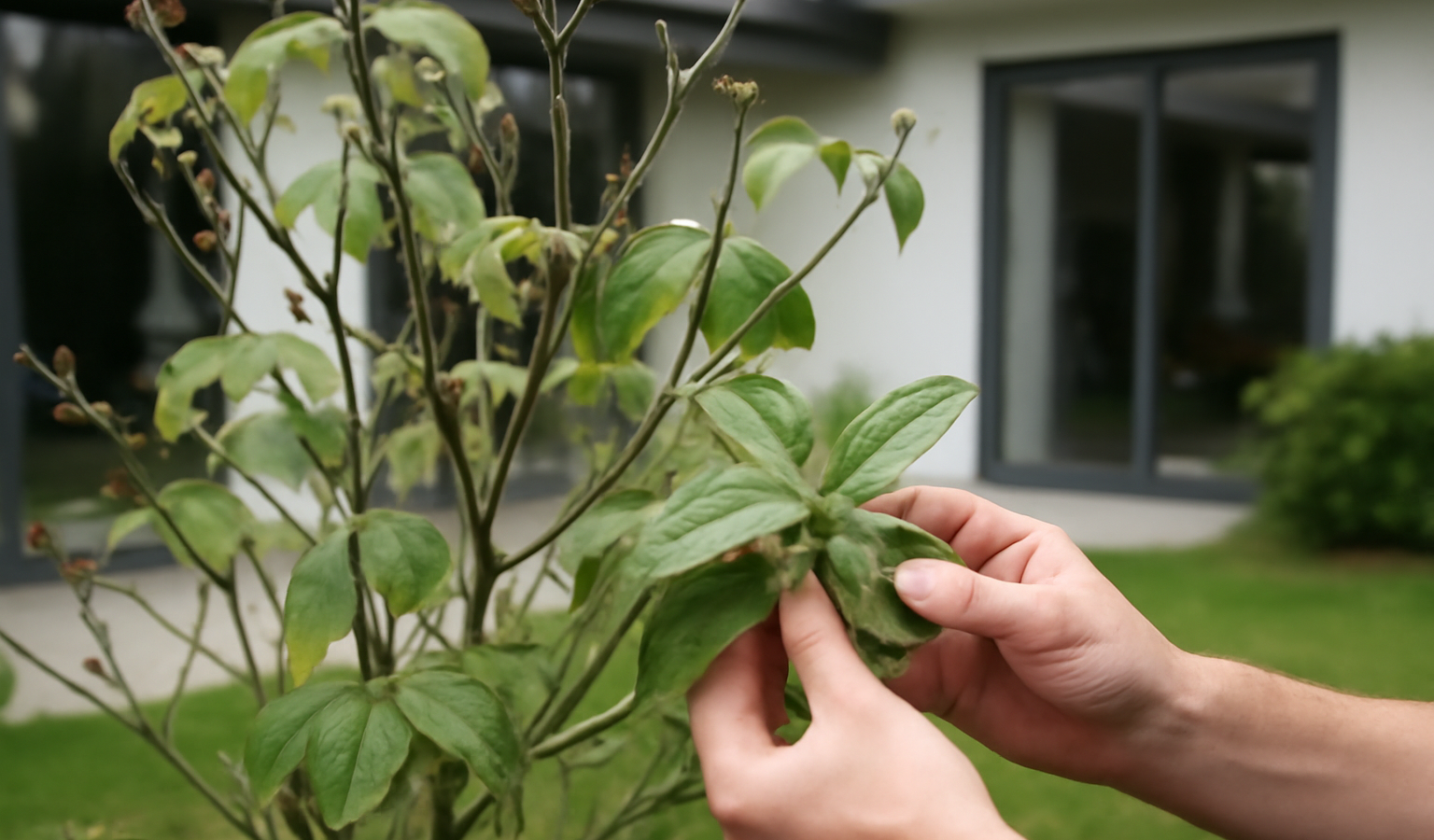
The flowering dogwood is one of the signature small trees of the spring landscape, lighting up the understory with its broad white or pink “blooms.” (Those showy parts are actually bracts surrounding the tiny true flowers, but to gardeners they’re the flowers.) When a dogwood leafs out healthy but produces no flowers, the cause is usually environmental — most often too much shade or a tree that’s simply too young — rather than disease. Dogwoods set their distinctive onion-shaped flower buds the previous summer, so several of the fixes here are about giving the tree the light and the time it needs to build those buds.
Below are the reasons a dogwood won’t bloom, how to diagnose each on your tree, and what to do. The first two — shade and immaturity — account for the large majority of cases, so start there.
Key Takeaways
- Too much shade is the leading cause. Dogwoods are understory trees but still need about 4–6 hours of sun (or bright dappled light) to bloom well.
- Young trees take 3–7 years to bloom; seed-grown trees take longer than grafted varieties.
- Too much nitrogen from lawn fertilizer pushes leaves over flowers — feed lightly and keep lawn feed away.
- Stress — drought, poor drainage, transplant shock, or disease — diverts energy from blooming. Look for round flower buds on the branch tips in summer to confirm a tree is gearing up to flower.
Cause 1: Too much shade
Dogwoods are often called shade trees because they naturally grow at the woodland edge, beneath the high canopy of taller trees. But “understory” doesn’t mean deep shade — in the wild they grow in bright, broken light, and they bloom in proportion to how much light they get. A dogwood in heavy shade will grow leaves and survive, but it won’t have the energy to set many flower buds, so it produces few or no blooms. This is the most common reason a healthy dogwood fails to flower, and it often worsens over the years as surrounding trees grow taller and cast deeper shade.
How to diagnose it
Observe the light the tree actually gets. Most flowering dogwoods bloom best with roughly 4–6 hours of sun or steady bright dappled light through the day. Is your tree under a dense canopy or on the shady north side of a structure? A shade-starved dogwood tends to be thin and open, with sparse blooms concentrated on whatever branches reach the most light, often only at the top or one bright side.
The fix
Let more light in. Thin or raise the canopy of the larger trees shading the dogwood so it receives more dappled or morning sun. (In hot southern climates, dogwoods still appreciate some afternoon shade — the goal is bright light, not blazing all-day sun.) If the site is hopelessly dark, transplant a young dogwood while dormant to a brighter spot at the woodland edge. More light is almost always the single biggest lever for getting a dogwood to bloom.
Cause 2: The tree is too young
Dogwoods need to reach a certain maturity before they flower, and a young tree will spend its early years establishing roots and structure instead. Depending on the size you planted and how it was propagated, a flowering dogwood typically takes 3 to 7 years to begin blooming well. Seed-grown trees take longer to mature than grafted, named cultivars, which are propagated from already-flowering wood.
How to diagnose it
How long ago did you plant it, and at what size? If you planted a small or young dogwood in the last few years and it’s otherwise healthy and growing steadily, immaturity is the most likely reason for no flowers. There’s nothing to fix — it just hasn’t reached blooming age yet.
The fix
Be patient and keep conditions ideal: bright dappled light or partial sun, consistently moist but well-drained acidic soil, and light feeding. Don’t push it with heavy nitrogen, which only delays flowering by forcing vegetative growth. If you’re buying a new dogwood and want blooms sooner, choose a larger, grafted, named variety rather than a small seedling.
Cause 3: Too much nitrogen
A dogwood planted in a lawn — a very common placement — often absorbs the nitrogen meant for the grass. Excess nitrogen drives leafy, vegetative growth and suppresses flower-bud formation, so a well-fed lawn can keep a dogwood lush and green but flowerless. The tree looks robustly healthy, which is exactly why this cause is easy to overlook.
How to diagnose it
Is the dogwood growing in or beside a regularly fertilized lawn, or have you been feeding it a high-nitrogen product? Is it notably leafy and vigorous with little or no bloom? That combination points to nitrogen overload.
The fix
Keep lawn fertilizer away from the dogwood’s root zone and avoid feeding it high-nitrogen products. Dogwoods need little fertilizer in decent soil; if you feed, use a balanced or slightly bloom-oriented formula in spring and topdress with compost or leaf mold, which dogwoods love. A light phosphorus source supports flowering. Our guide to slow-release vs quick-release fertilizer explains how to feed trees gently without the nitrogen surge that suppresses bloom.
Cause 4: Stress — drought, poor drainage, or transplant shock
Dogwoods have shallow roots and don’t tolerate stress well, and a stressed tree puts survival ahead of flowering. The most common stressors are drought (dogwoods are not drought-tolerant and suffer in dry spells), poorly drained or compacted soil, and transplant shock after a recent move. Any of these can cause a dogwood to skip bloom or set fewer buds the following year.
How to diagnose it
Check the growing conditions. Does the soil dry out hard between waterings, or does it stay soggy? Was the tree planted or moved recently? Stressed dogwoods often show scorched leaf edges in summer, early fall color, or sparse, undersized foliage — signs the tree is struggling and has little energy left for flowers.
The fix
Reduce the stress. Water deeply during dry spells — about an inch a week, more in heat — and spread a 2–3 inch mulch ring (kept off the trunk) to keep the shallow roots cool and moist; this is one of the most important things you can do for a dogwood. Improve drainage on soggy sites and avoid compacting the soil over the roots. Give a recently transplanted dogwood a year or two of attentive care to recover. A soaker hose or drip line makes consistent watering easy during the critical summer bud-set period.
Cause 5: Improper or mistimed pruning
Dogwoods bloom on old wood, setting their flower buds the previous summer. Prune in fall, winter, or spring and you remove the buds that would have flowered, leaving a leafy, bloomless tree. Dogwoods also need very little pruning and don’t respond well to heavy cutting, which can stress them and trigger vigorous non-flowering regrowth.
How to diagnose it
Did you prune or shape the tree any time from summer’s end through spring? If a healthy dogwood stopped blooming after a fall or winter trim, mistimed pruning likely removed the flower buds. Look for vigorous leafy shoots where you cut.
The fix
Prune dogwoods sparingly and only right after they finish flowering in late spring, which gives them the rest of the season to set new buds. Limit cuts to dead, damaged, or crossing branches and any suckers. Avoid major reshaping. Stop pruning at the wrong time and the tree will rebuild its bloom over the next year or two.
Cause 6: Late frost or anthracnose disease
Two more factors can cost a dogwood its flowers. A hard late-spring frost can damage the swelling flower buds or open bracts, browning them before they fully develop — though dogwoods bloom a bit later than magnolias and usually escape the worst of it. More serious is dogwood anthracnose, a fungal disease (especially in cool, wet, shady sites) that causes leaf and twig blight, dieback, and a steady decline that suppresses flowering and can eventually kill the tree.
How to diagnose it
For frost, look for browned bracts or buds after a spring freeze on an otherwise normal tree. For anthracnose, watch for tan leaf spots with purple margins, blighted leaves clinging to the tree, dieback of lower and interior branches, and cankers on twigs — typically in damp, shaded conditions.
The fix
Frost damage is usually a one-off; the tree blooms normally the next year. For anthracnose, improve air circulation and light by thinning the canopy, water at the base rather than overhead to keep foliage dry, rake and destroy fallen infected leaves, and prune out dead and cankered wood. Where the disease is a chronic threat, plant resistant kousa dogwoods (Cornus kousa) or resistant hybrids, which shrug off anthracnose and bloom reliably.
Prevention: a dogwood that blooms every spring
A reliably blooming dogwood comes down to light, water, and restraint. Give it bright dappled light or 4–6 hours of sun — more light, more flowers — in moist, well-drained, acidic soil rich in organic matter. Mulch the shallow roots and water deeply through summer droughts, especially while buds are forming. Keep nitrogen and lawn fertilizer away, prune only lightly and only right after flowering, and watch for anthracnose in damp, shady spots (choosing resistant kousa types where it’s a problem). Give young and recently moved trees a few patient years to mature.
In late summer, check the branch tips for the round, onion-shaped flower buds — if you see them forming, the tree is healthy and on track to bloom the following spring, and any single missed year is likely just frost or stress. For more on growing flowering trees and understory plants, see our Plants & Flowers guides. A healthy dogwood in the right light is a tree that wants to bloom — give it what it needs and it will.
Frequently Asked Questions
Why does my dogwood have leaves but no flowers?
The most common reasons are too much shade and a tree that’s too young. Dogwoods are understory trees but still need about 4–6 hours of sun or bright dappled light to bloom, and young trees take 3–7 years to flower. Too much nitrogen and general stress also suppress blooms. Increase the light, be patient with young trees, and keep lawn fertilizer away.
How many years until a dogwood blooms?
Flowering dogwoods typically take 3 to 7 years to bloom well, depending on the size planted and how the tree was propagated. Seed-grown trees take longer than grafted, named varieties. If your dogwood is young and otherwise healthy, immaturity is likely the reason — keep it in bright light with steady moisture and wait.
How much sun does a dogwood need to bloom?
About 4–6 hours of sun or steady bright dappled light. Dogwoods grow in shade but flower in proportion to light, so deep shade means few or no blooms. In hot climates they still want some afternoon shade. Thin overhead branches to brighten a shaded dogwood, or move a young one to a brighter edge.
Can too much fertilizer stop a dogwood from blooming?
Yes. Excess nitrogen — often from lawn fertilizer, since dogwoods are frequently planted in lawns — drives leafy growth and suppresses flower buds. Keep lawn feed out of the root zone, avoid high-nitrogen products, and use a light balanced or bloom-oriented feed plus compost or leaf mold.
Why did my dogwood stop blooming after I pruned it?
Dogwoods bloom on old wood and set flower buds the previous summer, so pruning in fall, winter, or spring removes those buds. Prune only lightly and only right after flowering in late spring, limiting cuts to dead, damaged, or crossing branches. The tree should rebuild its bloom over the next year or two.