

The blackberry aisle forces an early decision: thornless or thorned. It sounds like a comfort question, but it reaches into flavor, cold-hardiness, growth habit, and how much your forearms will bleed at harvest. Modern thornless varieties have closed most of the old quality gap, yet thorned types still hold a few real advantages in hardiness and intensity of flavor. This guide compares them honestly so you can pick canes that fit your climate, your space, and how much you actually want to fight your own fruit patch.
Key Takeaways
- Picking comfort: Thornless varieties are vastly easier and safer to harvest, prune, and train, which makes them the better pick for families and tight spaces.
- Hardiness: Many thornless types are erect or semi-erect and reliable to zone 5; some classic thorned and trailing types are less cold-hardy (zones 6-9).
- Flavor: Thorned and trailing types (like ‘Marionberry’) often have a deeper, more complex flavor, though top thornless varieties like ‘Triple Crown’ come very close.
- Yield: Thornless ‘Triple Crown’ and ‘Chester’ are among the highest-yielding blackberries you can grow.
- Best all-rounder: A thornless semi-erect variety like ‘Triple Crown’ for most home gardeners.
Quick Comparison at a Glance
| Trait | Thornless Blackberries | Thorned Blackberries |
|---|---|---|
| Ease of picking | Easy, no scratches | Difficult, gloves needed |
| Typical hardiness | Zones 5-9 (variety dependent) | Zones 5-10, some trailing types 6-9 |
| Flavor | Very good to excellent | Often deepest, most complex |
| Growth habit | Mostly erect/semi-erect | Erect, semi-erect, or trailing |
| Yield | High (Triple Crown, Chester) | High, variety dependent |
| Pruning ease | Comfortable | Requires heavy gloves |
| Best for kids/families | Yes | Less so |
| Examples | Triple Crown, Apache, Navaho, Chester, Ouachita | Marionberry, Boysenberry, Kiowa, wild brambles |
Thornless Blackberries
Thornless blackberries are the result of decades of breeding, and the current generation is genuinely excellent, not the watery compromise of the 1980s. The standouts are semi-erect types like ‘Triple Crown’ and ‘Chester’, and erect types like ‘Apache’, ‘Navaho’, ‘Arapaho’, ‘Ouachita’, and ‘Natchez’. ‘Triple Crown’ in particular is a favorite for backyard growers: it produces enormous yields of large, sweet berries on vigorous, smooth canes that are a pleasure to handle.
The obvious benefit is comfort. You can reach into the plant, prune in shorts, and let kids pick without anyone ending up in tears or bleeding. That single factor makes thornless the right answer for most family gardens. But there are practical advantages beyond comfort: smooth canes are easier to train onto a trellis, easier to tie down, and you can see and remove diseased or spent canes without fighting the plant.
Erect vs semi-erect thornless
Within thornless, growth habit matters as much as the thorns. Erect types (‘Apache’, ‘Navaho’, ‘Ouachita’) hold themselves upright and can be grown almost free-standing with minimal support; they spread by root suckers like red raspberries. Semi-erect types (‘Triple Crown’, ‘Chester’) produce long, arching, non-suckering canes that absolutely need a trellis but reward you with the heaviest yields. For a low-fuss patch, choose an erect thornless variety. For maximum production and you do not mind building a two-wire trellis, semi-erect ‘Triple Crown’ or ‘Chester’ is hard to beat. ‘Chester’ is also notably cold-hardy and disease-resistant.
Plant erect thornless types 2-3 feet apart and semi-erect types 4-6 feet apart, in rows 8-10 feet apart, in full sun and well-drained soil at pH 5.5-6.5. They want about 1-2 inches of water a week, heaviest during fruit sizing. Our broader plants and flowers guides cover the soil amendment basics that apply to all brambles.
Thorned Blackberries
Thorned blackberries include both improved cultivars and the wild brambles you find along fence lines. The improved thorned types are worth knowing because some of the most celebrated blackberries in the world carry thorns. ‘Marionberry’, the Pacific Northwest icon, is a thorned trailing blackberry prized for a deep, complex, slightly tart flavor that many connoisseurs consider unmatched. ‘Boysenberry’ (a blackberry hybrid) and ‘Kiowa’, which produces some of the largest berries of any variety, are also thorned.
The flavor argument is the real reason to consider thorned. Breeding for thornlessness has historically traded away a little intensity, and while top thornless varieties have nearly closed that gap, trailing thorned types like ‘Marion’ still set the bar for complex, wine-like blackberry flavor. If you are growing for jam, pie, or anything where flavor depth is the whole point, a thorned trailing variety can be worth the scratches.
The trade-offs of thorns
The downsides are concrete. Harvesting takes longer and requires care, since ripe blackberries are soft and you cannot grip carelessly through thorns. Pruning means heavy gauntlet gloves and long sleeves even in July heat. Trailing thorned types like ‘Marion’ are also less cold-hardy, generally rated for zones 6-9, and the long flexible canes must be lifted onto a trellis and tied, then lowered and protected in cold-winter regions. Wild thorned brambles bring an additional problem: they are notorious reservoirs for viruses and the spotted-wing drosophila fruit fly, and they spread aggressively, so most growers should remove wild patches rather than cultivate them. For tight yards, the space-saving ideas in our urban gardening section can help you trellis a single productive thorned plant against a wall.
Flavor, Yield, and Hardiness Compared
On flavor, the honest summary is that the very best thorned trailing varieties (‘Marion’, ‘Boysen’) edge out the best thornless ones for complexity, but ‘Triple Crown’ and ‘Natchez’ are close enough that most people would not complain. On yield, the thornless semi-erect ‘Triple Crown’ and ‘Chester’ are the production champions of the entire blackberry world, often outyielding thorned types. On hardiness, erect thornless varieties and ‘Chester’ reach into zone 5 reliably, while trailing thorned types are happier in zones 6-9. So if you are cold, thornless erect types also tend to win on survival.
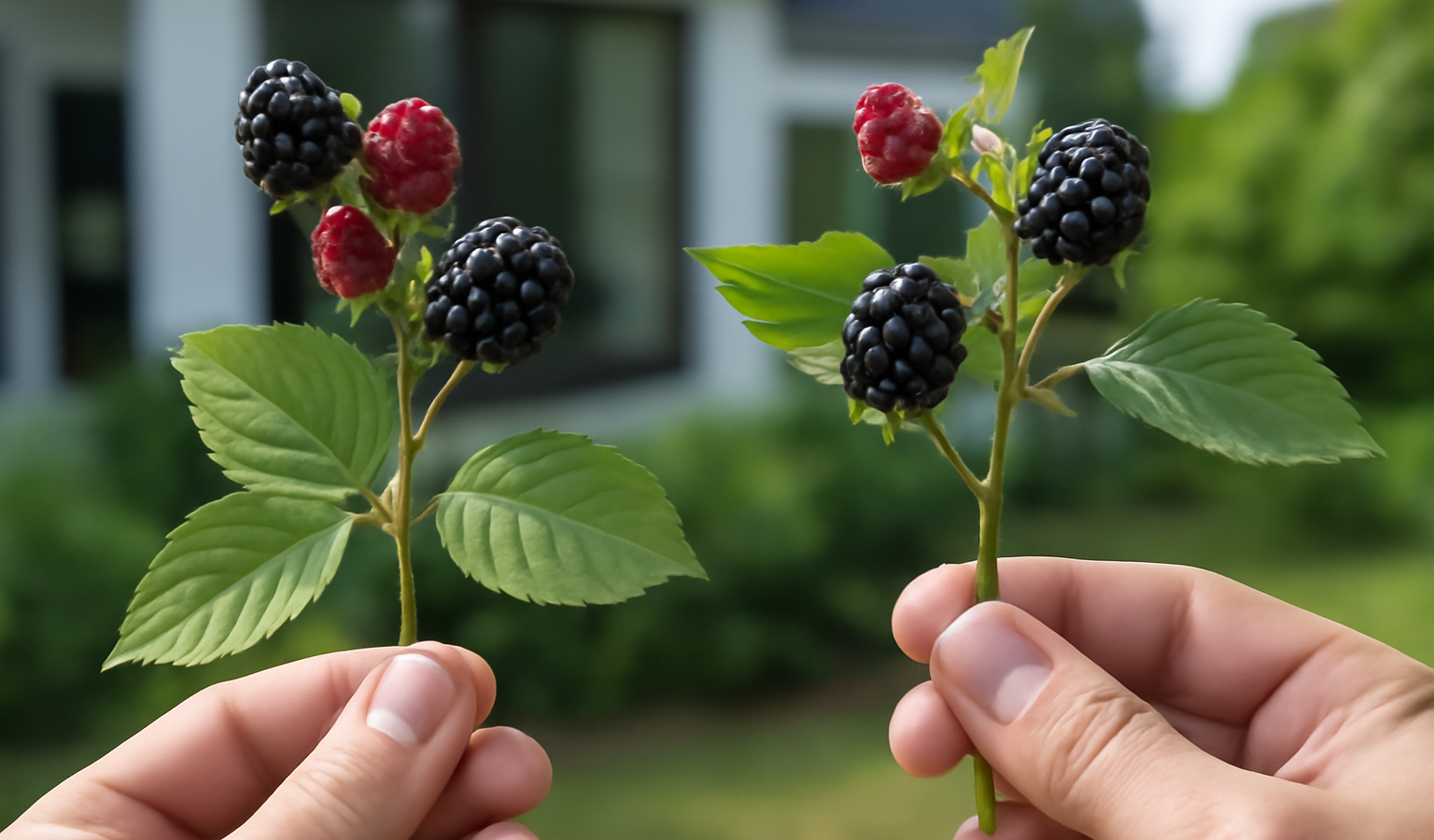
One more practical note: ripeness. A blackberry is only sweet when it is dull black and pulls off with zero resistance; a shiny, firm black berry is still tart. This is true for both types, but it matters more with thorned canes where you do not want to reach in twice. Wait for that dull, slightly soft stage for peak flavor.
Care Notes for Both Types
Both thornless and thorned blackberries are biennial in the cane: a primocane grows one year, fruits as a floricane the next, then dies. After harvest, cut spent floricanes to the ground (this is the moment you will most appreciate thornless canes). Tip-prune erect primocanes at about 3-4 feet in summer to force branching and boost the next year’s crop. Semi-erect and trailing types are pruned by training new canes up and tying them off, then removing the old ones.
Mulch with 2-3 inches of straw or wood chips, water consistently during fruiting, and feed with a balanced fertilizer in early spring. Watch for spotted-wing drosophila, which lays eggs in ripening fruit; pick promptly and clear fallen berries. Both types appreciate good airflow to prevent fungal issues, which is another argument for trellising and annual cane thinning.
Verdict: Which Should You Grow?
For most home gardeners, choose a thornless variety. The comfort, the family-friendliness, the easy pruning, and the genuinely excellent flavor and huge yields of ‘Triple Crown’ (semi-erect) or ‘Apache’/’Ouachita’ (erect) make thornless the default, sensible pick. If you are in zone 5 or want minimal support, an erect thornless type is ideal.
Choose a thorned variety only if you are a flavor purist in zones 6-9 chasing the deep, complex taste of a trailing ‘Marionberry’ or ‘Boysenberry’, and you accept the gloves, the tying, and the winter protection that come with it. A reasonable middle path for committed growers is one thorned trailing plant for flavor and a bed of thornless ‘Triple Crown’ for volume and easy picking. Whatever you do, dig out wild thorned brambles near your patch, since they spread disease and pests to your better plants.
Frequently Asked Questions
Do thornless blackberries taste worse than thorned ones?
Not noticeably anymore. Older thornless varieties were milder, but modern ones like ‘Triple Crown’ and ‘Natchez’ are excellent. Trailing thorned types like ‘Marionberry’ still edge them out for complexity, but most people would not complain about a good thornless berry.
Are thornless blackberries less hardy?
Generally the opposite. Erect thornless types and ‘Chester’ are reliable to zone 5, while many thorned trailing varieties are limited to zones 6-9. Check the specific variety’s rating before buying.
Which thornless variety has the highest yield?
Semi-erect ‘Triple Crown’ and ‘Chester’ are among the most productive blackberries available, often outyielding thorned varieties. They do require a trellis to support their long, arching canes.
Can thornless plants grow thorns later?
The fruiting canes stay thornless, but if a plant suckers from below the graft or reverts, you may see thorny shoots. Remove any thorny canes that appear, as they are reverted growth and will not improve.
How do I know when blackberries are ripe?
Wait for a dull, deep black color and a berry that detaches with almost no pull. Shiny, firm black berries are not ripe yet and will taste tart. This is true for both thornless and thorned types.