

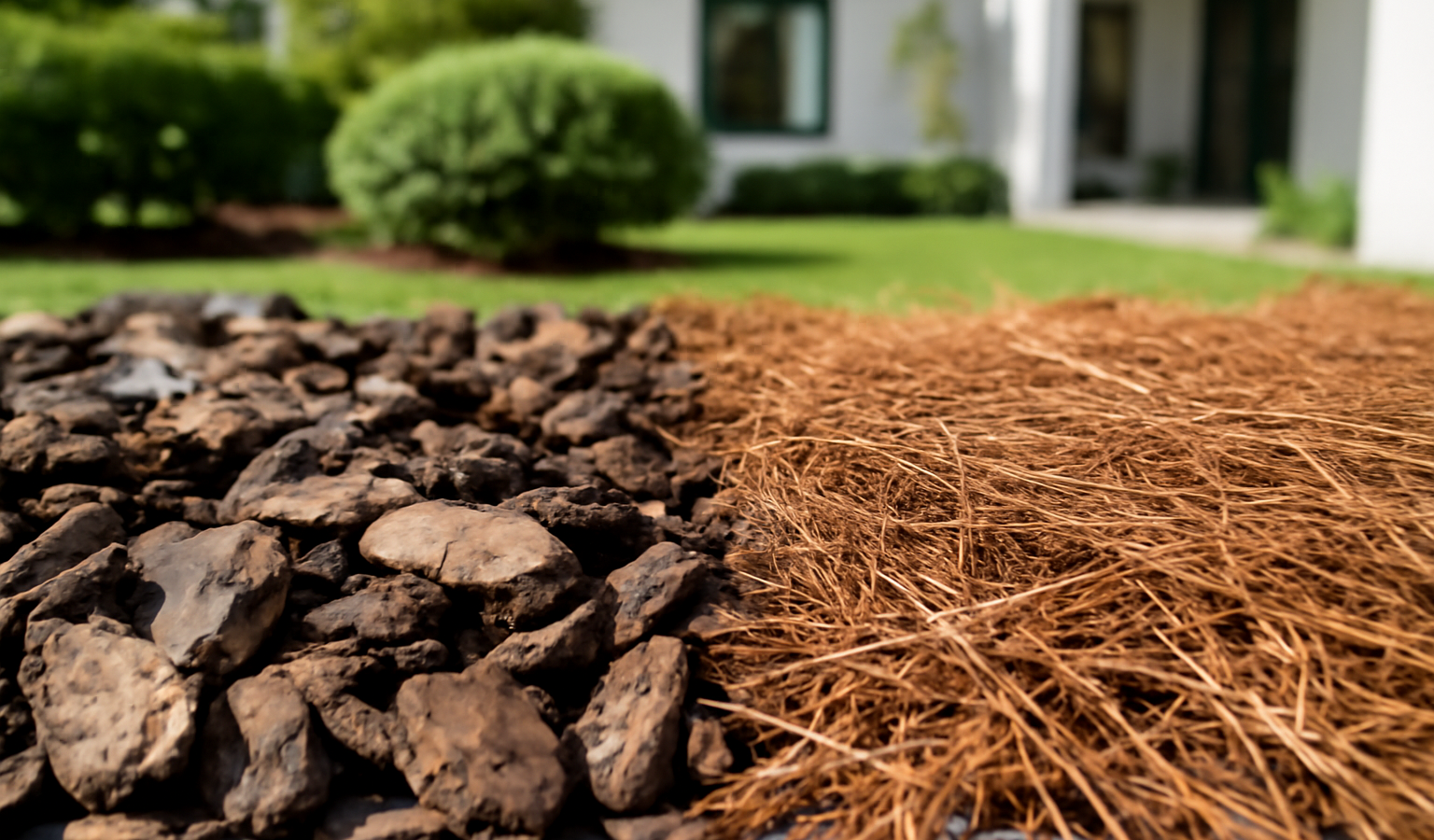
Here is the short answer: pine bark and pine straw are both excellent, slightly acidic mulches, and the better choice depends entirely on your terrain, your beds, and the look you want. Pine bark is the heavier, longer-lasting nugget or shredded mulch that stays put on flat ground and gradually conditions the soil as it breaks down. Pine straw is lightweight fallen needles that interlock and cling to slopes where bark would wash or roll away, and it gives large Southern-style beds a soft, natural look. Neither one will dramatically change the pH of established soil, despite what you may have heard. If your beds are flat and formal, lean bark; if you have banks, slopes, or acres of azaleas to cover, lean straw. This guide walks through how each behaves, where each wins, and how to apply both so they last.
Key Takeaways
- Pine bark stays put on flat ground and lasts longest (especially larger nuggets), but bigger pieces can float and wash in heavy rain.
- Pine straw clings to slopes and banks because the needles interlock; it almost never washes away and is the go-to mulch across the Southeast.
- Both are only mildly acidic. They will not meaningfully acidify established soil on their own; real acid-lovers still need sulfur or amendments.
- Bark conditions soil as it decomposes (fines fastest), while pine straw breaks down quicker and needs fluffing or topping up annually.
- Choose by terrain and look: bark for flat, formal beds around shrubs and trees; straw for slopes, naturalistic landscapes, and fast coverage.
How Pine Bark Mulch Works
Pine bark is exactly what it sounds like: the outer bark of pine trees, a byproduct of the lumber industry, processed into different sizes. You will usually see three grades. Large bark nuggets (often 2 to 3 inches across) are chunky and decorative; mini-nuggets are roughly 1 to 1.5 inches; and shredded pine bark or “pine fines” are small, almost soil-like particles. Size matters more than most people realize. The bigger the nugget, the longer it lasts and the slower it breaks down, but the more likely it is to float and drift during a hard rain. The smaller the particle, the faster it decomposes and the better it knits into a dense, weed-suppressing layer that also feeds the soil.
Because bark is dense and heavy compared to needles, it generally stays where you put it on level ground, holds moisture well, and moderates soil temperature through summer heat and winter cold. As it decomposes, it adds organic matter and improves soil structure, which is why pine fines are a favorite for amending heavy clay. Bark is slightly acidic, so it suits the same plants pine straw does, but the acidifying effect on the soil underneath is small and slow. The main maintenance reality is that bark breaks down at the bottom of the layer, so you will want to refresh a thinning bed every one to two years, and you may need to rake floated nuggets back into place after a storm.
How Pine Straw (Pine Needles) Works
Pine straw is simply the dried, fallen needles of pine trees, most often longleaf, slash, or loblolly pines, raked up and baled. Longleaf needles are the longest and most prized because they interlock the best and last longest in the bed; slash and loblolly are shorter and a bit cheaper. The defining trait of pine straw is how light and airy it is. The individual needles knit together into a loose, springy mat that physically locks onto a slope and resists sliding, washing, or blowing away. This is the single biggest reason landscapers reach for it: on a bank where bark would float to the bottom in the first storm, pine straw stays put and even helps slow runoff.
Because it does not compact the way wood mulches can, pine straw lets water and air pass through to the roots easily, and it gives beds a soft, woodland, distinctly Southern appearance. The trade-off is that it breaks down faster than bark and tends to fade and flatten over a season, so most people fluff it and add a thin top layer once a year. Now for the myth worth busting: pine straw does not “make your soil too acidic.” Fresh needles are only mildly acidic, and once they begin decomposing on the ground their effect on established, buffered soil is minimal. Soil microbes neutralize most of it. You can use pine straw freely around vegetables and non-acid-lovers without worrying that you are slowly pickling your beds.
| Factor | Pine Bark | Pine Straw |
|---|---|---|
| Longevity | Longer; large nuggets last 2+ years | Shorter; refresh/fluff yearly |
| Slope performance | Poor; floats and rolls downhill | Excellent; needles interlock and cling |
| Soil acidity effect | Mildly acidic; slow and minor | Mildly acidic; minimal once decomposing |
| Decomposition speed | Slow (fines faster than nuggets) | Faster; adds organic matter quickly |
| Weed suppression | Very good at 2-3 in., esp. fines | Good at 3-4 in.; lighter barrier |
| Appearance | Tidy, formal, defined | Soft, natural, woodland/Southern |
| Cost / coverage | Sold by bag/cubic yard; covers less area | By the bale; spreads fast over large areas |
| Washes away? | Yes, big nuggets float in heavy rain | Rarely; stays put even on banks |
| Best use | Flat beds, around shrubs and trees | Slopes, big naturalistic beds, acid-lovers |
When Pine Bark Wins
Pine bark is the better pick for flat, defined beds where you want a clean, finished, almost formal look. Around foundation shrubs, individual trees, and tidy planting islands, bark reads as deliberate and polished in a way loose needles do not. It also shines when your real goal is soil improvement: as bark decomposes it builds organic matter and structure, so if you are mulching a bed of heavy clay or building up a new planting area, choosing pine fines or shredded bark gives you a working mulch on top and a soil conditioner underneath. Bark is also the practical choice if you would rather not deal with mulch every single year, because the coarser grades break down slowly and hold their color and volume across two seasons.
Match the grade to the job. Large nuggets last the longest and look the most decorative, but they are the ones most likely to float out of a bed during a downpour, so keep them on level ground away from downspouts and drainage paths. Mini-nuggets are a sensible all-rounder. Pine fines break down fastest and improve the soil the most, knitting into a dense layer that smothers weeds well, so reach for them when soil health matters more than maximum longevity. If you are weighing bark against rock, our comparison of gravel vs mulch covers when an inorganic option makes more sense for permanent, low-maintenance beds.
When Pine Straw Wins
Pine straw wins decisively anywhere gravity is working against you. On slopes, berms, and banks, the interlocking needles grab onto the soil and each other, forming a mat that resists washing and even slows erosion. Bark simply cannot do this; it rolls and floats to the bottom. Pine straw is also the natural choice for large, sweeping, naturalistic landscapes, the kind common across the Southeast, where it ties whole beds together with a soft woodland texture and covers ground fast and cheaply. Because it is light, one person can mulch a large area quickly with a bale or two, which matters when you are covering acreage rather than a few small islands.
It is also a comfortable, traditional fit around acid-loving plants like azaleas, camellias, rhododendrons, blueberries, and hydrangeas, partly because the mild acidity is a gentle nudge in the right direction and partly because the airy texture keeps these shallow-rooted plants from sitting in compacted, soggy mulch. The maintenance is easy: rather than removing old straw, you typically just fluff the existing layer with a rake to revive its loft and add a thin new layer on top once a year. Pine straw really is the regional standard across much of the South for exactly these reasons. If you are also fighting weeds on those big beds, pairing straw with a barrier is worth understanding, which our guide to landscape fabric vs mulch walks through.
Do Pine Mulches Acidify Your Soil?
This is the question that drives most of the confusion, so let’s be honest about it. Both pine bark and pine straw are mildly acidic when fresh, often measuring somewhere in the range of pH 3.5 to 4.5 for the raw material. That sounds dramatic, but it does not translate into a dramatic change in your beds. Established garden soil is buffered, meaning it strongly resists pH swings, and the acidity of a mulch layer mostly affects the thin zone right at the surface as it decomposes. Soil microbes break the material down and largely neutralize the acids in the process. Repeated studies and decades of real-world use both point the same way: a topdressing of pine mulch will not meaningfully lower the pH of the root zone underneath over a season or two.
The practical upshot is that you should not rely on either mulch to acidify soil for acid-loving plants. If your azaleas or blueberries are struggling in alkaline soil, mulch is not the fix; you need to amend the soil itself with elemental sulfur or an acidifying fertilizer based on a soil test, and let the mulch be mulch. Conversely, you do not need to fear using pine straw or pine bark around vegetables, lawns edges, or non-acid-lovers. The acidity is a minor, slow, surface-level effect, not a soil-altering force. Choose your pine mulch for slope, longevity, and looks, and handle pH separately through amendments where it actually matters.
Application & Refresh Tips
Application differs because the two materials behave so differently. For pine bark, aim for a layer about 2 to 3 inches deep. Less than that and weeds push through; much more and you risk holding too much moisture against roots and slowing water from reaching the soil, especially with fine grades. Spread it evenly, keep it raked off drainage channels, and after heavy storms rake any floated nuggets back into the bed. For pine straw, go a bit deeper, around 3 to 4 inches, because it settles and compresses as it weathers. Spread it loosely and let the needles knit together; on a slope, a slightly thicker initial layer helps it lock in.
With both mulches, the most important rule is to keep the material off the stems and trunks. Pull mulch back a couple of inches from the base of shrubs and a few inches from tree trunks so you never build a “mulch volcano,” which traps moisture against bark and invites rot and pests. On refresh timing, bark usually needs topping up every one to two years as the bottom layer composts away, while pine straw is typically fluffed and lightly topped each spring to restore color and loft. Either way, you are maintaining a consistent 2-to-4-inch blanket rather than burying the bed deeper and deeper each year. For a broader look at building functional, low-maintenance beds and hardscape, browse our outdoor living guides.
Which Should You Choose?
Sloped beds and banks: Choose pine straw without hesitation, because the interlocking needles cling to grades where bark floats and washes away. Flat beds around shrubs and trees: Choose pine bark for a tidy, defined look and longer-lasting coverage that stays put on level ground. Acid-loving plants (azaleas, blueberries, camellias): Either works well; pine straw is the traditional regional choice, but remember to fix soil pH with sulfur or amendments, not mulch. Formal vs naturalistic look: Bark for crisp, manicured beds; straw for soft, woodland, large-scale Southern landscapes.
Lowest long-term cost: It depends on your situation. Pine straw is cheap to buy and spreads fast over large areas, but it needs annual fluffing and topping, so labor adds up; pine bark costs more upfront and covers less ground, but coarse nuggets can stretch two years between refreshes. For most home gardeners the honest verdict is this: use pine bark in flat, formal, soil-building beds, and use pine straw on slopes, around acid-lovers, and across big naturalistic plantings. Many great Southern gardens use both, matching the material to the terrain rather than picking one winner for the whole yard.
Frequently Asked Questions
Does pine straw or pine bark make soil too acidic?
No. Both are only mildly acidic and their effect on established, buffered soil is small and slow once decomposition begins. Soil microbes neutralize most of the acidity. If you need acidic soil for azaleas or blueberries, amend with elemental sulfur based on a soil test rather than relying on mulch.
Which lasts longer, pine bark or pine straw?
Pine bark lasts longer, especially larger nuggets, which can hold up well beyond two years. Pine straw breaks down faster and generally needs fluffing and a thin top layer every spring. Fine shredded bark sits in between, lasting longer than straw but breaking down faster than coarse nuggets.
Is pine straw better than bark on a slope?
Yes, by a wide margin. Pine straw needles interlock into a mat that clings to slopes and resists washing or rolling, while bark nuggets float and migrate downhill in heavy rain. For any bank or berm, pine straw is the clear choice.
How deep should I apply each mulch?
Apply pine bark about 2 to 3 inches deep and pine straw about 3 to 4 inches deep, since straw settles and compresses over time. With both, keep the mulch a couple of inches away from plant stems and tree trunks to prevent rot and pest problems.
Can I put pine straw or bark over an existing mulch layer?
Yes, as long as the total depth stays in the recommended range. Rake and fluff the old layer first, remove any matted or moldy material, then add a thin new layer on top. Avoid simply piling new mulch on year after year, which buries roots too deep.