

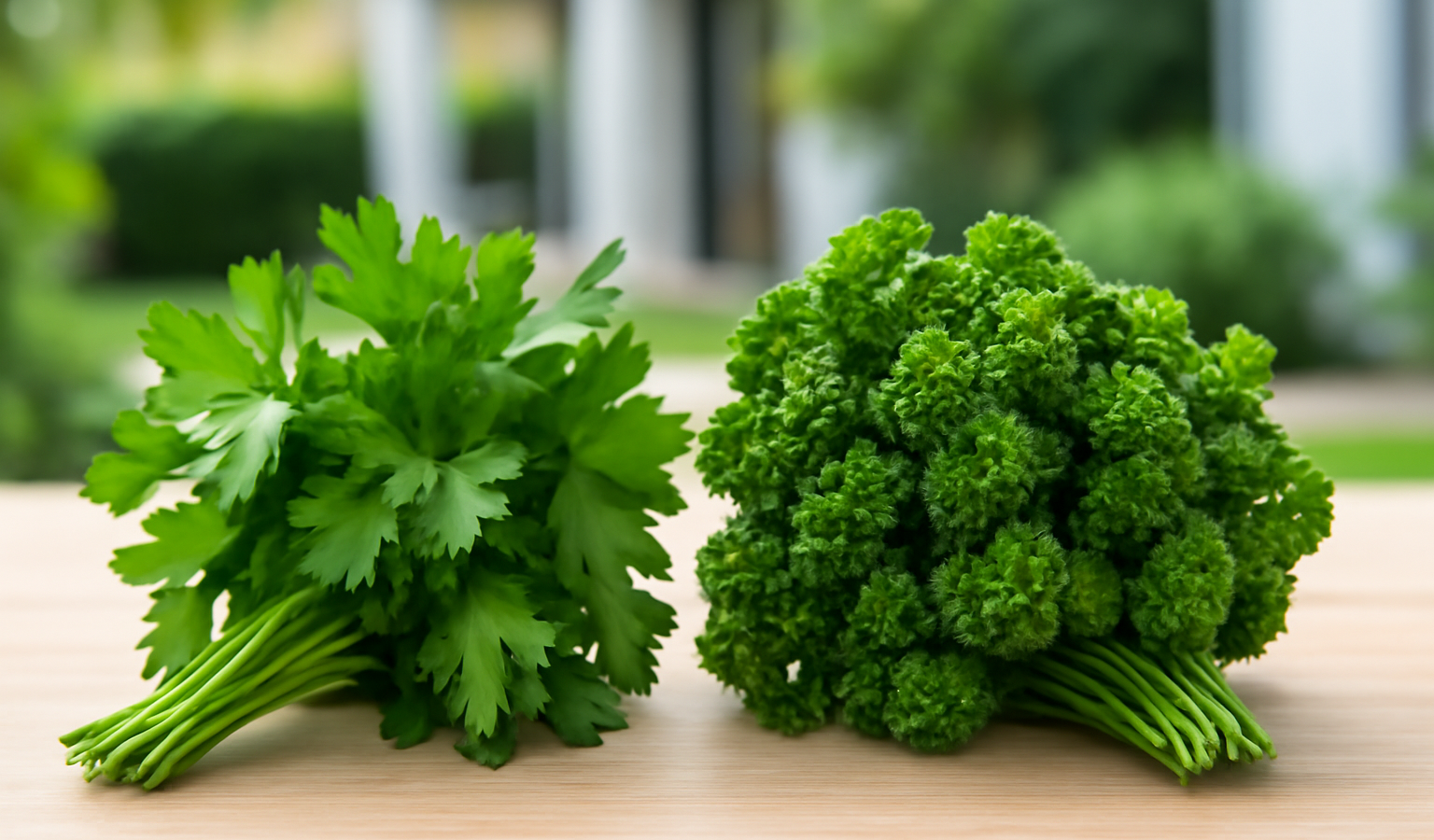
Italian (flat-leaf) parsley and curly parsley are the same species, Petroselinum crispum, separated mainly by leaf shape and, with it, flavor and kitchen role. Flat-leaf parsley has broad, fern-like leaves and a stronger, brighter, more peppery taste that holds up in cooking — it’s the cook’s parsley, the one most chefs reach for. Curly parsley has tightly ruffled leaves, a milder and slightly more bitter flavor, and a sturdy, decorative form that made it the classic plate garnish. In the garden the two are near-twins: same cool-season biennial habit, same culture, same long germination. Choosing between them comes down almost entirely to how you cook and, to a small degree, how cold-hardy and ornamental you want the plant to be.
Key Takeaways
- Same species — the difference is leaf shape and flavor: flat-leaf is stronger and better for cooking; curly is milder and a tougher, decorative garnish.
- Both are biennials grown as annuals, both germinate slowly (2–4 weeks), and both prefer cool weather and rich, moist soil.
- Flat-leaf is easier to wash and chop; curly’s ruffles trap grit but make it slightly more cold- and weather-hardy.
- Harvest outer stems first and the plant keeps producing all season until it bolts in its second year.
- Both grow well in containers, take partial shade in summer, and overwinter in mild zones (5–9) for an early-spring crop.
| Trait | Italian (Flat-Leaf) | Curly |
|---|---|---|
| Leaf shape | Broad, flat, fern-like | Tightly ruffled, curly |
| Flavor | Strong, peppery, bright | Milder, slightly bitter |
| Best use | Cooking, sauces, pesto | Garnish, salads, slow to wilt |
| Days to maturity | 70–90 | 70–90 |
| Germination | Slow (2–4 weeks) | Slow (2–4 weeks) |
| Cold hardiness | Good | Slightly better |
| Washing | Easy | Traps grit |
Italian Flat-Leaf Parsley: The Cook’s Choice
Flat-leaf parsley, often labeled Italian parsley, has broad, deeply cut leaves on tall stems. Its flavor is the reason it dominates serious kitchens: cleaner, brighter and more robustly herbaceous than curly, with enough backbone to survive brief cooking. It’s the parsley for tabbouleh, chimichurri, salsa verde, gremolata, soffritto and any dish where parsley is an ingredient rather than decoration. The flat leaves are also far easier to rinse free of grit and to chop finely.
Grow it from seed sown in early spring, or start indoors 6–8 weeks before last frost — and be patient, because parsley seed is famously slow, taking 2–4 weeks to germinate. Soaking seed overnight speeds things up. Plant in rich, well-drained soil with steady moisture, in full sun in spring and fall or partial shade through summer heat. Space plants about 8–10 inches apart. As a biennial it forms leaves the first year and flowers the second, so most gardeners treat it as an annual and resow.
Harvesting Flat-Leaf for Maximum Yield
Harvest by cutting whole stems from the outside of the plant at the base, never just shearing the tops. Taking outer stems first lets the central growing point keep pushing new leaves, so a few plants can supply a kitchen all season. Regular harvesting actually encourages fuller growth. Flat-leaf parsley also makes an excellent companion plant and a magnet for beneficial insects and swallowtail butterfly larvae. For a complementary cool-season green, see romaine vs iceberg lettuce.
Curly Parsley: The Hardy Garnish
Curly parsley’s tightly crimped leaves give it a dense, mossy look that made it the default restaurant garnish for decades. Its flavor is gentler and a touch more bitter than flat-leaf, which suits it to fresh uses where you want color and a mild parsley note without overpowering a dish — chopped into salads, sprinkled over plates, or blended into mild herb butters. Because the ruffled leaves hold their shape and resist wilting, curly parsley looks fresh on a plate far longer than flat-leaf.
Its growing requirements are essentially identical to flat-leaf: slow germination, cool-season preference, rich moist soil, full sun to part shade. The main practical differences are at the sink and in the cold. Those curls trap soil and water, so curly parsley takes more rinsing and spinning to clean. On the upside, the dense form is slightly more weather- and cold-tolerant, holding up a little better to frost and looking attractive in the winter garden in mild zones.
Where Curly Parsley Shines
Beyond garnishing, curly parsley earns its place as an ornamental edging plant and in container arrangements, where its bright green ruffles contrast nicely with flowers. It overwinters well in zones 5–9 with light mulch, giving you an early flush of greens the following spring before it bolts. Treat it like flat-leaf for harvest — cut outer stems at the base — and pinch any flower stalks in year two if you want to prolong leaf production a little. Browse the plants and flowers hub for more herb-growing guides.
Shared Care: Growing Either Parsley Well
Since the two parsleys grow identically, mastering a few fundamentals serves both. Start with that famously slow germination. Parsley seed has a natural coating of germination inhibitors and can take two to four weeks to sprout, which leads many gardeners to give up too soon. Soak seed in warm water overnight before sowing to leach out the inhibitors, keep the seedbed consistently moist (never let it dry between waterings), and hold soil temperature around 70°F. Sow a few extra seeds per spot to hedge against patchy germination, then thin to the strongest.
Parsley is a light-to-moderate feeder that wants rich, well-drained soil with steady moisture. Work compost into the bed before planting and side-dress once during the season, or feed container plants with a dilute liquid fertilizer every few weeks since pots leach nutrients faster. Give full sun in the cool parts of the year and partial shade through summer heat, which keeps the leaves tender and slows bolting. Mulch helps hold the even soil moisture parsley prefers.
Pests, the Biennial Habit and Overwintering
Parsley is largely trouble-free, but a few visitors show up on both types. The most striking is the black swallowtail caterpillar, a green-and-black striped larva that can strip stems quickly — many gardeners happily plant extra parsley to share, since the caterpillars become beautiful butterflies. Aphids may cluster on tender growth; rinse them off or use insecticidal soap. Good airflow prevents the occasional leaf spot or crown rot in wet conditions.
Remember that parsley is a biennial: it grows leaves the first year, then flowers, sets seed and dies in its second year. Most gardeners treat it as an annual and resow, because once it bolts to flower the leaves turn bitter and sparse. In milder zones (roughly 5–9), parsley overwinters with a little mulch and gives you a welcome early-spring flush of fresh leaves before it bolts that second season — at which point you can let it flower (the blooms attract pollinators and beneficial insects) and collect seed or simply pull it and start fresh. To harvest for the longest, steadiest supply from either type, always cut outer stems at the base and leave the central growing point to keep producing.
The Verdict: Which Should You Grow?
If you can only grow one, grow flat-leaf — its stronger flavor and easier prep make it the more useful kitchen herb. But each type has its moment. Match it to how you’ll use it.
- Serious cooking: Flat-leaf Italian, every time. Its bold, clean flavor is built for sauces, pestos and cooked dishes.
- Garnishing and presentation: Curly parsley holds its shape and color, staying crisp on the plate far longer.
- Easiest cleanup: Flat-leaf — broad leaves rinse and chop without trapping grit.
- Cold-climate or winter interest: Curly is marginally hardier and more decorative through frost.
- Containers and edging: Both work, but curly’s tidy mound is especially ornamental in pots and borders.
The easy answer is to grow a few of each: flat-leaf as your cooking workhorse and curly for garnish and for its better looks in the garden. Since they grow identically — slow to start, then generous all season — there’s little extra effort in keeping both. Sow early, soak the seed, keep them moist and harvest from the outside in.
Frequently Asked Questions
Can I substitute curly parsley for flat-leaf in cooking?
Yes, but expect a milder, slightly more bitter result and use a bit more to match the punch of flat-leaf. For dishes where parsley is a main ingredient — chimichurri, tabbouleh, pesto — flat-leaf’s stronger flavor is noticeably better.
Why is my parsley seed taking so long to sprout?
Parsley is naturally slow, germinating in 2–4 weeks. Soaking seeds overnight before sowing, keeping the soil consistently moist and warm (around 70°F), and being patient all help. Don’t give up too early — it often surprises you.
Is one type more cold-hardy than the other?
Curly parsley is slightly hardier and holds up a bit better to frost, and its dense form looks attractive in the winter garden. Both, however, overwinter well in zones 5–9 with light mulch and give an early-spring harvest before bolting in their second year.
How do I harvest parsley so it keeps growing?
Cut whole stems from the outside of the plant at the base rather than shearing the tops. This leaves the central growing point intact to produce new leaves, so a few plants can supply you all season. Regular harvesting encourages fuller growth.
Will parsley grow well in containers?
Yes. Both types thrive in pots at least 8 inches deep with good drainage and rich potting mix. Keep them consistently moist, give full sun in spring and fall or partial shade in summer heat, and they’ll produce for months.