

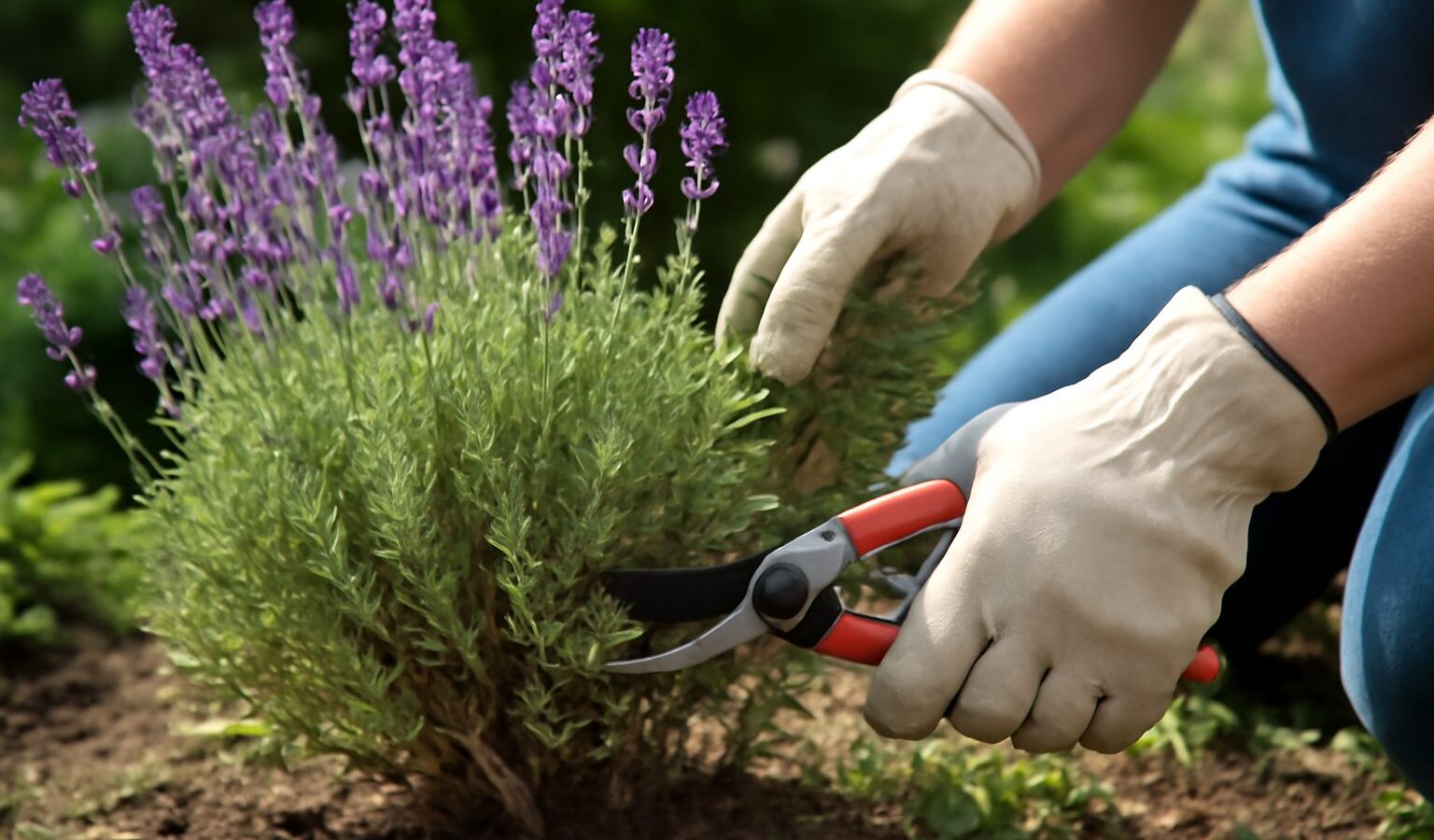
Lavender is one of the most rewarding shrubs in the garden and one of the most commonly killed by bad pruning — or, more often, by no pruning at all. Left alone, lavender grows leggy, splits open in the middle, and turns into a sprawling tangle of bare gray wood with a few flowers stranded on the tips. Pruned correctly, the same plant stays tight, mounded, and floriferous for a decade or more. The whole technique comes down to one principle: cut every year, cut at the right time, and never cut back into old, leafless wood. This guide walks through exactly when and how to prune each main type of lavender, and the specific mistakes that turn a thriving shrub into firewood.
Key Takeaways
- Never cut into bare old wood. Lavender rarely regrows from leafless brown stems. Always leave green growth below your cut.
- Prune once or twice a year. A light shaping after the first flush, then a harder shaping cut in late summer (or early spring in cold zones).
- Prune annually from year one. Skipping early years is what creates a woody, split, unfixable plant later.
- Remove up to a third. Take off roughly the top third, shaping the plant into a tight dome and leaving a few inches of green growth.
- Know your type. English lavender takes harder pruning than fussier Spanish, French, and lavandin types — adjust accordingly.
Why Pruning Lavender Matters So Much
Lavender is a Mediterranean sub-shrub. Like rosemary and sage, it forms woody stems at the base and produces soft, leafy, flowering growth at the tips. The problem is that the woody base does not readily push new shoots once it has gone bare and brown. Every year that you skip pruning, the zone of productive green growth creeps further out toward the branch tips, and the woody dead zone at the center grows larger. Eventually the heavy flowering tips flop outward, the plant splits open down the middle, and you are left with a hollow ring of bare wood that will never refill.
Annual pruning keeps the green, productive growth close to the base, encourages dense branching, and maintains the tidy mounded shape that makes lavender so attractive in a border. It also extends the plant’s life dramatically — a regularly pruned English lavender can stay good for 10–15 years, while an unpruned one is often a woody mess in five.
When to Prune Lavender
Timing depends on your climate and how many times you want to cut, but here is the reliable framework.
The main pruning: late summer / after flowering
The most important cut comes right after the main flush of bloom fades, typically in late summer (August into early September in most of the US). This is when you do the real shaping — cutting the plant back into a tight dome to set it up for next year. In milder zones (roughly 7 and warmer) this late-summer cut gives the plant enough time to harden a little before winter without pushing tender new growth too late.
Cold-climate timing: early spring instead
In colder regions (zones 5–6), avoid hard cutting in fall, because fresh growth stimulated late in the season can be killed by winter and damage the plant. Instead, leave the spent stems on over winter for a little extra crown protection, then do your main shaping prune in early spring just as new green growth appears at the base. You can still snip off spent flower stalks in late summer for tidiness.
An optional light trim after the first bloom
Many gardeners also do a light deadheading trim right after the first flush of flowers in early summer to encourage a second, lighter rebloom. This is a gentle tip-trim, not a shaping cut. Harvesting flowers for drying counts as this trim — cut the stems just above the foliage as the buds show color but before they fully open.
How to Prune Lavender, Step by Step
Use clean, sharp bypass pruners or shears — sterilize the blades if you have been cutting diseased plants. Then work through the plant calmly:
- Find the green growth line. Run your hand down a stem from the tip toward the base. You will feel where soft green leafy growth gives way to hard, leafless brown wood. That transition is your hard limit.
- Cut into green, not brown. Make every cut a few inches above the woody base, always leaving several inches of green, leafy growth with visible side shoots below the cut. New growth comes from these leaves, not from bare wood.
- Remove about a third. Take off roughly the top one-third of the plant overall. On a healthy, regularly pruned plant you can be confident; on a neglected one, be more conservative.
- Shape into a tight mound. Work around the whole plant, cutting to form a rounded dome. A dome shape sheds rain and snow and prevents the center from splitting open.
- Clear the spent flower stalks. Remove all old flower stems down to the leafy growth so the plant looks clean and puts its energy into next year’s growth.
The dried clippings are not waste — strip the buds for sachets, or compost the rest. The same once-a-year, shape-into-a-dome discipline keeps many woody Mediterranean plants in good order; see how it applies to other border shrubs in our Russian sage guide.
A few practical pointers make the job cleaner. Prune on a dry day rather than in wet conditions, both because dry stems cut more cleanly and because cutting wet foliage spreads fungal problems. Work in good light so you can clearly see the green-to-brown transition on each stem — getting this judgment right is the entire game. If you are shaping a long hedge or edging of lavender, a pair of sheep shears or one-handed shears lets you skim the whole surface into a smooth dome quickly, but still keep checking that you are not dipping into bare wood at the sides. And resist the urge to “even out” a slightly lopsided plant by cutting the tall side hard; instead, trim the whole plant lightly and let it rebuild symmetry over a season or two, since one aggressive cut into old wood on that side can leave a permanent bald patch.
Pruning by Lavender Type
Not all lavenders take pruning the same way:
- English lavender (Lavandula angustifolia): the hardiest and most forgiving. It tolerates the firmest pruning — you can confidently take a third off and shape hard. Best pruned in late summer after flowering.
- Lavandin (L. x intermedia, e.g. ‘Grosso’, ‘Provence’): large, vigorous hybrids that also take fairly hard pruning; shape them in late summer into a generous dome.
- Spanish lavender (L. stoechas) and French lavender (L. dentata): less cold-hardy and more sensitive. Prune more lightly and more often — a gentle shaping after each flush — and be extra careful never to cut into old wood, which they recover from poorly.
Common Lavender Pruning Mistakes
Avoid these and your lavender will thrive for years:
- Cutting into old wood. The cardinal sin. Bare brown stems rarely resprout — cut there and that section dies. Always leave green below the cut.
- Not pruning at all. Skipping pruning, especially in the early years, is what creates the woody, split, hollow plant you cannot fix later.
- Waiting too long to start. Begin shaping in the plant’s first year, even lightly, to build a dense, compact base.
- Hard pruning in fall in cold climates. Late-season growth gets winter-killed. In zones 5–6, wait for early spring.
- Leaving a flat or hollow top. Always shape to a dome so the center does not flop open and split.
What about a lavender that is already woody and split? Honestly, there is no reliable rescue once the base is bare — cutting into old wood usually finishes it. Your best move is to prune the remaining green as best you can to slow the decline, take cuttings to start replacements, and plan to replace the plant. Prevention through annual pruning is the only real cure. For more shrub-care techniques across the yard, browse our Outdoor Living guides.
Frequently Asked Questions
Can I cut lavender all the way back to the ground?
No. Lavender does not reliably regrow from bare, leafless old wood, so cutting it to the ground or into the woody base usually kills that section or the whole plant. Always leave several inches of green, leafy growth below every cut.
When is the best time to prune lavender?
The main shaping prune is done right after the main bloom fades, in late summer, in most climates. In cold zones 5–6, skip the hard fall cut and shape in early spring instead, once new green growth appears at the base. A light trim after the first flush can encourage rebloom.
How much of the plant should I remove?
Take off roughly the top one-third, shaping the plant into a rounded dome and always leaving green growth below your cuts. On a healthy, regularly pruned plant you can be confident; on a neglected woody plant, prune more cautiously to avoid cutting into bare wood.
Can I save an old, woody lavender that has split open?
Usually not. Once the center has gone bare and split, cutting into the old wood to rejuvenate it generally fails. The realistic options are to tidy the remaining green growth, take cuttings to propagate replacements, and plan to replace the plant. Annual pruning from the start prevents this.
Do all types of lavender get pruned the same way?
No. English lavender and lavandin hybrids are hardy and tolerate firm pruning. Spanish and French lavenders are less hardy and more sensitive, so prune them more lightly and more often. In every case the rule against cutting into old wood still applies.