

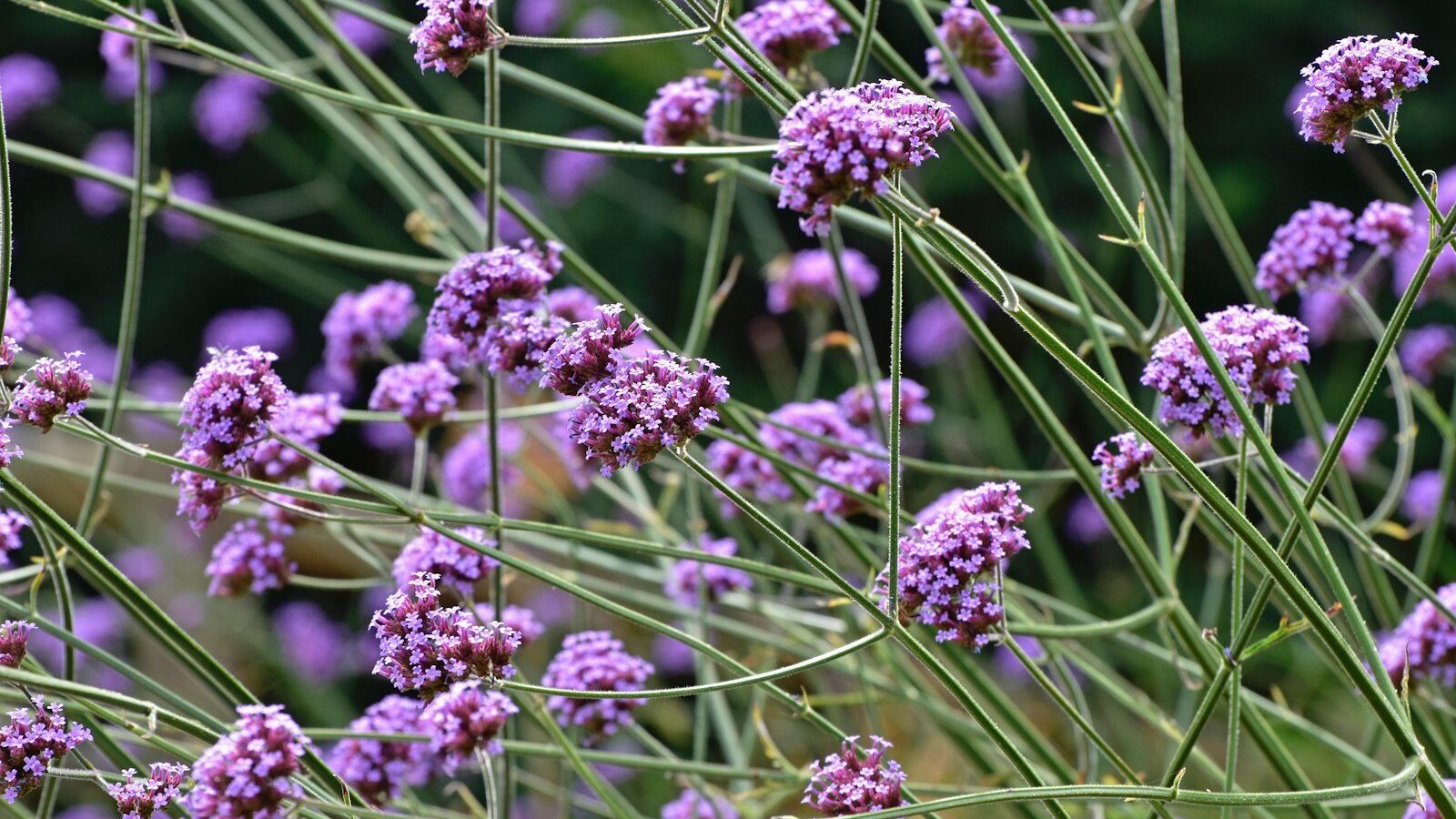
Verbena is one of the hardest-working flowers in a sunny garden: clusters of small flowers in purple, red, pink, white, and blue that bloom relentlessly from late spring until frost, drawing butterflies and bees the whole time. The name covers everything from low, trailing annuals that spill from hanging baskets to the towering, see-through Verbena bonariensis at the back of a border. They all share the same recipe for success — full sun, lean and well-drained soil, and good airflow — and most reward minimal care with maximum color.
Key Takeaways
- Verbena needs full sun (8+ hours) and sharply drained soil; shade and wet feet cause weak, mildew-prone plants.
- Space plants 12–18 inches apart for the airflow that prevents powdery mildew.
- Deadhead or shear lightly through summer to keep the bloom going nonstop.
- Trailing annual verbena is a basket/container star; V. bonariensis and the hardy hybrids are perennial border plants.
- Water at the base, feed lightly, and pinch young plants to encourage bushy, floriferous growth.
Know Your Verbena: Types and Hardiness
“Verbena” spans several very different plants, so identify yours before deciding how to grow it.
- Garden / trailing verbena (hybrids): Low, spreading plants 6–12 inches tall, smothered in flower clusters. Usually grown as annuals; perfect for baskets, window boxes, and edging. Modern series like ‘Superbena’ and ‘Lanai’ resist mildew better than older strains.
- Verbena bonariensis (tall verbena): Airy 4–6 foot wands of small purple flowers on thin stems you can see through. A short-lived perennial in zones 7–10 that reseeds freely; grown as an annual farther north.
- Hardy / homestead verbena (V. canadensis types): Spreading perennial groundcover, hardy to about zone 6, good for dry banks and rock gardens.
- Moss verbena (V. tenuisecta): Finely cut foliage, low and creeping, very heat- and drought-tolerant in warm climates.
Sun, Soil and Planting
Verbena is a sun worshipper. It wants a full 8 hours of direct sun; anything less and it stretches, blooms poorly, and becomes a magnet for powdery mildew. The soil should be average to lean and, above all, well-drained — verbena is far happier a little dry than soggy. Rich, heavily amended beds actually produce leggy plants with fewer flowers. A neutral pH around 6.0–7.0 suits it fine.
- Wait until after the last frost and the soil has warmed; verbena sulks in cold ground.
- Loosen the bed and, if it is heavy, add grit or compost just to improve drainage — do not over-enrich.
- Set plants at the same depth they grew in the pot, spaced 12–18 inches apart for airflow.
- Pinch the growing tips of young plants once after planting to force branching and a fuller habit.
- Water in well, then let the surface dry between waterings going forward.
For containers and hanging baskets, use a free-draining potting mix and a pot with ample drainage holes. Trailing verbena combines beautifully as the “spiller” alongside upright thrillers and mounding fillers.
If you are sowing from seed rather than buying transplants, give yourself a head start: verbena germination is notoriously slow and erratic. Sow indoors 10–12 weeks before your last frost, chill the seed in the refrigerator for a week beforehand to break dormancy, then keep the tray warm (around 70°F) and patient — sprouts can take two to four weeks and may emerge unevenly. Most gardeners find it far easier to buy a few vigorous plugs of a named series, but seed lets you grow large drifts of species types like V. bonariensis economically.
Watering and Feeding
Established verbena is genuinely drought-tolerant, which makes it ideal for hot, dry spots and water-wise gardens. Water deeply about once a week in the ground, letting the top inch dry out in between; overwatering is a far more common cause of failure than underwatering. Containers dry faster and may need watering every day or two in peak summer — but still let the surface dry slightly to avoid root rot. Water at the base in the morning so foliage dries quickly; overhead watering on crowded plants is the express route to powdery mildew. Feed lightly: a balanced, water-soluble fertilizer every 3–4 weeks for container plants, or a single spring application of slow-release for in-ground plantings. Heavy feeding gives leaves at the expense of flowers.
Deadheading and Shearing for Nonstop Bloom
Verbena blooms on new growth, so keeping it productive is mostly about removing spent flowers and encouraging fresh shoots. Pinch or snip off flower clusters as they fade. When the plant starts to look tired or stops blooming in midsummer heat — common with trailing types — do not wait it out: shear the entire plant back by a third to a half. It looks drastic, but within a week or two the verbena flushes with new growth and returns to heavy bloom for the rest of the season. Two or three light shearings over the summer keep baskets and bedding plants full and flowering instead of bare and leggy. Self-cleaning modern series need less of this, but a midsummer haircut still helps.
Overwintering and Propagation
In zones 7–10, hardy and tall verbenas survive winter outdoors; cut them back after frost and mulch lightly. V. bonariensis reseeds so generously that even where it dies as a perennial, seedlings reliably reappear — just leave a few seed heads standing in fall. In colder zones, trailing annual verbena will not survive winter outside, but you can take 3–4 inch tip cuttings in late summer, root them in a moist, gritty mix, and overwinter the young plants on a bright windowsill to set out next spring. Verbena also grows readily from seed started indoors 10–12 weeks before the last frost, though germination can be slow and uneven.
Designing With Verbena
Verbena’s versatility is its superpower — there is a form for nearly every sunny situation. Use trailing hybrids as the “spiller” cascading over the edges of hanging baskets, window boxes, and mixed containers, where they will trail 1–2 feet and bloom from the moment you plant them until frost. In the ground, low garden verbena makes a flowering groundcover or front-of-border edging that knits together quickly.
Tall Verbena bonariensis plays a completely different role: its slim, branching stems and small flower clusters create an airy, see-through veil you can plant near the front of a border without blocking the view behind it. Drifted through ornamental grasses, rudbeckia, and echinacea, it gives a naturalistic prairie look and a constant haze of butterflies. Because verbena thrives on heat and neglect, it is also a natural fit for hot hardscape edges, parking strips, and slopes where irrigation is limited — exactly the spots where thirstier annuals fail.
Growing Verbena in Containers
Containers are where trailing verbena truly shines, but they magnify both its needs and its problems. Use a quality, free-draining potting mix and never a pot without drainage holes — verbena rots fast in standing water. Because pots dry quickly and nutrients leach with every watering, container verbena needs more attentive feeding than in-ground plants: a dilute balanced fertilizer every 1–2 weeks keeps the bloom heavy. Site baskets where they get a full day of sun and good air movement; verbena crammed into a shady, still corner is the classic recipe for powdery mildew. Pinch young plants and shear midseason just as you would in the ground, and a single basket will pour out color from spring to frost.
Pests and Problems
Powdery mildew is by far the most common complaint — a white, dusty coating on the leaves caused by shade, crowding, and damp foliage. Prevent it with full sun, wide spacing, base watering, and mildew-resistant cultivars; treat outbreaks by shearing affected growth and improving airflow. Spider mites can flare in hot, dry conditions, showing as fine stippling and webbing — rinse plants and use insecticidal soap or horticultural oil. Aphids and whiteflies are occasional and easily managed. Leggy, sparse growth almost always means too little sun or too much nitrogen, both correctable. On the plus side, verbena is one of the best butterfly and pollinator plants you can grow.
Verbena anchors a pollinator border and a basket equally well. For more sun-loving color, explore the plants and flowers hub; pair it with another drought-tough, butterfly-friendly perennial like yarrow. If you are growing trailing verbena in baskets or on a balcony, our urban gardening section has container-specific watering and feeding tips.
Frequently Asked Questions
Is verbena a perennial or an annual?
Both, depending on type and climate. Trailing garden verbena is usually grown as an annual, while V. bonariensis and hardy verbenas are perennial in zones 6/7–10 and often reseed.
Why has my verbena stopped blooming in midsummer?
Heat and spent growth often pause flowering. Shear the plant back by a third to a half; it will flush new growth and resume heavy bloom within a couple of weeks.
How do I prevent powdery mildew on verbena?
Grow it in full sun with 12–18 inches of spacing, water at the base in the morning, and choose mildew-resistant series like ‘Superbena’. Shear off affected growth promptly.
How often should I water verbena?
Once established it is drought-tolerant — water deeply about once a week in the ground, letting the top inch dry out. Containers need more, but always let the surface dry slightly between waterings.
Does verbena attract pollinators?
Yes, very much so. The flat-topped flower clusters are a top nectar source for butterflies, bees, and hummingbird moths all season long.