

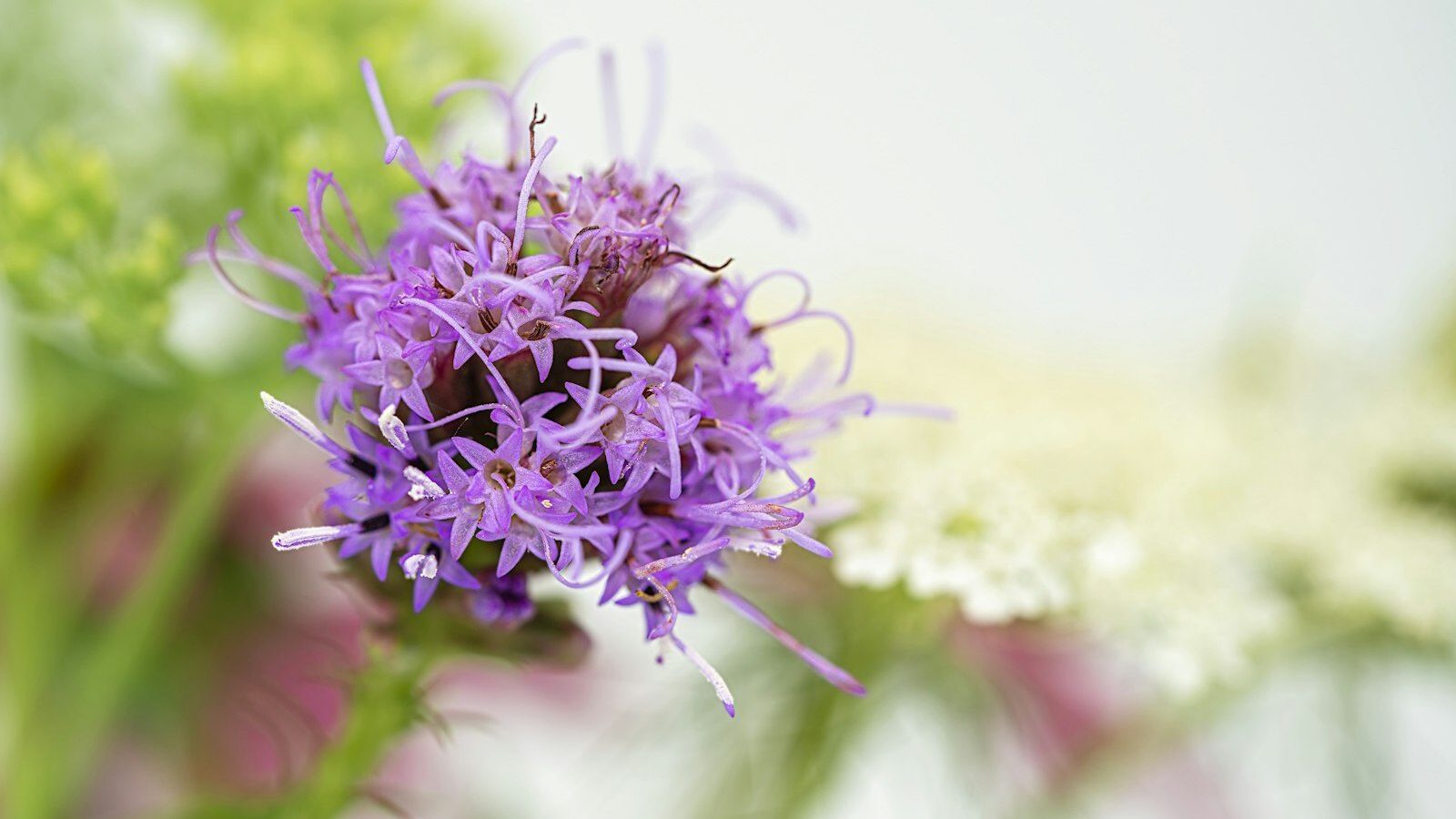
Liatris, better known as blazing star or gayfeather, is one of the easiest native perennials to fit into a sunny border, and one of the few flowers that opens its spikes from the top down instead of the bottom up. Each summer it sends up bottle-brush wands of fuzzy purple — or sometimes white — florets that bees, butterflies, and goldfinches cannot resist. As a North American prairie native, Liatris spicata and its relatives are built for heat, drought, and lean soil, which makes them nearly foolproof once established. Whether you start from inexpensive corms in spring or from nursery pots, this guide walks through planting depth, spacing, watering, staking, division, and the handful of problems that ever trouble this tough, pollinator-magnet perennial.
Key Takeaways
- Zones: Hardy in USDA zones 3–9; a true cold-tolerant prairie native.
- Sun: Full sun, at least 6 hours. Shade causes floppy, sparse spikes.
- Soil: Average to lean, well-drained soil. Wet winter ground is the main killer.
- Spacing: Plant corms 12–15 inches apart, 2–4 inches deep, eye-side up.
- Bloom time: Mid to late summer, blooming from the top of the spike downward.
- Wildlife: A top-tier nectar source for butterflies and bees; goldfinches eat the seed.
Meet the Plant: Species and Cultivars
The liatris you most often find for sale is Liatris spicata, dense blazing star, which grows 2–4 feet tall with tight, fluffy purple spikes. The cultivar ‘Kobold’ is a compact 24–30 inch selection that needs no staking, while ‘Floristan White’ and ‘Alba’ offer creamy white wands that glow at dusk. Other species worth seeking out include Liatris ligulistylis (meadow blazing star), famous as a monarch butterfly magnet, and Liatris pycnostachya (prairie blazing star), a taller, wilder-looking plant for naturalized settings. All share the same upside-down bloom habit and the same easygoing nature.
You can buy liatris two ways. Dormant corms — flat, knobby discs sold in bags in early spring — are cheap and let you plant a drift for a few dollars. Potted nursery plants cost more but flower the same year and let you place them precisely. Both establish easily; corms simply take a season to size up.
When and Where to Plant
Plant liatris corms in spring once the soil is workable and frost danger has passed, or set out potted plants from spring through early fall. In zones 8–9, fall planting also works because the ground rarely freezes hard. The plant’s only firm demand is full sun — six hours minimum, eight is better. In too much shade the spikes stretch, weaken, and flop, and bloom drops off sharply.
Soil should be average to lean and, above all, well-drained. Liatris evolved on prairies and tolerates poor, sandy, rocky, and slightly alkaline soils without complaint. What it cannot survive is soggy ground in winter, which rots the corms. If you garden in heavy clay, amend the bed with coarse sand or grit and plant on a slight rise, or grow the compact cultivars in containers. Rich, heavily fertilized soil actually works against you, producing tall, soft growth that flops and fewer of the tight spikes you planted it for.
How to Plant Liatris Corms
A liatris corm has a slightly domed top, where the growth eye sits, and a flatter, sometimes rooty bottom. Plant it eye-side up, 2–4 inches deep. If you cannot tell which side is up — and the knobby discs are genuinely confusing — plant the corm on its side; the shoot will find its own way to the surface. Space corms 12–15 inches apart, or cluster them in groups of five or seven for the strongest visual punch, since a single spike reads as thin but a drift reads as a purple haze.
Water the bed once after planting to settle the soil, then ease off. Corms planted in cool spring soil may take three to five weeks to show growth, so be patient and resist the urge to dig them up to check. Set potted plants at the same depth they sat in the nursery container, firm the soil, and water in.
Watering, Feeding, and Staking
During the first growing season, water liatris regularly to help the roots and corms establish — aim to keep the soil lightly moist but never waterlogged. Once established, liatris is markedly drought tolerant and needs supplemental water only during prolonged dry spells. Overwatering, especially in heavy soil, is far more dangerous than underwatering. Reduce or stop watering as the season winds down so the corms enter winter dry, which prevents rot.
Feeding is barely necessary. A thin layer of compost in spring is plenty; skip high-nitrogen fertilizers, which promote the soft, floppy growth liatris is otherwise free of. The taller species and the prairie types can flop in rich soil, after heavy rain, or in part shade — if yours lean, either move them to leaner, sunnier ground next year, switch to a compact cultivar like ‘Kobold,’ or give the tall ones a discreet grow-through support early in the season before they bloom. In a tight, well-grown clump, the stems support each other.
The flowers open from the top of the spike downward, which is unusual and a little counterintuitive — by the time the bottom florets open, the top is fading. For cut flowers, harvest when the top third to half of the spike has colored up; liatris is an excellent, long-lasting cut flower and dries well too. Deadheading spent spikes tidies the plant, but leave some standing if you want goldfinches to feed on the seed and to enjoy the winter silhouette.
Seasonal Care and Winter
Liatris foliage is grassy and unobtrusive after bloom. In late fall you can cut the stems back to a few inches once they yellow, or leave them standing through winter for seed and structure and cut back in early spring. The corms are fully hardy in the ground throughout zones 3–9 and need no winter protection beyond good drainage; a light mulch helps in the coldest zones but should be pulled back from the crowns in spring. In containers in cold climates, move the pot to an unheated garage or sink it in the ground over winter, since potted corms are more exposed to freezing than those in open soil.
Dividing and Propagating Liatris
Liatris clumps slowly enlarge as the corms multiply, and after three or four years a clump may become crowded and bloom less freely. Divide in early spring or fall: lift the clump with a fork, separate the cluster of corms by hand or with a clean knife, keep the plump, healthy ones, and replant immediately at the same depth, spacing them out. Division both rejuvenates an old clump and gives you free plants. You can also grow liatris from seed sown in fall or cold-stratified and sown in spring, though seed-grown plants take two to three years to reach blooming size. For most gardeners, corm division is faster and easier. The same patient lift-and-split approach works on many tough perennials — see our guide to growing bearded iris for a companion that loves the same lean, sunny conditions.
Pests and Problems
Liatris is refreshingly trouble-free. Its biggest enemies are not insects but moisture and rodents. Crown and corm rot from wet winter soil is the number one cause of death — fix it with drainage, not fungicide. Voles and gophers sometimes eat the corms; in problem areas, plant corms in wire baskets or treat the bed for rodents. Deer and rabbits usually leave liatris alone, making it a good choice for unfenced gardens.
Among insects, only occasional issues appear. Stem and leaf rust can show up in humid weather as orange or brown pustules on stems and foliage; improve air circulation, avoid overhead watering, and remove badly affected stems. Slugs may nibble young spring shoots. None of these typically threaten an established planting.
Companion Plants and Garden Uses
Liatris is a vertical accent, and it shines when contrasted with rounded and daisy-form flowers that share its sun-loving, drought-tolerant temperament. In a native or prairie-style planting, combine it with coneflowers (echinacea), black-eyed Susans (rudbeckia), coreopsis, butterfly weed, and ornamental grasses such as little bluestem or switchgrass. The spiky purple wands rising above mounded daisies create the classic prairie rhythm. In a more formal border, liatris pairs well with yarrow, phlox, and sedum, and the white cultivars cool down hot color schemes.
Because it is a powerhouse nectar source, liatris belongs in any pollinator or butterfly garden — meadow blazing star in particular is one of the best monarch plants you can grow. Plant it in generous drifts near a patio or path where you can watch the bees and swallowtails work the spikes. For more sun-loving, low-maintenance perennials to round out a pollinator border, browse the Plants & Flowers hub.
Frequently Asked Questions
Does liatris come back every year?
Yes. Liatris is a hardy perennial in USDA zones 3–9, and the corms persist and multiply for many years. Give it full sun and well-drained soil — especially dry winter soil — and it returns reliably and slowly spreads into larger clumps.
Why is my liatris flopping over?
Flopping usually means too much shade, soil that is too rich, or tall species after heavy rain. Move plants to full sun and leaner soil, switch to a compact cultivar like ‘Kobold,’ or add an early grow-through support for the tall prairie types.
Which way is up when planting liatris corms?
The slightly domed side with the growth eye goes up, and the flatter side goes down, 2–4 inches deep. If you genuinely can’t tell, plant the corm on its side — the shoot will find its own way to the surface.
Is liatris deer resistant?
Generally yes. Deer and rabbits tend to leave liatris alone, making it a solid pick for unfenced gardens. Voles and gophers, however, may eat the corms underground, so use wire baskets where those are a problem.
When does liatris bloom?
Liatris blooms in mid to late summer, typically July into August. Distinctively, the spikes open from the top down rather than the bottom up, and each spike stays in flower for several weeks, making it a long-lasting cut flower.