

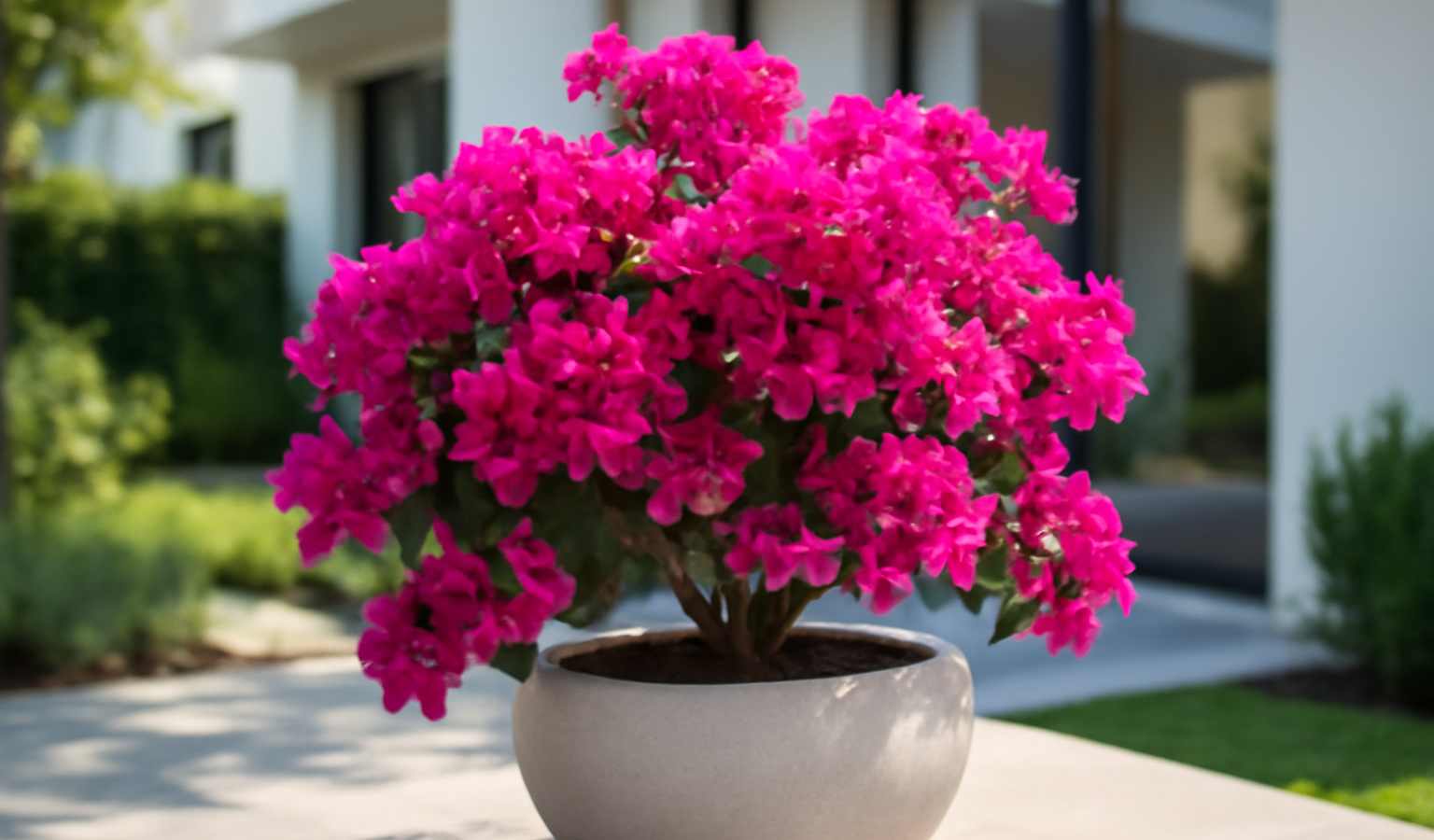
Bougainvillea is the plant behind those explosions of magenta, orange, and purple cascading over walls and pergolas in warm climates — and the secret to that color is the opposite of how most gardeners treat their plants. Bougainvillea blooms hardest when it’s a little stressed: full blazing sun, lean soil, and water held back to the point of slight drought. Pamper it with rich soil, shade, and constant water and you’ll get a lush green thorny monster with barely a flower. What look like the flowers are actually colorful papery bracts surrounding tiny true blooms, and they last for weeks. It’s a tropical, frost-tender vine, but even cold-climate gardeners can grow it beautifully in a container and bring it in for winter. This guide covers the sun and soil it craves, support for its thorny canes, the dry-to-bloom trick, container culture, and how to prune safely.
Key Takeaways
- Keep it dry to bloom: bougainvillea flowers most when slightly stressed — too much water and rich soil give leaves, not color.
- Full sun, all day: needs at least 6 hours of direct sun; the more sun, the more bracts.
- Tropical and frost-tender: hardy only in zones 9–11; elsewhere grow in a container and overwinter indoors.
- Thorny and needs support: it has sharp thorns and no self-clinging ability — tie it to a sturdy trellis, wall wires, or fence.
- Excellent in containers: a pot naturally restricts roots and dries out, which actually encourages heavier blooming.
Climate and Hardiness
Bougainvillea is a true tropical, reliably hardy outdoors only in USDA zones 9 through 11 — think southern Florida, the warmest parts of California and the Southwest, and the Gulf Coast, where it can grow into a massive evergreen vine smothering walls and rooftops. It is frost-tender: temperatures below freezing damage or kill the top growth, though in zone 9 an established plant may resprout from the roots after a light freeze if well-mulched. Everywhere colder, treat it as a container plant for the patio in summer and a houseplant in winter. It loves heat and humidity but also performs in hot, dry desert climates as long as it gets water to establish. The warmer and sunnier the spot, the better it flowers, so plant it in the hottest, brightest corner you have.
Sun and Soil
Sun is non-negotiable. Bougainvillea needs a minimum of six hours of direct sun a day, and ideally full sun from morning to evening — it simply will not bloom well in shade. As for soil, this is where gardeners go wrong by being too generous. Bougainvillea wants well-drained, even somewhat poor soil; rich, heavily fertilized ground produces rampant leafy growth at the expense of bracts. A sandy or loamy soil that drains fast is ideal, and slightly acidic pH suits it. The one thing it cannot abide is wet feet — soggy soil quickly rots its surprisingly fine, brittle roots. If you have heavy clay, amend heavily with grit and compost or grow in a raised bed or container instead. Plant it high, never in a low spot that collects water.
The Dry-to-Bloom Trick
Here’s the counterintuitive heart of growing bougainvillea: a little water stress triggers flowering. The plant evolved to bloom when conditions get tough, so when you let it dry out between waterings, it responds by producing those vivid bracts. Keep it constantly moist and it stays green and vegetative. The practical method is to water deeply but infrequently — soak the root zone, then let the top couple of inches of soil dry out before watering again. When you want to push a flush of bloom, ease off the water until the plant looks slightly wilted, then resume; this deliberate stress often brings on a wave of color within a week or two. The same logic applies to feeding: go light. Too much nitrogen produces leaves, so use a low-nitrogen, bloom-type fertilizer (one higher in phosphorus and potassium) sparingly during the growing season rather than a rich all-purpose feed. Lean and thirsty is the recipe for a bougainvillea that blooms its heart out.
Support for a Thorny Climber
Bougainvillea is technically a scrambling shrub rather than a true clinging vine — it has no tendrils or holdfasts, and it uses its sharp, curved thorns to hook onto surrounding plants and structures in the wild. In the garden, that means you must tie it to a support: a sturdy trellis, wires fixed to a wall, a strong fence, pergola, or arch. Choose a robust structure, because a mature bougainvillea is heavy and vigorous. Train and tie in the long canes while they are young and flexible, fanning them out and securing them with soft ties; horizontal training, as with climbing roses, encourages more flowering shoots along the cane. Be warned that the thorns are no joke — they’re stiff, sharp, and can cause skin reactions in some people — so always wear thick gloves and long sleeves when handling, tying, or pruning. For a freestanding pillar of color, train it up a stout obelisk; for screening, weave it through fence wires.
Growing Bougainvillea in Containers
Container growing is the answer for anyone outside zones 9 to 11, and it suits bougainvillea perfectly because a pot naturally restricts the roots and dries out faster — both of which encourage blooming. Use a container with excellent drainage and a free-draining potting mix; bougainvillea actually flowers better slightly pot-bound, so don’t rush to oversize the pot. The plant’s roots are fine and fragile and resent disturbance, so repot carefully and infrequently, and be especially gentle when first transplanting a nursery plant — disturb the root ball as little as possible. Place the container in the sunniest spot available, water when the top inch or two dries out, and feed lightly with a bloom fertilizer. When frost threatens, bring the pot indoors to a bright window or sunroom; the plant may drop leaves and rest over winter, which is normal. Water sparingly while it’s dormant and resume normal care when growth restarts in spring. Trained up a trellis in the pot, a container bougainvillea makes a stunning patio specimen.
Pruning and Common Problems
Bougainvillea blooms on new growth, so pruning both keeps it in bounds and stimulates fresh flowering wood. Prune lightly after each bloom cycle, and do any hard cutting-back in early spring before the main growth surge. Wear heavy gloves, shorten long canes, remove dead or tangled growth, and pinch the tips of young shoots to encourage bushiness and more flowering points. Don’t prune in late fall in marginal zones, as new growth is frost-tender. As for problems: the most common is “all leaves, no flowers,” which nearly always traces to too much water, too much nitrogen, or not enough sun — correct all three. Leaf drop is normal after a move, a cold snap, or a dry spell, and the plant usually rebounds. Watch for aphids and bougainvillea looper caterpillars chewing leaf edges; handpick or treat as needed. Root rot from overwatering is the most serious threat, so always err on the dry side. Pair it with other heat lovers — see our guide to growing star jasmine — and browse the Plants & Flowers hub for more climbing-plant guides.
Frequently Asked Questions
Why is my bougainvillea not flowering?
Almost always too much water, too much nitrogen fertilizer, or not enough sun. Bougainvillea blooms when slightly stressed, so let the soil dry between waterings, switch to a low-nitrogen bloom feed, and make sure it gets at least six hours of direct sun daily.
How often should I water bougainvillea?
Water deeply but infrequently, letting the top inch or two of soil dry out between waterings. It’s drought-tolerant once established, and a little water stress actually triggers bloom. Containers dry faster and need more frequent watering, but never keep the soil constantly soggy or the roots will rot.
Can bougainvillea survive winter outside?
Only in zones 9–11. It’s frost-tender, so below freezing the top growth is damaged or killed. In zone 9 a mulched, established plant may resprout from the roots after a light freeze. In colder zones, grow it in a container and bring it indoors before frost.
Does bougainvillea climb on its own?
No. It’s a scrambling shrub with sharp thorns but no tendrils or clinging pads, so it can’t attach itself to a wall. Tie its canes to a sturdy trellis, wires, fence, or pergola and train them while young. Always wear thick gloves — the thorns are sharp and can irritate skin.
When and how do I prune bougainvillea?
Prune lightly after each bloom cycle and do major cutting-back in early spring, since it flowers on new growth. Wear heavy gloves, shorten long canes, remove dead wood, and pinch shoot tips for bushiness. Avoid hard pruning in late fall in cold-edge zones, as fresh growth is frost-tender.