

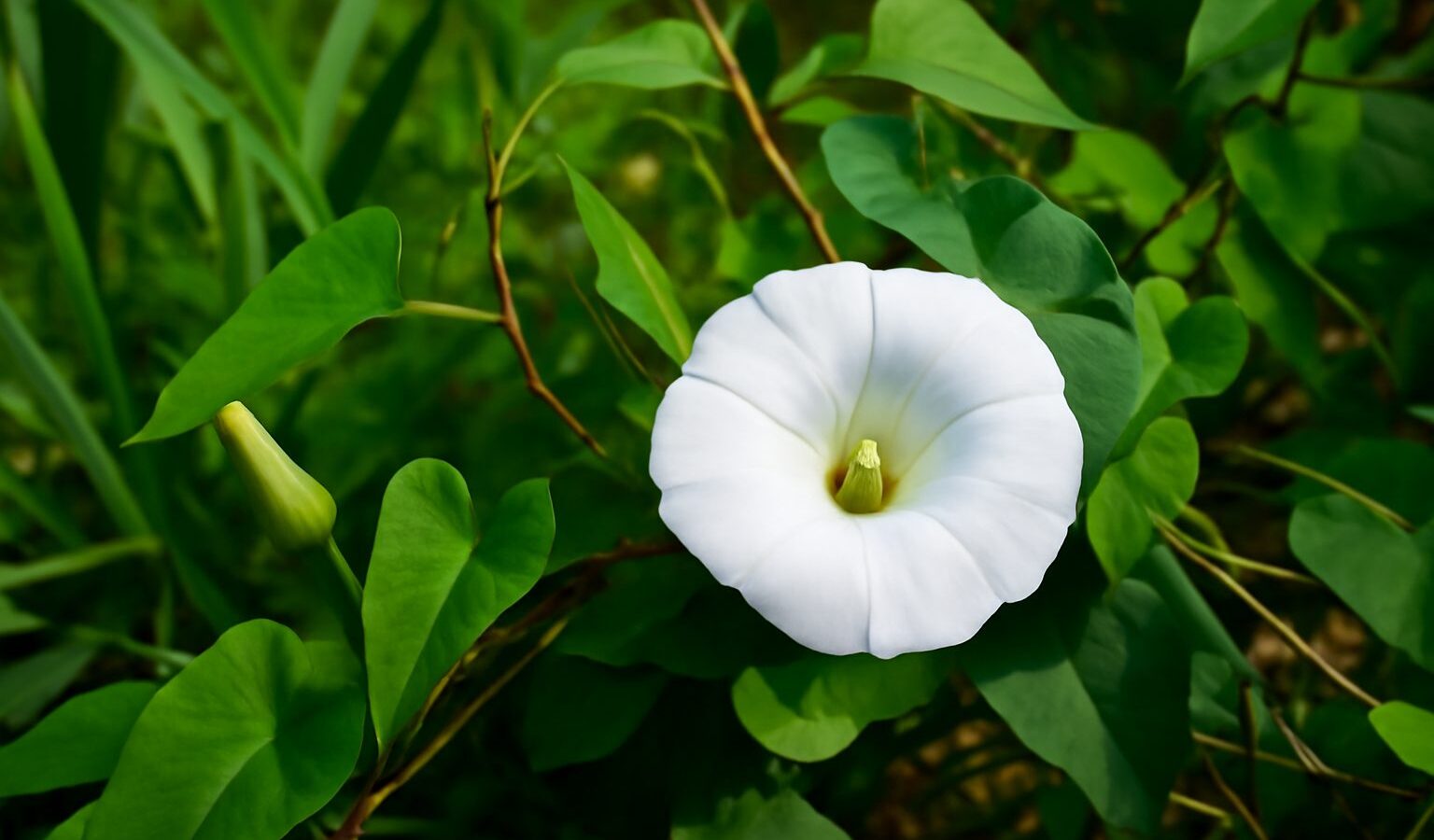
Field bindweed is the weed that makes experienced gardeners groan. It twines up your tomatoes, smothers your flower beds, and seems to come back stronger every time you pull it. The reason it is so maddening is underground: bindweed (Convolvulus arvensis) builds a root system that can plunge 20 feet deep and spread laterally for yards, with energy reserves and dormant buds that resprout from the tiniest fragment. Its seeds can stay viable in the soil for up to 50 years. You cannot win in a weekend. But you absolutely can beat bindweed with a deliberate campaign that starves the roots, blocks light, and times herbicide to the plant’s weakest moment. This guide lays out exactly how.
Key Takeaways
- Bindweed is a root problem, not a leaf problem. Roots reach 20+ feet deep and resprout from fragments, so single pulls fail.
- Identify it correctly: arrowhead leaves and white-to-pink trumpet flowers on a twining vine—not to be confused with morning glory or wild buckwheat.
- Exhaust the roots by removing every shoot the moment it appears, repeatedly, for one to two full seasons.
- Smothering with cardboard and mulch or landscape fabric starves it of light over many months.
- Glyphosate works best when applied at full bloom in late summer, when the plant moves sugars—and herbicide—down to its roots.
- Never rototill bindweed; you chop the roots into hundreds of new plants.
Identify field bindweed correctly
Killing bindweed takes the right approach, so first confirm what you have. Several twining weeds look similar, but field bindweed has a distinct signature.
- Leaves: arrowhead- or spade-shaped, 1 to 2 inches long, arranged alternately along a thin, twining stem. The pointed basal lobes are a reliable tell.
- Flowers: classic morning-glory-style trumpets about 1 inch across, white to pale pink, opening in the morning and closing by afternoon and in cloudy weather.
- Growth habit: stems twine counterclockwise up anything vertical—stems, fences, other plants—and sprawl as dense ground cover where there is nothing to climb.
- Roots: a deep vertical taproot plus a web of horizontal rhizomes loaded with white, brittle buds. This is the part that makes it nearly immortal.
Do not confuse it with cultivated morning glory (much larger leaves and flowers, annual), hedge bindweed (bigger trumpet flowers, blunt-lobed leaves), or wild buckwheat (a true annual that pulls out easily). Field bindweed is the small-flowered perennial, and it is the toughest of the bunch.
Why bindweed is so hard to kill
Understanding the enemy explains the strategy. A single bindweed plant stores enormous energy reserves in a root system that can extend 20 feet down and produce new shoots from buds scattered along the entire network. Snap a root and each piece a couple of inches long can become a new plant. That is why rototilling—the instinct of many frustrated gardeners—is the worst possible move: a tiller turns one plant into a hundred.
The winning principle is starvation. Every green shoot is a solar panel recharging those root reserves. If you remove the leaves faster than the plant can replace the energy it spent growing them, the roots eventually run out of fuel and die. This is slow, but it is the only thing that works permanently, and herbicide simply accelerates the same outcome.
Method 1: Exhaust the roots by repeated removal
For organic gardeners or anyone who cannot spray near edibles, relentless removal is the proven path. It is labor over time rather than effort in one burst.
- Cut or pull every shoot the moment it surfaces. Do not wait for it to climb or flower. The goal is to never let a leaf photosynthesize for long.
- Stay on a tight schedule. Check the area every 1 to 2 weeks throughout the entire growing season. Slacking lets the roots recharge and resets your progress.
- Pull gently from moist soil to lift as much root as you can, but accept that fragments will remain—your job is to keep removing what they send up.
- Be patient. A serious infestation needs one to two full seasons of this. You will see shoots get weaker and sparser as the reserves drain.
- Bag the green growth; do not compost living bindweed roots, which can re-establish in a cool pile.
Consistency beats intensity here. Twenty minutes every week for a summer accomplishes far more than a single exhausting dig that leaves the roots intact.
Method 2: Smother it with cardboard, mulch, or fabric
Cutting off light is starvation by another route, and it is ideal for clearing a whole bed you are willing to take out of production for a season. Bindweed cannot photosynthesize in the dark, and prolonged blackout drains the roots.
- Sheet mulch: mow or cut the bindweed flush, lay down overlapping plain cardboard or 8–10 sheets of newspaper, wet it, then top with 4 to 6 inches of wood-chip mulch. Leave it in place for an entire growing season—ideally a full year.
- Landscape fabric or black plastic: heavy woven fabric pinned tightly excludes light and is harder for shoots to pierce than thin film. Black plastic adds solarizing heat in sunny climates.
- Watch the edges. Bindweed will travel sideways and pop up at the seams, so overlap generously and patrol the perimeter, pulling any escapees.
- Expect a long timeline. Smothering rarely finishes the job in a few weeks; the deep reserves keep pushing shoots for months before they finally give out.
Method 3: Herbicide timed for maximum kill
When you need faster results over a large area, a systemic herbicide is the most efficient tool—but only if you apply it at the right growth stage. Spraying young spring bindweed wastes product because the plant is moving energy up into new growth, not down into roots.
Glyphosate at full bloom
Glyphosate is systemic and translocates to the roots, which is exactly what a deep-rooted perennial demands. The proven window is at full bloom in late summer, when the plant is naturally sending sugars down to recharge its roots for winter—the herbicide rides along. Spray actively growing, well-watered (not drought-stressed) foliage on a calm day, and shield any desirable plants because glyphosate kills everything green.
Selective broadleaf herbicides for lawns
Where bindweed threads through turf, a selective broadleaf product containing 2,4-D, dicamba, or quinclorac suppresses it without killing the grass. These rarely eradicate the roots in one pass but knock it back season to season as part of a thicker, more competitive lawn.
- Plan to retreat. One application almost never finishes bindweed. Hit the regrowth at full bloom the following season, and again if needed.
- Cut-and-treat climbers: for vines tangled in shrubs you cannot safely spray, unwind the stems onto bare ground and spray them there, or wipe foliage with a herbicide-soaked sponge glove.
- Always follow the label rate and observe any setbacks from edibles and water.
Prevent bindweed from returning
Because the seed bank lasts decades, prevention is a permanent part of bindweed management even after you win the main battle.
- Never let it set seed. Every flower you remove before it matures prevents another 50-year deposit in the soil. Deadhead or cut at first bloom in any area you cannot fully clear.
- Patrol weekly and pull seedlings while they are tiny—young plants have shallow roots and come out cleanly.
- Keep beds mulched 3 to 4 inches deep to block germinating seed and make stray shoots easy to spot and pull.
- Grow dense, competitive plantings. Bindweed exploits bare ground; thick ground cover and a vigorous lawn give it far less room.
- Clean tools and boots after working an infested area so you do not carry root fragments to clean beds.
- Inspect new soil and plants. Bindweed often arrives hidden in topsoil, mulch, or nursery pots—quarantine and watch new arrivals.
Treat bindweed as a multi-season project and combine methods—smother a bed, pull the escapees, and spray the late-summer survivors at bloom. For more on building beds that resist weeds in the first place, see our outdoor living and landscaping guides.
Frequently Asked Questions
Why does bindweed keep coming back after I pull it?
Because pulling removes only the shoot, not the deep root system. Field bindweed roots can reach 20 feet down and resprout from buds scattered along horizontal rhizomes, and even small fragments grow into new plants. The only way to win by pulling is to remove every shoot repeatedly for one to two seasons until the root reserves are exhausted.
When is the best time to spray bindweed?
At full bloom in late summer. At that stage the plant is moving sugars down into its roots to store energy for winter, and a systemic herbicide like glyphosate travels along the same path, reaching and killing more of the root system than a spring application would.
Will tilling get rid of bindweed?
No—it makes it dramatically worse. Tilling chops the roots into many small fragments, and each fragment can sprout into a new plant. You can turn a single infestation into a field full of bindweed in one pass. Smother or hand-remove instead.
How long does it take to kill bindweed completely?
Plan on one to two full growing seasons with consistent effort. Whether you smother, repeatedly remove shoots, or spray at bloom, the deep root reserves take many months to drain. Expect regrowth between treatments and stay on schedule rather than expecting a one-time fix.
Can I use vinegar or boiling water on bindweed?
They will burn the foliage and may kill seedlings, but as contact-only treatments they do not reach the deep roots, so established plants resprout quickly. They can be a useful supplement in cracks and paths, but for serious bindweed you need root-targeting tactics—starvation, smothering, or systemic herbicide.