

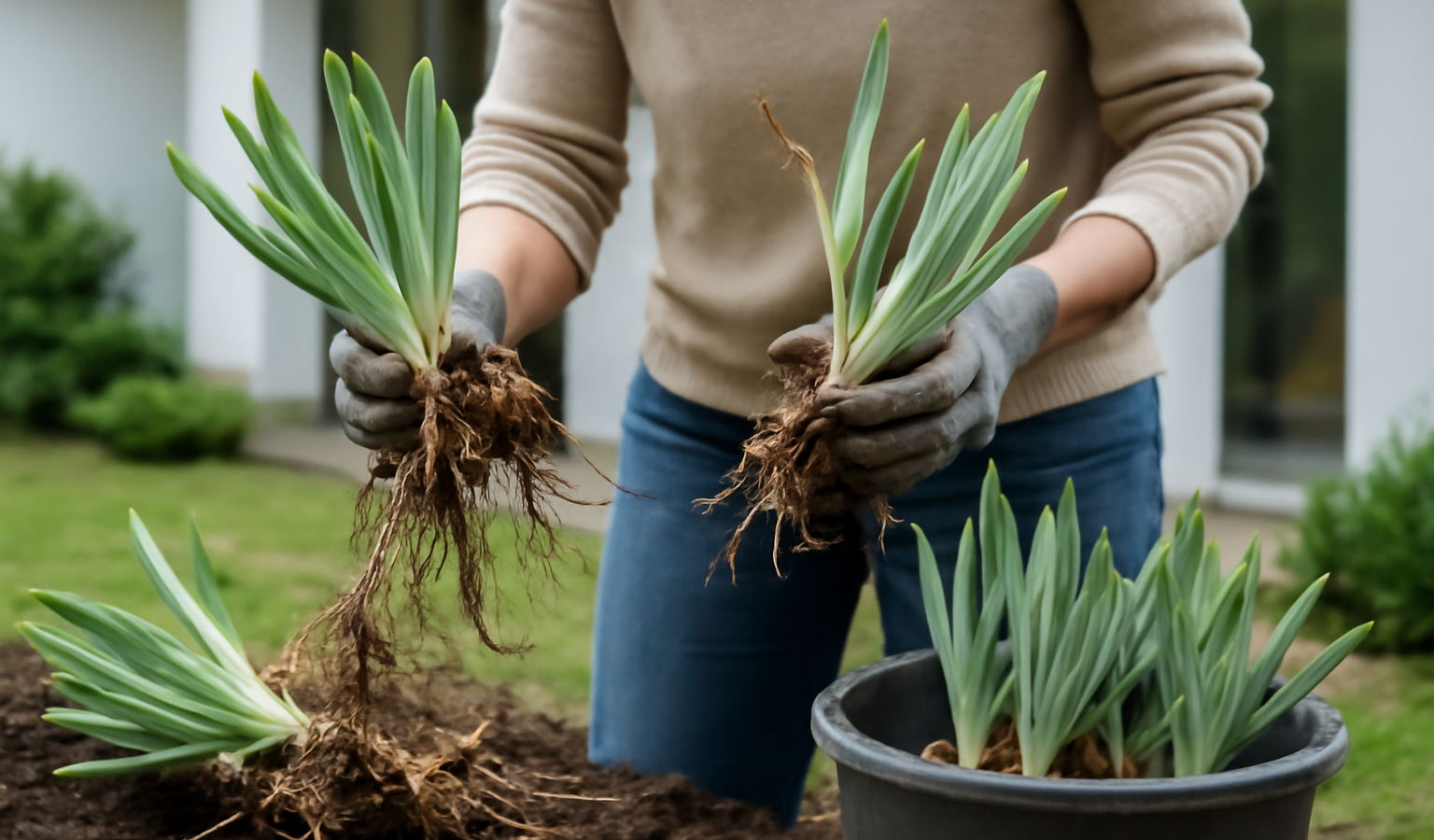
To divide irises, lift the clump after flowering, separate it into healthy pieces, and replant them with proper spacing. For bearded irises, dig the rhizome mass six to eight weeks after bloom (usually July through August), break or cut it into fans that each carry a firm chunk of rhizome, trim the foliage to a six-inch fan, and replant shallow with the rhizome top exposed at the soil surface. For Siberian and other beardless irises, dig the dense fibrous crown in early spring or early fall, split it into chunks of several fans with a sharp spade or saw, keep the roots wet, and replant at the same depth they were growing before. The two iris types look similar in the garden but they grow from completely different root structures, so the timing and the tools you reach for are not the same.
Most irises need dividing every three to four years. Once a clump gets crowded it stops blooming well, the center hollows out into a bare donut shape, and the plants compete for the same patch of soil until none of them perform. Dividing solves all of that in an afternoon, and it gives you free plants to spread around the yard or hand to a neighbor. This guide walks through both the bearded and the beardless approach in detail, including how to read the signs that a clump is ready, how to dodge the iris borer, and how to settle the new divisions in so they bloom again on schedule. Whether you grow tall bearded irises in a sunny border or Siberian irises along a damp edge, the process is straightforward once you know which set of rules applies to your plants.
Key Takeaways
- Divide bearded irises every three to four years in mid-to-late summer, six to eight weeks after bloom (typically July to August).
- Divide Siberian and other beardless irises in early spring or early fall while the soil is workable and the weather is cool.
- Bearded irises grow from rhizomes you cut into fans; Siberians grow from tough fibrous clumps you split with a spade, two forks, or even a saw.
- Replant bearded rhizomes shallow with the top exposed; replant Siberians at the same depth they grew before and never let their roots dry out.
- Look for declining bloom, a hollow center, and crowding as the signals it is time to divide, and watch for soft, smelly, borer-damaged tissue.
Why and When Irises Need Dividing
Irises are vigorous spreaders. A single rhizome or crown you plant this year will multiply into a fat colony within a few seasons, and that energy is exactly what eventually works against the planting. As the clump packs together, the older central growth dies back while the young growth pushes outward, leaving a ring of leaves around an empty, woody middle. Gardeners call this the hollow donut, and it is the single clearest sign that division is overdue. The plants are no longer feeding from fresh soil in the center, and the crowding starves them of the room, light, and nutrients they need to set flower buds.
The first symptom most people notice is a drop in flowering. A clump that gave you a dozen stalks two years ago suddenly offers three or four, and the blooms sit lower and smaller. You may also see foliage that looks crowded and floppy, with leaves shading each other instead of fanning out cleanly. Once you spot any of these, plan to divide that season or the next. On a healthy rotation, bearded irises want dividing every three to four years and Siberians can often go four to five years before they crowd, though a happy Siberian in rich, moist soil can need attention sooner.
Knowing Your Zone and Your Iris Type
Bearded irises (the classic Iris germanica types) thrive across USDA hardiness zones 3 through 9 and want full sun, lean-to-average soil, and sharp drainage. They grow from thick, horizontal rhizomes that sit at or just under the soil surface. Siberian irises (Iris sibirica) are hardy in zones 3 through 8, tolerate heavier and damper soil, and grow from a dense mat of fine fibrous roots with no fat rhizome at all. Japanese and Louisiana irises follow the beardless playbook too. Knowing which camp your plant belongs to decides everything that follows, because you treat a rhizome very differently from a fibrous clump. If you are unsure, dig down a few inches at the edge of the clump: a knobby horizontal stem like a thick finger means bearded, while a tight knot of stringy roots means beardless.
How to Divide Bearded Irises (Rhizomes)
Bearded irises are divided in the heat of summer, which surprises people who assume fall is the default for everything. The window opens six to eight weeks after the flowers fade, which lands in July or August across most of the country. At that point the plant has finished its spring growth surge and is entering a brief semi-dormant rest, so it tolerates the disturbance and has enough warm weeks left to root in before winter. Pick a dry stretch if you can, because the rhizomes heal cuts better in dry conditions and you reduce the chance of introducing rot.
Lifting and Cleaning the Clump
Start by cutting the foliage back to about a third of its height so you can see what you are doing. Slide a garden fork well outside the clump and lever the whole mass up rather than spearing through the center; a fork lifts with less root damage than a spade. Shake or knock off the loose soil, then rinse the rhizomes with a hose. Washing them clean is not optional fussiness; it lets you actually see the rhizomes, spot any damage, and find the firm dividing points. Spread the clean clump out on a tarp or bench in the shade and have a look at what you have.
- Identify the young, plump rhizomes at the outer edges; these are your keepers, each ideally with a green fan of leaves attached.
- Find the old central rhizomes, which are usually woody, leafless, and shriveled. These have already bloomed and will not flower again, so they get discarded.
- Inspect every piece for soft spots, foul smells, or tunnels boring through the flesh. That is iris borer or rot, and any affected tissue must be cut away or thrown out entirely.
Cutting Into Divisions
Use a clean, sharp knife to separate the clump into individual divisions. Each good division should be a section of firm rhizome about three to four inches long with at least one healthy fan of leaves growing from it. The rhizome is the food reserve and the fan is the active growth, so a piece needs both to perform well next year. Snap natural Y-junctions apart with your hands where you can, and cut where you must. Wipe or dip your blade in a ten percent bleach solution or rubbing alcohol between plants if you saw any disease, so you do not spread it from one rhizome to the next.
Once the divisions are separated, trim the leaves down to a tidy fan roughly six inches tall, cutting the top straight across or into a shallow inverted V. This is not for looks. Cutting back the foliage reduces wind-rock and water loss while the cut roots re-establish, so the plant can pour its energy into anchoring rather than holding up a full head of leaves. Trim the long roots back to about two inches as well, which makes replanting easier and encourages fresh root growth. Let the cut surfaces of the rhizomes air-dry for a few hours to a day so they callus over before you replant; a callused cut is far less likely to rot.
Dusting and Borer Prevention
Iris borer is the worst enemy of bearded irises in much of the eastern and central United States. The moth lays eggs on old foliage in late summer and the larvae tunnel into the rhizomes the following spring, hollowing them out and opening the door to bacterial soft rot. Division is your best chance to catch them. Dust the cleaned cut surfaces with powdered garden sulfur, which discourages fungal rot and helps the wounds seal. Throw away any rhizome that shows tunneling rather than trying to save it, and never compost borer-damaged tissue. Cleaning up and destroying old iris foliage every fall is the other half of borer control, since that is where the eggs overwinter.
Replanting Bearded Irises
Bearded irises rot if they are planted too deep, so this step matters more than any other. Dig a shallow hole and mound a small ridge of soil in the center. Set the rhizome on top of the ridge so its top sits right at the soil surface, exposed to the sun and air, and drape the trimmed roots down either side of the ridge. Firm the soil over the roots only, leaving the top of the rhizome visible like the back of a fish breaking the water. In hot southern climates a very thin skim of soil over the rhizome is acceptable to prevent sun scald, but in general, exposed is correct.
- Space divisions 12 to 18 inches apart to give them room to spread for the next three to four years before they crowd again.
- Point the leaf fan in the direction you want the plant to grow, because the rhizome travels forward away from the fan. Plant single rhizomes facing outward, or arrange three in a triangle with the fans facing out.
- Choose a spot with at least six hours of direct sun and excellent drainage; bearded irises sulk and rot in wet, shady ground.
- Water the new planting in once to settle the soil, then water only sparingly. These rhizomes prefer to root into soil that dries between waterings.
Newly divided bearded irises usually skip a bloom or put on a reduced show the first spring, then return to full flowering in the second year. That pause is normal and is the price of resetting a tired clump. Do not fertilize heavily at planting; a light scattering of low-nitrogen fertilizer such as bone meal worked into the bed is plenty, since too much nitrogen pushes soft growth that rots and attracts borers. If you are also tidying the rest of your borders this season, our guide on how to cut back perennials in fall covers the seasonal cleanup that keeps pests and disease out of the whole bed.
How to Divide Siberian and Beardless Irises (Fibrous Clumps)
Siberian irises play by a different set of rules. They grow from a dense, ever-thickening crown of fibrous roots, and over the years that crown becomes so tightly knit and woody that it feels like trying to cut through a coconut. The classic sign a Siberian needs dividing is the hollow donut: a vigorous ring of leaves around a dead, bare center. When you see that, or when bloom drops off, it is time. Unlike bearded irises, Siberians are divided in the cool shoulder seasons, in early spring just as new growth pushes up or in early fall while there are still several weeks of warm soil left for the roots to settle. Avoid summer division here; the fibrous roots dry out fast and the plant is under too much heat stress.
Digging the Crown
Dig the entire clump rather than trying to slice a wedge out of the ground. Drive a sharp spade in a full circle around the plant, well outside the leaves, and lever the whole rootball out. These clumps are heavy and hold a lot of soil, so on an old, established plant you may need to rock it loose from several sides before it gives. Once it is out, knock off enough soil to see the crown, but you do not need the surgical washing that bearded rhizomes require. The goal here is just to expose the root mass so you can find the best places to split it.
Splitting the Tough Clump
This is the part that takes muscle. A young Siberian clump may pull apart by hand or with a single firm cut, but an old one is genuinely tough and will not yield to gentle persuasion. Reach for the right tool for the job and do not be shy about it. The point is to get clean divisions, and a decisive cut does less harm than sawing back and forth or wrenching at the roots.
- For a moderate clump, slice straight down through the crown with a sharp spade, pushing your full weight onto it to cut through in one motion.
- For a stubborn crown, drive two garden forks back to back into the center and pry them apart, letting the tines lever the roots open along natural lines.
- For the toughest old woody crowns, a pruning saw, a soil saw, or even a hatchet is completely legitimate. Experienced gardeners cut these like firewood, and the plant recovers fine.
- Aim for divisions that each hold several fans of leaves and a good fist-sized chunk of healthy root. Discard the dead central material the same way you would with bearded irises.
The one rule you cannot break with beardless irises is this: never let the roots dry out. Those fine fibrous roots die quickly in sun and wind, and a division that dries before replanting may sulk for a full season or fail outright. Work in the shade, keep a bucket of water or a wet towel handy, and drop each division into water or cover it the moment it is cut. If you have to pause, heel the divisions into damp soil or wrap them in wet burlap. The technique here has a lot in common with splitting other clumping perennials, and our walkthrough on how to divide ornamental grasses shows the same fork-and-saw approach applied to tough-crowned grasses.
Replanting Siberians
Replant Siberian divisions at the same depth they were growing before, which means the crown sits about one to two inches below the soil surface. This is the opposite of bearded irises, which want exposure; beardless types want their crowns covered and never bake on the surface. Dig a hole wide enough to spread the roots, set the division in, backfill, and firm the soil so there are no air pockets around the roots. Space the divisions 18 to 24 inches apart, since Siberians make broad, grassy clumps over time and will fill that gap.
- Water the new divisions in deeply and thoroughly, soaking the root zone rather than just dampening the surface.
- Spread a two to three inch layer of mulch around the plants, keeping it off the crown, to hold moisture and moderate soil temperature.
- Keep the soil consistently moist for the first full growing season until the divisions are clearly established and putting out new growth. Siberians love steady moisture far more than bearded irises do.
- Choose a site in full sun to part shade with rich, moisture-retentive soil; Siberians tolerate the damp, heavy ground that would kill a bearded iris.
Like bearded irises, freshly divided Siberians may take a year to hit full stride and bloom heavily again. Resist the urge to dig them back up if they look quiet the first spring; they are busy building roots. By the second season they will reward the work with a fuller, healthier display than the crowded clump ever managed. If you are reworking a whole bed and want to think about how these fit alongside other plantings, the broader outdoor living hub pulls together the seasonal projects that keep a garden looking its best.
Aftercare and Common Problems
Watering is where the two iris types diverge most after planting. Bearded irises want a single settling-in watering and then a fairly dry regimen; their rhizomes rot if they sit in constantly wet soil, so let the ground dry between waterings and back off entirely once they are growing. Siberians want the opposite, with steady moisture through their first season and beyond. Match the water to the plant and you avoid the most common failures. For both types, hold off on heavy feeding until the divisions are rooted, then a light spring application of a balanced or low-nitrogen fertilizer keeps them productive without forcing soft, rot-prone growth.
If a division goes soft and mushy at the base and smells foul, that is bacterial soft rot, almost always from planting too deep, poor drainage, or borer damage. Cut out the affected tissue down to firm, clean flesh, let it dry, dust with sulfur, and replant high in well-drained soil. If you find tunnels and a fat pinkish caterpillar inside a rhizome, that is the borer larva; destroy it and the damaged tissue. Good garden hygiene, removing old foliage in fall and not crowding the plants, prevents most of these troubles before they start. Stay on a sensible three-to-four-year division schedule and your irises will reward you with strong, abundant bloom year after year.
Frequently Asked Questions
How often should I divide irises?
Divide bearded irises every three to four years and Siberian or other beardless irises every four to five years. The real trigger is the plant itself: when bloom drops off, the center of the clump hollows out into a bare donut shape, or the rhizomes and crowns start crowding each other, it is time to divide regardless of the calendar.
What is the best time of year to divide bearded irises?
Divide bearded irises in mid-to-late summer, six to eight weeks after they finish blooming, which usually falls in July or August. By then the plant has entered a brief rest period and tolerates the disturbance, and there are still enough warm weeks left for the rhizomes to root in before cold weather arrives.
How deep do I plant divided irises?
It depends on the type. Bearded iris rhizomes are planted shallow with the top of the rhizome exposed at or just above the soil surface, because they rot if buried. Siberian and other beardless irises are planted with the crown one to two inches below the surface, at the same depth they were growing before.
Why won’t my irises bloom after I divided them?
A bloom pause is normal the first spring after division, as the plant spends its energy rebuilding roots rather than flowering. Both bearded and Siberian irises typically return to full bloom in the second year. Persistent failure usually means they are planted too deep, in too much shade, or are overfertilized with high-nitrogen feed.
How do I cut through a tough Siberian iris clump?
Old Siberian crowns are extremely tough and will not pull apart by hand. Use a sharp spade driven down with your full weight, two garden forks placed back to back and pried apart, or a pruning saw or hatchet for the woodiest centers. Keep the fibrous roots moist the entire time, and aim for divisions with several fans each.