

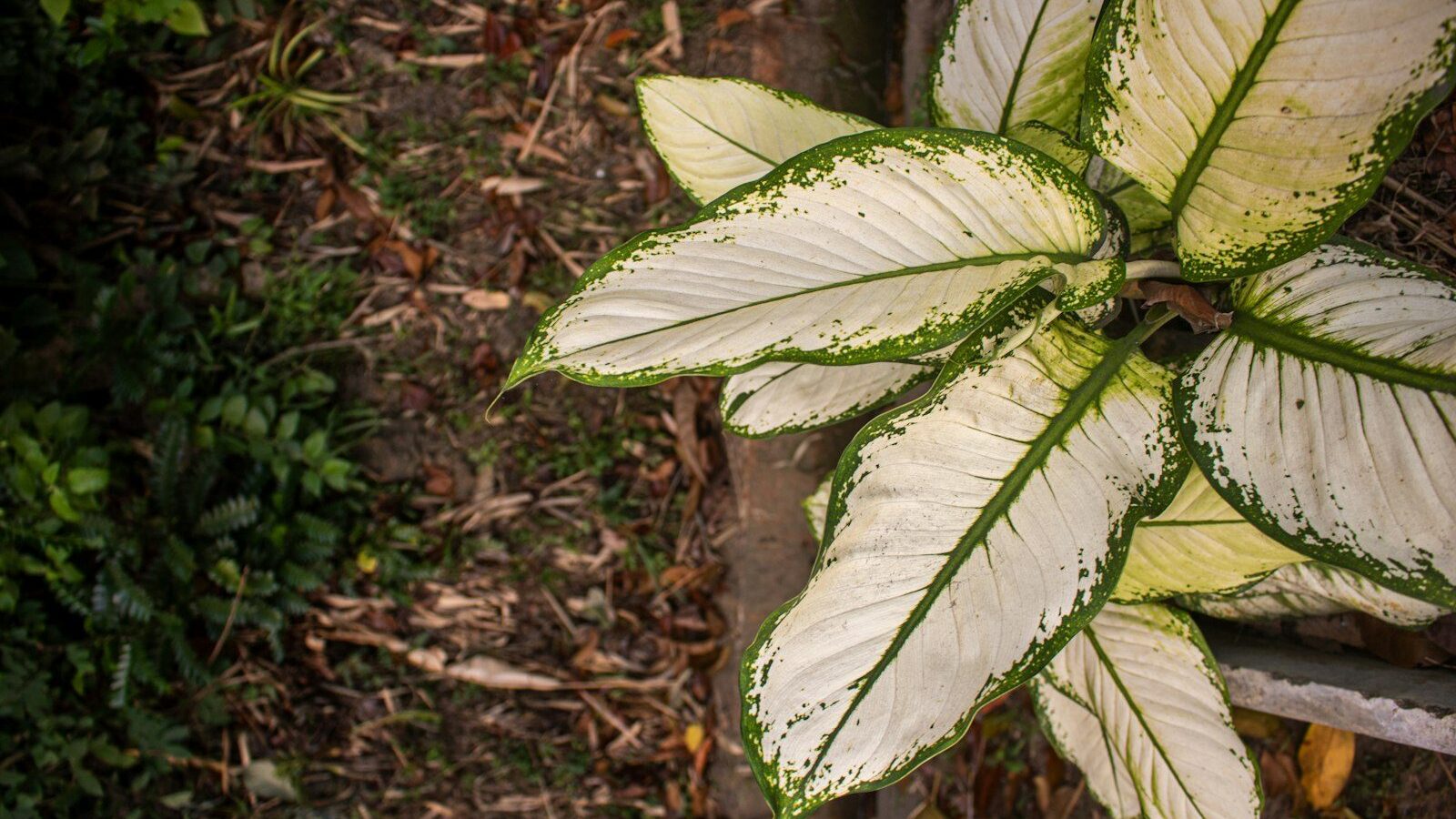
Dieffenbachia, better known as dumb cane, is one of the most forgiving large-leaved houseplants you can grow, which is exactly why it shows up in offices, lobbies, and living rooms everywhere. Give it bright indirect light, water it when the top inch of soil dries, and it rewards you with broad, paddle-shaped leaves splashed in cream, lime, and deep green. The catch is the sap: every part of the plant is loaded with calcium oxalate crystals, so it earns a hard place on the keep-away-from-pets-and-toddlers list. This guide walks through light, water, soil, humidity, feeding, propagation, the handful of problems that actually come up, and exactly how toxic it is.
Key Takeaways
- Light: bright, indirect light; tolerates medium light but variegation fades in shade and the stem stretches.
- Water: let the top 1–2 inches dry, then water thoroughly; roughly every 7–10 days in summer, less in winter.
- Soil: loose, well-draining peat- or coir-based mix with perlite; never let it sit in water.
- Humidity & temp: loves 50–60%+ humidity and 65–80°F; protect from drafts and cold below 60°F.
- Toxicity: toxic to cats, dogs, and humans — the sap causes intense mouth burning and temporary loss of speech (hence “dumb cane”).
Light requirements
Dieffenbachia performs best in bright, indirect light — think a spot a few feet back from an east- or west-facing window, or close to a north window that gets steady daylight. In that kind of light the leaves stay large, the variegation stays crisp, and the internodes (the gaps between leaves on the stem) stay short and compact. It will survive in medium to low light, which is why it does fine in interior office spaces, but two things happen as light drops: the cream-and-white variegation reverts toward plain green because the plant needs more chlorophyll to survive, and the stem stretches toward the nearest window, eventually flopping over.
Keep it out of direct midday sun. A few hours of gentle morning sun is tolerated, but harsh afternoon rays scorch the thin leaves, leaving bleached or crispy brown patches that never recover. If you only have a bright south window, set the plant back from the glass or filter the light with a sheer curtain. Rotate the pot a quarter-turn every week or two so it grows evenly instead of leaning. If your home is genuinely dim, a basic LED grow light on for 10–12 hours a day keeps the color and shape that a window can’t.
Watering
Overwatering is the number-one killer of dumb cane, so resist the urge to water on a fixed schedule. Instead, check the soil: push a finger in and water only when the top 1 to 2 inches feel dry. In a bright, warm spot during the growing season that usually lands around once every 7 to 10 days; in winter, when growth slows and light is weaker, it can stretch to every two to three weeks. When you do water, water thoroughly — pour until it runs freely from the drainage holes, then empty the saucer so the roots are never sitting in standing water.
Dieffenbachia is mildly sensitive to the fluoride, chlorine, and salts in some tap water, which can show up as brown leaf tips and edges. If your tap is heavily treated, let water sit out overnight before using it, or switch to filtered or rainwater. Soggy soil leads straight to root rot — the first signs are yellowing lower leaves and a soft, mushy stem base. If the soil never seems to dry out, you are watering too often, the pot is too large, or drainage is poor; fix all three before the rot spreads.
Soil and potting
Use a loose, fast-draining potting mix that still holds some moisture. A reliable blend is two parts standard peat- or coir-based houseplant potting soil to one part perlite, with a handful of orchid bark or coarse sand mixed in for extra aeration. That structure lets excess water drain away quickly while keeping the root zone evenly damp. Whatever container you choose, it must have drainage holes — a decorative pot with no hole is a root-rot trap.
Repot every one to two years in spring, or whenever you see roots circling the surface or escaping the drainage holes. Step up just one pot size (roughly two inches wider in diameter); too large a pot holds excess soil and water and slows the plant down. When you unpot it, gently tease apart the outer roots, set the plant at the same depth it grew before, and firm fresh mix around it. For more on getting the basics right across your whole collection, see our Plants & Flowers guides.
Humidity and temperature
As a tropical plant native to the understory of Central and South American forests, dieffenbachia is happiest with humidity around 50 to 60 percent or higher. In a dry home — especially in winter with the heat running — the leaf tips and margins turn brown and papery. Raise local humidity by grouping plants together, setting the pot on a pebble tray filled with water (the pot sits on the pebbles, above the waterline), or running a small humidifier nearby. Misting helps briefly but evaporates fast, so it’s the weakest option.
Keep temperatures between 65 and 80°F. Dieffenbachia has no cold tolerance: anything below about 60°F stresses it, and a cold draft, an open winter window, or a spot near an air-conditioning vent can trigger sudden leaf drop or dark, water-soaked spots. Equally, keep it away from radiators, heating vents, and hot appliances that dry it out. A stable, room-temperature corner away from doors that open to the outside is ideal.
Feeding
Dumb cane is a moderate feeder. During the active growing season from spring through early fall, feed every four weeks with a balanced liquid houseplant fertilizer (something like a 10-10-10 or 20-20-20) diluted to half the label strength. Half strength matters — full-strength salts build up in the soil and burn the roots, which again shows as brown leaf tips. Always apply fertilizer to already-moist soil, never to bone-dry roots.
Stop feeding in late fall and through winter when growth naturally pauses; fertilizing a resting plant just adds salts it can’t use. If you see a crusty white buildup on the soil surface or pot rim, that’s accumulated mineral salt — flush the pot by running water through it for a couple of minutes, letting it drain completely, and easing back on the feeding rate.
Pruning and shaping
Over time a dieffenbachia tends to drop its lower leaves and grow a bare, leggy cane with a tuft of foliage on top. You can rejuvenate it by cutting the stem back hard — even down to a 4- to 6-inch stub. It looks drastic, but the remaining cane will push out new shoots from dormant buds, often two or three, giving you a fuller, bushier plant. Spring is the best time for hard pruning so the plant has a full season to recover.
Always wear gloves when cutting, use clean, sharp shears, and keep your hands away from your eyes and mouth — the sap is an irritant (more on that below). Wipe the blade and wash your hands afterward. Routinely snip off any fully yellowed or damaged leaves at the base to keep the plant tidy and direct energy to healthy growth.
Propagation
The pieces you remove during pruning are perfect for propagation, and dieffenbachia is genuinely easy to multiply. The most reliable method is the stem cutting. Cut a 4- to 6-inch section of healthy cane that includes at least one or two nodes (the slightly raised bumps where leaves emerged). You can root it two ways:
Tip cuttings in water or soil
Take a top cutting with a couple of leaves, let the cut end air-dry for an hour or two so the sap seals, then place it in a glass of water or insert it into moist potting mix. In water, change it every few days; roots typically appear in two to four weeks, after which you can pot it up.
Cane sections (horizontal rooting)
Cut the leafless cane into 2- to 3-inch segments, each with a node. Lay each segment horizontally on top of moist soil, pressing it halfway in with the node facing up. Cover with a clear bag or dome to hold humidity and keep it warm and bright but out of direct sun. New shoots and roots emerge from the nodes over several weeks. This is how a single tall, leggy plant becomes several new ones.
Common problems and pests
Yellowing lower leaves almost always mean overwatering or poor drainage — let the soil dry more between waterings and confirm the pot drains. A few yellow leaves at the very bottom on an otherwise healthy plant is just normal aging. Brown, crispy tips and edges point to low humidity, salt buildup from over-fertilizing, or sensitivity to tap water; raise humidity and flush the soil. Drooping or curling leaves usually signal underwatering or cold stress, while sudden leaf drop follows a cold draft.
On the pest front, watch for spider mites (fine webbing and stippled, faded leaves, common in dry air), mealybugs (white cottony clusters in leaf joints), and the occasional scale or aphid. Treat early by wiping leaves down and applying insecticidal soap or neem oil, repeating weekly until the infestation clears. Mushy, dark stem bases mean root or stem rot from overwatering — at that point, take a healthy top cutting and start over, because a rotted base rarely recovers. Catching pests early is far easier than fighting an outbreak; check the undersides of leaves whenever you water.
Pet and child safety
This is the most important section. Dieffenbachia is toxic to cats, dogs, and people. Every part of the plant contains insoluble calcium oxalate crystals plus proteolytic enzymes. When chewed, those crystals embed in the soft tissues of the mouth, tongue, and throat, causing immediate intense burning, drooling, swelling, vomiting, and difficulty swallowing. The common name “dumb cane” comes from the temporary loss of speech that can follow from a swollen tongue and throat. In rare cases, severe swelling can interfere with breathing.
Keep this plant well out of reach of pets and small children, place it on a high shelf or in a room they can’t access, and wash your hands after handling it. If a pet or child chews any part, rinse the mouth with water or milk and contact your veterinarian, the ASPCA Animal Poison Control Center, or a poison control hotline right away. If you want greenery in a pet-heavy household, choose a non-toxic plant instead and browse our other houseplant care guides for safer options.
Frequently Asked Questions
How often should I water a dieffenbachia?
Water when the top 1–2 inches of soil feel dry — typically every 7–10 days in the warm growing season and every 2–3 weeks in winter. Always water thoroughly until it drains, then empty the saucer. Let the soil dry slightly between waterings rather than following a rigid schedule.
Why are the leaves on my dumb cane turning yellow?
The most common cause is overwatering or poor drainage. Let the top couple of inches dry out, make sure the pot has drainage holes, and check for a mushy stem base. A few yellow leaves at the very bottom of an otherwise healthy plant is just normal aging.
Is dieffenbachia toxic to cats and dogs?
Yes. All parts contain calcium oxalate crystals that cause intense mouth and throat burning, drooling, vomiting, and swelling if chewed. Keep it out of reach of pets and children, and contact a vet or poison control immediately if any is ingested.
How do I make a leggy dieffenbachia bushier?
Cut the bare cane back hard in spring — even to a 4–6 inch stub. The remaining stem will push out multiple new shoots, giving you a fuller plant. You can root the cut sections to make new plants. Wear gloves, since the sap is an irritant.
Why are the tips of my dieffenbachia leaves turning brown?
Brown, crispy tips usually mean low humidity, salt buildup from over-fertilizing, or sensitivity to fluoride and chlorine in tap water. Raise humidity to 50–60%, flush the soil to clear salts, feed at half strength, and consider filtered or rainwater.
Dieffenbachia is about as low-maintenance as a dramatic, large-leaved tropical gets: steady indirect light, water only when the topsoil dries, decent humidity, and a half-strength feed in the growing season. Mind the toxic sap, keep it away from curious pets and kids, and this plant will hold its bold variegated foliage for years.