

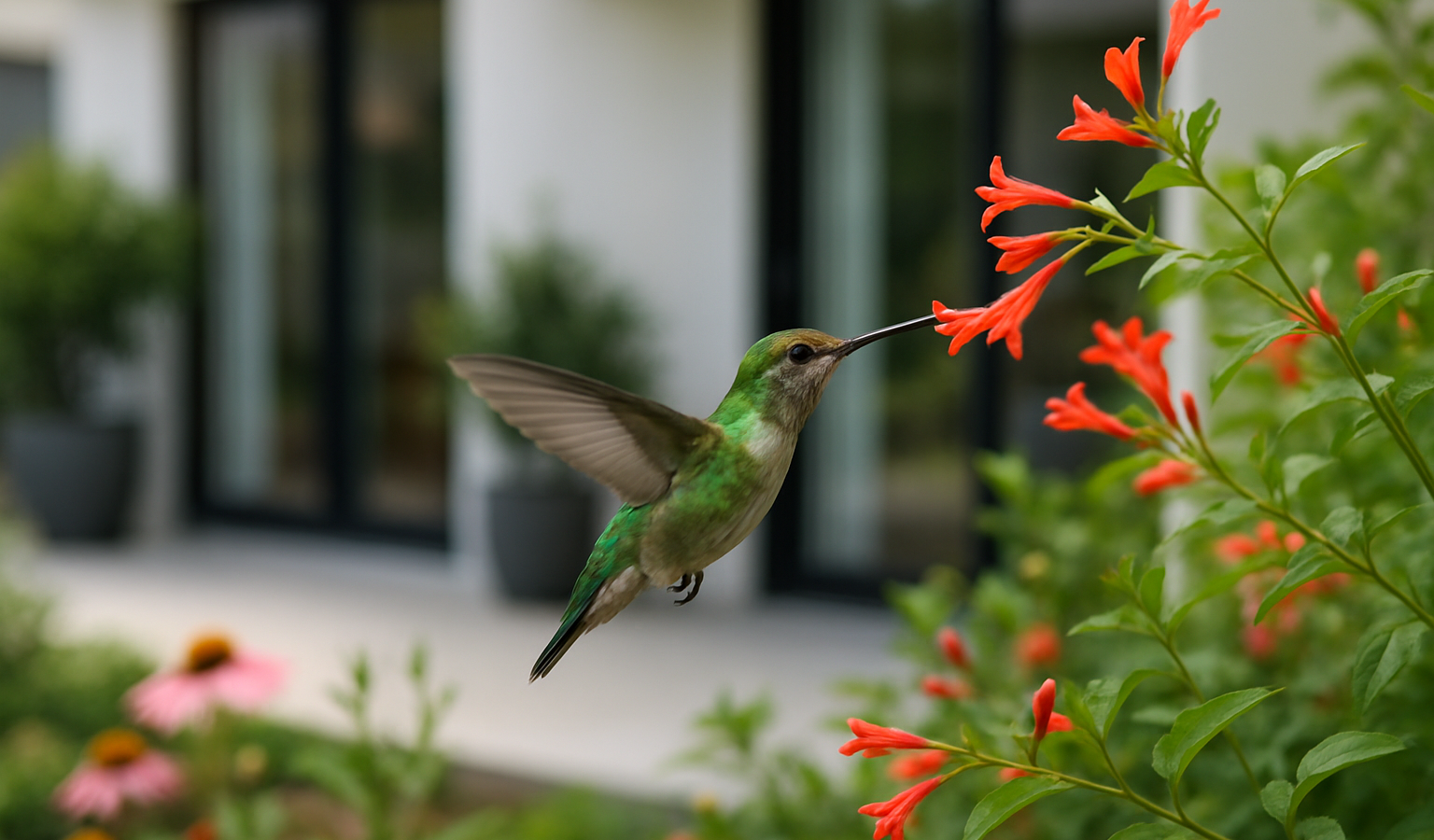
Hummingbirds are pure garden magic — iridescent, impossibly fast, and bold enough to hover inches from your face. Drawing them in is easier than most people think, and it rests on understanding what these tiny, high-metabolism birds actually need. A hummingbird’s heart beats over a thousand times a minute and it must eat constantly, visiting hundreds of flowers a day, so the formula for attracting them is built around fuel: a planting of tubular, nectar-rich, red and orange flowers, backed up by a properly maintained sugar-water feeder, with perches to rest on, a source of moving water, and a strict no-pesticide rule so the small insects they also rely on for protein survive. This guide covers each piece in detail, including the exact sugar-to-water ratio for feeders and the maintenance schedule that keeps them safe, so you can turn your yard into a regular stop on the hummingbird circuit.
Key Takeaways
- Plant tubular red and orange flowers: hummingbirds are drawn to red and feed from deep, tube-shaped blooms other pollinators can’t reach.
- Feeders work — if maintained: use a 4:1 water-to-white-sugar ratio, no dye, and clean and refill every 2–3 days in heat.
- Add perches: hummingbirds spend most of the day resting, so nearby twigs and thin branches keep them in your yard.
- Offer moving water — a mister, dripper, or fountain attracts them far more than still water.
- No pesticides: hummingbirds need small insects for protein, and sprays poison both the bugs and the birds.
Plant Tubular, Nectar-Rich Flowers
The foundation of any hummingbird garden is the right flowers. Hummingbirds have long bills and even longer tongues, perfectly shaped to probe deep, tubular flowers that hold nectar out of reach of most other pollinators. They are strongly drawn to the color red, and also to orange, pink, and purple — but red is the headline, which is why so many hummingbird flowers are scarlet. They have little sense of smell, so showy color matters more than fragrance. As with any pollinator garden, plant for a long succession of bloom so nectar is available from the moment they arrive in spring through their fall migration, and plant in generous groupings they can spot from the air.
- Perennials: bee balm (monarda), cardinal flower (Lobelia cardinalis), columbine, coral bells (heuchera), penstemon, salvia, and hosta flowers.
- Vines: trumpet vine (Campsis), trumpet honeysuckle (Lonicera sempervirens), and cypress vine — vines are hummingbird favorites for their abundant tubular blooms.
- Annuals: fuchsia, petunias, cuphea (cigar plant), zinnias, and red salvia.
- Shrubs: weigela, flowering quince, and butterfly bush.
Native plants are especially valuable because native hummingbirds evolved with them. Coral honeysuckle, cardinal flower, and native salvias are reliable magnets. For one excellent option, see our guide on how to grow coral bells (heuchera), a hummingbird-friendly perennial.
Add a Feeder — and Maintain It Properly
A nectar feeder supplements your flowers and gives hummingbirds a reliable reason to keep returning, especially before your blooms open in spring and after they fade in fall. But a poorly maintained feeder does more harm than good, so getting the details right is essential.
The Right Nectar Ratio
Make your own nectar — it is cheap, easy, and safer than store-bought. The correct recipe is a 4:1 ratio of water to plain white granulated sugar (one part sugar to four parts water), which closely matches the sugar concentration of natural flower nectar. Dissolve the sugar fully — warming the water helps — then let it cool to room temperature before filling the feeder. Follow these rules strictly:
- Use only plain white cane sugar. Never use honey (which ferments and grows deadly mold), brown sugar, raw sugar, or any artificial sweetener.
- Never add red dye. It is unnecessary and potentially harmful; a feeder with red parts is enough to attract them.
- Keep it clean. Empty, rinse, and refill the feeder every 2–3 days in warm weather (every 4–5 in cool weather), because sugar water ferments and grows mold quickly in heat. Clean the feeder thoroughly with hot water — and vinegar or a weak bleach rinse periodically — to prevent deadly fungus.
- Hang it in the shade if possible to slow spoilage, and only fill it as much as the birds drink in a few days to avoid waste.
Hummingbirds are territorial, so if one bully is monopolizing a feeder, hang several feeders out of sight of one another to let more birds share. Put feeders up early in spring to catch the first arrivals, and leave them out a couple of weeks after you last see a bird in fall to fuel migrating stragglers.
Provide Perches
It surprises many people, but hummingbirds spend the great majority of their day — as much as 75–80% — perched and resting, not flying. Hovering burns enormous energy, so between feeding bouts they rest on twigs and survey their territory. Providing perches near your flowers and feeders is therefore a powerful and easy way to keep hummingbirds in your yard rather than just passing through. Leave some thin, exposed twigs and small bare branches on trees and shrubs where a hummingbird can sit in the open and watch over its food sources; they favor high, clear vantage points. A simple length of thin wire or a slender stake placed near a feeder gives them a spot to land. Taller shrubs and small trees nearby also offer shelter from wind and predators and places to nest. A yard with good perching spots, sheltered greenery, and food close together is one a hummingbird will adopt as home turf and defend daily.
Offer Moving Water
Hummingbirds drink mostly from nectar, but they love to bathe, and the key is movement. A standard deep birdbath is too big and still for these tiny birds — they prefer to fly through fine spray or skim across a thin, moving sheet of water. The most effective option is a mister or fine-spray fountain attachment, which creates a cloud of droplets hummingbirds will dart through to bathe on the wing. A gentle dripper that drops water onto a leaf or a shallow basin, or a small fountain with moving water, works well too. The sound and sparkle of moving water draws them in from a distance far more than a still bath would. Place the water feature near your flowers and perches, in part shade, and keep it clean and topped up. Even a shallow saucer with a solar bubbler or a dripping hose can do the trick. Adding moving water often noticeably increases hummingbird activity in a garden that already has the flowers and feeders in place.
Skip the Pesticides
Nectar fuels hummingbirds, but it is not their whole diet — they need protein, which they get by eating tiny insects and spiders: gnats, fruit flies, aphids, mites, and small soft-bodied bugs. Insects are essential, especially for females feeding their young. This is exactly why pesticides are so damaging in a hummingbird garden. Insecticides wipe out the small insects hummingbirds depend on for protein, and the birds can also be poisoned directly or by eating contaminated prey. A garden sprayed clean of bugs is a garden with nothing for a hummingbird to feed its chicks. So garden without pesticides: tolerate a healthy population of small insects as a feature, not a flaw, and let the birds and other natural predators keep them in balance. Leaving aphids and gnats around is, counterintuitively, part of a thriving hummingbird habitat. As a bonus, a pesticide-free garden also protects the bees and butterflies sharing your space.
Putting It All Together
To bring hummingbirds to your garden and keep them coming back, give them everything their fast-burning lives demand. Plant a long-blooming succession of tubular, nectar-rich flowers heavy on red and orange — bee balm, cardinal flower, salvia, trumpet vine, coral honeysuckle. Hang a feeder of homemade 4:1 sugar water with no dye, and clean and refill it every few days without fail. Provide open perches near the food, offer moving water through a mister or dripper, and never spray pesticides, so the small insects they need for protein survive. Even a balcony with a couple of red-flowered pots and a small clean feeder can attract them. Set this up and a hummingbird will quickly add your garden to its daily route — and once it does, you will find yourself watching for that iridescent flash all summer long. For more ways to bring wildlife to your yard, see our guide on how to attract butterflies to your garden.
Frequently Asked Questions
What is the correct hummingbird nectar recipe?
Mix four parts water to one part plain white granulated sugar (a 4:1 ratio), which matches natural flower nectar. Dissolve the sugar fully, cool to room temperature, and fill the feeder. Never use honey, brown sugar, artificial sweeteners, or red dye, and refill every 2–3 days in warm weather.
What flowers attract hummingbirds?
Tubular, nectar-rich flowers in red and orange are best — hummingbirds are strongly drawn to red. Top choices include bee balm, cardinal flower, salvia, columbine, coral bells, trumpet vine, and trumpet honeysuckle. Plant natives where possible and aim for blooms from spring through fall.
Do I need to add red dye to hummingbird nectar?
No — never add red dye. It is unnecessary and potentially harmful. The red parts of the feeder itself are enough to attract hummingbirds. Plain clear sugar water in a 4:1 ratio is all you need.
Why do hummingbirds need perches?
Hummingbirds spend most of their day — around 75–80% — perched and resting, because hovering burns so much energy. Providing thin, exposed twigs and small bare branches near your flowers and feeders gives them places to rest and watch their territory, which keeps them in your yard instead of just passing through.
Will pesticides hurt hummingbirds?
Yes. Hummingbirds need small insects and spiders for protein, especially when feeding young. Pesticides wipe out that food supply and can poison the birds directly or through contaminated prey. Garden pesticide-free and tolerate small insects like gnats and aphids — they’re part of a healthy hummingbird habitat.