

If you want the bold, peppery, unmistakable “pizza” flavor that defines real oregano, grow Greek oregano (Origanum vulgare subsp. hirtum). If you want a softer, sweeter, more rounded herb that behaves itself in the kitchen and blends into a wider range of dishes, grow Italian oregano (Origanum x majoricum), which is actually a hybrid of oregano and sweet marjoram. That is the short answer, and for most cooks the decision comes down to one question: how much punch do you want? Greek wins on intensity and cold-hardiness; Italian wins on subtlety and versatility but is a touch more tender. Everything below is the detail that helps you match the right oregano to your zone, your cooking, and your garden space.
Key Takeaways
- Flavor: Greek oregano is pungent, peppery and high in carvacrol; Italian is milder, sweeter and marjoram-soft.
- Identity: Greek is true oregano (O. vulgare subsp. hirtum); Italian is a hybrid of oregano and sweet marjoram (O. x majoricum).
- Hardiness: Greek is reliable in USDA Zones 5 to 10; Italian is more tender, roughly Zone 6 or 7 and warmer.
- Habit: Greek tends to sprawl into a low spreading mat; Italian grows more upright and compact.
- Best use: Greek for pizza, tomato sauce and Mediterranean cooking; Italian for milder, broader, everyday seasoning.
Greek Oregano (Origanum vulgare subsp. hirtum)
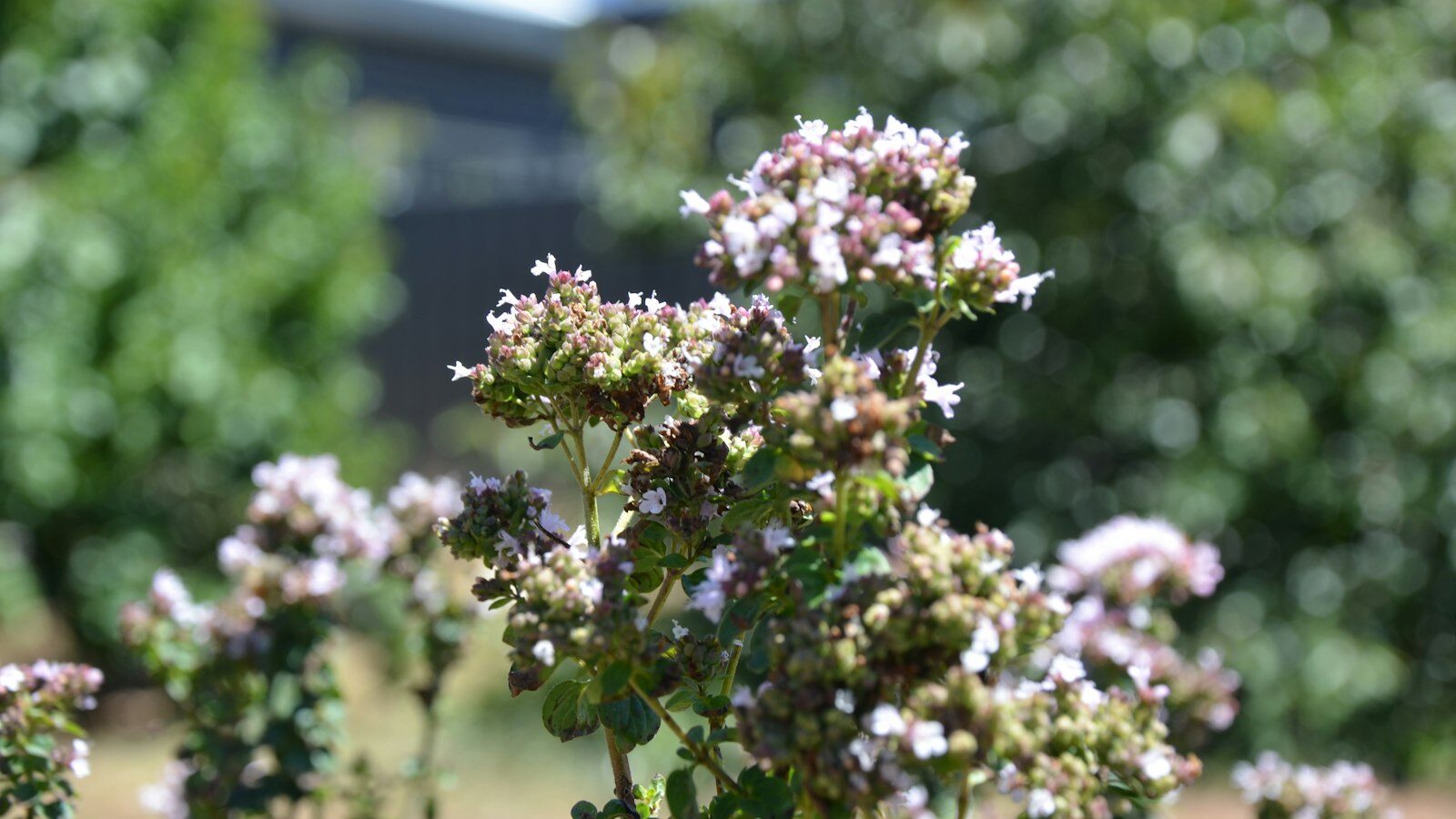
Greek oregano is the true “pizza” oregano, the one that gives that hot, peppery, almost spicy bite to a slice and the backbone to a long-simmered tomato sauce. Botanically it is a subspecies of common oregano, Origanum vulgare subsp. hirtum, and it is the type prized across the Mediterranean for both fresh use and drying. You can often recognize it by its slightly fuzzy, gray-green leaves and white flowers, as opposed to the pink or purple flowers of ornamental common oregano. If you have ever bought a plant simply labeled “oregano” and found it tasted weak or grassy, you almost certainly had plain O. vulgare rather than this hot-flavored subspecies. When you shop, look specifically for “Greek oregano,” “true Greek,” or the hirtum name on the tag.
The flavor intensity comes down to chemistry. Greek oregano is loaded with carvacrol, the volatile compound responsible for that warm, pungent, almost throat-catching pungency, along with thymol. High-carvacrol plants are what give dried oregano its punch, and it is the reason a good Greek oregano can carry a dish where a milder herb would simply disappear. The flavor actually concentrates and deepens when the leaves are dried, which is why oregano is one of the few culinary herbs that many cooks prefer dried over fresh. A little goes a long way: a teaspoon of well-grown, properly dried Greek oregano can season a whole pot of sauce.
Its second major advantage is toughness. Greek oregano is a hardy perennial across USDA Zones 5 to 10, surviving winters down to roughly minus 20 degrees Fahrenheit once established, especially with a little snow cover or a light winter mulch. In the garden it tends to sprawl, sending out low, trailing stems that root where they touch the soil and form a spreading, somewhat scruffy mat 8 to 18 inches tall and considerably wider. That sprawling habit makes it excellent as a low groundcover along a sunny path or tumbling over the edge of a raised bed, though it does mean you will want to keep an eye on its spread in a tidy herb garden.
How to grow Greek oregano
Like most Mediterranean herbs, Greek oregano lives and dies by sun and drainage. Give it full sun, six hours minimum and ideally eight or more, because sun is what drives the plant to produce the essential oils that carry the flavor; a shaded, overwatered oregano will grow lush and green but taste of almost nothing. Plant it in lean, gritty, well-drained soil with a neutral to slightly alkaline pH around 6.5 to 7.5, and avoid rich, heavy, or constantly wet ground, which invites root rot. Space plants 12 to 18 inches apart, water deeply but infrequently while they establish, then back off, because mature oregano is genuinely drought-tolerant and prefers to dry out between waterings.
For the best flavor, harvest leaves just before the plant flowers, when the concentration of carvacrol in the foliage peaks; once oregano blooms, the leaves turn slightly bitter and lose some of their punch. Shear the plant back by about a third before or at the first sign of flowering, both to trigger fresh tender growth and to bank a harvest for drying. To dry it, hang small bundles upside down in a warm, dark, airy spot for one to two weeks, then strip the leaves and store them whole in a sealed jar, crushing them only as you cook. Cut the whole plant back hard in late fall or early spring to keep it from turning woody.
Italian Oregano (Origanum x majoricum)
Italian oregano is the gentler, more refined option, and it is genuinely a different plant rather than just a different cultivar. It is a hybrid, Origanum x majoricum, a cross between true oregano and sweet marjoram (Origanum majorana), and that parentage shows up directly in the flavor. It carries the recognizable warmth of oregano but softened and sweetened by the floral, slightly piney, balsamic notes of marjoram. The result is a milder, rounder, more aromatic herb that lacks the sharp peppery bite of Greek oregano. Cooks who find true Greek oregano too aggressive or who want an herb that will not dominate a dish often reach for Italian oregano instead.
Because its carvacrol content is lower and balanced by marjoram’s sweeter compounds, Italian oregano is far more forgiving in the kitchen. You can use a heavier hand without overpowering a sauce, and it folds nicely into egg dishes, dressings, marinades, roasted vegetables, and lighter tomato preparations where a hit of pungent Greek oregano would be too much. It is also a little prettier and better-behaved in the garden than its sprawling cousin. Italian oregano grows in a more upright, compact, shrubby form, typically 12 to 24 inches tall, with neat green leaves and small white flowers, which makes it a tidier candidate for a formal herb bed or a container on the patio.
The trade-off for that softer flavor and tidier shape is reduced cold-hardiness, inherited from its tender marjoram parent. Italian oregano is reliably perennial only to about USDA Zone 6 or 7 and warmer, and it is more likely than Greek oregano to be damaged or killed in a hard, wet winter. In Zone 5 and colder, treat it as you would marjoram: grow it as an annual, take cuttings in late summer, or pot it up and overwinter it on a bright, cool windowsill or in a frost-free greenhouse. Its more upright, container-friendly habit actually makes that overwintering routine fairly painless.
How to grow Italian oregano
The cultural needs mirror Greek oregano almost exactly: full sun, sharp drainage, and lean soil are the holy trinity. Give it at least six to eight hours of direct sun to build up the aromatic oils, plant it in gritty, well-drained soil around pH 6.5 to 7.5, and water deeply but let it dry between drinks. Because Italian oregano is more tender, pay extra attention to winter drainage in particular; cold combined with soggy soil is what kills it, so a raised bed, a mound, or a container with gravelly mix gives it the best odds of returning. Space upright plants about 12 inches apart.
Harvest the same way you would Greek oregano: snip stems regularly, and take your biggest cutting just before the plant flowers, when flavor is at its peak. Frequent harvesting and a light shear keep the plant compact and pushing tender new leaves rather than running to flower and turning woody. Italian oregano dries well, though because it is milder you will generally use more of it than you would Greek. Hang bundles in a warm, dark, airy place, then strip and jar the leaves whole. In containers, refresh the top inch of mix each spring and do not overfeed; too much nitrogen produces soft, flavorless growth that is also more prone to winter damage.
Head-to-Head Comparison
| Feature | Greek (O. vulgare subsp. hirtum) | Italian (O. x majoricum) |
|---|---|---|
| Identity | True oregano subspecies | Oregano x sweet marjoram hybrid |
| Flavor | Pungent, peppery, bold | Mild, sweet, marjoram-soft |
| Carvacrol / punch | High, the “pizza” oregano | Lower, gentler aroma |
| USDA hardiness | Zones 5 to 10 | Zones 6 or 7 and warmer |
| Growth habit | Low, sprawling, spreading mat | Upright, compact, shrubby |
| Mature size | 8 to 18 in. tall, wide spread | 12 to 24 in. tall, tidier |
| Best use | Pizza, tomato sauce, Greek dishes | Milder everyday seasoning |
The Verdict: Which Should You Grow?
If you want bold pizza and tomato-sauce flavor, grow Greek oregano, full stop. Its high carvacrol content delivers the hot, peppery, classic oregano bite that defines Italian-American pizza, marinara, and Greek dishes like roasted lemon potatoes and grilled lamb. It is the oregano whose flavor actually improves when dried, so it is also your best choice if you plan to stock your own dried-herb jar. Nothing else on this list will give you that unmistakable punch.
If you want a milder, more versatile cooking herb, grow Italian oregano. Its marjoram-softened sweetness makes it easier to use across a wide range of dishes without overwhelming them, and it is the better pick if you have found true Greek oregano too aggressive in the past. Many cooks who season with a lighter hand simply prefer it for everyday food. For ideas on weaving culinary herbs into edible borders and beds, see our guide to plants and flowers.
If you garden in a cold zone (Zone 5 or colder), choose Greek oregano for the ground, since it is the hardier of the two and will reliably return year after year; treat Italian oregano as an annual or overwintered pot. If you are growing in a container or a tidy herb garden, Italian oregano’s upright, compact habit is the easier fit, while sprawling Greek oregano is better turned loose as a fragrant groundcover or allowed to tumble over a wall. Plenty of gardeners with room simply grow both, Greek for bold flavor and drying, Italian for gentle everyday use. For more on laying out a low-water, sun-loving herb area, browse our outdoor living ideas.
Frequently Asked Questions
Which oregano is best for pizza and pasta sauce?
Greek oregano (Origanum vulgare subsp. hirtum). Its high carvacrol content gives the bold, peppery, classic “pizza” flavor that stands up to long-simmered tomato sauces and melted cheese, where milder Italian oregano can get lost.
Is Italian oregano really oregano?
Not exactly. Italian oregano (Origanum x majoricum) is a hybrid between true oregano and sweet marjoram, so it tastes like a milder, sweeter oregano with marjoram’s floral notes rather than the sharp pungency of true Greek oregano.
Which oregano is more cold-hardy?
Greek oregano, which is reliable in USDA Zones 5 to 10. Italian oregano inherits tenderness from its marjoram parent and is only dependable to about Zone 6 or 7, so colder gardeners should grow it in pots or as an annual.
When should I harvest oregano for the best flavor?
Harvest just before the plant flowers, when the leaves hold the most carvacrol and aromatic oils. Once oregano blooms, the leaves turn slightly bitter and lose punch, so shear the plant back at the first sign of flower buds.
Why does my oregano have no flavor?
Usually too little sun or too much water and feeding. Sun and lean, well-drained soil drive the essential oils that carry flavor, while shade, soggy ground, and excess nitrogen produce lush but bland leaves. Also check that you have true Greek oregano, not plain ornamental O. vulgare.