

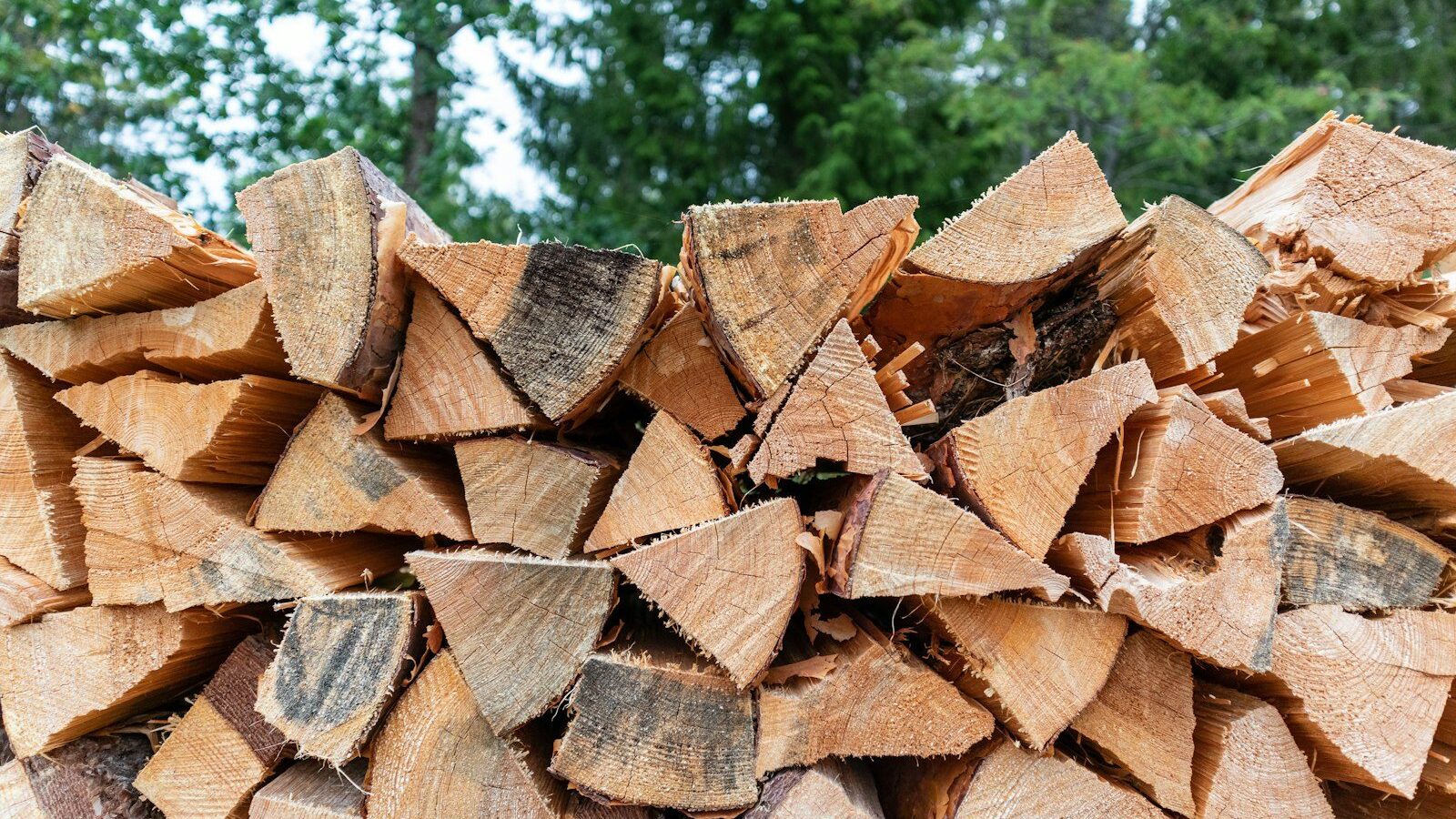
The right log splitter is matched to two numbers: how much wood you process a year, and how thick and gnarly that wood is. A homeowner burning two cords of straight-grained pine needs nothing like the machine a property owner splitting twenty cords of knotty oak does. Tonnage handles diameter and hardness; cycle time decides how fast you work; and the power source — electric, gas, kinetic or muscle — sets the cost and where you can use it. Here are the seven best log splitters for 2026.
As an Amazon Associate we earn from qualifying purchases. This page contains affiliate links at no extra cost to you.
Key Takeaways
- Tonnage scales with log diameter and hardness. 5–7 tons handles softwood up to ~10″; 20–25 tons covers most hardwood; 25+ tons for large, knotty rounds.
- Cycle time is the real productivity number. Kinetic splitters cycle in 2–3 seconds versus 10–20 for hydraulics — huge over a full cord.
- Electric is clean and quiet for garage/cord-per-year use; gas is for high volume and off-grid work.
- Match the machine to your wood volume. Most homeowners are over-served by a 25-ton gas splitter and well served by a 7-ton electric or a kinetic.
Quick Comparison
| Splitter | Best For | Key Spec |
|---|---|---|
| WEN 56207 Electric | Best overall (electric) | 6.5-ton, 20.5″ logs |
| Boss Industrial ES7T20 | Premium electric | 7-ton electric |
| Champion 25-Ton Gas | High-volume hardwood | 25-ton, 224cc gas |
| YARDMAX YS0552 Kinetic | Fastest cycle time | 5-ton kinetic, ~2s cycle |
| Sun Joe LJ10M Manual | Budget / light use | 10-ton hydraulic manual |
| PowerSmart 7-Ton Electric | Best value electric | 7-ton, 15A motor |
| Champion 7-Ton Towable Gas | Portable mid-duty | 7-ton, 80cc, towable |
| Champion 27-Ton Kinetic-Hybrid Gas | Big knotty wood, fast | 27-ton gas, dual-action |
1. WEN 56207 Electric — Best Overall
The WEN 56207 is the electric splitter most homeowners should buy first. Its 6.5-ton ram handles logs up to 20.5 inches long and roughly 10 inches across, the 15-amp motor runs off a standard outlet, and it rolls on built-in wheels so you can move it from shed to woodpile. No fumes, no pull-start, no fuel — just plug in and split.
It will stall on big knotty oak, but for the seasoned hardwood and softwood a typical wood-burning household processes, it is the right blend of capability, price and convenience.
The practical appeal is that it lets you split in places a gas machine cannot go — inside an open garage on a rainy weekend, or right next to the wood stove — with no fumes to vent and no pull cord to fight. The two-handed control scheme (one hand on the lever, one on the button) keeps both hands clear of the wedge, which is a genuine safety advantage. Cycle time is the honest weakness: at roughly 18 to 20 seconds out-and-back per stroke, it is slow next to a kinetic splitter, so you settle into a steady rhythm rather than racing. For the one-to-three cords a year that most households burn, that pace is fine. Keep a long, heavy-gauge extension cord rated for 15 amps so the motor gets full voltage; a thin cord will cause it to lug and overheat.
Pros
- Plug-in, no fuel or fumes
- Handles 20.5″ logs on a 15A circuit
- Wheels for easy repositioning
Cons
- 6.5 tons struggles on large knots
- Tethered to an outlet
2. Boss Industrial ES7T20 — Best Premium Electric
The Boss Industrial ES7T20 steps up to 7 tons with a heavier-built frame and a smoother hydraulic action than budget electrics. It splits up to 20.5-inch logs, runs on standard household power, and the build quality means it shrugs off seasons of use that wear out lesser machines.
You pay more than for the WEN, but if you want an electric that feels closer to a gas unit in stoutness, this is it.
Pros
- Sturdy, durable frame
- Smooth 7-ton hydraulic action
- Quiet, fume-free operation
Cons
- Higher price than budget electrics
- Still corded and tonnage-limited
3. Champion 25-Ton Gas — Best for High-Volume Hardwood
When you split many cords of knotty oak, hickory or elm, you need gas tonnage. Champion’s 25-ton splitter with a 224cc engine powers through large, gnarly rounds that stall any electric, converts from horizontal to vertical for huge logs you cannot lift, and tows behind a vehicle at low speed to move between piles.
It is loud, needs fuel and maintenance, and is overkill for a cord a year — but for serious firewood production it is the workhorse.
The vertical mode is the feature that saves your back: instead of lifting a 150-pound oak round onto a horizontal beam, you tip the splitter upright, roll the round against the foot plate, and split it on the ground. For the largest, gnarliest rounds that is the difference between a manageable day and an injury. The 25 tons of force rarely stalls, even where the grain twists around a knot, and the auto-return ram and detent valve mean you can set the lever and let it cycle while you reposition the next piece. Expect the usual small-engine upkeep — oil changes, fresh fuel or stabilizer, an air filter — and a hydraulic system that wants its fluid and filter checked each season. At well over 400 pounds it is not something you wheel around casually, but the integrated tongue and tires make towing it to the woodpile straightforward.
Pros
- 25 tons splits big knotty hardwood
- Horizontal/vertical operation
- Towable for moving between piles
Cons
- Loud, with fuel and maintenance
- Heavy and overkill for low volume
4. YARDMAX YS0552 Kinetic — Fastest Cycle Time
Kinetic splitters trade hydraulic tonnage for flywheel-stored energy and blistering speed. The YARDMAX YS0552 cycles in roughly 2–3 seconds versus 10–20 for hydraulics, so over a full cord of straight-grained wood it can out-produce a higher-tonnage hydraulic machine. The auto-return ram keeps you feeding logs without waiting.
It is less effective on heavily knotted rounds where raw force matters more than speed, but for clean firewood at volume, the cycle time is a game-changer.
Pros
- ~2–3 second cycle, very fast
- Auto-return ram speeds feeding
- High output on straight-grained wood
Cons
- Struggles on heavy knots
- Premium price for the speed
Free, no-obligation quote · Connect with a local pro
5. Sun Joe LJ10M Manual — Best Budget / Light Use
For a campsite, occasional kindling, or a small wood stove, a manual hydraulic splitter like the Sun Joe LJ10M delivers up to 10 tons of force through two hand levers — no power source at all. It is quiet, maintenance-light, and packs away small.
It is slow and you supply the muscle, so it is not for volume, but for a few logs at a time it is the cheapest, most portable way to split wood.
Pros
- No power needed — fully portable
- Inexpensive and quiet
- 10 tons via hand levers
Cons
- Slow and physically demanding
- Not for any real volume
6. PowerSmart 7-Ton Electric — Best Value Electric
The PowerSmart 7-ton electric splitter delivers a tier of force above the entry models at a budget-friendly price. The 15-amp motor plugs into household power, the steel wedge handles seasoned hardwood up to its capacity, and built-in wheels and a stand make it usable without a separate work table.
Fit and finish are basic and it is corded like all electrics, but for the homeowner who wants 7 tons without the Boss price tag, the value is hard to beat.
Pros
- 7 tons at a budget price
- Standard outlet, no fuel
- Wheels and stand included
Cons
- Basic build quality
- Corded and tonnage-limited
7. Champion 7-Ton Towable Gas — Best Portable Mid-Duty
If you split wood away from an outlet — at a cabin, a back lot, or a friend’s property — the Champion 7-ton towable gas splitter gives you go-anywhere portability with an 80cc engine and a 1-7/8-inch ball coupler for towing at low speed. It bridges the gap between corded electrics and big 25-ton machines.
It needs fuel and a bit of upkeep, and 7 tons is mid-duty, but for mobile firewood work at moderate volume it is a practical, affordable choice.
Pros
- Towable, works off-grid
- Gas power without 25-ton bulk
- Reasonable price for portability
Cons
- Fuel and engine maintenance
- 7 tons limits big knotty rounds
8. Champion 27-Ton Dual-Action Gas — Best Speed Plus Force
For the homeowner who splits a lot of big, knotty hardwood and resents the slow hydraulic cycle, a 27-ton dual-action gas splitter is the answer that refuses to compromise. The 27 tons of hydraulic force muscles through the gnarliest oak and elm rounds that defeat kinetic and low-tonnage machines, while the dual-action wedge splits on both the forward stroke and the return — effectively halving the dead time of a single-action ram and closing much of the gap to a kinetic splitter on cycle speed.
It converts between horizontal and vertical operation for rounds too heavy to lift, tows behind a vehicle, and runs a stout overhead-valve engine. The trade-offs are the familiar ones for a big gas machine: real weight, fuel and hydraulic maintenance, noise, and a price that only pays off if you process many cords a year. But for high-volume firewood work where both force and speed matter, it is the most productive single tool here.
Pros
- 27 tons plus a split-on-return dual-action ram
- Horizontal/vertical conversion and towable
- Splits big knotty wood faster than standard hydraulics
Cons
- Heavy, loud, and needs engine and hydraulic upkeep
- Overkill and pricey for low-volume users
How to Choose a Log Splitter: Buyer’s Guide
Size tonnage to your wood. Softwood and clean rounds up to about 10 inches split fine at 5–7 tons. Most seasoned hardwood is comfortable at 20–25 tons. Large, knotty, green or twisted rounds want 25 tons or more. Buying excessive tonnage just adds weight, cost and fuel use.
Weigh cycle time against force. Hydraulic splitters take 10–20 seconds per stroke; kinetic flywheel splitters cycle in 2–3 seconds. For high volumes of straight-grained wood, a kinetic can out-produce a stronger hydraulic. For knotty wood, raw tonnage wins.
Pick a power source by volume and location. Electric is clean, quiet and ideal for a cord or two a year near an outlet. Gas is for high volume and off-grid work. Manual is for occasional kindling and ultimate portability.
Consider log handling. Horizontal-only splitters require lifting every round onto the beam; horizontal/vertical machines let you roll heavy logs and split them on the ground. Log cradles or wings that catch the split halves save you bending to pick pieces off the floor, and a 4-way wedge (on machines with the tonnage to drive it) quarters a round in a single stroke for kindling and small splits.
Use it safely. A log splitter applies tons of force a few inches from your hands, so the rules are not optional. Keep it a strictly one-person job — the operator runs both the control and the wood, never a helper holding the log. Place hands on the ends of the round, never the sides where they can be pinched against the wedge or beam. Wear safety glasses and gloves, set the machine on level ground, and keep children and pets well back. Never reach across the beam while the ram is moving.
Plan for maintenance. Hydraulic splitters need their fluid level checked and the filter changed periodically; gas models add engine oil, air filter, spark plug and fuel care. Before winter storage, stabilize or drain the fuel on gas units, wipe the ram and wedge, and store electrics indoors. Season your wood before splitting where you can — wood splits more cleanly when it has dried somewhat, and once split it dries far faster for the stove. Once your wood is split, our guide to building a fire pit gives it a home, and the best chainsaws for homeowners roundup covers the bucking step. Browse more in the Tools & Gear hub.
Frequently Asked Questions
How many tons do I need to split firewood?
For softwood and clean hardwood up to about 10 inches, 5–7 tons is enough. Most seasoned hardwood splits well at 20–25 tons, and large knotty or green rounds want 25 tons or more.
Electric vs. gas log splitter — which should I buy?
Electric is best for a cord or two a year near an outlet — quiet, clean, low maintenance. Gas is better for high volume, large hardwood, and off-grid use, at the cost of noise, fuel and upkeep.
What is a kinetic log splitter?
A kinetic splitter stores energy in a flywheel and releases it in a fast 2–3 second cycle, far quicker than hydraulics. It excels at high volumes of straight-grained wood but is less effective on heavily knotted rounds.
Can I run an electric log splitter on a regular outlet?
Yes. Most home electric splitters use a 15-amp, 120-volt motor that plugs into a standard outlet. Use a heavy-gauge extension cord rated for the amperage to avoid voltage drop.
Is it worth buying a splitter or just renting one?
If you split a cord or more every year, owning pays off quickly in convenience and saved rental fees. For a one-time job, renting a high-tonnage gas unit for a weekend is the smarter spend.
What safety gear and habits do I need when splitting?
Wear safety glasses and sturdy gloves, keep it a one-person operation, and place your hands on the ends of the log rather than the sides where they can be pinched. Set the machine on level ground, keep bystanders and pets clear, and never reach across the beam while the ram is moving. The two-handed controls on quality splitters exist to keep both your hands away from the wedge.
Does wood split better wet or dry?
Partially seasoned wood usually splits more cleanly than green wood, which can be stringy and fibrous. Very dry hardwood can become tougher and more brittle, but for most firewood, letting rounds dry for a few months before splitting strikes a good balance — and split wood seasons much faster for the stove than whole rounds.
Bigger job? Hire a pro.
For large, tall or hazardous work, compare free, no-obligation quotes from vetted local tree pros near you.