

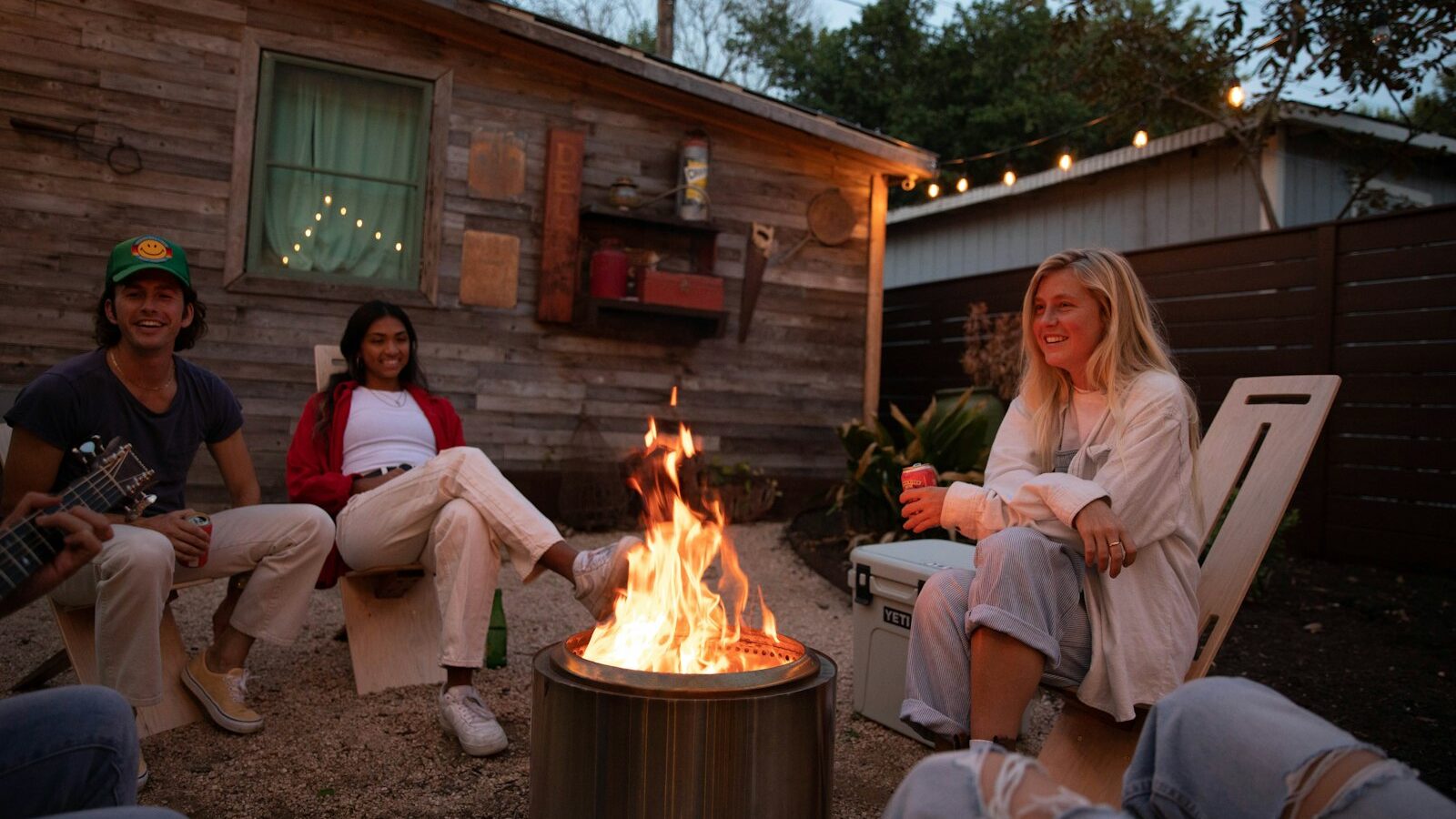
A great fire pit turns an ordinary backyard into the place everyone wants to be after dark, but the right pick depends on your fuel preference, how much smoke you can tolerate, and how much clearance your space allows. We compared seven of the most popular fire pits of 2026 across wood-burning, smokeless, and propane categories. Below you will find a quick comparison table, in-depth reviews, and a safety-first buying guide so you can choose with confidence.
Some links in this article are affiliate links. As an Amazon Associate we earn from qualifying purchases, at no extra cost to you.
Key takeaways
- Smokeless fire pits use a double-wall, secondary-combustion design that burns off smoke, so you spend less time dodging the fumes and more time relaxing.
- Wood-burning pits deliver the crackle, aroma, and high heat; propane pits offer push-button convenience and often sidestep local burn bans.
- Material matters: stainless steel resists rust and stays light, while heavy-gauge or corten steel trades portability for longevity.
- Safety comes first. Maintain generous clearance from structures, furniture, and overhanging branches, and always check local fire codes and HOA rules before lighting up.
- Match the size to your group and your patio, and never leave any fire pit unattended.
| Fire pit | Best for | Fuel | |
|---|---|---|---|
| Solo Stove Bonfire 2.0 | Best overall | Wood / smokeless | Check price |
| Breeo X Series 24 | Best for cooking | Wood / smokeless | Check price |
| Solo Stove Yukon 2.0 | Best for large gatherings | Wood / smokeless | Check price |
| BioLite FirePit+ | Best portable | Wood / charcoal / smokeless | Check price |
| Tiki Brand Smokeless Fire Pit | Best value smokeless | Wood / smokeless | Check price |
| Outland Living Cypress | Best propane | Propane | Check price |
| Landmann Big Sky | Best budget wood-burning | Wood | Check price |
The best fire pits reviewed
1. Solo Stove Bonfire 2.0 — Best for most backyards
The Solo Stove Bonfire 2.0 is the fire pit we recommend to most people, and for good reason. Its double-wall stainless steel construction drives a secondary-combustion process that reignites smoke before it escapes, so you get a clean, dancing flame with dramatically less of the eye-stinging haze that follows you around an ordinary fire. At roughly 19.5 inches across, the Bonfire is big enough for a genuine three-to-five-person fire yet light enough to carry across the yard or stow for winter.
The 2.0 revision adds a removable base plate and ash pan, which makes cleanup far less of a chore than the original. Solo Stove also backs the Bonfire with the largest accessory ecosystem in the category, from stands and shelters to cooking attachments. If you want one pit that handles ambiance, easy maintenance, and good looks, this is the safe choice.
Pros
- Excellent smoke reduction from secondary combustion
- Removable ash pan makes cleanup easy
- Lightweight and easy to relocate
- Huge range of accessories
Cons
- No built-in cooking grate included
- Stainless finish can discolor over time
2. Breeo X Series 24 — Best for cooking
If your fire pit doubles as an open-flame kitchen, the Breeo X Series 24 is the standout. Breeo builds its pits from corten steel, which develops a protective weathered patina over time and is made in the USA with a reputation for longevity. The X Series engages secondary combustion much like other smokeless pits, but Breeo’s real edge is its cooking ecosystem, headlined by the Outpost grill grate that many reviewers consider the best in the category.
The 24-inch model hits the sweet spot for backyard cooking and ambiance, comfortably feeding a group while leaving room for a real fire. It needs no assembly and supports multiple optional attachments. Keep in mind that corten steel is meant to weather, so the surface color will change with exposure, which is part of the design rather than a flaw.
Pros
- Best-in-class cooking attachments
- Durable, made-in-USA corten steel
- Strong smokeless performance
- No assembly required
Cons
- Heavier and less portable
- Patina appearance is not for everyone
3. Solo Stove Yukon 2.0 — Best for large gatherings
When you regularly host bigger crowds, step up to the Solo Stove Yukon 2.0. It is the largest of Solo Stove’s signature pits and delivers the same smoke-reducing secondary combustion as the Bonfire, just scaled up for a commanding flame that throws more heat and warms a wider circle of chairs. For entertaining groups, it is the brand’s top performer.
Like the Bonfire 2.0, the updated Yukon includes a removable base plate and ash pan for easier cleaning. The trade-off for that bigger fire is size and weight: the Yukon is far less portable and demands more clearance and a larger heat-safe footprint. If you have the space and the audience, it is hard to beat.
Pros
- Large flame ideal for big groups
- Strong smokeless performance
- Removable ash pan for easy cleanup
- Compatible with Solo Stove accessories
Cons
- Bulky and hard to move
- Needs more clearance and fuel
4. BioLite FirePit+ — Best portable fire pit
The BioLite FirePit+ takes a different approach to smokeless burning. Instead of relying purely on passive airflow, it uses 51 air jets fed by a rechargeable battery pack to inject oxygen across the fire bed, producing a uniform temperature and a mostly smokeless burn. It accepts either firewood or charcoal, includes a grill top, and weighs just under 20 pounds with foldable legs and a soft carry case.
That packability makes it our pick for campsites, beaches, tailgates, and small patios where a heavier pit would be impractical. The fan lets you dial airflow up or down, which is handy for grilling. The main caveats are that it is smaller than a dedicated backyard pit and the battery needs charging, so it adds a step compared with a fan-free design.
Pros
- Highly portable with foldable legs and carry case
- Adjustable airflow via rechargeable fan
- Burns wood or charcoal and includes a grill top
- Mostly smokeless performance
Cons
- Smaller fire than backyard pits
- Battery requires charging
5. Tiki Brand Smokeless Fire Pit — Best value smokeless
If you want smokeless performance without the premium price, the Tiki Brand Smokeless Fire Pit is the value pick. Its internal airflow channels circulate air to drive secondary combustion and noticeably reduce smoke compared with a single-wall pit. It genuinely works, and for shoppers who want a cleaner fire on a tighter budget, it is an easy recommendation.
The compromises show up in build quality and support. The Tiki is lighter-gauge than a Solo Stove or Breeo, it requires some assembly, and it lacks the attachment options of pricier rivals. Its warranty coverage is also shorter than the lifetime protection some competitors offer. For occasional use and as a first smokeless pit, though, it delivers a lot of cleaner fire for the money.
Pros
- Real smokeless performance at a lower price
- Approachable entry point into the category
- Compact and easy to handle
Cons
- Lighter build than premium pits
- Requires assembly and offers no attachments
- Shorter warranty
6. Outland Living Cypress — Best propane fire pit
For push-button convenience with no smoke and no firewood to haul, the Outland Living Cypress is our favorite propane option. It lights instantly, produces a steady flame you can turn off the moment you are done, and leaves no ash to clean. Because it burns clean propane rather than wood, a gas pit like this can also sidestep some local burn restrictions that ground wood fires during dry spells, though you should always verify your local rules.
Sized for roughly four or five guests, the Cypress is well suited to decks and patios where smoke and embers are a concern. The trade-offs versus wood are familiar: less of that classic crackle and aroma, plus the need to keep a propane tank on hand. If convenience and a tidy deck rank highest for you, it is an excellent choice.
Pros
- Instant ignition and shut-off
- No smoke, ash, or embers
- May bypass some wood-burning restrictions
- Good size for small gatherings
Cons
- Lacks the crackle and aroma of wood
- Requires a propane tank
7. Landmann Big Sky — Best budget wood-burning pit
Not everyone needs smokeless technology or gas convenience. If you simply want an affordable, classic open fire, the Landmann Big Sky is a long-running budget favorite. It is a traditional steel wood-burning bowl with a spark screen and a poker, giving you the crackle, glow, and aroma of a real campfire at a fraction of the cost of a premium smokeless pit.
Because it is a single-wall bowl, you should expect more smoke than the smokeless models above, and you will want to position chairs upwind. The included mesh screen helps contain sparks, which is an important safety feature for an open fire. For shoppers prioritizing price and a no-fuss traditional experience, the Big Sky is a dependable starting point.
Pros
- Very affordable
- Classic open-fire experience with crackle and aroma
- Includes spark screen and poker
Cons
- Produces more smoke than smokeless pits
- Single-wall steel needs care to avoid rust
Free, no-obligation quote · Connect with a local pro
How to choose a fire pit
The best fire pit for you comes down to a handful of decisions: which fuel you prefer, whether smokeless technology is worth it, what material suits your climate, how big a pit your space can handle, and how seriously you take safety and clearances. Here is how to weigh each.
Wood vs. propane vs. gas
- Wood-burning: Delivers the real campfire experience with crackle, aroma, and strong heat, but it produces smoke and ash, requires cleanup, and may be subject to seasonal burn bans.
- Propane: Lights with the click of an igniter, makes no smoke or ash, and shuts off instantly. It is the convenient, deck-friendly choice and can bypass some fire restrictions, but it needs a propane tank and lacks the crackle of wood.
- Natural gas: Like propane but plumbed to a fixed line, so you never refill a tank, though it requires permanent installation and professional setup.
Is smokeless technology worth it?
Smokeless fire pits use a double-wall design that preheats air and feeds it back into the fire as a row of secondary flames, burning off much of the smoke before it escapes. Brands report large reductions in smoke compared with a single-wall pit. You will still see some smoke, especially while the fire builds and if you burn damp wood, but for most people the difference is dramatic. If you sit close to your fire or have neighbors nearby, the upgrade is usually worth it. Burning dry, seasoned hardwood maximizes the effect.
Material: steel vs. cast iron
- Stainless steel: Lightweight and rust-resistant, the standard for portable smokeless pits like Solo Stove.
- Corten (weathering) steel: Develops a protective patina and is prized for longevity, as seen in Breeo pits, though it changes color over time.
- Carbon/painted steel: Common on budget pits; affordable but needs covering and care to avoid rust.
- Cast iron: Holds and radiates heat well and looks classic, but it is heavy and can rust if left uncovered.
Size and portability
Match the pit to your group and your space. A compact pit around 19 inches suits three to five people and small patios; larger pits throw more heat for bigger crowds but need more fuel and clearance. If you camp, travel, or rearrange your yard often, prioritize a lightweight portable model with a carry case. If the pit will live in one spot and host frequent gatherings, a larger, heavier unit is fine.
Safety, clearances, and local rules
No matter which pit you choose, safety is non-negotiable. Follow these guidelines:
- Place the pit on a level, non-combustible surface such as gravel, pavers, or a fire-rated mat, never directly on a wooden deck or dry grass.
- Maintain generous clearance from your house, fences, furniture, and any flammable structures, and keep the area above the pit clear of overhanging branches, awnings, and umbrellas.
- Keep a bucket of water, a hose, or a fire extinguisher within reach, and use a spark screen for open wood fires.
- Never leave a fire unattended, keep children and pets at a safe distance, and let ashes cool completely before disposal.
- Always check your local fire codes, seasonal burn bans, and HOA rules before lighting up, since requirements for clearances and allowed fuels vary by area.
For more ways to upgrade your space, browse our outdoor living ideas and the full outdoor living category. Pair your new fire pit with the best solar outdoor lights for ambiance, and if you are tight on space, see our small backyard ideas.
Frequently asked questions
Are smokeless fire pits worth it?
For most people, yes. The double-wall, secondary-combustion design noticeably reduces smoke compared with a traditional single-wall pit, which means less smoke in your eyes and clothes and happier neighbors. You will get the best results burning dry, seasoned hardwood. If you sit close to the fire or have nearby homes, the upgrade is usually worth the higher price.
How much clearance does a fire pit need?
Place the pit on a level, non-combustible surface and keep ample distance from your house, fences, furniture, and other flammable items, with nothing flammable overhead such as branches, umbrellas, or awnings. Exact distances vary by manufacturer and by local fire code, so check both the product instructions and your municipality’s rules before you light a fire.
Can I use a fire pit on a wooden deck?
Not directly. The intense heat can scorch or ignite wood. If you must use a pit on a deck, choose a propane model designed for deck use, set it on a fire-rated mat or heat shield, and confirm the manufacturer permits it. Always verify your local codes and HOA rules first.
Do I need to check local fire codes or HOA rules?
Yes. Many areas regulate open burning, impose seasonal burn bans during dry conditions, and set minimum clearances, and HOAs often have their own restrictions. Propane pits sometimes remain allowed when wood fires are banned, but you should always confirm before lighting any fire.
Wood or propane: which should I choose?
Choose wood if you want the crackle, aroma, and high heat of a classic fire and do not mind smoke and cleanup. Choose propane if you want instant ignition, no smoke or ash, a deck-friendly footprint, and the ability to keep burning during many wood-fire restrictions. Smokeless wood pits are a middle ground that keeps the real fire while cutting smoke.
How do I keep my fire pit from rusting?
Cover it when not in use, empty ash promptly so moisture does not collect, and store it dry over winter if possible. Stainless and corten steel resist corrosion better than painted carbon steel, but every pit lasts longer with a cover and basic care.
Rather hire a pro?
Prefer to skip the DIY and have it done right? Compare free, no-obligation quotes from vetted local landscaping pros near you.