

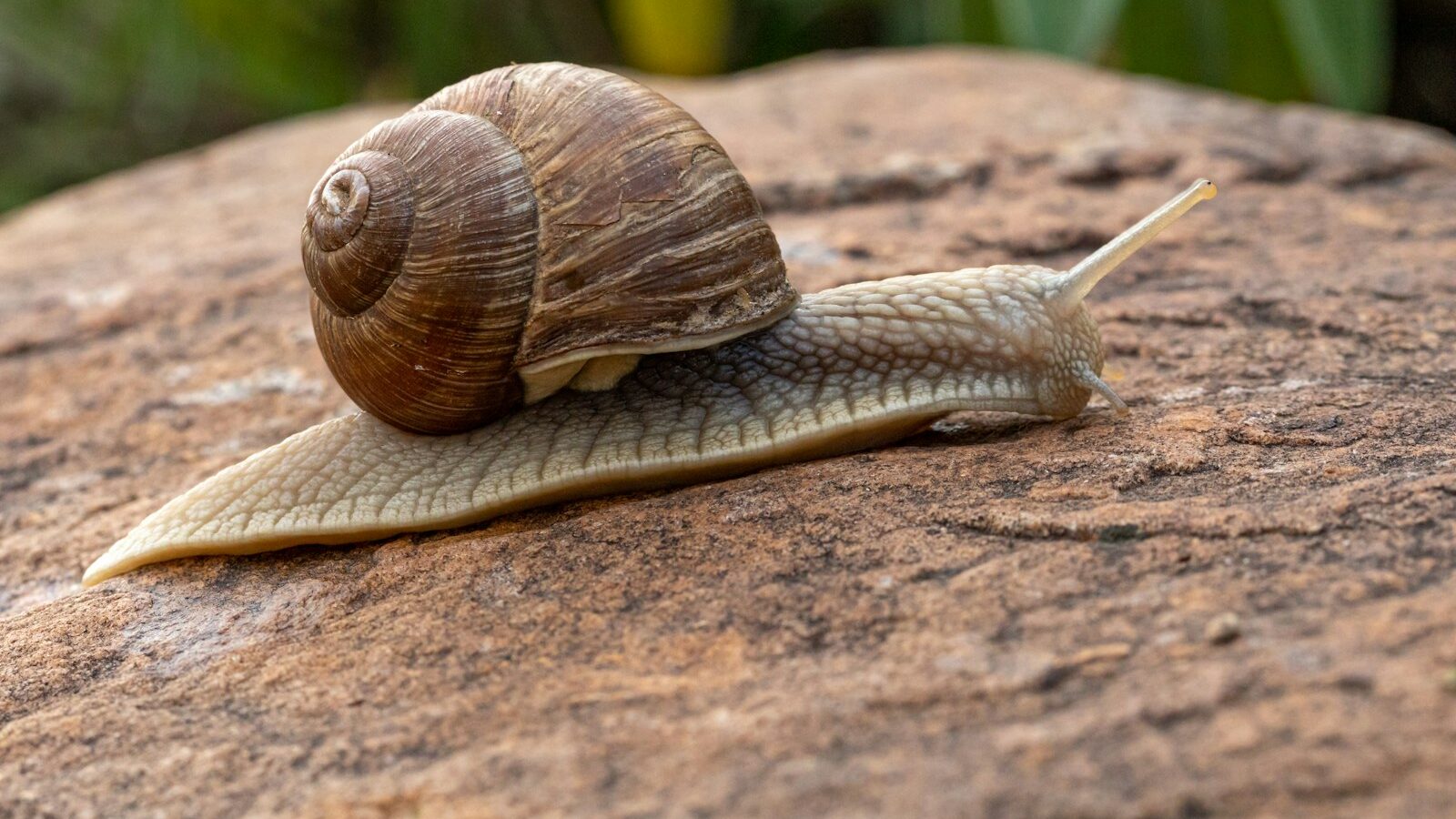
Slugs and snails are so closely related that gardeners often lump them together — and for control purposes, that’s mostly fine, because the same baits, traps, and barriers work on both. The one obvious difference: a snail carries a hard coiled shell it can retreat into, while a slug has no external shell and looks like a soft, naked, slow-moving tube. Both are mollusks, both glide on a single muscular foot leaving a silvery slime trail, both feed mostly at night and in damp weather, and both can shred seedlings, leafy greens, strawberries, and tender hostas overnight. This guide explains how to tell them apart, the specific damage each causes, and a layered control plan that actually keeps them off your plants.
Key Takeaways
- Snails have a hard coiled shell; slugs are shell-less. Otherwise they’re biologically and behaviorally very similar.
- Both feed at night and in wet weather, rasping irregular holes with smooth edges in leaves, fruit, and seedlings, and leaving silvery slime trails.
- Slugs hide in soil, mulch, and under boards by day; snails also tuck under shells into sheltered nooks, walls, and pots, surviving dry spells better.
- The same controls work on both: hand-picking at night, beer traps, copper barriers, diatomaceous earth, iron-phosphate bait, and removing daytime hiding spots.
- Iron-phosphate baits are pet- and wildlife-safe and effective; avoid older metaldehyde baits where pets or children are present.
| Factor | Slugs | Snails |
|---|---|---|
| Shell | None (or tiny internal remnant) | Hard, coiled external shell |
| Body | Soft, elongated, naked | Soft body that retracts into shell |
| Daytime shelter | Soil cracks, mulch, under boards/pots | Retreats into shell; walls, pots, debris |
| Drought tolerance | Lower — needs constant moisture | Higher — seals shell and waits it out |
| Climbing | Yes, but stays lower | Often climbs walls, stems, and pots |
| Damage | Holes with smooth edges, slime trails | Same — irregular holes, slime trails |
| Control | Identical to snails | Identical to slugs |
Slugs: How to Identify Them
A slug is essentially a snail without an external shell — a soft, elongated, slimy body that glides on a single muscular foot. Garden species range from tiny gray field slugs barely half an inch long to the large, mottled leopard slug that can stretch four inches or more. Colors run from gray and tan to brown, black, yellow, and spotted. At the front, two pairs of retractable tentacles: the upper pair carries the eyes, the lower pair senses smell and touch. Some slugs retain a tiny internal shell remnant, but you’ll never see it. Because they lack the protective shell, slugs are highly vulnerable to drying out, so they’re tied even more tightly to moisture than snails.
That moisture dependence dictates their habits. Slugs feed almost entirely at night or during damp, overcast days, and spend daylight hours hidden in cool, moist refuges: soil cracks, dense mulch, under boards, pots, stones, and leaf litter, and in the crowns of plants. The surest sign of slugs is the combination of irregular holes with smooth, scalloped edges chewed in leaves, flowers, fruit, and seedlings, plus the dried silvery slime trails they leave behind on leaves, soil, and hardscape. They’re especially destructive to seedlings, lettuce and leafy greens, hostas, strawberries, and tender ornamentals, sometimes mowing a row of just-emerged seedlings to the ground in a single night.
How to control slugs
Start by attacking their daytime shelter: clear away unnecessary boards, debris, and excess mulch near vulnerable plants, and water in the morning rather than the evening so the soil surface is drier overnight when slugs are active. Hand-picking after dark with a flashlight is tedious but remarkably effective — go out an hour or two after dusk on a damp evening, drop the slugs into soapy water, and repeat for several nights to knock the population down hard. Beer traps (a shallow container of beer sunk to soil level) lure and drown them, though you’ll need several and must refill them every couple of days.
For barriers, copper tape around pots and raised beds gives slugs a mild shock they won’t cross, and a band of diatomaceous earth or crushed eggshells abrades their soft bodies (though it stops working once wet). The most practical broad control is iron-phosphate bait, scattered thinly around plants: slugs eat it, stop feeding, and die within a few days, and it’s safe around pets, wildlife, and children — a major advantage over older metaldehyde baits. Encouraging predators helps too; ground beetles, frogs, toads, birds, and even ducks all eat slugs, so a habitat-friendly garden suppresses them naturally. Combining two or three of these tactics works far better than relying on any one.
Snails: How to Identify Them
Snails are immediately recognizable by the hard, coiled shell on their back, into which they can fully retract for protection. The common garden snail has a brownish, globular shell with darker bands, while other species vary in color and shape. The soft body, head tentacles, and gliding foot are essentially the same as a slug’s — biologically they’re the same kind of animal, just one wearing armor. That shell is the snail’s great advantage: it not only deters some predators but also lets the snail seal itself inside with a layer of dried mucus and wait out dry or cold spells, surviving conditions that would kill an exposed slug. This is why snails persist in drier, sunnier gardens where slugs struggle.
Their behavior otherwise mirrors slugs: nocturnal and moisture-loving, feeding on the same tender plants, fruit, and seedlings, and leaving the same silvery slime trails and smooth-edged holes. By day, snails retreat into their shells and tuck into sheltered spots — under pots and debris, in dense ground cover, along the base of walls and fences, and inside the rims of containers. They’re notable climbers, often scaling walls, fences, raised beds, tree trunks, and pots to reach foliage and fruit, so damage can appear well above ground level. If you find clusters of small, pearly, round eggs in the soil when digging, those belong to slugs or snails, both of which lay eggs in moist soil and can produce many generations a year.
How to control snails
Here’s the good news: every method that works on slugs works on snails, because they respond to the same baits, barriers, traps, and predators. Hand-pick them at night with a flashlight, or check their daytime hiding spots — under pots, along wall bases, inside container rims — and remove them by hand. Because snails climb and shelter in nooks, pay extra attention to walls, fences, and the undersides of pot rims when you’re hunting them, and clear away the ground-level debris and dense low foliage that gives them cover.
For barriers, copper tape works on snails just as it does on slugs, and ringing pots and bed edges is especially worthwhile since snails are such determined climbers. Iron-phosphate bait is equally effective against snails and remains the safest broad-application option around pets and wildlife. Diatomaceous earth and grit barriers help, with the same caveat that they fail when wet. Encourage the same predators — birds, toads, ground beetles, and ducks. The one practical wrinkle is that snails’ shells and superior drought tolerance let them hang on longer through dry weather, so in arid gardens snails may be your dominant mollusk and you’ll want to keep barriers and bait in place even when conditions seem too dry for slugs.
Head-to-Head: Why the Distinction Barely Matters for Control
Unlike most pest pairs, slugs and snails don’t require different treatment strategies — the shell is essentially the only meaningful difference, and it changes how each survives dry spells far more than how you fight them. Both rasp the same smooth-edged holes, leave the same slime trails, feed on the same plants at the same times, lay similar eggs in moist soil, and fall to the same baits and barriers. So when you find chewed seedlings and silvery trails, you don’t actually need to know which one you have to start treating; you just need to confirm it’s mollusks and not something else.
The differences that do matter are about ecology. Slugs, lacking a shell, are more moisture-dependent and dominate in damp, mulched, shaded gardens; they also burrow into soil and hide lower down. Snails tolerate drier conditions, climb more aggressively, and shelter in walls and container rims, so they show up in sunnier gardens and cause damage higher up plants. In practice this means a damp shade garden skews toward slugs while a hot, walled courtyard skews toward snails — useful for knowing where to focus your barriers and bait, but not a reason to change products. If your seedlings are vanishing and you’re unsure whether mollusks or another culprit is to blame, our guide on why seedlings die can help you rule out damping-off and other causes.
Verdict: Identifying and Beating Both
Soft, naked, slimy body with no shell: Slug. Hide-removal, night picking, beer traps, copper, and iron-phosphate bait all work.
Hard coiled shell on the back: Snail. Exactly the same controls — just check climbing routes, walls, and pot rims more carefully.
Damage in a damp, shaded, heavily mulched garden: Likely slugs. Reduce moisture and mulch near vulnerable plants and water in the morning.
Damage in a hot, dry, walled garden, often up high: Likely snails, which tolerate drought and climb. Focus copper barriers on pots and bed edges.
The bottom line is reassuring: you don’t have to win an identification contest to protect your garden. Confirm you’re dealing with mollusks — smooth-edged holes and silvery slime trails are the giveaway — then stack two or three control methods together. Remove daytime hiding places, hand-pick on damp nights, ring vulnerable beds and pots with copper, and scatter iron-phosphate bait, which is both effective and safe around pets and wildlife. Whether your culprit wears a shell or not, that layered approach will reliably keep your seedlings, greens, and strawberries from being eaten overnight.
A Year-Round Prevention Routine
Because slugs and snails breed quickly and produce several generations a season, prevention is about keeping populations low year-round rather than reacting only when damage appears. The most powerful preventive habit is habitat management: keep beds tidy, lift boards and pots off bare soil where possible, thin out dense low ground cover near vulnerable crops, and avoid piling mulch right against seedling stems. Watering in the morning instead of evening leaves surfaces drier through the active night hours, which alone can noticeably cut feeding. In spring, when young mollusks are hatching, a few rounds of night hand-picking or early baiting knock back the breeding population before it explodes.
Protect your most vulnerable plantings specifically. Surround seedling beds and prize hostas with copper tape or a maintained grit barrier, and start iron-phosphate bait at the first sign of trouble rather than waiting for heavy damage. Encourage the predator community that controls mollusks for free — leave a few rough corners and a small water source for toads and frogs, avoid broad pesticides that harm ground beetles, and welcome birds. When you transplant or buy new plants, check the pots and root balls for hitchhiking snails and clusters of pearly eggs in the soil. A garden that’s managed this way rarely suffers the overnight massacres that catch off-guard gardeners by surprise, and the occasional straggler is easy to pick off by hand.
Frequently Asked Questions
What’s the actual difference between a slug and a snail?
The shell. Snails carry a hard coiled external shell they can retract into; slugs have none (or only a tiny internal remnant). Otherwise they’re the same kind of mollusk with nearly identical biology, behavior, diet, and damage — and they respond to the same controls.
Do I need different treatments for slugs versus snails?
No. Every method — hand-picking, beer traps, copper barriers, diatomaceous earth, iron-phosphate bait, and predators — works on both. The only practical difference is that snails climb more and tolerate dry weather better, so adjust where you place barriers rather than what you use.
Are slug and snail baits safe around pets?
Iron-phosphate baits are considered safe around pets, wildlife, and children when used as directed, and they’re effective. Older metaldehyde baits are toxic to dogs and other animals and should be avoided where pets or kids have access. Always read the label and choose iron phosphate when in doubt.
How do I know it’s slugs or snails and not another pest?
Look for irregular holes with smooth, scalloped edges in leaves and fruit, plus dried silvery slime trails on foliage, soil, and hardscape — the slime is the clincher. Most damage appears overnight or after rain. Caterpillars and beetles chew differently and leave no slime.
Does coffee grounds or eggshells really stop them?
Crushed eggshells and grit create a mild abrasive barrier that helps somewhat but loses effectiveness once wet. Coffee grounds give inconsistent results. Copper tape and iron-phosphate bait are far more reliable. Use grit barriers as one layer in a combined approach, not as your only defense.