

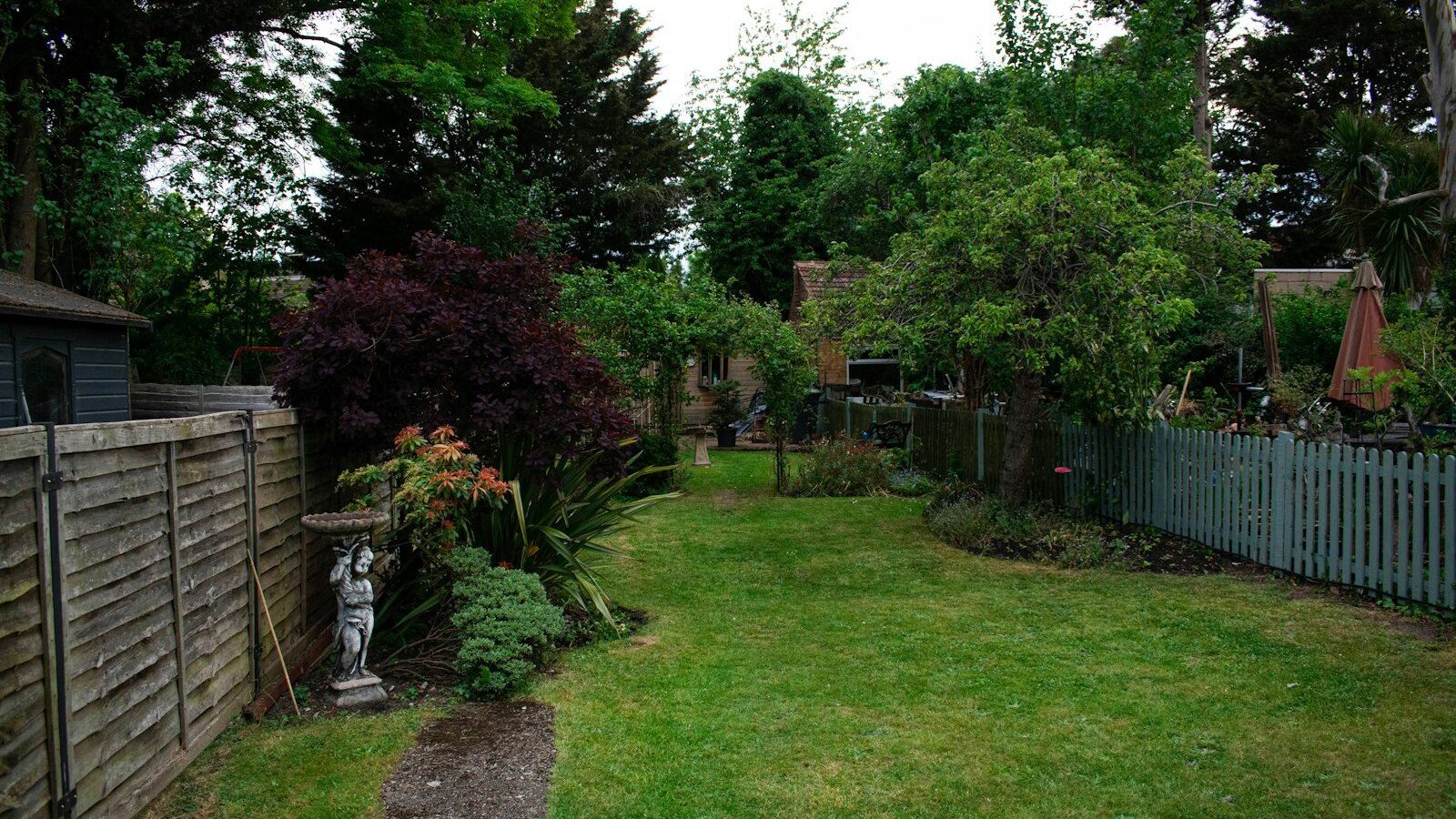
The side yard is the most neglected strip of any property — a narrow corridor between the house and the fence, usually shaded, often muddy, and frequently used as a dumping ground for trash cans and hoses. But that same strip is prime real estate: it’s the route guests and family take to the backyard, and a thoughtful design turns a dead zone into a usable, attractive passage. The constraints are real — limited width, low light, and frequent foot traffic — so the ideas below are built specifically for narrow spaces, with hardscape options, shade-tolerant plant lists by USDA zone, vertical solutions, and budget notes. Pick the combination that matches how you actually use the space.
Key Takeaways
- Solve the path first — a defined walkway keeps the narrow space dry and usable year-round.
- Go vertical: trellises, wall planters, and slim columnar plants add greenery without eating floor space.
- Most side yards are shady, so choose shade-tolerant plants and white or variegated foliage to brighten.
- Keep the layout simple and linear; one repeated material and plant reads better than a busy mix.
- A basic gravel path and planting runs $200–$500; a paver walkway runs $8–$15 per square foot.
Start by Solving the Path
The number-one side-yard problem is a muddy, eroded route. Fix it before anything else. For the cheapest durable surface, lay a gravel path: excavate 4 inches, add landscape fabric, 3 inches of compacted crushed stone, and a 1-inch top layer of pea gravel or decomposed granite — about $2–$4 per square foot in materials. For a cleaner look that handles heavy traffic and rolling trash cans, lay concrete pavers or flagstone on a compacted base ($8–$15 per square foot installed). A path 30–36 inches wide is comfortable for one person and a wheelbarrow. Edge it with steel or a brick mowing strip to keep gravel and mulch in place.
1. The Gravel Garden Passage
For a low-water, low-maintenance side yard, gravel the whole strip and plant tough, drought-tolerant plants in pockets. A central decomposed-granite path with planting bands on either side suits a sunnier south- or west-facing side. Use Lavandula, Salvia, Sedum, and small ornamental grasses like Festuca ‘Elijah Blue’. Gravel suppresses weeds, drains instantly, and never needs mowing. Zones 5–9. A 4×25-foot strip costs roughly $250 in gravel plus $120 in plants.
2. A Shade Walk Garden
North-facing side yards are deep shade, so make the most of it with a woodland-walk feel. Line a flagstone or stepping-stone path with Hosta, ferns (Dryopteris, Athyrium ‘Lady in Red’), Brunnera ‘Jack Frost’ (silver leaves), Hakonechloa (Japanese forest grass, the best plant for narrow shade), and a groundcover of Pachysandra or moss. Variegated and silver foliage brightens the gloom. Zones 4–8. Roughly $200 for plants along a 25-foot run.
3. A Vertical Garden on the Fence or Wall
When you can’t spread out, grow up. Mount a trellis or wall-mounted planter pockets on the fence and grow climbers: Clematis, climbing Hydrangea (great in shade), or Hedera (English ivy, on masonry only). For edibles, a wall-mounted rail planter holds herbs and lettuce. Slim columnar evergreens like Thuja ‘Emerald Green’ or Taxus ‘Beanpole’ give privacy height in a footprint barely a foot wide. Vertical greenery turns a bare fence into a living wall without sacrificing the narrow walkway. About $100–$250 depending on the system.
4. A Functional Utility Corridor
Sometimes the honest answer is to make the side yard work hard. Build a slim storage zone: a screened enclosure for trash and recycling bins, wall-mounted hooks for tools and hoses, and a narrow vertical cabinet. Then dress it up — paint the screen the same color as the house trim and run a row of containers along the base. A continuous gravel or paver floor keeps it clean. This is the right call for the utility side of the house; budget $150–$400 for a DIY bin screen and storage hooks.
5. A Container-Only Side Garden
If the ground is concrete, paved, or full of utility lines you can’t dig, go all containers. Line one side with a staggered row of large pots — tall ones at the back, shorter at the front — planted with shade-tolerant Heuchera, ferns, Carex, and a trailing Lysimachia ‘Goldilocks’. Use frost-proof pots at least 16 inches across so they don’t dry out daily. Self-watering containers cut maintenance in a hot, narrow corridor that bakes. A grouping of six large pots runs about $300 with plants.
6. A Privacy Screen Side Yard
If a neighbor’s windows look down the side yard, screen it with narrow upright plants that don’t crowd the path. Thuja ‘Emerald Green’ (12–15 ft tall, only 3–4 ft wide), columnar Carpinus betulus ‘Frans Fontaine’ (hornbeam), or bamboo in a root barrier for fast screening. Space arborvitae 2.5–3 feet apart for a solid wall. Pair with a trellis panel where you need quick height. Zones 3–8. About $250–$400 for a screened 25-foot run.
7. A Stepping-Stone and Groundcover Path
For a soft, naturalistic look on a low-traffic side, set large flagstones as stepping stones with a tough, walkable groundcover knitting between them. Thymus serpyllum (creeping thyme) for sun — it releases scent when stepped on — or Soleirolia (baby’s tears) and Sagina (Irish moss) for shade. Set stones a comfortable stride apart, centers about 24 inches. The green joints look far better than bare dirt or weeds. Zones vary by groundcover; thyme is hardy to zone 4. Roughly $150–$250.
8. A Productive Edible Side Garden
A south- or west-facing side yard that catches a few hours of sun can become a surprisingly productive growing strip without taking up backyard space. Run a line of narrow raised beds (24 inches wide is enough) along the sunnier wall, or mount a vertical rail system on the fence for herbs and salad greens. Espalier a fruit tree — apple or pear trained flat against a warm wall fits a space barely 18 inches deep and turns a bare fence into an architectural, fruiting feature. Tuck in compact crops that tolerate partial shade, such as lettuce, kale, chard, and herbs like mint, parsley, and chives, and reserve the sunniest end for tomatoes or peppers in containers. A drip line on a timer keeps the narrow corridor watered without daily hauling. Zones vary by crop; most leafy greens grow in zones 3–10 in the cool seasons. Budget about $200–$350 for beds, soil, and a basic drip kit, and the strip earns its keep with food.
Lighting the Corridor for Evening Use
A side yard is most often used after dark — taking out the trash, coming home at night, walking to the backyard — so lighting transforms how usable it feels. Low-voltage path lights set every 6–8 feet along one edge give safe footing, while a string of weatherproof bistro lights overhead between the house and fence makes the corridor feel like a room rather than an alley. Solar fixtures are the cheapest option but struggle in the deep shade that side yards often have; a low-voltage transformer with a buried cable is more reliable and costs about $150–$300 for a full run. Aim light down and across the path rather than out at eye level to avoid glare, and uplight one or two specimen plants or the textured house wall for depth. Good lighting also improves security on the often-hidden side of the house.
Drainage, Light, and the Width Problem
Two technical issues make or break a side yard. First, drainage: narrow spaces between buildings often funnel roof runoff and stay soggy. If yours puddles, slope the path surface slightly to one side, or for chronic wet, dig a shallow French drain (a gravel-filled trench with a perforated pipe) down the low edge. Direct downspouts into it or pipe them through. Second, the width illusion: keep the design strictly linear and repeat one paving material and one or two plants down the whole length — a busy mix of materials makes a narrow space feel cluttered and even smaller. A single sightline straight to the backyard, framed by simple repeated planting, makes the corridor feel longer and more generous than it is. Finally, mind the light: most side yards are shadier than they look, so test the spot across a day before buying sun-lovers, and favor plants that tolerate the dry shade close to the house wall.
For the shade plants that thrive here, see our perennial garden ideas, define the path cleanly with these garden border and edging ideas, and tie the look to the house with our foundation planting ideas. Browse the Outdoor Living hub for more.
Frequently Asked Questions
What is the cheapest way to landscape a narrow side yard?
A gravel path is the most cost-effective fix at roughly $2–$4 per square foot in materials — excavate 4 inches, lay landscape fabric, add compacted crushed stone, and top with pea gravel. Plant a few tough shade or drought-tolerant plants in pockets and the dead strip becomes a clean, usable passage for a few hundred dollars.
What plants grow in a shady side yard?
Hostas, ferns, Brunnera, Heuchera, Japanese forest grass (Hakonechloa), and groundcovers like pachysandra or creeping thyme handle the low light. Variegated and silver-leaved varieties brighten the space, and climbing hydrangea covers a shaded fence or wall beautifully.
How wide should a side yard path be?
Aim for 30–36 inches so one person can walk comfortably and push a wheelbarrow or roll a trash can through. If the total space is very tight, a 24-inch stepping-stone path still works for light foot traffic. Edge it to keep gravel or mulch contained.
How do I fix a muddy, wet side yard?
First grade the path to shed water to one side. For chronic sogginess, install a French drain — a gravel-filled trench with a perforated pipe — along the low edge and route downspouts into it. A permeable gravel or open-jointed paver surface also lets water drain instead of pooling.
How can I add greenery without losing walkway space?
Go vertical. Mount a trellis or wall planters on the fence for climbers and herbs, and use slim columnar plants like ‘Emerald Green’ arborvitae that grow tall in a footprint barely a foot wide. A living wall or fence-mounted pockets add lush greenery while leaving the narrow floor clear for walking.