

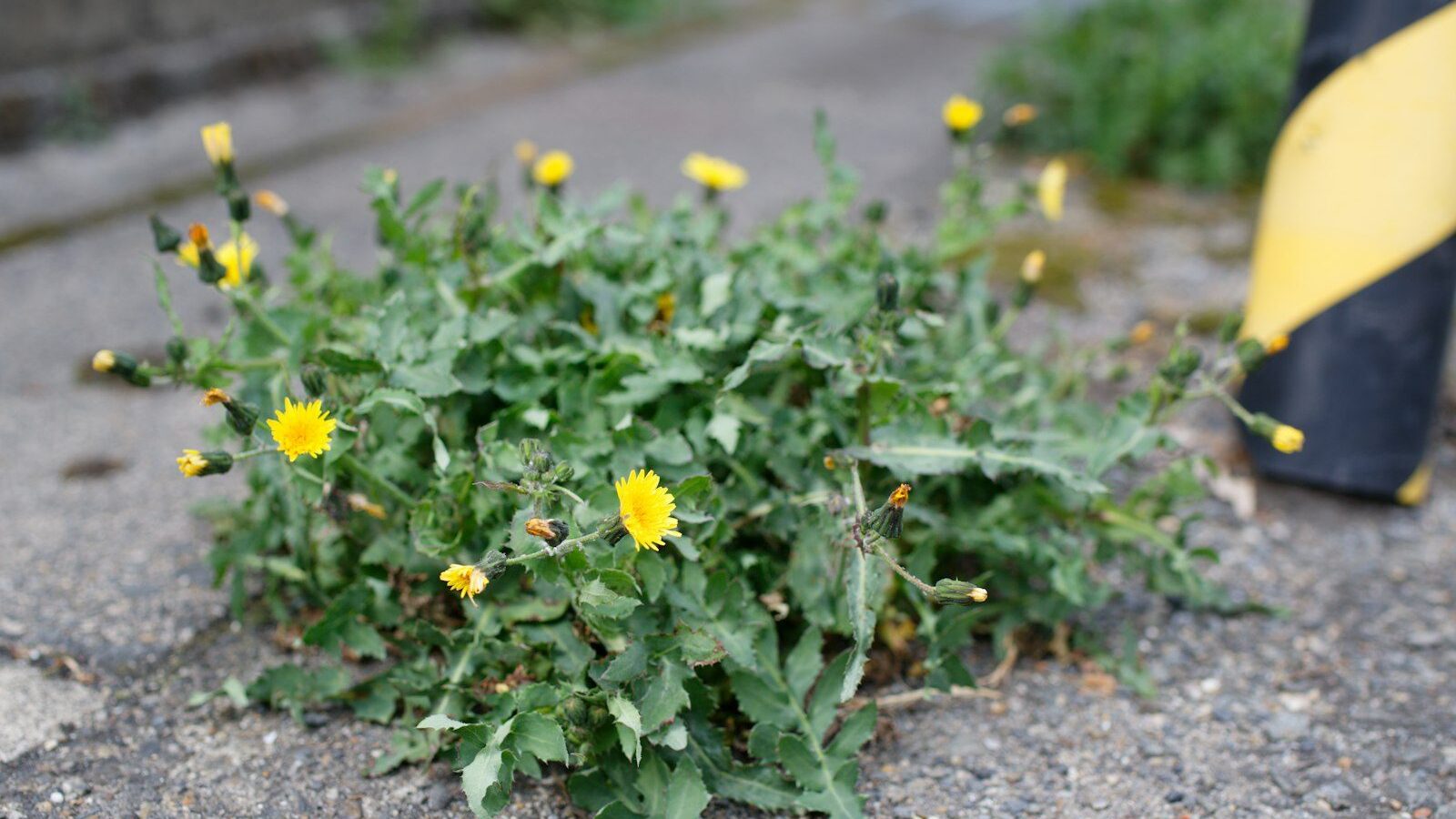
Spotted spurge (Euphorbia maculata, also sold under the name Chamaesyce maculata) is the flat, fast-growing mat that fills the cracks in your driveway, the bare spots in thin lawns, and the edges of vegetable beds all summer long. Unlike cool-season weeds, spurge loves heat: it germinates when soil warms, sprawls outward from a central taproot, and can go from seedling to seed-producing adult in just a few weeks. A mature plant produces thousands of seeds, so the difference between a minor nuisance and a yard-wide problem is whether you stop it before it reseeds. The good news is that spurge is an annual with a shallow taproot, which makes it very controllable once you understand its summer timing. This guide covers identification (including the milky sap that confirms it), hand and cultural removal, pre- and post-emergent herbicides, product choices, and prevention.
Key Takeaways
- Spotted spurge is a heat-loving summer annual — it germinates as soil warms past about 60°F and explodes in hot weather.
- Snap a stem: spurge bleeds a milky white sap, the quickest way to confirm ID (and a skin/eye irritant, so wear gloves).
- It has a single central taproot, so hand-pulling young plants is easy and effective before they flower.
- A spring pre-emergent (applied as soil warms) is the most powerful tool because it stops germination before plants ever appear.
- Thick turf and mulch starve spurge of the bare, sunny, compacted soil it needs to establish.
How to Identify Spotted Spurge
Spotted spurge grows flat and tight to the ground, forming a dense circular mat that radiates from one central point. The small, oval leaves grow in opposite pairs along reddish, branching stems, and most leaves carry a distinctive reddish or purple blotch down the center — the “spot” in the name. The whole plant hugs the soil so closely that a lawn mower passes right over it, which is part of why it persists in turf.
The definitive identification test is the sap. Pinch or snap any stem and a milky white latex oozes out immediately. This sap is characteristic of the spurge family and irritates skin and eyes, so always wear gloves and avoid touching your face when handling it. Tiny, inconspicuous pinkish flowers form in the leaf axils and quickly mature into seed capsules; a single plant can set thousands of seeds over a summer, and the seeds can lie dormant in the soil for years.
Spurge is an opportunist of stress. It colonizes hot, compacted, low-fertility, bare ground — driveway and sidewalk cracks, gravel, the thin sun-baked edges of lawns, and beds where mulch has worn away. If you have spurge in your turf, it is usually telling you the lawn is thin, scalped, or struggling in that spot.
Manual and Cultural Control
Because spotted spurge is an annual with a single shallow taproot, hand-pulling is genuinely effective — far easier than fighting a rhizome-spreading perennial. The key is to pull young, before the plant flowers and sets seed. Wear gloves to avoid the irritating sap, grasp the plant at the center crown, and pull steadily to lift the taproot. Pull when soil is moist so the root releases cleanly; a mat left to dry can snap off and regrow from the crown. In beds, a sharp hoe slicing just below the soil surface on a hot, dry day kills seedlings fast.
Do not toss flowering spurge into a cool compost pile — bag the seed-bearing plants instead. Stay vigilant in midsummer, because spurge germinates in repeated flushes; a single pass in June will not be enough, and a quick weekly walkthrough to pull new seedlings keeps the seed bank from refilling.
Culturally, the goal is to eliminate the bare, baking soil spurge depends on. In lawns, mow cool-season grass at 3 inches or higher and keep it fed and irrigated so the canopy shades the soil — spurge seed needs warmth and light to germinate, and a dense turf canopy denies both. Relieve compaction with core aeration, since spurge thrives in hard, compacted ground. In beds and along hardscape edges, maintain a 2- to 3-inch mulch layer. For cracks in pavement, the long-term fix is to seal or fill them so there is nowhere for seedlings to root.
Chemical Control
Pre-Emergent Herbicides
Pre-emergent control is the most effective chemical strategy against spurge because it stops the seed flush before any plant emerges. Apply a pre-emergent in spring as soil temperatures climb toward 55–60°F — the same window used for crabgrass prevention, and often the same product. Prodiamine, dithiopyr, and isoxaben all provide strong spotted-spurge suppression. Because spurge keeps germinating through the summer in waves, a single early-spring application can lose strength by midsummer; a split application (a second, lighter dose 8–10 weeks later, per the label) maintains the barrier through peak germination. Always water the granules in to activate them.
Post-Emergent Herbicides
- For spurge already growing in a lawn, use a selective three-way broadleaf herbicide (2,4-D, MCPP, dicamba). Spurge responds well, but treat plants while they are young — mature, hardened mats are tougher to kill.
- Spray in the morning on a calm day; spurge tolerates heat, but avoid spraying lawns when temperatures exceed the label’s limit (often 85–90°F) to prevent turf injury.
- Add a non-ionic surfactant to help the spray adhere to the small, low-lying leaves and overcome the waxy surface.
- Coat the foliage to just before runoff. Re-treat in 2–3 weeks if regrowth or new germination appears.
- For spurge in pavement cracks, gravel, and bare areas, spot-spray with non-selective glyphosate — but keep it off lawn and ornamentals, as it kills any green plant it contacts.
Always read and follow the product label, including the turf species listed as tolerant, temperature limits, and any interval before reseeding. The label is the law and the most reliable source of rates for your specific product.
Recommended Products
For prevention, a prodiamine or dithiopyr granular pre-emergent (the standard crabgrass preventers) is the most cost-effective choice and conveniently controls spurge at the same time; an isoxaben product is a strong alternative where broadleaf weeds are the main concern and it is labeled for many ornamental beds. For existing spurge in turf, any reputable 2,4-D + MCPP + dicamba broadleaf concentrate or ready-to-spray works well on young plants. For pavement, gravel, and bare ground, a 41% glyphosate concentrate is the standard spot treatment.
For organic or vegetable-bed situations, rely on hand-pulling, hoeing, mulch, and — for hardscape — a flame weeder or boiling water on isolated plants in cracks. Avoid horticultural vinegar expectations: it burns spurge tops but rarely kills the taproot, so it is at best a repeat-application contact tool. Match the product to the site and never use a turf herbicide in an edible bed.
Timing: When to Treat by Season
Spring is the critical pre-emergent window. Apply as soil temperatures rise into the mid-50s to 60°F — typically when forsythia finishes blooming and right around the same time you would prevent crabgrass. Getting the barrier down before germination is far more effective than chasing emerged plants all summer.
Summer is the post-emergent and hand-pulling season. Spurge is actively growing in the heat, so treat or pull young plants throughout the season before they flower. Because it germinates in repeated flushes, plan on multiple passes from June through August. A mid-summer split application of pre-emergent (if the label allows) extends protection. By fall, spurge naturally dies with cooling temperatures, so there is little reason to spray dying plants — focus instead on building thick turf and mulch so the seed bank has nowhere to establish next year.
Preventing Spotted Spurge Long-Term
Spurge can only invade hot, bare, compacted, low-fertility soil, so prevention is about denying it those conditions. Keep turf dense and tall, feed and water it on a sensible schedule for your grass type, and overseed thin spots so grass occupies the ground spurge would otherwise claim. Relieve compaction through annual core aeration. In beds, maintain a thick mulch layer, and along driveways, patios, and walks, fill and seal the cracks that give seedlings a foothold.
Combine those cultural defenses with a reliable spring pre-emergent and prompt removal of any escapees before they seed, and the population shrinks year over year. For more on building the kind of thick, competitive lawn that crowds out summer weeds, see our Outdoor Living guides. If spurge is creeping into vegetable plots, our Urban Gardening mulching and bed-prep advice keeps soil covered, and you can compare hoes, sprayers, and flame weeders in our Tools & Gear section.
Frequently Asked Questions
How do I know it is spotted spurge and not another weed?
Spotted spurge grows flat in a circular mat with small paired leaves, often marked with a reddish blotch down the center, on reddish stems. The clincher: snap a stem and it bleeds milky white sap. Wear gloves, as the sap irritates skin and eyes.
What kills spotted spurge the fastest?
Young plants pull out easily by the taproot when soil is moist. In lawns, a three-way broadleaf herbicide (2,4-D, MCPP, dicamba) with a surfactant works on young spurge. In pavement and bare ground, glyphosate. The best tool, though, is a spring pre-emergent that prevents it.
When should I apply pre-emergent for spurge?
In spring as soil temperatures reach the mid-50s to 60°F — the same window as crabgrass prevention. Because spurge germinates in waves through summer, a split application (a second dose 8–10 weeks later, per the label) keeps the barrier effective.
Why does spurge grow in my driveway cracks?
Spurge thrives in hot, bare, compacted soil with little competition — exactly what a pavement crack offers. Spot-treat with glyphosate or pull young plants, then seal and fill the cracks so future seedlings have nowhere to root.
Will spotted spurge come back next year?
It can, because each plant drops thousands of seeds that stay viable in the soil for years. Break the cycle by pulling or spraying before plants flower, applying a spring pre-emergent, and keeping turf and mulch thick so seeds cannot establish.