

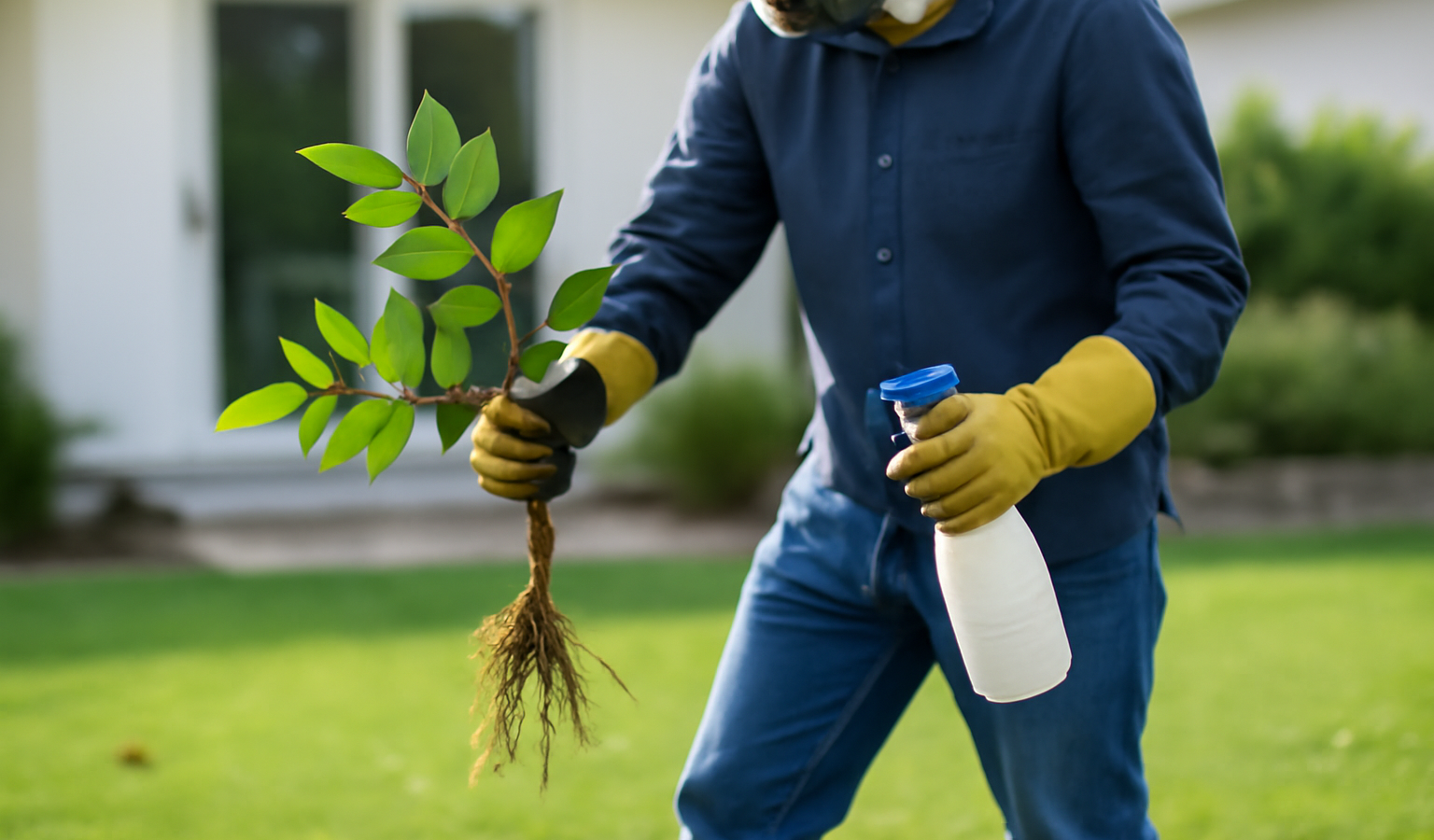
Poison sumac is the most toxic of the three urushiol-bearing plants in North America—more potent than poison ivy or poison oak—so getting rid of it is as much about protecting yourself as it is about killing the plant. The two reliable approaches are chemical control with a systemic herbicide and manual removal by digging out the roots, and both demand full skin coverage and a strict no-burn rule, because urushiol oil causes a severe allergic rash on contact and is dangerous to inhale if the plant is burned. This guide shows you how to positively identify poison sumac (it grows as a shrub or small tree in wet ground, which sets it apart from harmless staghorn sumac), the safest ways to remove it, how to dispose of the debris, and why you should expect to monitor the site for a couple of seasons because the roots resprout.
Key Takeaways
- Identify first: Poison sumac is a wetland shrub/small tree with 7–13 leaflets per stem, smooth (not toothed) leaf edges, a red leaf stalk, and drooping white-gray berries.
- Never burn it: Burning vaporizes urushiol oil, which can cause severe lung damage if inhaled.
- Cover up: Wear long sleeves, pants, waterproof gloves, eye protection, and disposable coveralls—urushiol passes through cloth and lingers on tools.
- Two methods: Systemic herbicide (glyphosate or triclopyr) for large plants; careful digging of the entire root for small ones.
- Persistence: Roots and missed fragments resprout—expect to retreat for 1–2 seasons.
- Dispose, don’t compost: Bag all debris and send it to landfill; urushiol stays active for a year or more.
How to Identify Poison Sumac
Before you remove anything, make sure it really is poison sumac (Toxicodendron vernix), because it is easily confused with the harmless and common staghorn sumac. The distinguishing features are worth learning:
- Habitat: Poison sumac grows almost exclusively in wet, boggy, swampy ground—the edges of ponds, marshes, and flooded woodland. If a “sumac” is growing in dry, sunny soil along a roadside, it is almost certainly the harmless kind.
- Leaves: Each compound leaf has 7 to 13 leaflets arranged in pairs along a central stalk, with a single leaflet at the tip. The leaflet edges are smooth, not toothed or serrated.
- Stalk color: The central leaf stem (rachis) is often reddish, a helpful tell.
- Berries: Poison sumac bears loose, drooping clusters of small white to gray-green berries. Harmless staghorn sumac, by contrast, has upright, cone-shaped clusters of fuzzy red berries and toothed leaflets.
- Form: It grows as a tall shrub or small tree, typically 6 to 20 feet, with smooth gray bark.
In short: smooth-edged leaflets, a red leaf stalk, hanging white berries, and wet ground point to poison sumac; toothed leaflets and upright red berry cones point to the harmless staghorn or smooth sumac. When in doubt, treat it as poison sumac and protect yourself accordingly.
Understand the Hazard: Urushiol
Every part of poison sumac—leaves, stems, roots, and berries—contains urushiol, the same oily allergen found in poison ivy and poison oak, but in higher concentration. Brushing against the plant, touching tools or gloves that contacted it, or handling cut stems can transfer the oil to your skin and trigger an intensely itchy, blistering rash that can take weeks to clear. Two rules are non-negotiable. First, never burn poison sumac: heat carries urushiol into the smoke, and inhaling it can cause severe, even life-threatening, inflammation of the lungs. Second, treat everything that touches the plant as contaminated—urushiol can remain active on tools, gloves, and clothing for a year or more if not cleaned.
Gear Up Before You Start
Proper protection is the most important step. Pick a calm, dry day and put on, at minimum:
- Long sleeves and long pants, ideally disposable coveralls or clothing you can wash separately and immediately afterward—urushiol can soak through ordinary fabric over time.
- Waterproof gloves such as nitrile or heavy rubber. Avoid cloth or leather, which absorb the oil. Consider wearing a disposable pair underneath.
- Eye protection (safety glasses or goggles) and a respirator or mask if you will be cutting.
- Closed boots, with pant legs tucked in or taped.
Keep a degreasing soap (like dish soap) and plenty of water nearby. If you think you have touched the plant, wash the area thoroughly with soap and cool water as soon as possible—within a couple of hours gives you the best chance of removing the oil before it bonds to skin. Wash tools with soapy water or rubbing alcohol, and bag and launder your clothes separately on a hot cycle.
Method 1: Chemical Control With Herbicide
For established plants, a systemic herbicide is the most effective option because it is carried down into the roots, killing the whole plant rather than just the top. The two common active ingredients are glyphosate and triclopyr. Triclopyr is a broadleaf herbicide that spares grasses, which is useful if the sumac is growing in a lawn-edge or grassy area; glyphosate is non-selective and kills most green plants it touches.
The most reliable application is the cut-stump method: cut the trunk or main stems close to the ground, then immediately—within a few minutes, before the cut seals—paint or spray full-strength herbicide directly onto the fresh cut surface so it travels to the roots. For smaller plants and resprouts, you can instead apply a foliar spray, coating the leaves thoroughly when the plant is actively growing in late summer to early fall, when it is moving sugars (and the herbicide) down to the roots. Because poison sumac favors wetlands and water margins, be very careful near standing water—many herbicide formulations are not approved for aquatic sites, so read the label and choose a product cleared for use near water if needed. Always follow the label rates and precautions exactly.
Method 2: Manual Removal by Digging
For young or small plants, you can dig them out—just be thorough, because any root left behind will resprout. The best time is when the soil is moist (its native wet ground often is), which makes the roots easier to pull intact. Loosen the soil widely around the plant with a shovel or fork, then lever the entire root system out, following and removing the spreading roots as far as you can. Place everything directly into heavy-duty trash bags as you go—do not pile it on the ground where the oil can spread or roots can re-establish.
Hand-pulling and digging is realistic only for small infestations; mature poison sumac has extensive roots that are difficult to extract completely, which is why herbicide (or the cut-stump method combined with digging) is usually more practical for large plants. Whatever you do, resist the urge to power-trim, mow, or weed-whack poison sumac—that flings urushiol-laden plant material and sap around and is a fast route to a serious rash.
Disposal: Bag It, Never Burn It
Once the plant is removed or dead, dispose of every piece carefully. Seal all the debris—roots, stems, leaves, and berries—in heavy plastic bags and send it to a landfill according to your local regulations. Do not compost it, chip it, or add it to yard-waste collection, and above all never burn it. Urushiol does not break down quickly and can remain irritating on dead plant material for a year or more, so even the dried-up remains are hazardous. After bagging, clean your tools with rubbing alcohol or soapy water, and wash your gloves, boots, and clothing before they touch anything else.
Persistence: Expect to Retreat
Poison sumac rarely surrenders on the first try. Its roots store energy and readily send up new shoots, especially if you dug and left fragments behind or if a foliar spray did not fully translocate. Plan to monitor the site for at least one to two growing seasons and re-treat any regrowth promptly—small resprouts are far easier and safer to kill than re-established plants. Catching new shoots while they are young, and hitting them with herbicide when they are actively growing, is the key to eventually clearing the site for good. Once the area is finally clear, you can replant it with desirable shrubs or ground cover; our outdoor living and landscaping guides cover suitable plants for damp, low spots, and for tackling other invasive weeds see our broader plants and flowers resources.
When to Call a Professional
Because poison sumac is so toxic and often grows in difficult wetland terrain, there is no shame in hiring help. If the infestation is large, the plants are mature trees, the site is near water you cannot legally treat, or you are highly sensitive to urushiol, a licensed landscaper or weed-control professional has the protective equipment, approved herbicides, and disposal channels to handle it safely. For a severe rash—especially one near the eyes, on the face, or covering a large area, or if you have any difficulty breathing after exposure—seek medical care promptly.
Frequently Asked Questions
How can I tell poison sumac from harmless sumac?
Poison sumac grows in wet, boggy ground and has 7–13 smooth-edged leaflets, a reddish leaf stalk, and drooping clusters of white to gray berries. Harmless staghorn and smooth sumac grow in dry soil, have toothed leaflets, and bear upright, cone-shaped clusters of fuzzy red berries.
Can I burn poison sumac to get rid of it?
No—never burn it. Burning vaporizes the urushiol oil into the smoke, and inhaling it can cause severe, potentially life-threatening lung inflammation. Always bag the debris in sealed plastic and send it to a landfill instead, and never add it to compost, chipping, or yard-waste collection.
What’s the best herbicide for poison sumac?
Systemic herbicides containing glyphosate or triclopyr work best because they kill the roots. The cut-stump method—cutting the stem and immediately painting full-strength herbicide on the fresh cut—is most effective on large plants. Triclopyr spares grasses; check the label for products approved near water, since sumac grows in wet areas.
Will poison sumac grow back after I remove it?
Often, yes. The roots store energy and resprout, especially after digging that leaves root fragments behind. Monitor the site for one to two growing seasons and treat any regrowth promptly while it’s young—small resprouts are much easier to kill than re-established plants.
What should I do if I touch poison sumac?
Wash the skin thoroughly with soap (a degreasing dish soap works) and cool water as soon as possible—ideally within a couple of hours—to remove the urushiol before it bonds. Wash contaminated clothing separately on a hot cycle and clean tools with alcohol. For a severe or facial rash, or any breathing difficulty, seek medical care.