

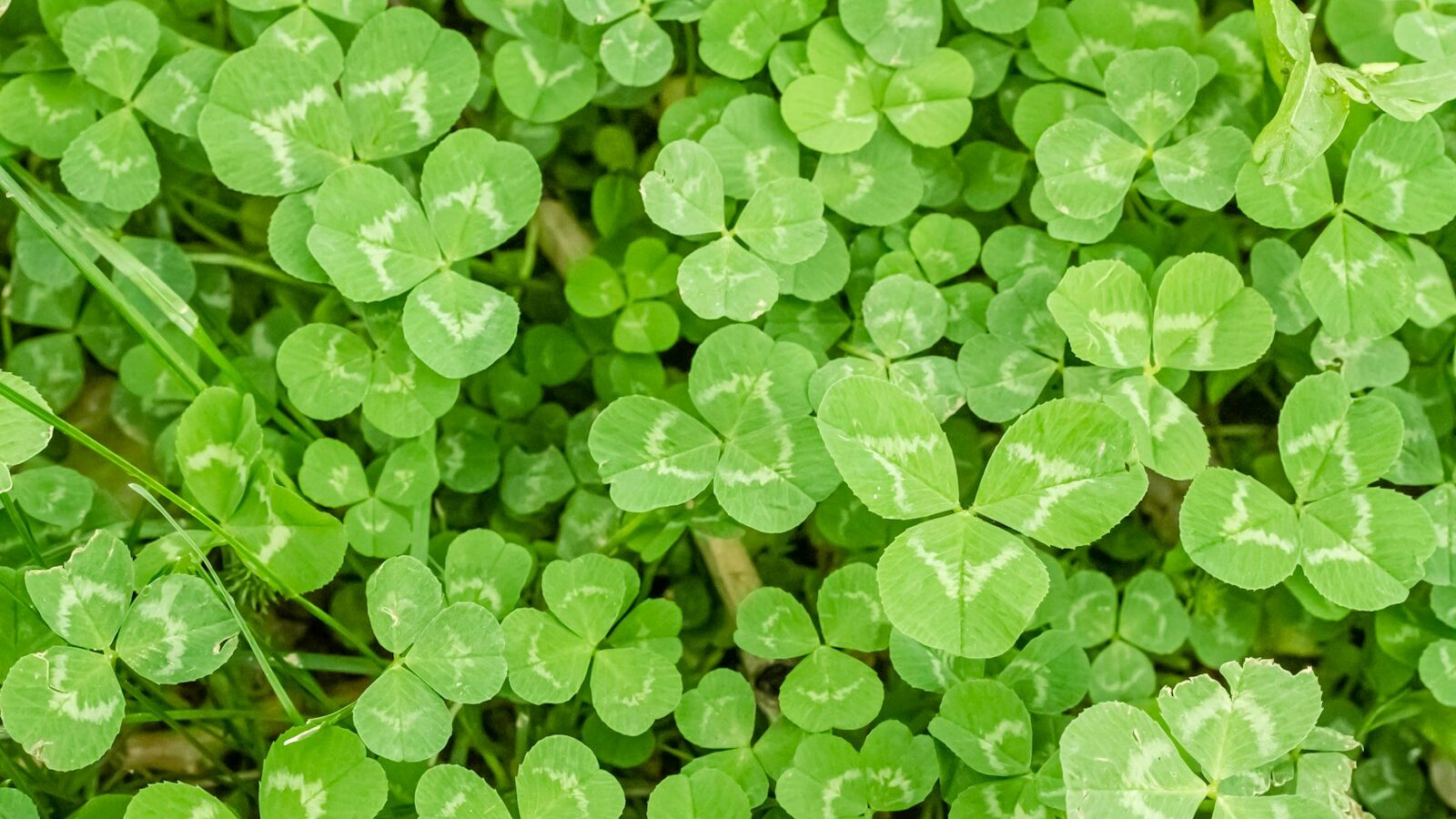
Those low-growing patches of three-leaf greenery with white puffball flowers are white clover (Trifolium repens), the most common clover invading American lawns. While some homeowners now welcome clover for its drought tolerance and bee-friendly blooms, most want a uniform turf. Clover spreads fast, outcompetes thin grass, and signals an underlying problem with your soil. This guide covers exactly why clover shows up, how to kill existing patches, and—most importantly—how to fix the conditions so it never comes back.
Key Takeaways
- Clover thrives in low-nitrogen, compacted, thin lawns—it fixes its own nitrogen, so it wins where grass is starved.
- The fastest chemical fix is a broadleaf herbicide containing quinclorac, clopyralid, or a 2,4-D + dicamba + MCPP blend applied to actively growing clover.
- Organic options include hand-pulling, smothering, corn gluten meal as a pre-emergent, and a vinegar-based spot spray.
- The permanent solution is a thick, well-fed lawn: fertilize with nitrogen, mow tall (3-4 inches), aerate compacted soil, and overseed bare spots.
- Prevention beats treatment—dense turf crowds out clover before it can establish.
Why Clover Grows in Your Lawn
Clover is a legume, which means it pulls nitrogen out of the air and fixes it in the soil through bacteria in its roots. That superpower lets it thrive in conditions where grass struggles. If clover is taking over, your lawn is telling you something:
- Low nitrogen: The number-one cause. Underfed lawns can’t compete; clover doesn’t need the nitrogen grass craves.
- Compacted soil: Hard, compacted ground stresses grass roots while clover’s shallow roots cope fine.
- Wrong soil pH: Clover tolerates a wider pH range than turfgrass, gaining an edge in overly acidic or alkaline soil.
- Mowing too short: Scalping weakens grass and exposes soil, giving low-growing clover room to spread.
- Thin or bare patches: Any gap in the canopy is an invitation for clover seed to germinate.
This is why simply killing clover rarely works long-term—if the soil conditions stay the same, it returns within a season. A soil test ($15-20 from your county extension office) tells you your pH and nutrient levels so you can correct the actual problem.
Chemical Control: Herbicides That Kill Clover
For fast, large-scale removal, a selective broadleaf herbicide kills clover without harming your grass. Clover has a waxy leaf coating, so a single application often isn’t enough—plan on two treatments 2-3 weeks apart.
Best active ingredients
- Quinclorac: Highly effective on clover and safe on most cool- and warm-season grasses. Often the top choice.
- Clopyralid: Targets legumes specifically and works well on stubborn clover.
- Three-way blends (2,4-D + dicamba + MCPP): Widely available “weed-and-feed” and broadleaf killers that tackle clover along with dandelions and other weeds.
Application tips
- Spray when clover is actively growing—spring or early fall—and temperatures are between 60-85°F. Stressed clover in summer heat resists herbicide.
- Don’t mow 2-3 days before or after spraying, so there’s enough leaf surface to absorb the chemical.
- Apply on a dry, calm day with no rain forecast for 24-48 hours.
- Add a surfactant if the product doesn’t include one—it helps the spray stick to clover’s waxy leaves.
- Check the label for which grass types are safe; St. Augustine and centipede are sensitive to some products.
A spot-spray bottle is fine for scattered patches; use a tank or backpack sprayer for widespread infestations. Always follow label rates exactly—more is not better and can damage your turf.
Be patient after spraying. Clover doesn’t wilt overnight; you’ll see leaves curl, yellow, and brown over 1-2 weeks before the plant dies back fully. Resist the urge to respray early or double the dose, both of which risk thinning your grass and opening fresh gaps for more clover. Keep kids and pets off treated areas until the spray has dried and you’ve watered per the label, and store leftover product out of reach. If you’re treating a large lawn, mark or flag the patches first so you can confirm coverage and spot any survivors for the follow-up application.
Organic and Natural Ways to Remove Clover
If you’d rather avoid synthetic herbicides—especially in a lawn used by kids, pets, or pollinators—several non-chemical methods work, though they take more patience.
Hand-pulling
For small patches, pull clover when the soil is moist so the shallow root system comes up intact. Loosen with a hand fork and remove the whole clump, including runners. Reseed the bare spot immediately so grass—not new clover—fills the gap.
Smothering
Cover larger patches with cardboard or a dark plastic sheet for 2-3 weeks. Denied light and oxygen, the clover dies off. You’ll have to reseed the bare area afterward, so this works best for isolated infestations.
Corn gluten meal
Applied in early spring, corn gluten meal is a natural pre-emergent that suppresses clover seed germination while adding a slow dose of nitrogen—addressing two causes at once. It won’t kill established clover, so use it as a preventive layer, not a cure.
Vinegar spot spray
A homemade mix of horticultural vinegar (higher acetic acid than kitchen vinegar), a squirt of dish soap, and water burns clover foliage on contact. It’s non-selective, so it kills grass it touches too—use a careful spot spray and expect to reapply, since it doesn’t reach the roots.
One organic mistake to avoid: do not try to “starve” clover by withholding fertilizer or water in hopes the lawn will reclaim the space. The opposite happens. Clover makes its own nitrogen and tolerates drought far better than turfgrass, so cutting back on care only weakens the grass and hands clover an even bigger advantage. Every organic method above works best when paired with feeding and thickening the lawn, not instead of it.
The Real Fix: Build a Thick, Healthy Lawn
Killing clover is only half the battle. Unless you fix the conditions that let it move in, it comes right back. A dense, vigorous lawn shades the soil and crowds out clover before it can germinate. Here’s how to make your turf the dominant plant:
- Fertilize with nitrogen: This is the single biggest deterrent. A well-fed lawn outcompetes clover, which loses its advantage when grass has plenty of nitrogen. Use a quality lawn fertilizer following a seasonal schedule for your grass type.
- Mow high: Keep cool-season grass at 3-4 inches and warm-season grass at the upper end of its range. Taller grass shades out low-growing clover and never scalp—follow the one-third rule.
- Aerate compacted soil: Core aeration in the growing season relieves compaction so grass roots can thrive where clover currently has the edge.
- Correct pH: Apply lime to raise pH or sulfur to lower it based on your soil test, putting grass back in its ideal range.
- Overseed bare spots: Fill thin areas with grass seed so there’s no open ground for clover to colonize.
For a complete feeding plan, see our guide on the best lawn fertilizers, and if you’re filling in thin or bare patches, our grass seeding guide walks through overseeding for a denser canopy. Pairing weed control with these cultural practices is what makes the results stick.
Troubleshooting and Timing
- Clover came back after spraying: You likely treated the symptom, not the cause. Fertilize, raise your mowing height, and aerate to fix the soil conditions.
- Herbicide didn’t work: Clover’s waxy leaves shed weak applications. Use a surfactant, spray during active growth, and make a second pass after 2-3 weeks.
- When to treat: Spring and early fall are ideal—clover is actively growing and grass recovers fast. Avoid summer drought and heat stress.
- New grass and herbicide: Don’t apply most broadleaf herbicides to lawns seeded within the last 4 weeks, and wait the label-specified interval before reseeding after spraying.
One last thought: clover isn’t all bad. It fixes nitrogen, stays green in drought, needs little mowing, and feeds pollinators. A growing number of homeowners deliberately seed micro-clover into lawns for a low-maintenance, eco-friendly yard. If you’re fighting it everywhere, it may be worth asking whether a clover-tolerant lawn would suit you better than an endless battle. But if you want pure turf, the formula is simple: kill what’s there, then feed and thicken the grass so clover never gets another foothold.
Frequently Asked Questions
Will clover go away on its own?
Rarely. Because clover fixes its own nitrogen, it thrives exactly where grass is starved and will keep spreading until you either kill it or improve the lawn’s nitrogen, mowing height, and soil compaction so the grass can outcompete it.
What kills clover but not grass?
Selective broadleaf herbicides with quinclorac, clopyralid, or a 2,4-D + dicamba + MCPP blend kill clover while leaving turfgrass unharmed. Check the label for your specific grass type, since St. Augustine and centipede are sensitive to some formulas.
Does vinegar kill clover permanently?
Horticultural vinegar burns clover foliage on contact but doesn’t reach the roots, so the plant often regrows and you’ll need repeat applications. It’s also non-selective and will kill grass it touches, so use it only as a careful spot treatment.
When is the best time to get rid of clover?
Spring and early fall, when clover is actively growing and temperatures sit between 60-85°F. Herbicides absorb best then, and grass recovers quickly to fill the gaps. Avoid treating during summer heat stress or drought.
Does fertilizing really stop clover?
Yes—it’s the most important long-term fix. Clover gains its advantage in low-nitrogen soil. Regular nitrogen feeding plus mowing tall and aerating builds a dense lawn that shades and crowds out clover before it can establish.