

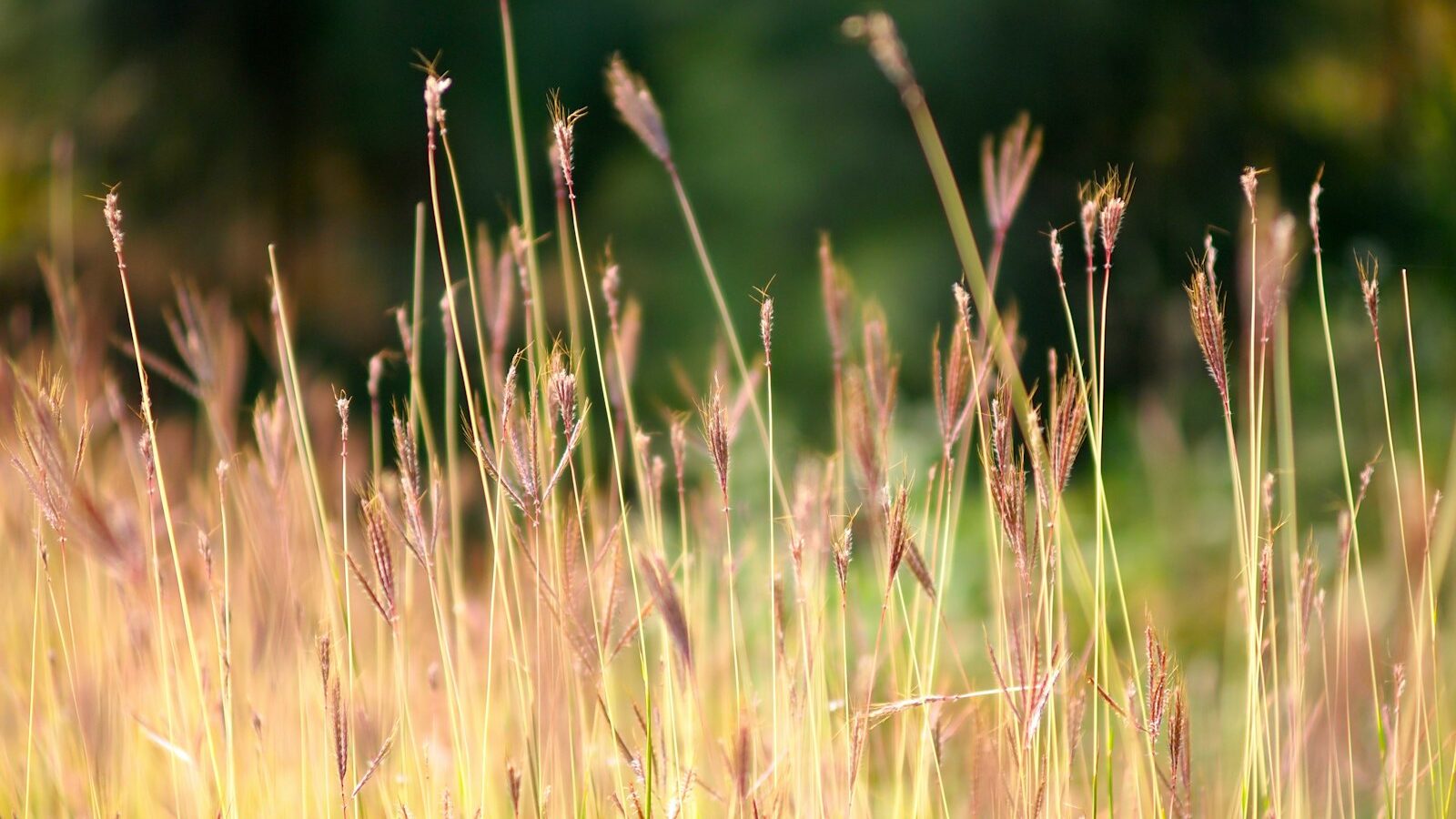
Cut warm-season ornamental grasses down to 4 to 6 inches in late winter to early spring, before new green growth pushes past about 6 inches. That single sentence covers 90 percent of the job. The other 10 percent is knowing which grasses follow a different rule, getting the timing right for your USDA zone, and not slicing the tops off the new shoots because you waited two weeks too long. Most grasses are cut once a year, and the worst thing you can do is treat every grass in the bed the same way. A miscanthus, a blue fescue, and an evergreen sedge each want something different from you, and if you walk out with hedge shears and level the whole border, you will scalp the plants that should have been combed instead.
Key Takeaways
- Cut warm-season grasses (miscanthus, switchgrass, fountain grass) to 4-6 inches in late winter to early spring, before new growth reaches 6 inches.
- Cut cool-season grasses (feather reed grass, blue fescue) lightly and earlier, in late winter; they green up fast and resent hard shearing.
- Never shear evergreen grasses and sedges like Carex to the ground; comb out dead blades with your fingers or a rake instead.
- Leave grasses standing through winter for wildlife habitat, seed-head beauty, and crown protection in cold zones.
- Bundle the clump with bungee cords or twine before cutting, wear gloves for razor-sharp blade edges, and divide congested clumps while you are in there.
Warm-Season vs. Cool-Season Grasses: Know What You Have
Before you touch a single blade, figure out which category each grass falls into, because the two groups operate on opposite schedules. Warm-season grasses do most of their growing when soil temperatures climb in late spring and summer. They go fully dormant in winter, turning tan, beige, or golden, and they stay that color until you cut them. This group includes the workhorses of the perennial border: maiden grass and other Miscanthus sinensis cultivars, switchgrass (Panicum virgatum ‘Heavy Metal’, ‘Northwind’, ‘Shenandoah’), fountain grass (Pennisetum alopecuroides ‘Hameln’), big bluestem, little bluestem (Schizachyrium scoparium), and prairie dropseed. These are the grasses that earn a hard, low cut once a year.
Cool-season grasses, by contrast, get going in the cool weather of early spring and fall, often staying semi-green or partly evergreen through mild winters. Feather reed grass (Calamagrostis ‘Karl Foerster’) is the most common example, along with blue fescue (Festuca glauca), blue oat grass (Helictotrichon sempervirens), and tufted hair grass (Deschampsia). These wake up early, sometimes pushing new growth in late February or March in milder regions, so they get cut earlier and more gently. Hard-shearing a blue fescue to the ground every year will weaken it and shorten its life; these clumping fescues prefer a light haircut and a finger-comb to pull out the dead thatch.
The Evergreen Exception You Must Not Shear
Here is the rule that trips up the most people: some plants sold as ornamental grasses are evergreen or semi-evergreen and should never be cut to the ground. The biggest group is the sedges, especially Carex (Japanese sedge ‘Evergold’, Carex oshimensis, Carex morrowii, the native Pennsylvania sedge, and others). Sedges are not true grasses, and they keep their foliage year-round. If you shear a Carex down to 4 inches the way you would a miscanthus, you will set it back severely and it may take an entire season to recover its form, if it recovers at all. The same caution applies to evergreen blue fescue in mild zones and to many smaller mounding sedges. Instead of cutting, run your gloved fingers or a leaf rake through the clump in early spring to pull out the brown, dead blades, leaving the living green foliage intact. At most, you can trim back the tattered tips. Treat these as comb-not-cut plants and you will keep them looking sharp for years.
Timing: When to Cut, Month by Month and Zone by Zone
The ideal window for cutting back warm-season grasses is late winter to early spring, after the worst of the cold has passed but before new growth begins in earnest. The visual cue matters more than the calendar date: cut when you see the first green shoots emerging at the base, but before those shoots reach roughly 6 inches tall. Cut earlier than that and you lose nothing except the winter display; cut later and your shears will lop the tips off the fresh growth, leaving every blade with an ugly blunt brown end that stays visible for the rest of the season. Once new shoots clear 6 inches, you have to switch to hand pruners and pick around them, which turns a 10-minute job into an hour of fiddling.
Translate that into months by your USDA hardiness zone. In warm zones 8, 9, and 10 (much of the South, Gulf Coast, and the West Coast), grasses often start moving in February, so plan to cut in late January through February. In zones 6 and 7 (the mid-Atlantic, the Ohio Valley, the Pacific Northwest lowlands), late February through March is the sweet spot. In colder zones 3, 4, and 5 (the Upper Midwest, New England, the northern Plains), you can usually wait until March or even early April, since new growth holds off until the soil warms. The key principle is to track your plants, not the date on the calendar. A late, lingering winter pushes everything back; an early warm spell pulls it forward. Watch the base of the clump.
Why You Leave Grasses Standing Through Winter
The reason you wait until late winter instead of cutting in fall is not laziness, it is good horticulture and good for the garden. First, standing grasses are one of the best winter features a garden can have. The bleached foliage and seed heads catch low sunlight, hold snow, and move in the wind when everything else in the border has collapsed into mush. Second, those seed heads and the dense clumps feed and shelter wildlife. Songbirds pick seeds from switchgrass and panicum all winter, and the hollow stems and clump bases give overwintering insects, including beneficial pollinators and the larvae of butterflies and moths, a place to ride out the cold. Cut everything down in October and you strip that resource away.
Third, and most practically, the standing foliage protects the crown of the plant. The dense, dormant top growth acts like a thatch blanket over the base, insulating it from freeze-thaw cycles and shedding excess water away from the crown, which is exactly what prevents rot in cold, wet winters. This crown protection matters most in colder zones and in any clay-heavy or poorly drained soil. If you cut a marginally hardy grass to the ground in November in zone 5, you have removed its winter coat right when it needs it most. This is the same logic behind leaving other perennials and protecting tender plants over winter; if you are planning cold-season care across the whole garden, our guide on how to protect plants from frost covers the broader strategy. Leaving grasses standing is the easiest, free version of that protection.
Tools and the Step-by-Step Cut
You do not need much to cut back grasses, but the right tool for the size of the clump makes an enormous difference. For small grasses and sedges under about a foot across, sharp bypass hand pruners are all you need. For medium clumps, a pair of long-handled hedge shears (the manual scissor type) lets you take big bites and gives you control near the base. For large, established stands of miscanthus or switchgrass three or four feet across, a powered hedge trimmer (electric or cordless battery) is the only sane choice. For truly massive, woody-based clumps, some gardeners reach for a reciprocating saw or even a string trimmer fitted with a brush blade, but a hedge trimmer handles almost everything in a home garden.
The Bundling Trick
The single best technique for cutting large grasses is to bundle the clump before you cut it. Wrap a bungee cord, a ratchet strap, or a loop of twine around the entire clump about two-thirds of the way up and cinch it tight, gathering all the stems into a single fat column. Now when you cut through the base, the whole bundle stays together instead of exploding across the bed, and you can carry it off in one armful or drop it straight onto a tarp. It cuts your cleanup time in half and keeps the loose blades from scattering into the lawn and neighboring beds. For very large clumps, bundle in two or three sections.
- Glove up. The dried blade edges of many grasses, especially miscanthus and the bluestems, are genuinely sharp and will give you paper-cut-style slices on bare forearms and hands. Wear leather or thick gloves and long sleeves.
- Bundle the clump with a bungee cord or twine, gathered tight two-thirds of the way up.
- Cut to 4-6 inches above the crown with your shears or trimmer, keeping the cut roughly level. Do not cut into the crown itself.
- Lift the bundle away in one piece and set it on a tarp.
- Comb or rake the base to clear any loose dead material and expose the emerging shoots to light and air.
Cut height matters. Leave 4 to 6 inches of stubble rather than scalping the plant flush to the ground. That stub protects the crown from a late frost, marks where the clump is so you do not step on the new shoots, and avoids damaging the growing point. Going lower than a few inches gains you nothing and risks the crown. For cool-season grasses, you can stay at the higher end of that range or cut even less.
Divide Congested Clumps While You Are In There
Spring cleanup is the perfect time to divide grasses, because the clump is cut down to a manageable stub and you can see exactly what you are working with. Most ornamental grasses benefit from division every three to four years, and you will know it is time when the center of the clump dies out and goes hollow while the outer ring keeps growing, leaving a doughnut shape. A dead, bare center is the plant telling you it is overcrowded. Divide just as new growth is starting, right after you cut back, so the divisions have the whole season to re-establish.
To divide, dig up the whole clump or slice off wedges from the edge with a sharp spade. The roots of mature warm-season grasses are tough and fibrous, so do not be gentle: a sharp spade driven straight down, or even a saw for the most stubborn root masses, is the standard approach. Discard the dead center and replant healthy chunks the size of a softball or larger, each with roots and several growing points, at the same depth they were before. Water them in well. Division keeps grasses vigorous, gives you free plants for the rest of the garden, and prevents the over-large, flopping clumps that result from years of neglect.
Disposal and Composting the Clippings
Grass clippings from your cleanup are excellent organic matter, but they need handling. The dried stems are high in carbon, which makes them a fine “brown” component for a compost pile, balancing out nitrogen-rich green material like kitchen scraps and fresh lawn clippings. Chop or shred the long blades first, either by running a mower over them on a tarp or cutting them into shorter lengths, because whole three-foot stems mat together and take forever to break down. Once shredded, they compost down over a season or two. They also make a serviceable coarse mulch spread around shrubs.
Two cautions. First, some ornamental grasses, particularly certain miscanthus and the aggressive fountain grasses, self-seed readily, and if your compost pile does not heat up enough to kill the seed you can spread the plant where you do not want it. If your grass is a known re-seeder or is considered invasive in your region, bag the seed heads and send them out with yard waste rather than composting them. Second, if you cut grasses that showed signs of fungal disease such as rust, keep that material out of the home compost pile entirely.
Common Mistakes to Avoid
The most frequent mistake is cutting too late and slicing into the new growth. Once those green shoots are up past a few inches, every horizontal shear cut leaves a blunt brown tip on hundreds of blades, and that browned, mangled look persists for months because grasses do not regrow from a cut tip the way a lawn does. If you have missed your window and the new growth is already tall, switch to hand pruners and selectively remove just the old dead stems, leaving the green untouched, even though it is slower. The second big mistake is the one we covered at the top: shearing evergreen grasses and sedges like Carex to the ground. They are not warm-season grasses, they do not regenerate from the base on cue, and cutting them hard can ruin them for a full season.
Other errors worth flagging: cutting in fall in a cold zone and stripping away the crown protection; scalping the clump flush to the soil instead of leaving a 4 to 6 inch stub; skipping division for years until the clump is a hollow, flopping ring; and not wearing gloves, which leads to a forearm full of small cuts by the end of the afternoon. If you are working through a full seasonal cleanup, it pairs naturally with other late-winter tasks, and you can browse the rest of our outdoor living and garden care guides to build out your spring checklist; the companion piece on how to winterize roses works on a similar protect-then-prune rhythm.
Frequently Asked Questions
Can I cut my ornamental grasses in the fall instead of spring?
You can, but it is usually better not to. Standing grasses provide winter interest, food and shelter for birds and beneficial insects, and crown protection against freeze-thaw cycles and rot. In colder zones especially, leave them up and cut in late winter or early spring instead. If you garden where winters are mild and wet and rot is a bigger threat than cold, a fall cut is more defensible.
How short should I cut ornamental grasses?
Leave 4 to 6 inches of stubble above the crown for warm-season grasses like miscanthus and switchgrass. Cool-season grasses can be cut a bit higher and more lightly. Never scalp the clump flush to the ground, since the stub protects the growing point and marks where the plant is so you do not trample emerging shoots.
Do I cut back evergreen grasses and sedges the same way?
No. Evergreen and semi-evergreen plants like Carex sedges and blue fescue should not be sheared to the ground. Instead, comb out the dead brown blades with your gloved fingers or a rake in early spring, leaving the living green foliage. At most, trim tattered tips. Hard-cutting these can set them back for a full season.
How do I know if it is too late to cut?
Look at the base of the clump. Once new green shoots have grown past roughly 6 inches, shearing will leave blunt brown tips on the new growth that stay ugly all season. If you are past that point, switch to hand pruners and selectively remove only the old dead stems, leaving the new green untouched.
How often should I divide ornamental grasses?
Every three to four years for most warm-season grasses, or whenever the center of the clump dies out and goes hollow, leaving a doughnut shape. Divide in early spring right after you cut back, using a sharp spade to slice through the tough root mass. Discard the dead center and replant healthy chunks with several growing points each.